AI may help game teams build faster, but it cannot decide why a game should exist in the first place. That is the central message from Square veterans Hiromichi Tanaka, Kouichi Ishii and Yoshinori Kitase, who have reflected on both the rapid experimentation of the Super Nintendo era and the realities facing creators working with today’s increasingly accessible tools.
Their position is not an outright rejection of AI. Instead, it draws a line between using technology to remove production friction and handing over the fundamental creative decisions that give a game personality. Kitase described the modern toolset as a major opportunity for inexperienced creators to make and finish projects, but maintained that people remain indispensable when an idea needs to move from nothing into something meaningful.
“When it comes to creating something and taking it from 0 to 1, you absolutely need people,” Kitase said. “That will never change.”
It is a useful distinction in a debate that often collapses very different uses of AI into one question: whether it should be in game development at all. The developers instead point to a more practical issue: which parts of development can technology accelerate, and which parts still require human judgment?
AI as a tool, not an author
Kitase compared AI’s possible place in development to the broader impact of engines such as Unity and Unreal Engine. A game engine is a software framework that supplies common technical foundations for building a game. Rather than making every basic system from scratch, developers can build on established tools and concentrate more of their effort on their own game’s design.
That kind of access has lowered barriers to entry. A smaller team, or even an individual creator with limited previous experience, can now work with an existing foundation and gain experience by completing a project. Kitase sees newer tools, including AI, as potentially extending that opportunity further. The important qualifier is that easier production does not automatically generate a strong creative premise.
In this view, “0 to 1” means more than producing assets or assembling functional systems. It means setting the direction: deciding what the game is trying to make players feel, which mechanics serve that purpose, what deserves to be discarded, and when a project is finished. Those decisions can be difficult precisely because they do not have a single technical answer.
Ishii suggested that AI could prove especially helpful during prototyping, the early stage where developers make rough playable versions to test an idea. Faster prototypes could give a team more chances to evaluate alternatives, revise a concept and ask whether a different approach is stronger before committing to a final version.
Related coverage includes Square Enix Veterans Say AI Cannot Replace the Human Leap From Idea to Game.
That is a more narrowly defined use case than treating AI as a substitute for a creative team. A prototype exists to prompt decisions, not to settle them. Ishii’s concern is that work made solely through AI may look finished on the surface while feeling cold or lacking the human touch needed to connect with an audience.
Why their development history informs the argument
The comments carry particular weight because Tanaka, Ishii and Kitase are discussing them through the lens of a period in which game projects could change dramatically while in production. They looked back on early Final Fantasy and Mana work from Square’s Super Nintendo years, when teams were smaller and development cycles were shorter than those commonly associated with major games today.
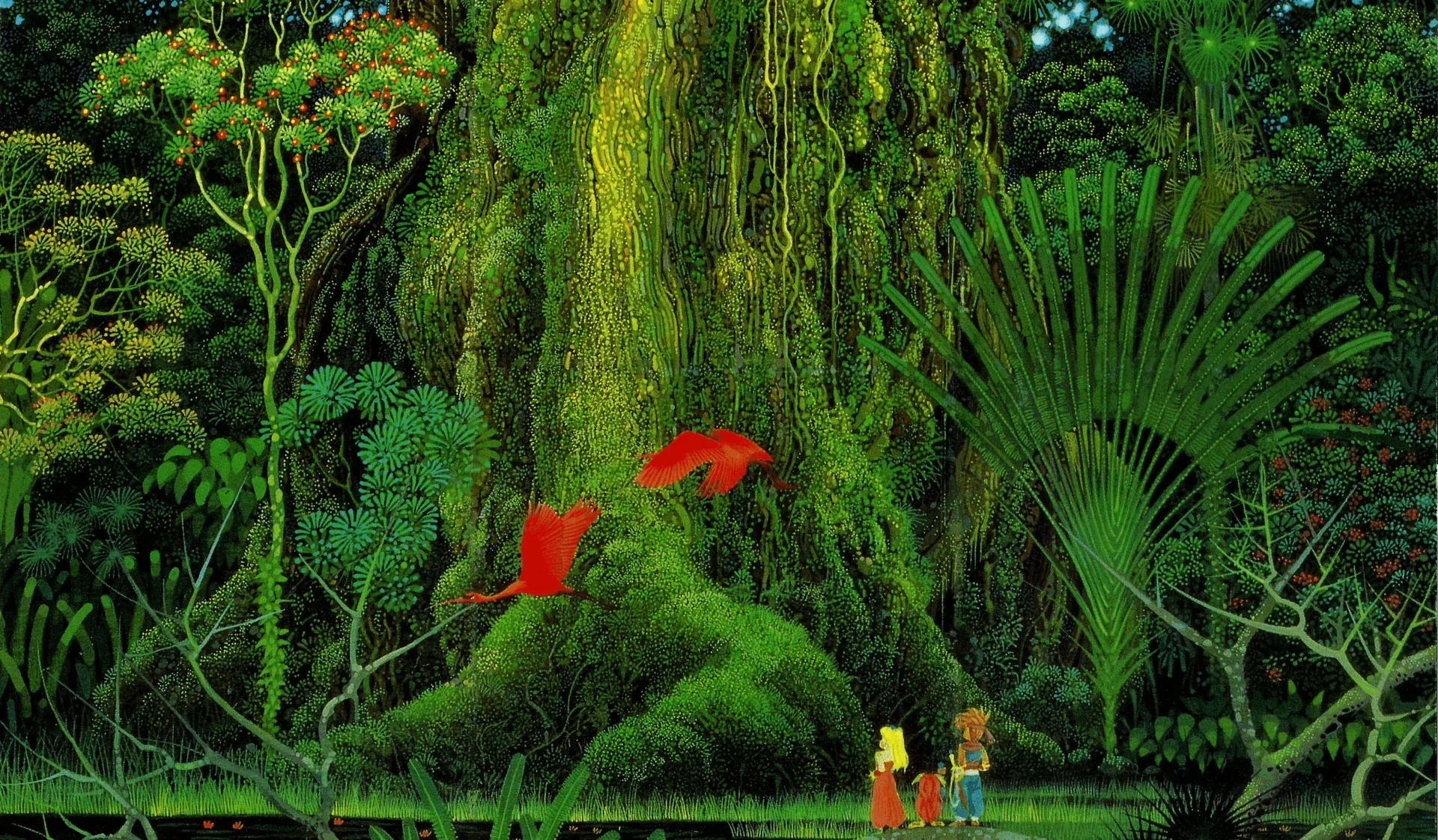
That relative flexibility could allow substantial course corrections. Secret of Mana, for example, was initially intended for Nintendo’s ultimately cancelled SNES CD add-on. Akira Toriyama was planned as its character designer, but did not end up working on the project after it was reimagined as a conventional SNES game. Toriyama did later work on Chrono Trigger, a project that emerged after that shift in Secret of Mana’s development.
The era’s shifting technical plans also had consequences beyond a single game. The disruption around Secret of Mana and Nintendo’s decision not to adopt discs for the Nintendo 64 contributed to the decision to make Final Fantasy VII a PlayStation exclusive.
Those examples are not evidence that modern teams can simply recreate an older development model. Today’s projects can involve vastly more complex production demands, and the veterans did not claim that AI automatically restores old-fashioned agility. But their history explains why rapid iteration matters to them. If a team can test more possibilities earlier, it may gain time to identify what makes an idea work rather than merely deliver a technically polished version of its first plan.
The human part is setting the boundaries
Ishii’s formulation is particularly clear: people must define the beginning and end of the process. Put another way, AI may assist with tasks inside a workflow, but creators are still responsible for establishing the problem, evaluating the output and deciding whether the result belongs in the game.
That matters for practical reasons as well as artistic ones. A tool can make generation quicker, but quick output creates its own challenge: somebody must review it. A prototype only helps if the team can explain what it is testing and interpret what the test reveals. More options are useful only when creators have a point of view strong enough to choose among them.
For aspiring developers, the advice is not to avoid engines, AI assistance or other modern tools. It is to avoid mistaking access to tools for the full craft of game creation. Finishing a small game can build valuable experience, but creators still need to practice the harder skills around it:
- defining a clear player experience rather than beginning with an undefined pile of features;
- making a prototype that answers a specific design question;
- recognizing when a technically competent result does not fit the project’s identity;
- revising or cutting work when it does not serve the core idea; and
- taking responsibility for the final creative choices.
Those skills are also relevant to the business side of independent development. Lower production barriers can enable more projects, but they can also intensify competition for attention. The challenge of visibility is already acute in crowded digital showcases; the scale of Steam Next Fest’s game flood illustrates why a project needs a clear identity in addition to a workable build. Faster tools may help more people make games, but they do not guarantee that players will understand what makes one worth trying.
Polish and resonance are not the same thing
The veterans’ concern is ultimately about resonance. A game can be technically functional, visually consistent and full of content while still failing to leave an impression. Ishii’s warning about an AI-only result feeling polished but emotionally distant identifies a gap that cannot be measured simply by output speed.
Kitase offered a personal parallel: he considered using AI to draft a speech for his eldest son’s wedding two years earlier, then decided it did not feel appropriate and wrote it himself. The point is not that AI-generated text cannot be coherent. It is that some acts of expression have value because a person makes the choices, accepts the vulnerability and communicates their own perspective.
Games are collaborative works rather than personal speeches, of course. They are also technical products that benefit enormously from tools. But the analogy helps explain why the group is cautious about allowing efficiency to become the only goal. A game’s systems, art, story and sound must ultimately point in a shared direction. That direction comes from people deciding what is worth saying and how to say it.
Responsible use remains an open question
Discussion in Japanese game-development circles is increasingly concerned with responsible incorporation of AI rather than only with whether it will be used. Surveys cited in the discussion indicate that more than 85 percent of developers in Japan are either using the technology or considering it.
That figure suggests the question will not be settled by a simple yes-or-no stance. Developers, studios and players will instead have to judge individual uses and their consequences. The veterans’ comments offer a workable principle: use technology where it gives teams more room to experiment, test and refine, but retain human ownership of the vision and the decisions that shape the final work.
Whether audiences accept particular implementations remains uncertain. So does the balance studios will strike between speed, cost and creative authorship. But Tanaka, Ishii and Kitase make one position plain: AI may become another important instrument in the development toolkit. It is not, by itself, the creator who turns an initial spark into a game with a reason to be remembered.