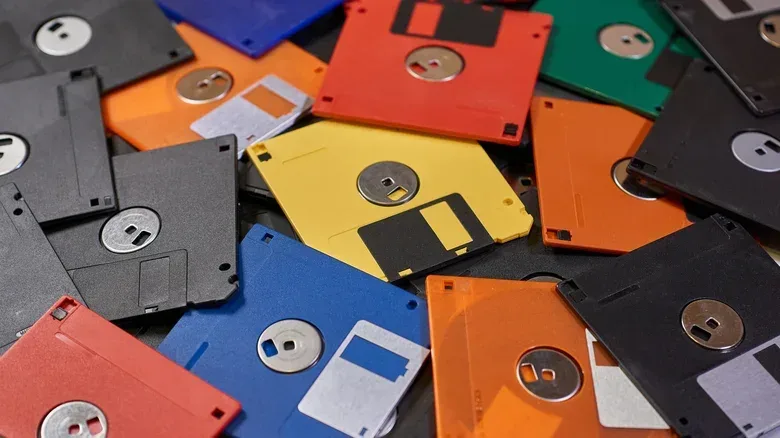

The humble floppy disk has survived another boss battle for far longer than most people probably realized. The US Federal Aviation Administration is beginning a modernization effort that will retire diskette-based air traffic control systems used for vital weather and other critical information at more than 400 facilities.
The replacement is called the Enterprise – Information Display System, or E-IDS. Rather than relying on the older diskette setup, E-IDS uses digital displays to provide air traffic teams with status information, updates and alerts. The FAA intends to install it at 435 sites by the end of 2028.
Initial deployments are planned for Atlantic City International Airport, Nashville International Airport, and Greater Rochester International Airport. Two data processing hubs, in Atlanta and Salt Lake City, are also among the first locations scheduled for the changeover.
What is being replaced?
Floppy disks were an early removable-storage format used to hold computer files and programs. IBM developed the first floppy disk in 1971, and the format became a familiar part of workplace and home computing long before CDs, USB storage and cloud-connected systems became common. The FAA systems now being replaced date to the 1980s.
It is worth separating the vintage storage medium from the job it serves. This is not a novelty device kept alive for retro-computing fun. The FAA says the diskette systems distribute information that air traffic controllers need, including weather material and other operationally important data. That makes the project less about an amusingly old technology headline and more about the reliability, maintainability and usability of infrastructure that supports public air travel.
Air traffic control is the network of people, procedures and systems that manages aircraft movement and helps controllers maintain safe, orderly traffic. Controllers need timely operational information; in that environment, a display system is not simply an office-screen upgrade. It is part of the flow through which teams receive and review updates.
Why E-IDS matters
The FAA expects the new system to give controllers faster access to information, reduce repair costs and improve safety. Those are distinct goals, even if they reinforce each other.
- Faster access to information: Digital displays designed for status updates and alerts can make it easier for teams to receive current operational information.
- Lower repair expense: Maintaining decades-old technology can require specialized knowledge and parts. Replacing aging equipment can reduce that repair burden.
- Safety improvements: The FAA connects the modernization to safer public air travel, reflecting the importance of dependable access to weather and other critical information.
That does not mean a floppy disk itself is automatically unsafe, or that a new display solves every challenge facing aviation. The stated project is a targeted system replacement. Still, the rationale is easy to understand: systems with a critical operational role must be maintained over long periods, and the cost and difficulty of doing so can grow as their underlying technology ages.
A rollout measured in years, not minutes
The planned completion date is the end of 2028, so this is a broad, multi-year deployment rather than a single switchover. The scale helps explain that timeline. The diskette-based systems remain in use at more than 400 facilities, while the E-IDS installation target covers 435 sites.
Starting with three airports and two processing centers also illustrates a practical aspect of replacing critical infrastructure: it must be introduced while the wider operation continues. The supplied details do not describe installation procedures, staff training or transition safeguards, so it would be wrong to fill in those blanks. But the scheduled first locations establish that the FAA is moving beyond a general modernization goal and into an identified installation sequence.
For travelers, the most immediate implication is not a new passenger-facing feature or a visible airport attraction. The change concerns the systems used by air traffic teams. Its intended benefits—quicker information access, lower maintenance costs and safety improvements—sit behind the scenes.
Old technology can stay on duty surprisingly long
The FAA effort is a reminder that essential systems do not always follow consumer technology’s replacement cycle. A device can look prehistoric next to modern personal hardware while remaining embedded in an environment built around long-term reliability, established workflows and carefully managed change.
There are recent examples of floppy disks persisting in government use. The US Air Force ended its use of 8-inch diskettes associated with nuclear missile launch silos in 2019. Japan announced in 2024 that it had eliminated floppy-disk dependence in all but one of its government systems. Those cases do not make every legacy setup identical, but they show that the technology has retained a foothold well after it disappeared from ordinary day-to-day computing.
That persistence is also why the FAA news lands with equal parts disbelief and recognition. Floppy disks feel like artifacts from the era of beige PCs, game save files and software installs with more discs than a sensible person wants to label. Yet a storage format’s cultural retirement and its institutional retirement are very different events.
The real story is operational information, not nostalgia
It would be easy to frame the whole development as a punchline about government hardware finally receiving a patch several decades late. The better reading is that the FAA is replacing a specific means of delivering critical operational information with a digital-display system intended for the work controllers perform today.
Legacy technology is a broad term for older hardware or software that remains in operation after newer alternatives have become available. “Legacy” does not necessarily mean useless. Often, it means the system is deeply integrated into a process where replacing it carries real planning, technical and operational demands. In a high-consequence setting, changing equipment responsibly can matter as much as identifying equipment that is old.
The new E-IDS name also points to its purpose. An information display system is, plainly, a system for presenting information. In this case, the FAA says it will relay status details, updates and alerts to air traffic teams. The important measure is therefore not whether the screen looks futuristic; it is whether the system reliably helps users access the information they need.
There is a faintly relatable technology lesson here for anyone who has opened a game launcher, a workplace application or an operating system only to wonder why a basic task takes so long. Performance and clarity matter most when people depend on information arriving promptly. On the consumer side, that same interest in speed is behind efforts such as the Xbox PC app update focused on faster launches and cleaner navigation. Aviation, naturally, carries a much more serious operational context.
From diskette era to digital displays
The FAA’s published destination is clear: E-IDS at 435 sites by the end of 2028. The immediate starting points are equally clear: Atlantic City International, Nashville International, Greater Rochester International, plus processing hubs in Atlanta and Salt Lake City.
What remains notable is the contrast between the age of the outgoing systems and the scale of their continuing use. Hardware rooted in the 1980s is still supporting information flow across hundreds of locations. The coming replacement will not make floppy disks vanish from museums, retro collections or old computer desks. It will, however, begin removing them from one of the more consequential places they were still quietly doing a job.
For the FAA, this is an infrastructure modernization program with defined operational goals. For everyone else, it is also a useful reminder: sometimes the phrase “legacy support” means an old game still boots. Sometimes it means a floppy disk is still on the clock at an air traffic facility. Only one of those deserves a 2028 retirement plan.