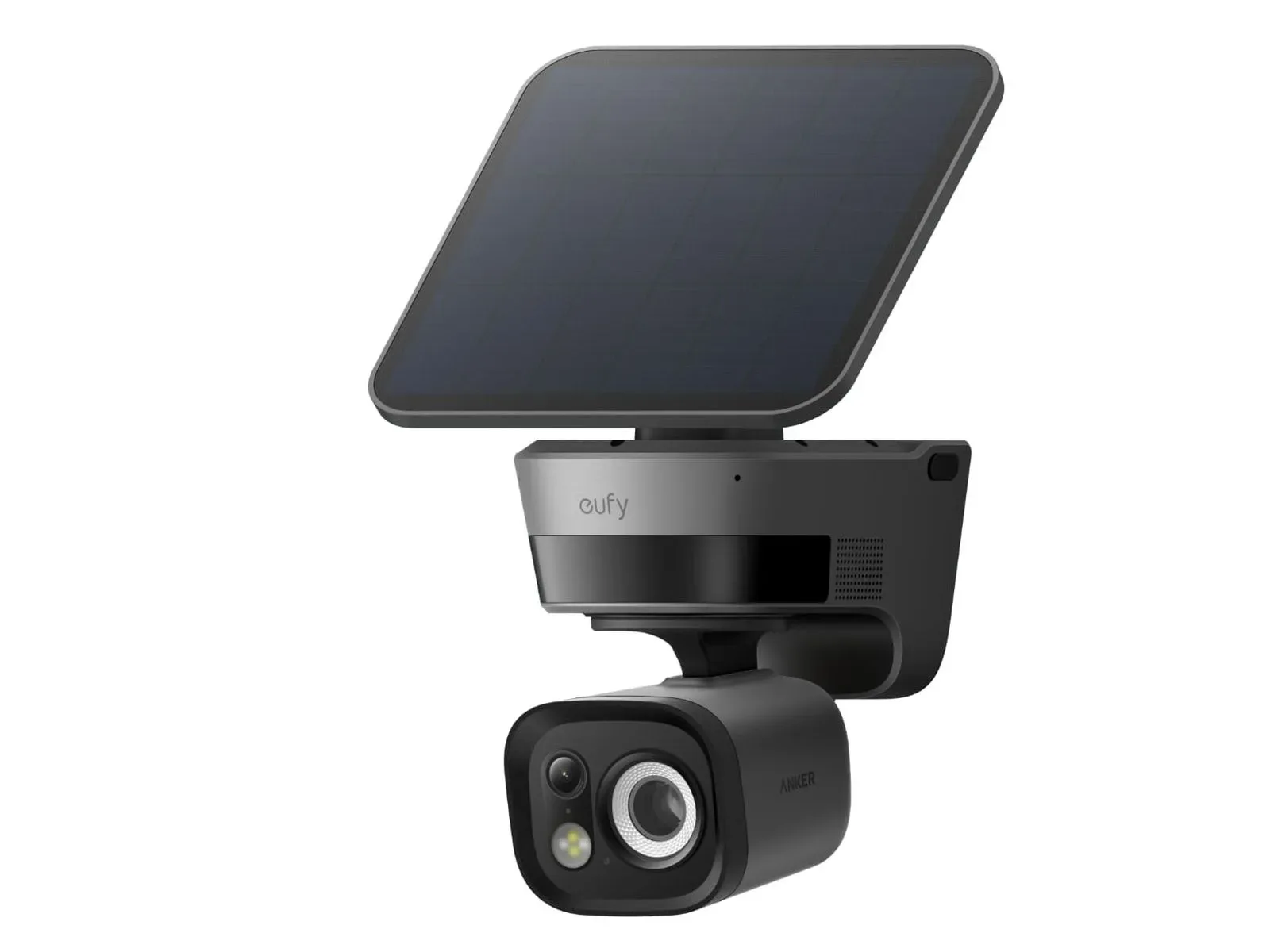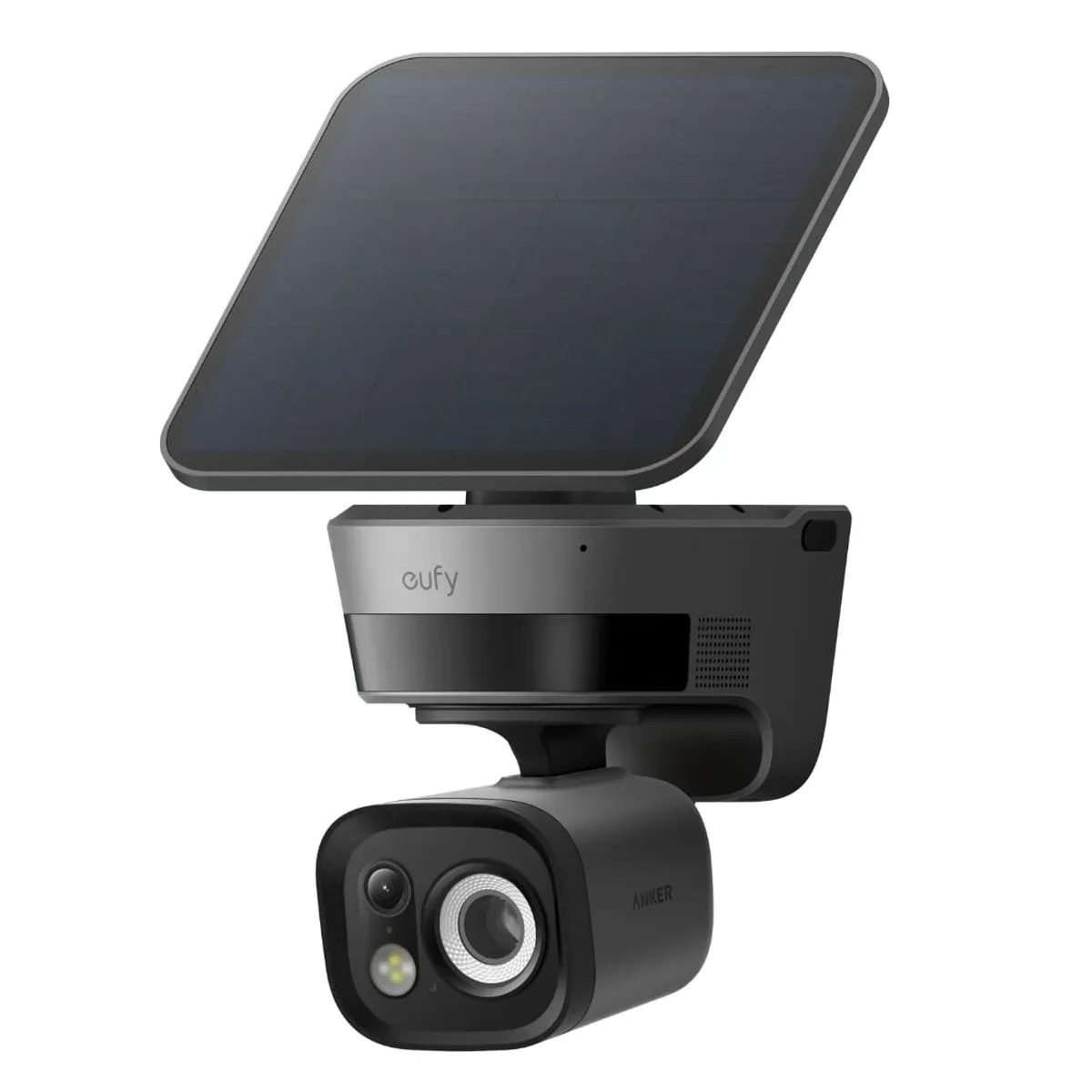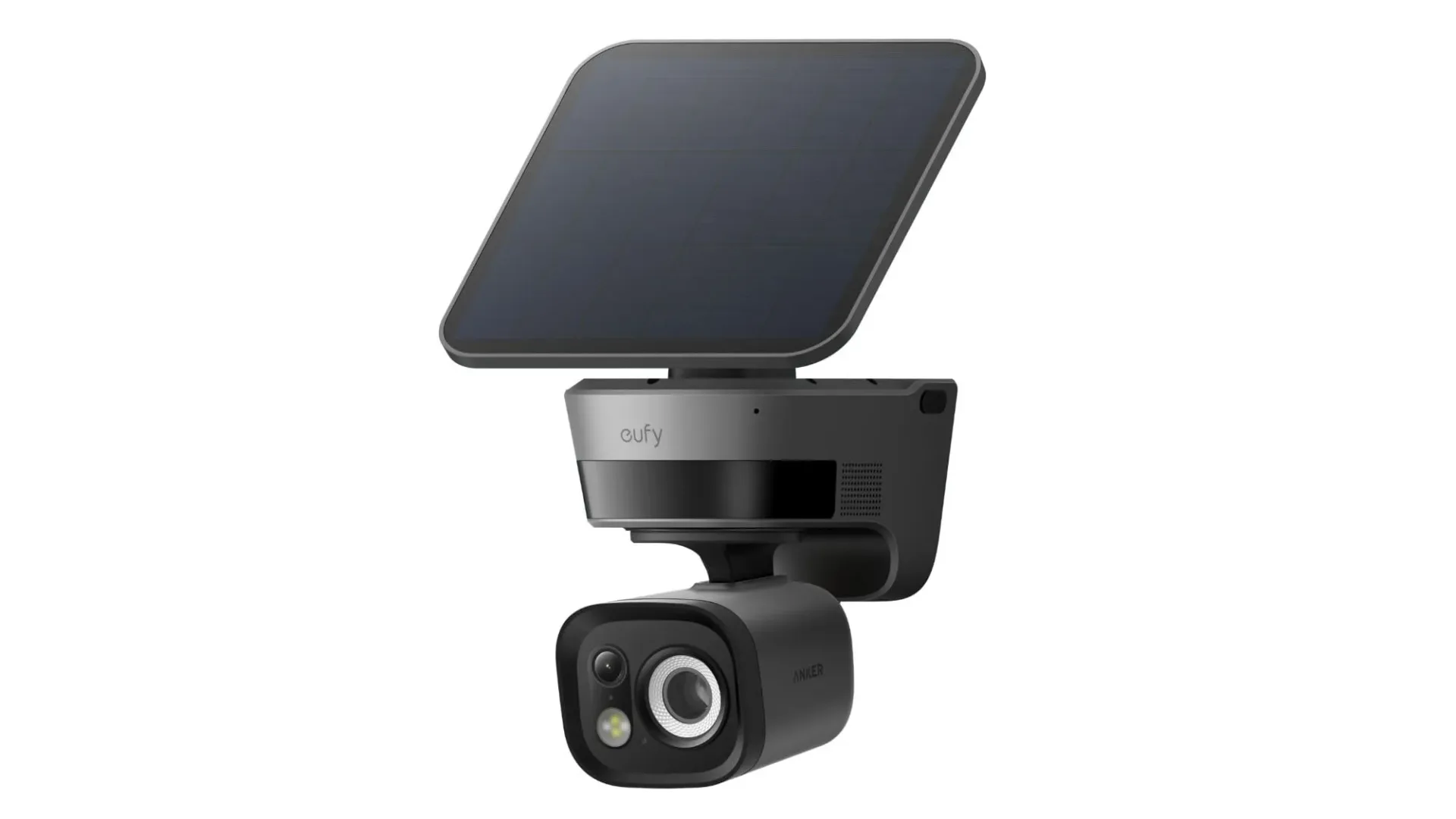
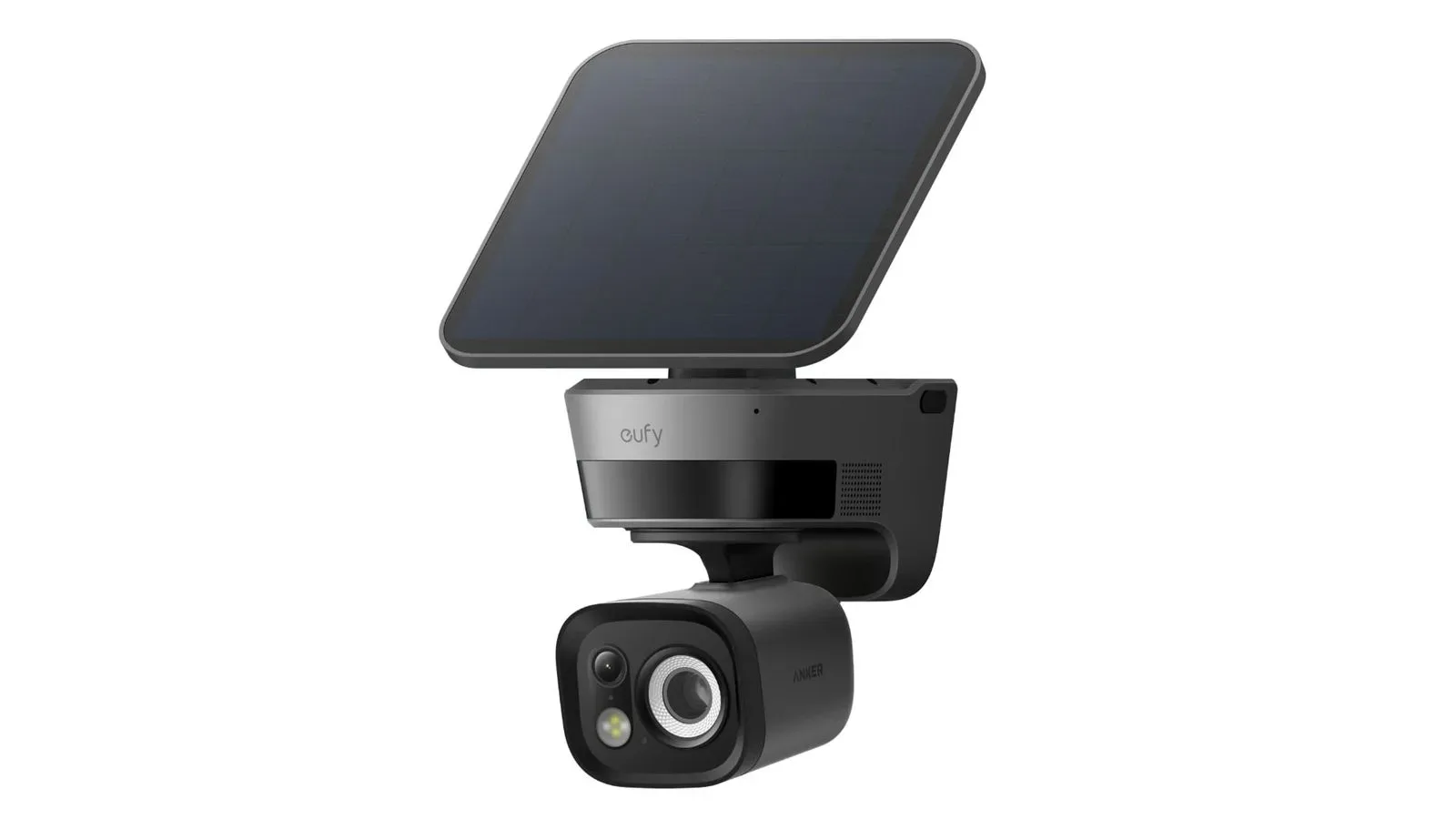
Eufy has introduced the TrackLight Cam S1, an outdoor security camera that puts active deterrence at the center of its pitch. Rather than merely recording activity near a property, the device uses a light designed to follow detected movement. Owners can also enable a deterrence mode that combines the tracking light with a 105-decibel siren, or use red-and-blue flashing lights.
That approach makes the TrackLight Cam S1 a little different from a camera whose job ends at sending a notification and saving a clip. The practical idea is straightforward: make an approaching person aware that they have been seen. Whether that is desirable will depend on the home, the placement and the owner’s tolerance for conspicuous alerts, but it is a meaningful distinction in the product’s design.
The camera is priced at $300. A $500 bundle includes Eufy’s HomeBase, the companion hub needed for Apple Home compatibility and one of the available recording-storage routes. Eufy is also selling a Window Camera E10 for $80, aimed at people who want to monitor an outside area from indoors rather than mount hardware outdoors.
What the TrackLight Cam S1 is designed to do
The headline feature is the TrackLight: an automatically tracking light intended to actively deter potential intruders. Eufy describes the TrackLight Cam S1 as the first outdoor security camera with this type of auto-tracking light. Alongside it is a 120-degree floodlight, so the device combines a focused moving signal with broad-area illumination.
In its optional tracking deterrence mode, the camera activates the light and siren together. The 105-decibel rating signals that this is not a subtle notification. It is intended to attract attention around the property as well as alert a person close to the device. The separate red-and-blue flashing mode offers another visible deterrent option.
There is an important real-world trade-off in any active-deterrence system. A bright, moving light and loud alarm may help make a visitor reconsider lingering near a driveway or entryway. The same behavior could also prove disruptive if alerts occur when the camera mistakes ordinary activity for something suspicious. Buyers should think carefully about where the camera points, the kinds of movement routinely present in that area, and whether loud alerts are appropriate for their neighborhood.
The supplied specifications suggest Eufy is trying to make detection more deliberate than a simple camera-motion trigger. The unit uses dual radar with 180-degree detection coverage at up to 40 feet. Radar, in this context, is a sensor system used to detect movement and presence over an area. It is distinct from the camera’s video capture. The relevant practical question is not just whether an object enters the image, but whether the sensor setup can identify movement early enough for the light and alert behavior to matter.
Video, zoom and night coverage
The TrackLight Cam S1 records in 4K and includes 10x digital zoom and night vision. “4K” refers to a high-resolution video format, potentially useful when an owner needs to inspect a captured scene more closely. It should not be confused with a guarantee of clear identification at every distance or in every lighting condition. Video results also depend on a subject’s position, movement, darkness and the camera’s placement.
Likewise, 10x digital zoom means the camera enlarges an image electronically rather than using a lens that optically magnifies a distant subject. It can be helpful for examining part of a recording, but it does not create visual detail that was not captured in the original image. For shoppers comparing security cameras, that distinction is worth keeping in mind: a large zoom number is not, by itself, a measure of recognition range.
Night vision and the integrated lighting are two parts of the same broader objective: maintaining useful coverage after dark. The floodlight covers 120 degrees, while the tracking light is meant to add a more directed response to detected activity. That combination could suit an entrance, driveway or other outdoor approach where an owner wants both ambient illumination and a visible reaction to movement.
A Family List aims to make detection less blunt
One of the more notable software features is the app’s Family List. Homeowners can add known people so that, when a recognized person approaches, the camera can provide a softer welcoming light rather than the stronger deterrence behavior. The feature identifies a known phone through Bluetooth.
This is an attempt to address a familiar smart-home problem: a security setup needs to react differently to a household member than to an unknown person. Bluetooth is the short-range wireless technology commonly used for device connections and nearby-device detection. In this implementation, the relevant device is the person’s phone, not an asserted facial identification system.
There are practical limits inherent in that arrangement. A welcome response depends on the relevant phone being nearby and detectable via Bluetooth. Someone who leaves their phone elsewhere, has Bluetooth disabled, or approaches with a different device may not fit the expected profile. Conversely, owners deciding how much to rely on the feature should remember that it is designed around recognized phones. It is not a blanket promise that every familiar arrival will always trigger the gentler lighting behavior.
Still, the concept is sensible. Security cameras are often placed at the exact points where family members, guests and delivery workers will create frequent motion events. A system that offers a configurable distinction between familiar and unknown approaches has a clearer goal than one that treats every approaching person the same way.
Power and weather claims
The TrackLight Cam S1 includes a 15,000mAh battery and a 5.5-watt solar panel. Eufy positions the combination as supporting continuous operation. For an outdoor camera, built-in solar charging can reduce the maintenance burden of removing and recharging a battery, assuming the selected mounting location receives suitable light.
“Continuous operation” should be read as the product’s intended operating model rather than a universal promise of zero intervention. A camera’s energy demands can vary with lighting activity, recording and environmental conditions, while solar input naturally depends on exposure. The available information does not specify a measured battery-life figure under particular usage conditions, so prospective owners should avoid treating the battery capacity alone as a precise endurance estimate.
The camera is rated IP65 for dust and water resistance. An IP rating is a standardized ingress-protection classification: the first number addresses protection against solid particles, while the second concerns water exposure. Here, IP65 indicates dust protection and resistance to water jets. That makes the product suitable for outdoor use as described, but it is not the same as an invitation to submerge it or disregard mounting instructions.
Storage is a decision, not an included feature
The TrackLight Cam S1 has no built-in storage. Owners need to provide a microSD card or connect the camera to HomeBase. This is one of the most important purchase details because recording storage determines what happens after the camera detects an event.
A microSD card is a small removable flash-memory card. Using one gives the owner a local storage option directly associated with the camera, though the card itself is an extra requirement. HomeBase is Eufy’s hub option and also unlocks Apple Home compatibility for the TrackLight Cam S1. Eufy says no subscription is required, which may appeal to buyers seeking camera recording without an ongoing service fee.
That does not make the storage choice trivial. Buyers should factor a microSD card into the cost if they do not plan to buy HomeBase, while those interested in an Apple-focused smart-home setup should recognize that HomeBase is a requirement for Apple Home use. Apple Home, also commonly associated with HomeKit setups, is Apple’s smart-home platform for bringing supported devices into one household-control environment.
For readers following how connected devices fit into bigger consumer-tech ecosystems, the growing role of software and companion platforms remains relevant beyond cameras; recent Apple Watch smart-device developments offer another example of functionality becoming closely tied to the devices and services around it.
The lower-cost Window Camera E10 takes another route
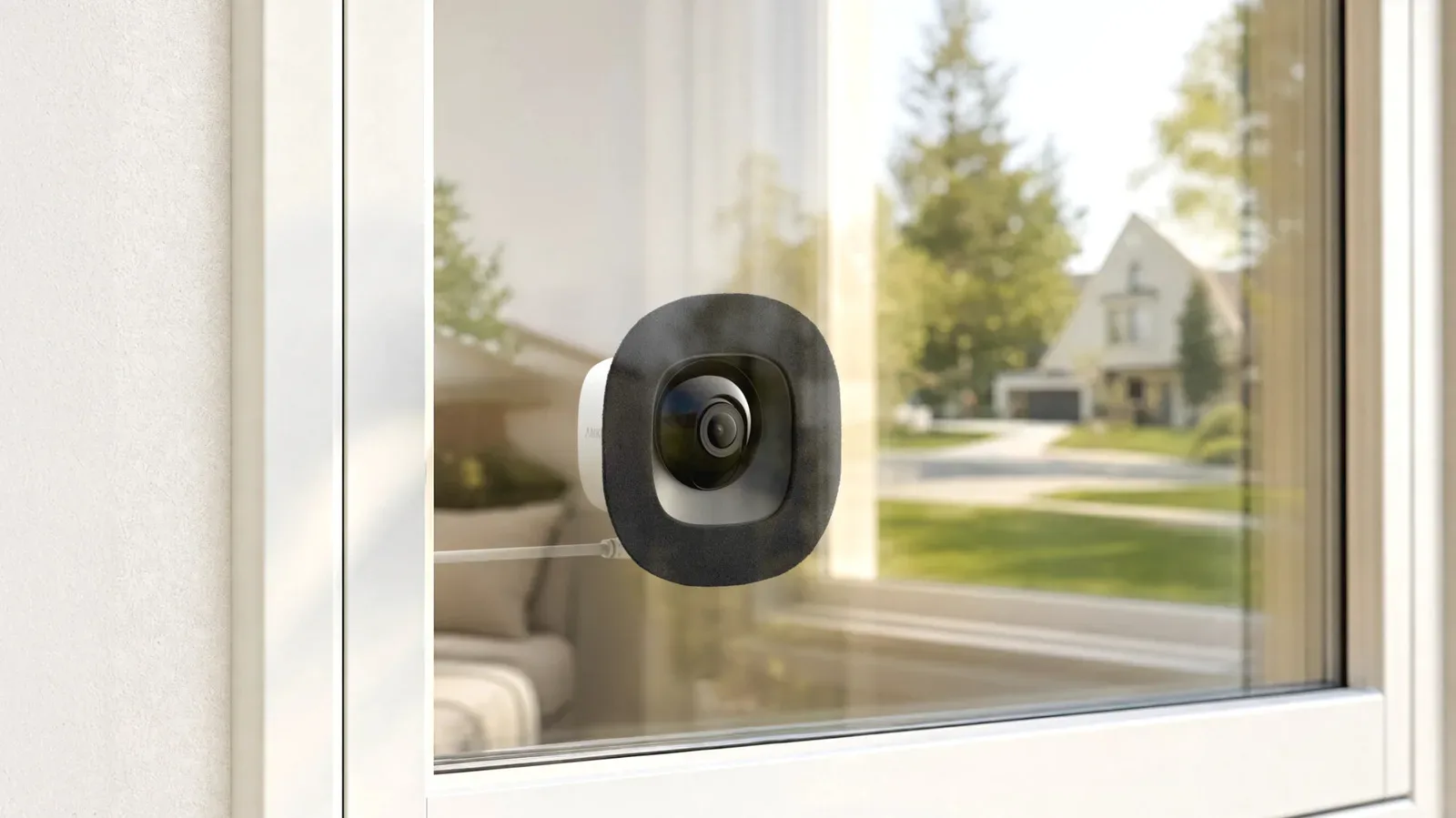
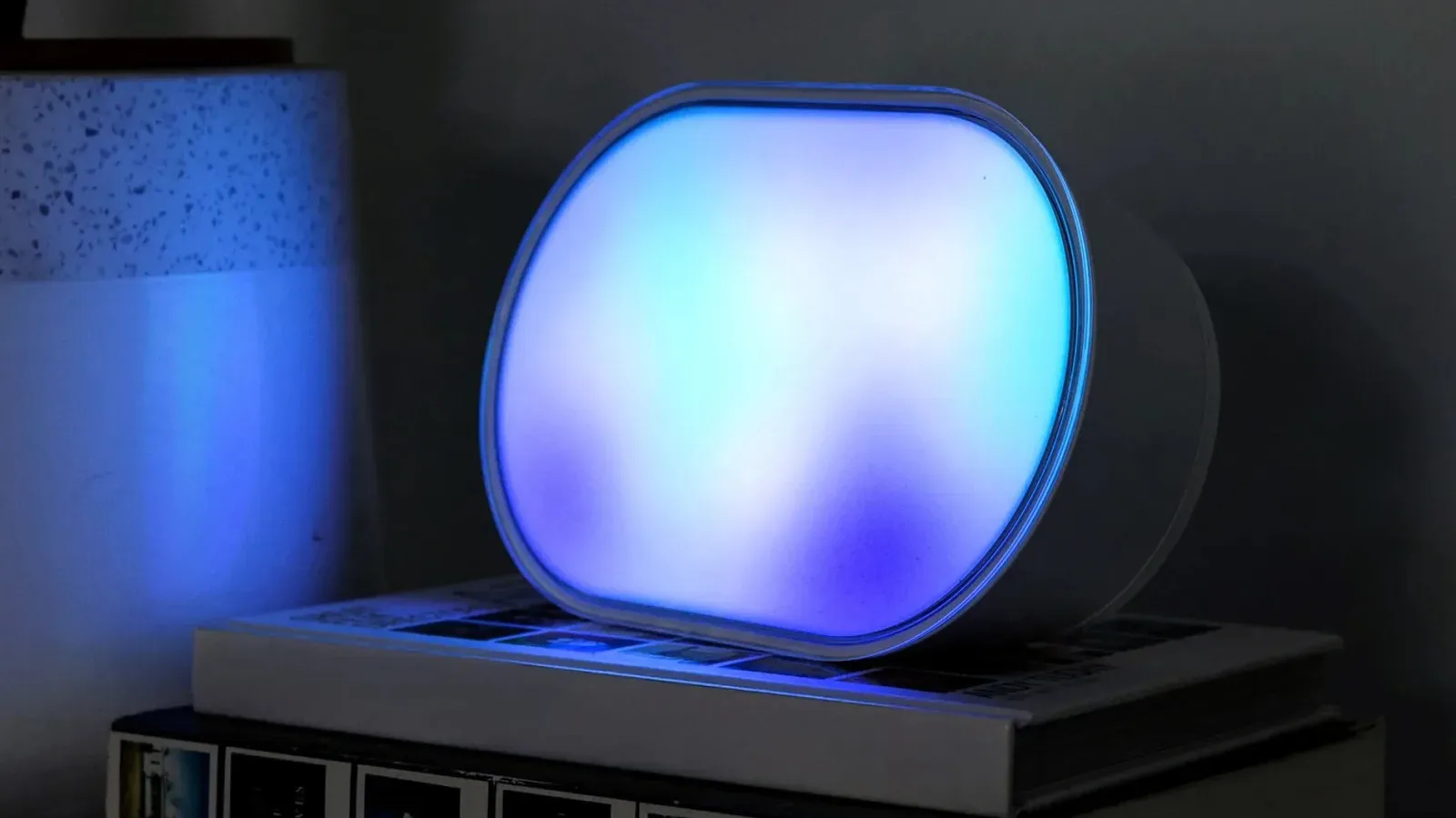
Eufy has also recently launched the Window Camera E10, a 2.5K-resolution model designed to sit in a window and view an outdoor space such as a yard, driveway or entryway. Rather than requiring an outdoor installation, it is intended to observe from inside through the glass.
The E10 includes anti-reflection treatment and 25 degrees of tilt. Those details speak directly to the constraints of shooting through a window: reflections and a fixed indoor position can compromise a view. Anti-reflection is meant to reduce unwanted reflected light in the image, while tilt gives an owner some ability to adjust the camera’s angle once it is placed.
At $80, it serves a notably different use case and budget from the $300 TrackLight Cam S1. It does not replace an outdoor camera’s purpose in every setting, particularly for an owner who specifically wants a moving deterrent light, floodlight and radar coverage. But it offers an alternative for people who want an exterior view without placing a camera outdoors.
Who should pay attention
The TrackLight Cam S1’s strongest appeal is likely to be homeowners who want their exterior camera to do more than document motion. Its feature set combines 4K video, night vision, dual-radar detection, a 120-degree floodlight, an auto-tracking light, flashing-light options and an audible alarm. The Family List adds a more nuanced objective: make arrivals from recognized phones feel less like security incidents.
The decision points are equally clear. The $300 camera needs separately supplied microSD storage or a HomeBase connection. Apple Home integration requires HomeBase, and the camera-plus-HomeBase bundle costs $500. Solar support may reduce charging chores, but the best result will still depend on an appropriate outdoor position. And owners should be prepared to configure active alerts responsibly, given the attention-grabbing nature of a moving light and 105-decibel siren.
For a less elaborate, indoor-mounted approach to watching outdoor space, the $80 Window Camera E10 is the simpler option. The two products therefore present a useful split: one emphasizes active outdoor response; the other emphasizes avoiding an outdoor installation altogether.
Shop the products
Check current price, model and availability at the retailer.