Eufy’s Window Camera E10 is now available in the US for $80, offering a rather neat answer to a familiar home-security problem: what if the best place to put an outdoor camera is somewhere a drill cannot go?
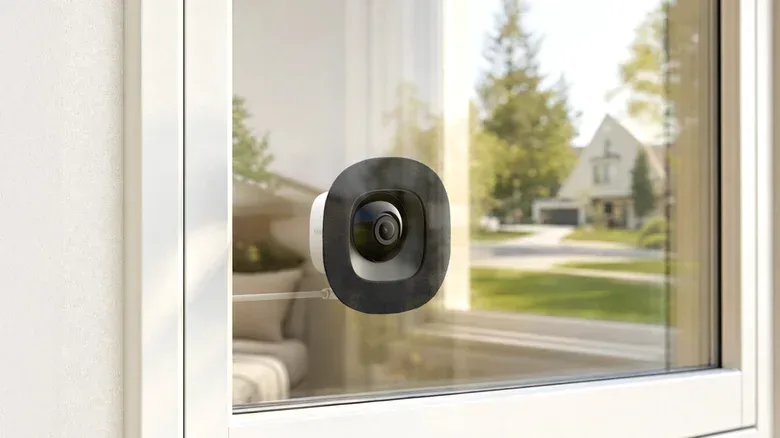
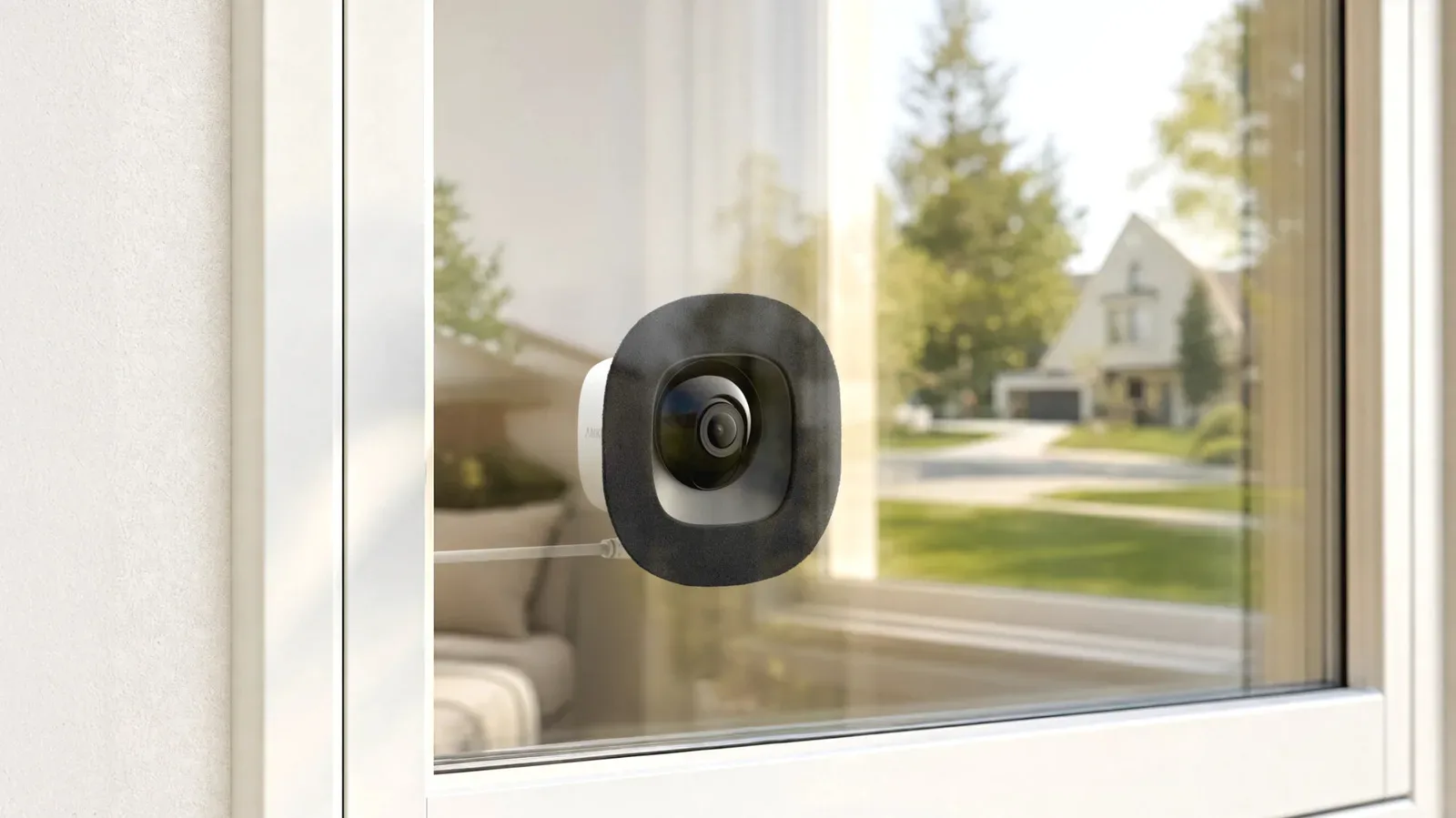
The device is physically an indoor camera, but it is designed to adhere to the inside of a window and point outward. That means no exterior mounting, no holes in walls and no need to expose the camera itself to the weather. For renters, people avoiding permanent changes to a property, or anyone whose enthusiasm for DIY ends immediately before the phrase “find a stud,” that premise is the main event.
There are caveats, naturally. A window is not an invisible portal for a camera lens, and Eufy’s approach depends heavily on the glass, the room lighting, the view and the location of a nearby power outlet. Still, the E10’s combination of a window-flush lens, adjustable tilt, local recording and subscription-free recognition makes it a notably specific piece of smart-home hardware rather than just another camera with an app.
An outdoor view without an outdoor installation
The Window Camera E10 attaches to glass with residue-free adhesive. Its placement is entirely indoors, while its lens faces outside. The installation is therefore tool-free, an important practical distinction from a conventional exterior security camera that may require drilling, routing a cable or making an outdoor mounting surface part of the plan.
The camera also includes a manually adjustable downward tilt of up to 25 degrees. That adjustment matters because windows do not automatically point cameras at the useful part of a scene. A user might want to frame a doorstep, driveway, path or garden area rather than record a heroic amount of sky. The tilt does not change the camera’s location, but it can help make its fixed window position more workable.
Its core specifications include 2.5K video resolution, up to 8x digital zoom and MaxColor Night Vision for recording after dark. Digital zoom enlarges an existing portion of an image rather than moving a lens closer to the subject, so it should be understood as a framing tool, not a promise that faraway details receive newly discovered pixels. The listed 2.5K resolution is the base image capture specification; how useful a zoomed image becomes will still depend on distance, lighting and the scene beyond the window.
For night use, the important question is not merely whether a camera has a named low-light mode, but whether the window setup avoids turning the room behind it into an unwanted mirror. Eufy’s design attempts to address exactly that.
The glass problem is also the whole product challenge
Recording through glass is difficult because glass can reflect interior light. A lamp, illuminated room or other light source behind the camera may create glare or reflections in an outward-facing image. That is why simply placing a typical indoor camera on a windowsill is not necessarily a substitute for an exterior camera. The view can look more like a security feed from inside an aquarium.
Eufy says the E10 uses a lens that sits flush against the window, intended to prevent background light from reaching the lens in the usual way. In plain terms, getting the lens right up against the glass is meant to reduce the space and angles through which interior reflections can interfere with what the camera sees outside.
That solution comes with a clear list of conditions. Eufy says clear windows with one or two panes are best suited to the camera. Particularly thick windows can create reflections from their additional layers, especially when lamps are on inside. Frosted or patterned glass is unsuitable, which makes sense: glass that deliberately diffuses or distorts a human view cannot be expected to provide a clean camera image.
These limits are not tiny footnotes. They are the buying checklist.
- Clear glass: The intended scenario is a clear window, not frosted or patterned glass.
- One or two panes: Eufy identifies these as the better fit for its window-mounted approach.
- Interior lighting: Lamps can matter, particularly with thicker glass, because they may contribute to glare.
- Window position: High-floor apartment windows can leave major portions of the scene out of frame, creating significant blind spots.
- Power nearby: The E10 needs a USB-C cable connection and has no battery-powered option.
That last point deserves as much attention as the optics. “No drilling” does not mean “no installation considerations.” A window might offer a good exterior view but be nowhere near an outlet. Since the camera uses a single USB-C cable for power, the room layout decides whether the elegant stick-it-to-the-glass idea remains elegant after the cable needs to reach a power source.
Local storage and recognition without a required subscription
The E10 records to a microSD card with support for capacities up to 256GB. The card is not included, so it is an additional purchase and a necessary part of the local-recording setup. The camera can record continuously, allowing 24/7 capture rather than only event clips.
Local storage means footage is saved to the card rather than requiring a subscription as the stated path for recording. It also underpins one of the E10’s more attractive features: Eufy says its AI recognition for people, pets and vehicles does not require a subscription when the camera is used with local storage.
Recognition is different from recording. Continuous recording creates footage; recognition is the camera’s attempt to classify activity within that footage or its live view into categories such as a human, a pet or a vehicle. Those labels can make a busy feed more manageable than treating every movement as identical. A person at a door, a passing car and a pet crossing the scene are not necessarily equally important to the owner.
It is also worth keeping the word “AI” in proportion. Here, it refers to built-in detection categories, not a camera that has developed independent opinions about the neighborhood’s parking habits. The relevant practical claim is subscription-free human, pet and vehicle recognition when relying on local storage.
AI functions in consumer technology increasingly raise broader policy and fraud questions, including the kind of issues explored in this look at a US task force focused on AI-related fraud and foreign interference. The E10 is a much narrower household use case: identifying types of activity in a camera view. Its appeal is less about futuristic spectacle than reducing the number of times a user needs to inspect footage of routine motion.
Wi-Fi, audio and the details that remain conditional
The camera supports dual-band 2.4GHz and 5GHz Wi-Fi. Dual-band support gives it compatibility with both common home Wi-Fi frequency bands, though it does not erase the ordinary realities of signal strength, router placement or building materials. A window can be ideal for a camera’s view and less ideal for a stable wireless connection; those are separate considerations.
There is also an integrated microphone intended to capture ambient sounds and louder noises immediately outside. Yet the same barrier that complicates video can complicate audio. Eufy warns that audio reliability depends greatly on the thickness of the glass. The microphone is therefore best viewed as an additional capability with a material limitation, not a guarantee of crisp sound from beyond every window.
The specification list creates a reasonably clear picture of what the E10 is trying to be. It is not a battery camera that can be placed anywhere outdoors. It is not a universal solution for every glass surface. And it is not a device whose placement can ignore outlets, lighting or sightlines. Instead, it is a camera for a particular arrangement: a clear, suitably thin window with an effective view of ground-level activity, reasonable Wi-Fi and access to USB-C power.
Who the Window Camera E10 appears to suit
The strongest use case is someone who wants to observe an exterior space without making permanent exterior changes. A renter may be unable or unwilling to install a camera outdoors. A homeowner may simply prefer not to drill into an exterior wall for a single viewing angle. In either case, placing the hardware inside changes the project from a mounting job into a window-placement decision.
The camera could also be useful where the most important activity happens close to a clear ground-level window: an entry area, path, driveway or other visible exterior zone. The adjustable 25-degree downward tilt is particularly relevant when the camera must look down toward that activity rather than straight outward.
Conversely, prospective buyers should be cautious if their best available window is high above the area they need to monitor. Eufy specifically warns that high-floor apartments can result in substantial blind spots. Likewise, decorative, frosted or patterned glass is an immediate mismatch, while thick multi-layered windows paired with indoor lamps can create the reflections this product is designed to minimize.
It is a refreshingly tangible example of smart-home design being dictated by the boring physical world. The camera may recognize a vehicle, but it cannot negotiate with frosted glass. It can record all day, but it cannot conjure a USB-C power connection beside a window. And its flush lens can reduce certain reflection issues, but a room full of bright lamps and extra-thick glass remains a difficult environment.
A specialized alternative, not a replacement for every outdoor camera
At $80, the Eufy Window Camera E10’s pitch is straightforward: turn a suitable window into the mounting point for an exterior-facing security camera, while retaining indoor installation and local recording. Its feature set includes 2.5K video, 8x digital zoom, night recording, 24/7 capture, dual-band Wi-Fi, a microphone, microSD storage up to 256GB and local-storage-based person, pet and vehicle recognition without a required subscription.
The finer print is not incidental; it defines whether the product makes sense. Buyers need clear glass, ideally one or two panes, a useful view that does not introduce big blind spots, tolerable reflection conditions and power close enough for a USB-C cable. They also need to provide their own microSD card.
For the right window, Eufy’s approach offers a genuinely different path to outdoor monitoring. For the wrong window, it is an $80 reminder that glass has been quietly defeating cameras for years. The E10 does not claim to abolish that problem. It makes a focused attempt to work around it—without asking the user to pick up a drill.