The Department of Justice has established the Super Intelligence Task Force, or DOJ-SITF, a new unit intended to protect US-based artificial-intelligence technology from compromise by foreign state and state-sponsored actors, transnational criminal organizations, and people or companies allegedly involved in fraud.
The title has enough comic-book-government-agency energy to make one expect a briefing room full of capes, but the stated purpose is more grounded: protecting important technology from interference and misuse. The task force will be led by Stanley Woodward and Stephen Weiss, who report to Attorney General Todd Blanche. The department also said the unit will work with SI Force Chair Jay Clayton.
“Super intelligence” is the administration’s preferred label for what is more commonly called artificial intelligence, or AI. That terminology shift is part of the story, but it should not obscure the more practical question raised by the task force’s creation: what can a Justice Department-led effort actually do when AI systems, their data, and the companies building them are potential targets for foreign influence, cyber intrusion, organized crime, or fraud?
What the DOJ says the task force is for
The announced remit is broad but clear in its core direction. DOJ-SITF is meant to help ensure that critical US AI technologies serve the public rather than being “manipulated by bad actors at home or abroad.” Its listed concerns cover several distinct kinds of risk:
- Foreign state and state-sponsored actors: governments or groups supported by governments that could seek leverage over US technology.
- Transnational criminal organizations: criminal networks operating across borders, where the relevant conduct may involve more than one country or legal system.
- Fraud by individuals or companies: deceptive or unlawful conduct involving AI technology, its use, or representations made around it.
That is an important distinction. “AI security” can mean many things, from preventing a model from producing unwanted responses to protecting a company’s systems from an intrusion. The Justice Department’s wording is aimed less at the everyday question of whether a chatbot gives a strange answer and more at national-security, criminal, and fraud risks surrounding strategically important AI work.
In this context, compromise is a useful term to unpack. It generally means that something has been improperly accessed, influenced, stolen, altered, or otherwise placed at risk. The announcement does not specify the technical methods that DOJ-SITF will prioritize, which cases it will take, or what enforcement tools it will use. Still, its language signals concern over actors gaining improper influence over American AI capabilities or exploiting the sector for criminal ends.
Why a Justice Department task force matters
A task force is not itself a new law, a new AI model, or a magic firewall with a seal on it. It is an organizational structure: a way to focus leadership and coordination on a category of issues that cuts across existing responsibilities. The Justice Department’s role is especially relevant when alleged conduct potentially intersects with criminal law, fraud, cross-border activity, or threats involving foreign actors.
For businesses developing or deploying AI, the immediate practical significance is not yet fully defined. The announcement does not lay out new compliance rules, technical standards, reporting requirements, or penalties. Companies should therefore be cautious about treating the task force as a detailed regulatory framework before further information emerges.
What it does indicate is that the department sees AI as a field where technology policy and law-enforcement concerns increasingly meet. Developers, corporate leadership, investors, and customers may all pay closer attention to how claims about AI systems are made, who has access to sensitive systems and information, and whether a business’s international relationships create security or fraud exposure.
That concern reaches beyond the companies making headline-generating models. AI is increasingly presented as a feature inside ordinary consumer and business products, from assistants to search and shopping tools. For a nearby example of how quickly AI features are being threaded into routine services, Amazon’s Alexa shopping-by-text test illustrates the broader shift toward AI-mediated interactions. A Justice Department task force is focused on a different level of risk, but it arrives during a period when AI is becoming less of a standalone novelty and more of an underlying layer in products people use every day.
“Super intelligence” is a political label, not a technical clarification
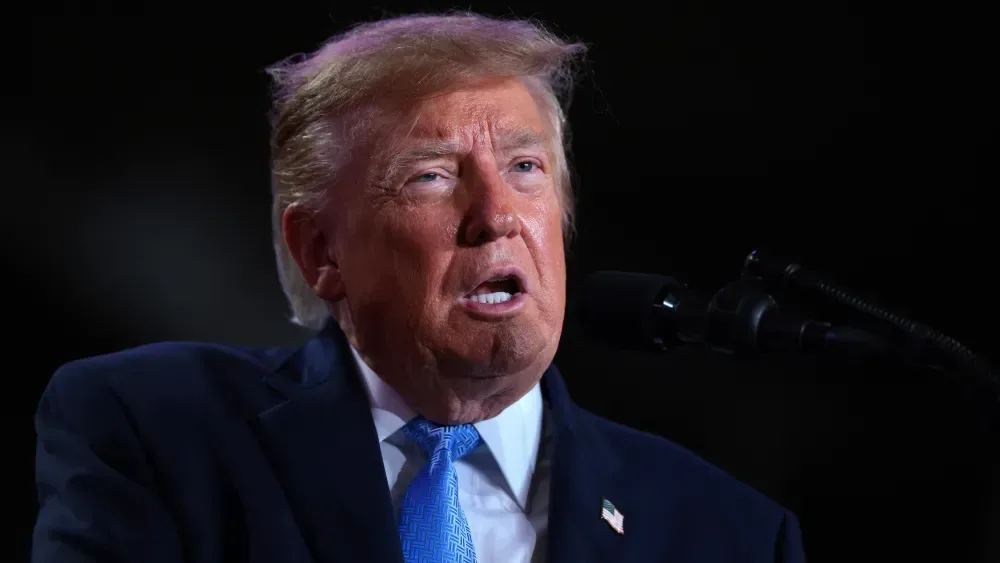
The new unit’s name also puts the administration’s terminology campaign into official use. President Donald Trump has promoted “super intelligence” and said he would ban the term “artificial intelligence” after objecting to continued use of AI terminology. Yet AI remains the established shorthand used across the technology world and by the public.
For readers trying to interpret the announcement, the simplest translation is also the most useful: when this task force refers to “super intelligence,” it is discussing the category widely known as AI. The renamed label does not, based on the information available here, identify a separate technology, a particular model, or a new technical benchmark.
This is more than semantic nitpicking, even if the phrase does sound like a setting you unlock after beating a 1990s arcade game without losing a life. Precise terminology makes it easier to understand what government actions cover. If a label has no settled technical meaning, outside observers can struggle to determine whether it includes all AI systems, only advanced systems, or something else altogether.
The task force announcement uses expansive language about “critical” technology, but it does not define which systems qualify as critical. That unanswered point matters. A narrowly focused program could concentrate on especially sensitive, high-value development. A broader approach could potentially touch a much wider range of companies whose products use AI. Until the department provides greater detail, either interpretation would be premature.
The key questions left open
The announcement gives DOJ-SITF a direction, leadership, and a list of threats. It does not yet supply an operating manual. Several questions will determine how consequential the task force becomes:
- Scope: Which AI technologies, firms, datasets, or infrastructure will fall within the group’s attention?
- Methods: Will the task force principally investigate alleged crimes, coordinate with other government bodies, issue guidance, or take some combination of those approaches?
- Thresholds: What will count as manipulation, compromise, or a sufficiently critical AI technology?
- Transparency: How much will the public learn about its priorities, investigations, and outcomes?
- Industry impact: Will companies be asked to change their practices, cooperate with investigations, or provide particular kinds of information?
These are not minor implementation details. They are the difference between a task force that mainly coordinates existing concerns and one that substantially reshapes the way companies manage sensitive AI work. The available announcement does not answer them, so confident claims about immediate effects would go beyond the evidence.
Fraud is likely to be one of the clearest parts of the mandate
Of the risks named by the department, fraud may be the most familiar to non-specialists. Fraud generally involves deception for gain or to cause loss. Applied to AI, the basic issue can involve misleading statements, deceptive conduct, or misuse of systems in ways that could harm people, organizations, or markets.
The announcement does not identify particular alleged schemes, companies, or cases. That absence is notable: DOJ-SITF’s launch should not be read as an accusation against every business using AI, nor does it establish that a particular company has done anything wrong. It establishes a dedicated focus on the possibility that fraud could affect this fast-moving area.
For users, the practical takeaway is similarly modest but important. An official task force does not make an AI product safer by default, and a flashy label does not tell someone whether a service handles information responsibly. Users and organizations still need clear explanations of what a product does, who operates it, and what claims can actually be supported.
Security, innovation and the looming policy test
Attorney General Blanche framed the effort as a partnership intended to keep development powered by American innovators while ensuring important technology benefits the public and is not manipulated by bad actors. That formulation pairs two goals that can sometimes pull in different directions: support domestic innovation while guarding against abuse and foreign interference.
The balance will be the real test. A security initiative needs enough specificity to identify and address genuine threats. An innovation-focused policy also needs enough clarity that legitimate companies can understand what is expected of them. The public announcement establishes the first principle—AI-related technology deserves focused protection—but does not yet show how DOJ-SITF will manage those trade-offs in practice.
There is also a wider political backdrop. Major technology companies have strong reasons to maintain relationships with the federal government, particularly when government contracts are in play. At the same time, the sector may face greater scrutiny from changing political majorities. That tension does not predict any particular investigation or outcome, but it helps explain why a DOJ initiative centered on fraud, foreign actors, and influential technology will draw attention beyond the legal community.
For now, DOJ-SITF is best understood as a newly created enforcement and coordination focus, not a complete public blueprint for AI governance. Its name may be unusually grand, but the enduring issues are recognizably terrestrial: security, criminal misuse, deceptive conduct, corporate accountability, and the question of who gets to influence foundational technology. The next meaningful measure will be details—defined scope, identifiable priorities, and evidence of how the task force acts.