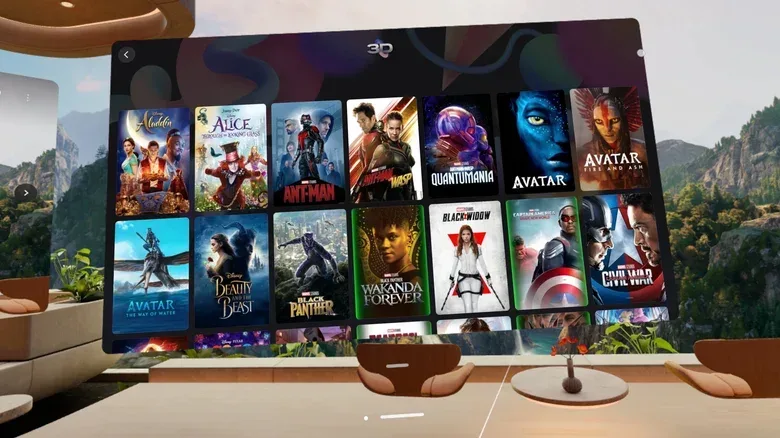
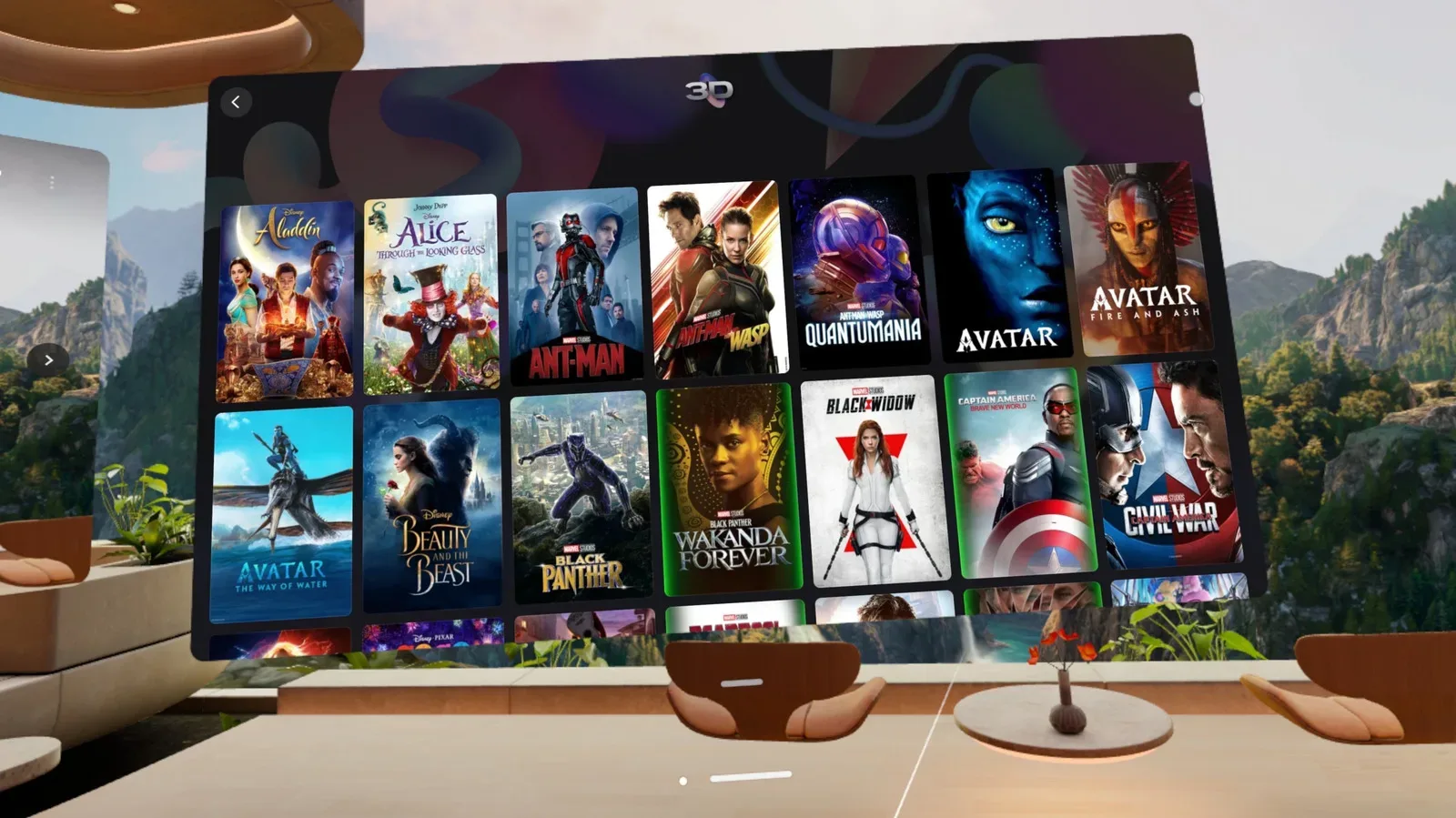
Meta Quest 3 and Quest 3S owners now have a new reason to dust off their headsets: Disney+ has added a library of stereoscopic 3D movies alongside dedicated virtual environments. It is a meaningful addition for anyone who misses the short-lived convenience of 3D televisions, and it puts films made with depth as a major visual tool back into a readily accessible home format.
The catalogue varies by region, but the available selection includes films from Marvel, Pixar and recent Star Wars releases, plus the high-frame-rate 3D editions of the Avatar movies. Viewers with a Disney+ subscription can select a compatible film, verify that a 3D option is listed, and begin playback through the Quest app.
That sounds like a straightforward streaming update, but it changes the practical appeal of a Quest headset. VR has long been capable of presenting separate images to each eye, which is exactly what stereoscopic 3D requires. Yet enjoying 3D movies at home has often demanded either discontinued television hardware or a more technical setup involving personal Blu-ray rips. A mainstream subscription app removes much of that friction for the supported headsets.
Why VR can suit 3D films
Stereoscopic 3D uses slightly different images for each eye to create the perception of depth. In a cinema, this usually means wearing glasses that filter the projected image. Those glasses can make a theatrical picture appear dimmer. A headset instead sends the appropriate image directly to each eye on its own display, avoiding that specific projection-and-glasses trade-off.
That brightness advantage matters for films that lean on scale, layered environments, particles, foreground objects and carefully staged action. The depth effects in titles such as Guardians of the Galaxy and Black Panther can register more distinctly than they do on a conventional 2D display. The Quest 3 presentation also provides a more personal, controlled viewing space: the picture is always positioned in front of the viewer, rather than competing with a living-room layout or ambient reflections.
The Avatar releases are especially notable because Disney+ includes their 3D high-frame-rate versions. High frame rate, or HFR, refers to video presented with more frames each second than a traditional film presentation. The intended effect is smoother motion. Combined with stereoscopic depth, it gives Quest 3 and Quest 3S owners access to a format that had previously been available for home viewing on Apple Vision Pro.
That does not mean every 3D conversion becomes essential viewing. The format remains highly dependent on filmmaking choices. Some productions use depth as a subtle sense of space; others push objects out toward the audience. But a headset gives films that were designed well for 3D a better chance to show why the format persists, even after 3D TV sets largely disappeared from ordinary living rooms.
What the Quest app does well
The important improvement is convenience. There is no indication here that viewers need to manage their own 3D video files or configure specialist playback software. A subscriber simply needs to identify a title with 3D support in Disney+. That is a modest workflow, but it is precisely the kind of friction reduction that a niche format has needed.
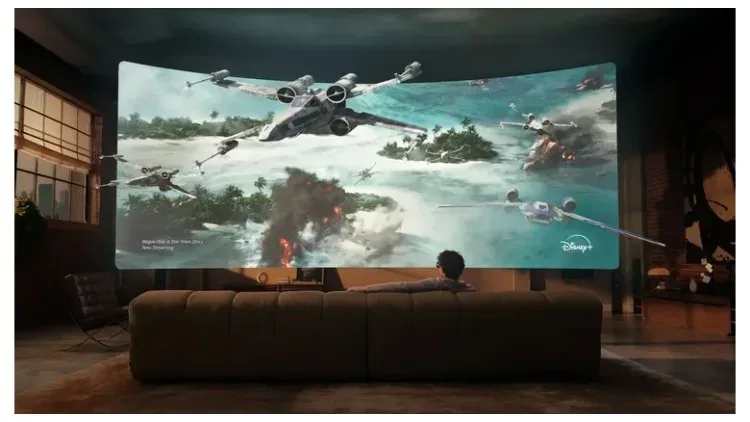
For existing Quest 3 and 3S owners, the feature is also additive rather than a reason to replace a television. A headset can be a useful alternative when someone wants a large apparent screen without a large physical screen, or wants to watch privately. The included environments offer a more theatrical option than a flat app window, with seating choices that include front, middle and back rows.
Disney’s involvement is significant because it covers franchises with large audiences and films that have frequently received 3D releases. A library containing Marvel, Pixar, Star Wars and Avatar gives the feature more substance than a token launch collection of obscure experiments. At the same time, prospective viewers should check the specific catalogue in their own region rather than assume every listed title is available everywhere.
The update also arrives after Apple made 3D film support a prominent part of the Vision Pro proposition. Quest 3 is positioned far below that device in cost, so the appearance of a comparable category of streaming content is a practical win for Meta’s current users. It does not make the two platforms interchangeable, but it narrows one conspicuous content gap.
The biggest limitation is not the movies
Meta’s Horizon OS limits how freely a Disney+ video window can be resized. The screen must occupy a defined placement in the operating system instead of being enlarged on demand into an enormous, field-of-view-filling image. That is an interface constraint with real consequences for movie watching: virtual-screen size is one of the most persuasive reasons to use a headset for video in the first place.
Users who want the largest apparent presentation can turn to the cinema environment and choose a front-row seat. It is a workable solution, but it is not the same as flexible window control. More importantly, it makes watching within a virtual theater the route to maximum scale, rather than allowing a viewer to set the size they want while also arranging other apps around it.
This distinction is worth understanding. A virtual environment is a prebuilt setting, such as a cinema, that places content in a particular scene. A freely resizable window is an operating-system feature that lets the viewer decide how much of their view the video occupies. The former can be immersive; the latter is better for multitasking and personal preference. Quest’s 3D movie experience has the first, but offers less of the second.
That means the new capability is strongest when treated as focused movie time. Put on the headset, open a compatible movie and settle into the theater environment. It is less suited to someone hoping to maintain a huge 3D film screen while also keeping other VR applications conveniently available.
Audio and HDR labels need perspective
Headphones are the sensible companion for a 3D movie session on Quest. The headset’s built-in speakers have limited low-end impact and do not offer the richness many blockbuster mixes need. A film with major action sequences, a large orchestral score or heavy effects work will benefit more from headphones than from relying on the onboard audio alone.
The Quest 3 supports Dolby Vision and Dolby Atmos, but those labels should not be confused with a guarantee of premium audiovisual hardware performance. Dolby Vision is associated with high-dynamic-range video, commonly shortened to HDR. HDR aims to preserve a broader range between the darkest and brightest parts of an image. Quest 3 uses LCD displays and does not provide true HDR, so Dolby Vision support does not turn the headset into a true-HDR screen.
Dolby Atmos is an audio format designed to support a more spatial presentation of sound. Its practical value depends on the playback system. On Quest’s modest integrated speakers, the difference is limited; headphones are the more sensible way to pursue a fuller soundtrack. In short, the format badges describe compatibility, not a shortcut around the physical limits of the display and speakers.
Why the device list raises questions
The 3D Disney+ feature is currently for Quest 3 and Quest 3S, not the widely used Quest 2 or the original Quest. Quest 3 launched in fall 2023, making the timing noteworthy: VR video has supported stereoscopic playback for years, and the basic concept is far from new.
There is no stated technical barrier in the available information that would inherently stop Quest 2 or Quest 1 from streaming stereoscopic video. That does not establish why those devices were excluded; platform support can involve app development, licensing, commercial priorities and quality targets as well as raw technical capability. But it does leave owners of those earlier models without a clear explanation for why they cannot use this particular official Disney+ 3D option.
The delay is also hard to ignore given the competitive context. Vision Pro launched in 2024 with 3D movies as a visible selling point, while Quest already had the basic headset traits necessary to make stereoscopic viewing compelling. Meta may simply be treating the release as an enhancement for its current hardware base, but the timing limits its usefulness as a dramatic new purchase incentive for people who already moved on from their Quest hardware.
A further possibility is that the feature helps establish a content story for Meta’s planned VR Glasses. Those glasses are priced at $1,300 and are set to arrive in spring 2027. A lighter form factor could make long movie sessions more comfortable than wearing a conventional Quest headset. That is an expectation based on the difference in form factor, not a tested claim about the unreleased product.
What current owners should do
For someone who already has a Quest 3 or Quest 3S and subscribes to Disney+, trying the 3D library is an easy recommendation. Start by checking whether a desired title shows a 3D version in the app, and remember that regional availability may differ. Use headphones, especially for action-heavy films, and enter the cinema environment if a larger apparent screen matters more than multitasking.
- Look for a 3D designation before starting a movie; not every title or regional catalogue will match.
- Use headphones rather than depending on the headset’s built-in speakers.
- Choose the virtual cinema and a front row when the goal is the biggest possible presentation.
- Keep expectations realistic about Dolby Vision and Dolby Atmos branding on Quest hardware.
- Do not assume Quest 2 or original Quest support will arrive, because no such expansion has been confirmed.
For more context on how screen technology and platform ecosystems shape media experiences, see our coverage of a YouTube issue affecting a new Apple TV 4K.
Disney+ 3D on Quest does not solve every complaint about VR movie viewing. Horizon OS needs more flexible video controls, the headset audio remains a weak point, and the lack of Quest 2 support narrows the feature’s reach. Still, for the people with the right headset and subscription, the addition makes a neglected part of home cinema substantially easier to enjoy—and gives 3D films a brighter, more immediate presentation than many viewers remember from the multiplex.