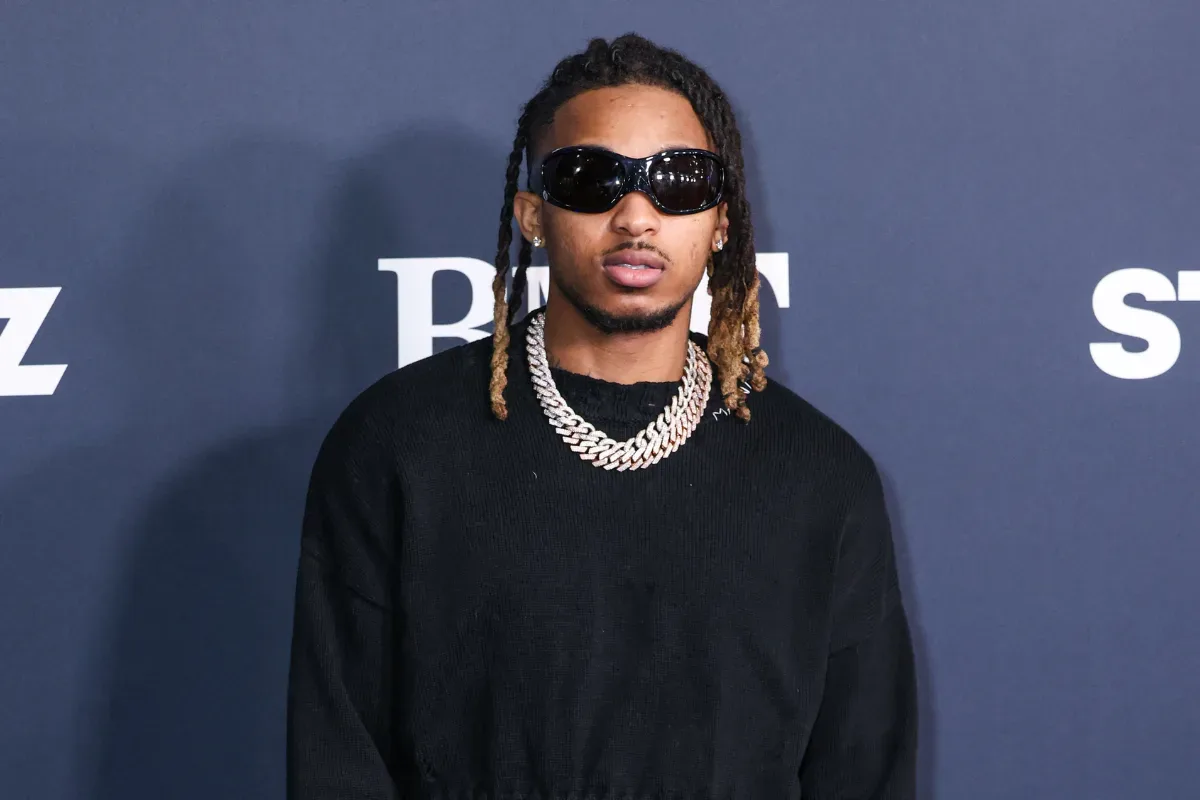
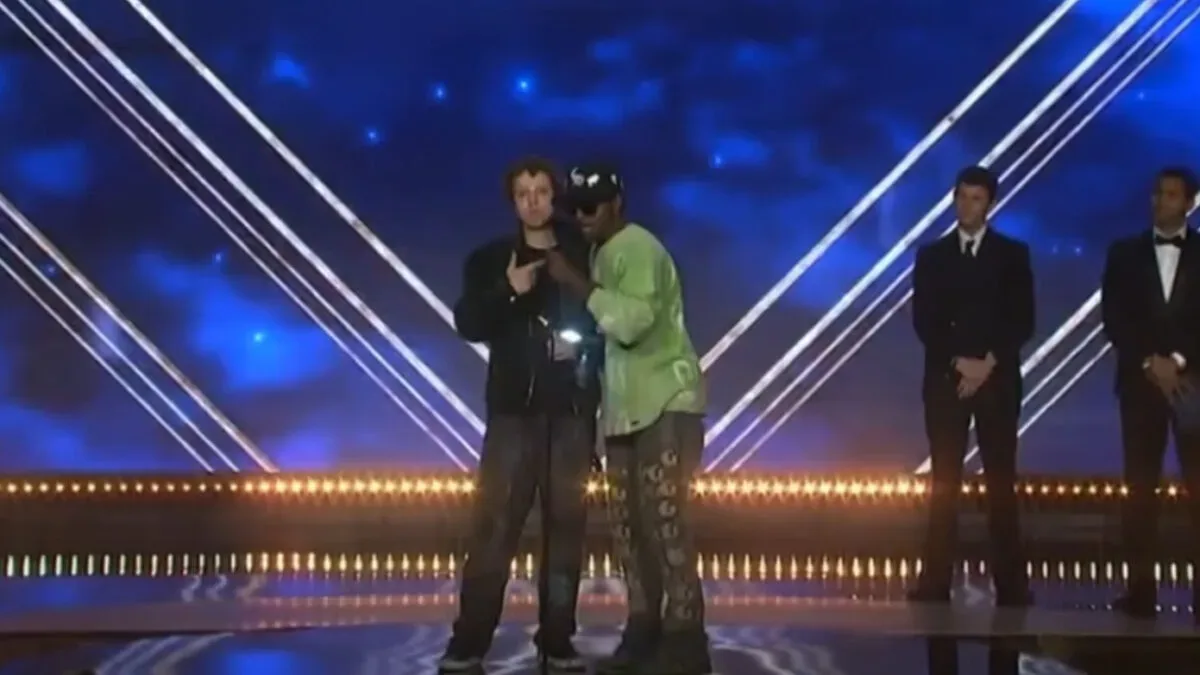
DDG has apologized to AriAtHome after a fan interrupted Ari Miller’s acceptance speech at the 2026 Streamer Awards in Los Angeles. The interruption occurred after Miller, who streams as AriAtHome, won Best Music Streamer over fellow nominees Darryl Dwayne Granberry, known as DDG, PlaqueBoyMax and Bishu.
The unidentified attendee walked onto the stage, took the microphone and delivered a deliberately familiar line: “I’m sorry imma let you finish but DDG had the best music of all time.” It was an explicit recreation of Kanye West’s 2009 MTV awards-show interruption of Taylor Swift, in which West argued that Beyoncé should have won instead.
But DDG quickly made clear that the stunt was not welcome support. In a public message directed at AriAtHome, he wrote that he did not approve of what happened, praised Miller’s talent and apologized. Miller responded warmly, writing, “nothing but love bro.”
That brief exchange prevented a fan-created spectacle from becoming a dispute between the two nominees. It also put the focus back where it belonged: Miller won the award, and DDG did not endorse someone disrupting that recognition in his name.
What happened during the Best Music Streamer speech
The sixth annual Streamer Awards brought online personalities together in Los Angeles, with Twitch streamers among the central figures being honored. During AriAtHome’s acceptance speech for Best Music Streamer, the stage crasher stepped in and took the microphone to make his case for DDG.
The line was constructed as a pop-culture callback rather than an original criticism of Miller. Its “I’m sorry, I’ll let you finish” framing has become shorthand for the 2009 incident, and the claim that DDG had “the best music of all time” was modeled on the same exaggerated awards-show language. That did not make it harmless in the room. The interruption placed an award winner in the uncomfortable position of having to share an achievement moment with a stranger’s performance.
Miller appeared to handle the moment calmly, nodding rather than escalating the exchange and allowing the intruder’s bit to lose momentum. The audience, however, reportedly jeered. As the attendee left, he also became involved in a verbal confrontation with streamer Marlon Lundgren Garcia, who dismissed the stunt in blunt terms.
The attendee had smart glasses and was livestreaming the incident through them. That detail matters because it shifts the incentive behind an interruption like this. A stage rush can be aimed not only at the people inside a venue, but at turning a live ceremony into instantly shareable personal content. The award, the winner and the nominee invoked in the stunt all risk becoming props for a clip.
Related coverage includes DDG Apologizes After Fan Interrupts AriAtHome at 2026 Streamer Awards.
DDG’s response was the important part
DDG’s statement was direct: he did not “co-sign or approve” the interruption, said AriAtHome was talented and deserved the win, and apologized. In practical terms, it did three things.
- It separated DDG from the fan’s actions. A supporter invoking a creator’s name can create the impression of a coordinated stunt or an approved tactic. DDG rejected that premise.
- It affirmed the result. Rather than arguing the Best Music Streamer decision, DDG said Miller clearly deserved the award.
- It addressed the person affected. The apology was aimed at AriAtHome rather than at the wider argument around awards, rankings or fandoms.
That last point is especially useful in a creator ecosystem where audiences often treat nominations and wins as factional contests. A nominee can be disappointed; fans can have preferences. Neither changes the basic boundary that an acceptance speech belongs to its winner. DDG’s post recognized that boundary without turning the incident into a prolonged feud.
Miller’s “nothing but love bro” reply helped close the loop. There is no indication here of animosity between the two creators. The conflict was manufactured by an attendee attempting to turn a familiar awards-show reference into a real interruption.
A reference is not a justification
The 2009 Kanye West interruption is widely recognizable precisely because it was disruptive. Repeating it at another ceremony does not remove the underlying problem; it imports it. The joke depends on the audience understanding that someone is being cut off at a moment meant to celebrate their work.
There is a difference between a staged homage, where participants have consented to a planned bit, and an unauthorized interruption during a live speech. The available details point to the latter. The individual was unknown, took the microphone and livestreamed through smart glasses. Those factors make the episode less like ceremony programming and more like opportunistic content creation.
For live-event organizers, the distinction is not merely etiquette. Unscheduled stage access creates uncertainty around safety, production and the ability of speakers to finish their remarks. Even an interruption that begins as a reference can change quickly when security, audience reaction and the intruder’s own plans are not under the event’s control.
Security questions followed the stage rush
In the aftermath, other streamers criticized the awards for how easily the stage was reached. The Streamer Awards take place alongside TwitchCon, although the events are unaffiliated beyond their timing. The proximity nevertheless placed the interruption in a wider conversation about safety at large creator-focused gatherings.
That conversation has not emerged from nowhere. TwitchCon has faced concerns in prior years involving stalker fears and hazardous ball pits, while the convention is also described as dealing with lower ticket sales. None of those issues establish what happened at the awards ceremony, and the Streamer Awards should not be treated as part of TwitchCon. Still, the incident gives critics a concrete question to ask of the awards event itself: how did an unidentified person get to a presenter or winner during an acceptance speech?
“Security” can mean more than guards standing near the stage. In this context, it can include credentials, controlled routes from the audience area, barriers, staff communication and a clear response plan when someone enters a restricted space. The incident does not provide enough information to judge which of those measures were present or absent. It does show why attendees and creators will seek answers after a person was able to grab a live microphone.
The livestreaming element adds another complication. Modern wearable devices can make a disruptive act immediately distributable, reducing the gap between a stunt and its online afterlife. Event teams cannot erase that incentive entirely, but limiting access to the stage remains the clearest way to stop a creator’s acceptance moment from being hijacked in the first place.
For streamers who frequently move between online broadcasts and in-person events, the overlap is worth considering. A live stream is usually managed through permissions, inputs and moderators; a physical ceremony needs equally reliable boundaries around who may enter a performance space. Basic technical setup can matter enormously in a broadcast context too, as explained in this guide to camera, microphone and permission checks, but no settings menu can substitute for venue controls when the microphone is physically on stage.
The rest of the 2026 Streamer Awards
Best Music Streamer was not the only notable result of the night. IShowSpeed received this year’s Streamer Award but was unable to attend after missing a flight. The ceremony also took place amid the usual intense interest in creator categories, where fan communities often make nominations and results into a running public debate.
That environment can be lively without becoming hostile. A viewer saying they preferred another nominee is normal fandom. An onstage interruption during the winner’s speech is a different category of behavior because it shifts the disagreement into someone else’s professional moment and forces everyone present to deal with it.
DDG’s response offered the more constructive model. He did not accept the fan’s advocacy as flattering, did not dispute AriAtHome’s victory and did not allow a viral stunt to speak for him. AriAtHome, in turn, accepted the apology without extending the conflict. The resulting message is simple: support for a creator does not require disrespect for the winner.
The stage crasher may have been chasing the recognizability of an old awards-show moment, but the lasting takeaway is more current. At creator events built around live personalities and constant sharing, organizers need credible stage protections, fans need to understand the difference between enthusiasm and entitlement, and nominees can defuse a bad situation by refusing to reward it. DDG did exactly that.