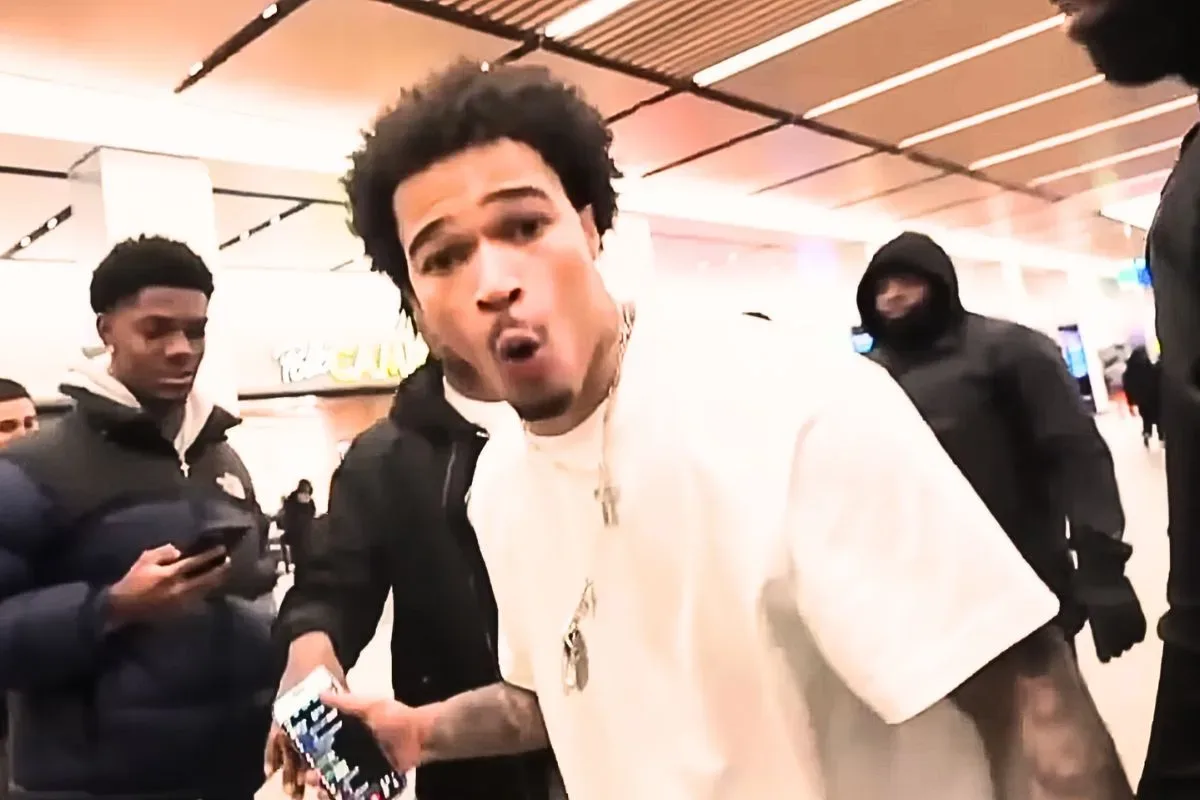
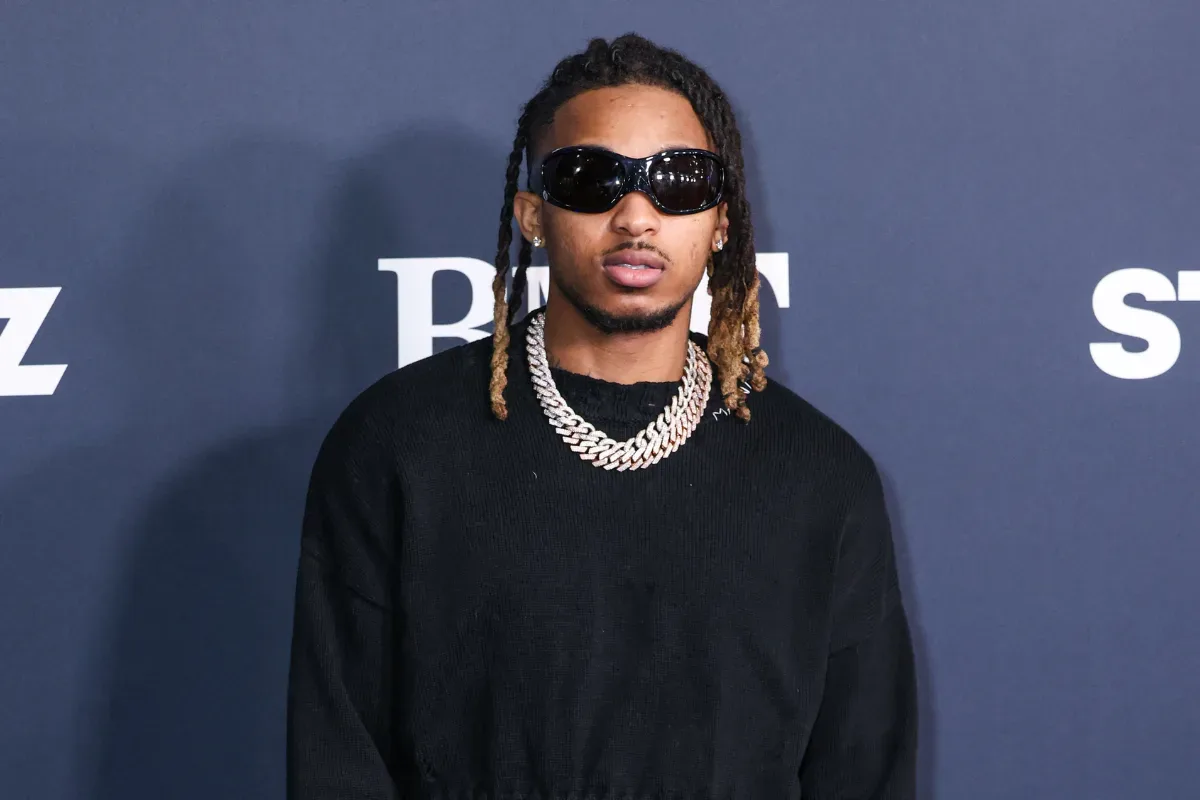
AriAtHome’s Best Music Streamer victory at the Streamer Awards on November 12 came with an interruption that briefly redirected attention toward fellow nominee DDG. An unidentified man cut into Ari’s acceptance speech with a variation on the famous awards-show interruption routine: “I’m sorry I’m going to let you finish, but DDG had the best music of all time. All time.”
The person then repeated the point, calling DDG the “best music artist of all time.” The comments were the interrupter’s own, not a statement from DDG. Ari had won the category ahead of DDG, PlaqueBoyMax and Bishu, and the ceremony described it as his first win following four nominations.
DDG later addressed the moment on X, apologizing to Ari, rejecting the interruption and making clear that he believed Ari deserved the award. That response matters because it separates a fan-driven spectacle from the nominee whose name was being invoked. The headline-grabbing part of the exchange was a third party attempting to make an awards-show statement on DDG’s behalf; DDG’s own reaction was to praise Ari’s talent and the result.
The interruption borrowed a very familiar awards-show script
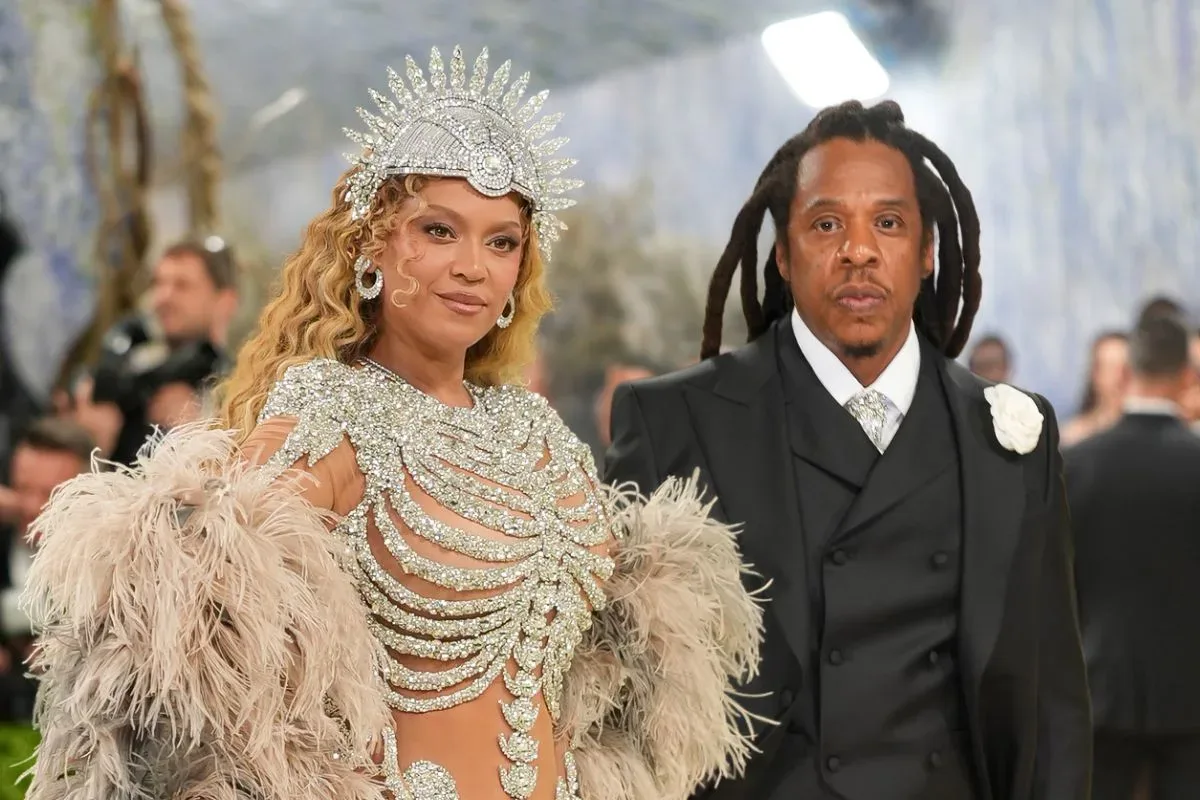
The wording was an unmistakable reference to Kanye West’s interruption of Taylor Swift at the 2009 MTV Video Music Awards, when West praised Beyoncé during Swift’s acceptance speech. That older incident has become a widely recognized cultural shorthand: someone uses another winner’s moment to argue that a different artist should have won.
In this case, the reference did not change the result, but it did place an awkward, real-time test in front of the winner. Ari did not turn his speech into an extended argument with the intruder or a response to DDG. Instead, he returned to the people and work he had intended to recognize.
That restraint gave the moment its more meaningful outcome. Awards interruptions can be designed to pull focus toward a rivalry, a meme or the person interrupting. Ari’s decision to continue with a community-centered thank-you kept the focus on the category itself: music creators working on Twitch. The interruption may be the clip people initially notice, but it was not the message Ari chose to leave behind.
AriAtHome’s speech centered on a shift away from chasing clout
During his remarks, Ari explained that he had once made songs about prominent streamers in the hope that their audiences would discover his work. He said he eventually moved away from that approach. Rather than making music intended to orbit people who were already famous online, he built a portable setup, went outside and collaborated with everyday people.
That is useful context for understanding why his response after the interruption landed differently from the stunt itself. Ari’s account of his work describes a move from attention-seeking toward participation: the music was no longer merely about notable online figures, but made with people he encountered through street performances.
Related coverage includes AriAtHome Wins Best Music Streamer After DDG Shout-Out Interrupts Speech.
A portable setup, in this context, means a music-making rig that can be taken out of a dedicated studio environment. The supplied details do not specify its equipment, but the practical creative idea is clear. Mobility lets a streamer turn collaboration into part of the broadcast and make the setting, passers-by and contributors part of the process. It also puts the emphasis on spontaneous human interaction rather than only on the reach of a larger creator.
After the interruption, Ari thanked people who had taken part in those performances. He also deliberately included the other nominees in his remarks:
“And I do want to say uh all the people nominated in this category uh have kept music alive on Twitch. So I wanted to thank them sincerely. Uh music on Twitch is small and you guys are killing it. So thank you everybody. Cheers,” Ari said.
It was a generous framing of a competitive category. Rather than treating DDG, PlaqueBoyMax and Bishu simply as names he had beaten, Ari described the nominees as contributors to a smaller creative ecosystem. That distinction is important. Competition supplies the award’s structure, but collaboration, experimentation and a sustained audience are what enable a music-streaming scene to exist between ceremonies.
What “music streamer” covers—and why the field is broader than one genre
Best Music Streamer is not limited to one form of performance. The category includes recording artists, instrumentalists, DJs, producers and composers. Those labels describe different roles in making music, even if a livestream can blur them together.
- Recording artists perform or create recorded songs.
- Instrumentalists focus on playing instruments.
- DJs present and mix music for an audience.
- Producers shape recordings and music-making sessions.
- Composers write music.
Putting those practices into a single streaming award recognizes that livestreaming is a format as much as it is a genre. A viewer may tune in to hear a finished performance, watch a recording session unfold, see instrumental skill in real time or participate in the conversation around a track being made. The specific creative disciplines differ, but the live element creates a shared relationship between artist and audience.
DDG’s 2025 Hit-A-Thon is one illustration of that overlap between music and livestreaming. The seven-day event allowed viewers to follow recording sessions and help shape the project that became Blame The Chat. It is a useful example of audience participation extending beyond passive listening: viewers were able to observe the development of music and influence the resulting project.
That does not make every music stream the same, nor does it settle what any award category should value most. It does show why nominees with different musical styles and working methods can appear in the same field. The connective tissue is the live, audience-facing process.
The practical stakes of a live creative community
Ari’s description of music on Twitch as “small” should not be read as a dismissal. In his speech, it was followed by praise for the other nominees and an acknowledgment that they are “killing it.” The implication is that smaller communities can be especially dependent on creators supporting the visibility and legitimacy of the format as a whole.
For viewers, the appeal is partly proximity to the process. A traditional release asks audiences to meet a song after it is finished. A livestream can let them encounter the work while it is still being formed, whether that means watching a session, seeing a performance happen in public or following a creator’s decisions over time. DDG’s Hit-A-Thon example shows one end of that spectrum, with viewers helping shape a project; Ari’s street collaborations show another, with in-person participants entering the creative experience.
For creators, the format also brings a different set of pressures. Live work is less controllable than a polished upload or finished recording. A creator is responding to an audience and, in Ari’s street-performance approach, to an unpredictable public setting. The upside is that the process can become the content. The downside is that attention can be diverted instantly—as the Streamer Awards interruption demonstrated.
That makes Ari’s recovery from the moment worth noting. He acknowledged the broader field instead of escalating the disruption, and the episode ultimately included DDG publicly distancing himself from it. Both responses reduced the chance that a winner’s speech would become a feud between competitors.
There is also a broader lesson in the contrast between the interruption and Ari’s remarks. The interruption relied on a familiar, instantly legible reference to a past pop-culture controversy. Ari’s speech pointed toward something less theatrical: people building a niche through performances, collaborative sessions and mutual recognition. One generated an immediate viral-style beat; the other articulated why the category exists.
The awards-show parallel naturally recalls Beyoncé’s connection to the original 2009 moment, though the modern incident was fundamentally its own event. Beyoncé’s lasting place in pop-culture conversation remains a reminder of how long certain live-TV moments can echo, even when a later imitation has a completely different set of people and circumstances.
Recognition without rewriting the moment
The essential record is straightforward: AriAtHome won Best Music Streamer; DDG, PlaqueBoyMax and Bishu were fellow nominees; an unidentified person interrupted Ari’s acceptance speech to praise DDG; and DDG subsequently apologized to Ari and affirmed that the winner deserved the honor.
Beyond that, the incident offers a compact picture of where music-focused livestreaming stands. Its leading figures can draw enough attention for an awards-stage interruption to become news, yet Ari’s own speech still characterized the Twitch music space as small. Those ideas are not incompatible. A community can have strong personalities, highly engaged viewers and a growing cultural footprint while remaining more specialized than larger entertainment categories.
Ari’s acceptance speech recognized that balance. His win marked an individual achievement, but his thanks extended to competitors and collaborators who help make live music creation visible. The brief DDG shout-out may have disrupted the ceremony, but it did not prevent Ari from making that case.