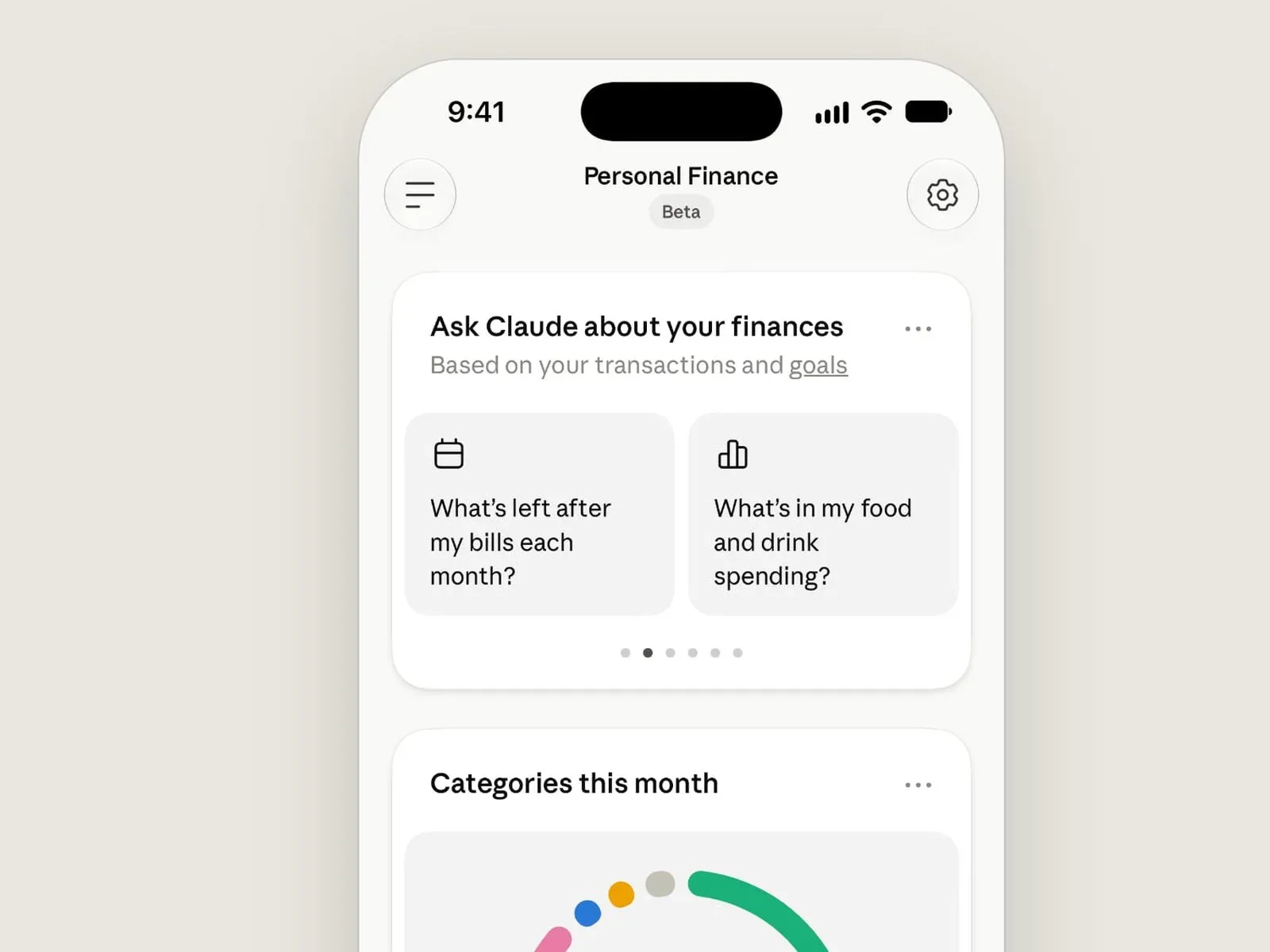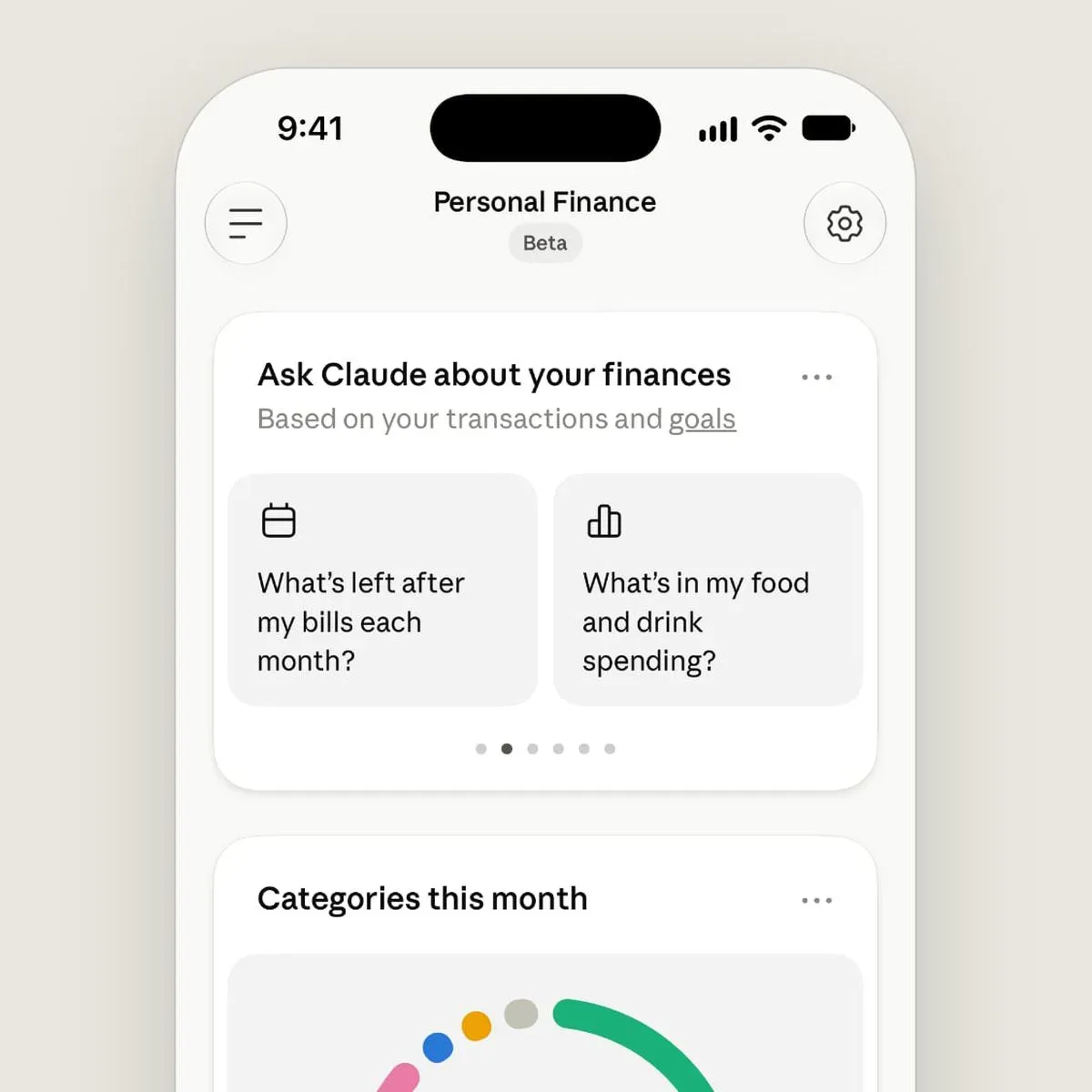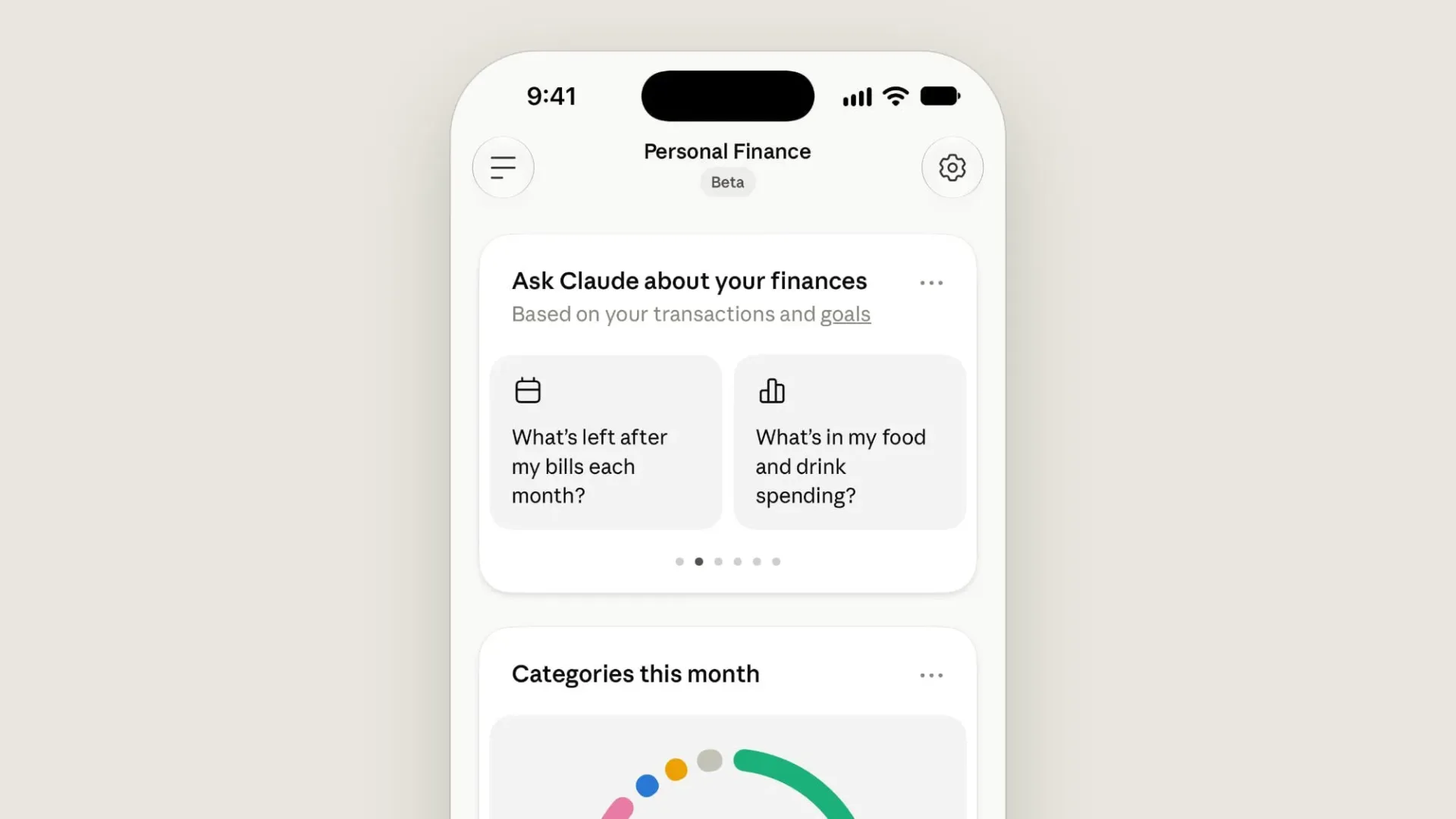
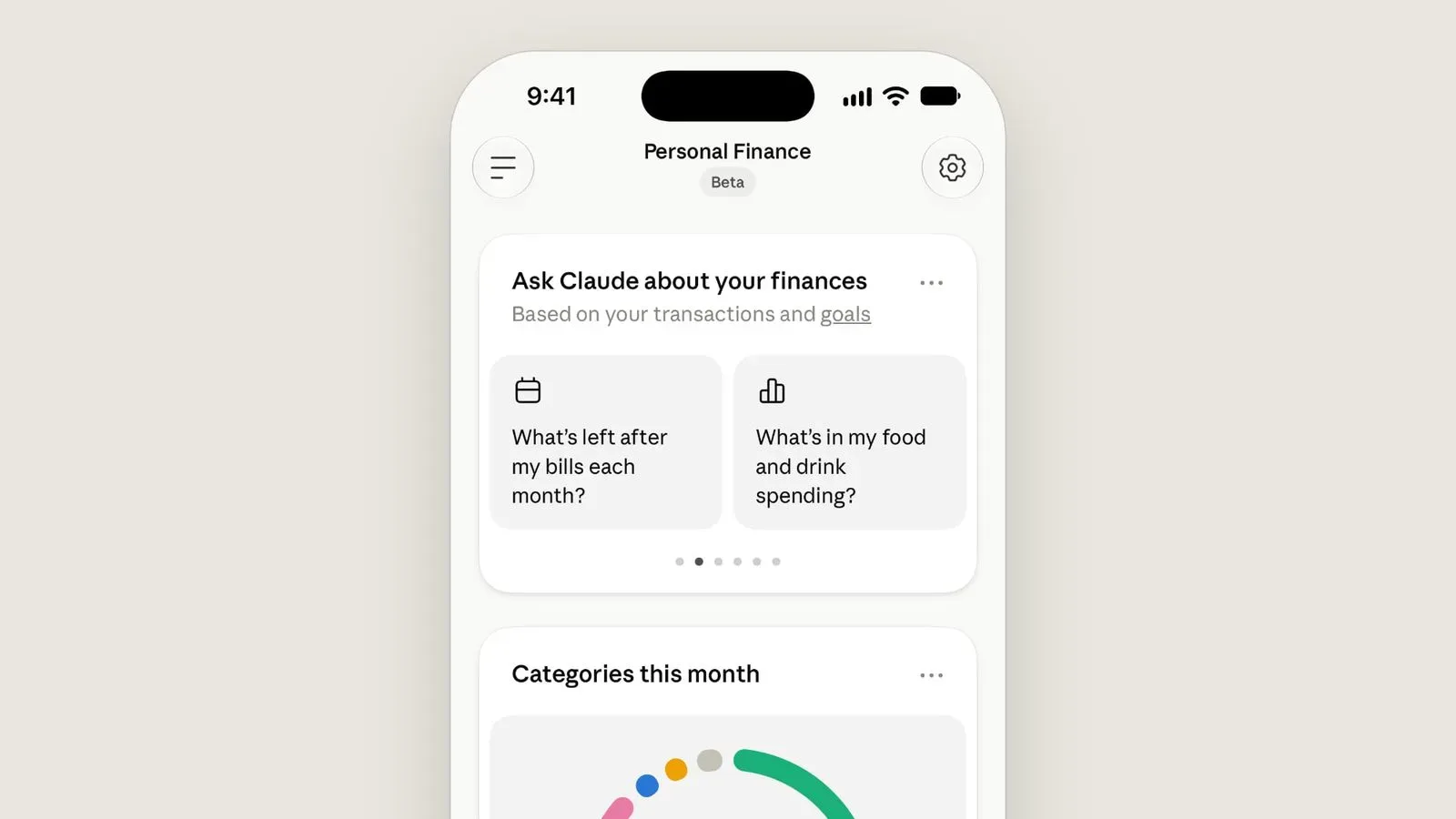
Anthropic has introduced Personal Finance for Claude, a beta feature that lets users connect bank and card accounts and ask the AI to analyze their financial activity in conversational language. The key boundary is an important one: Claude’s access is read-only. It can review the information made available through a connection, but it cannot transfer funds, manage accounts, or make investments.
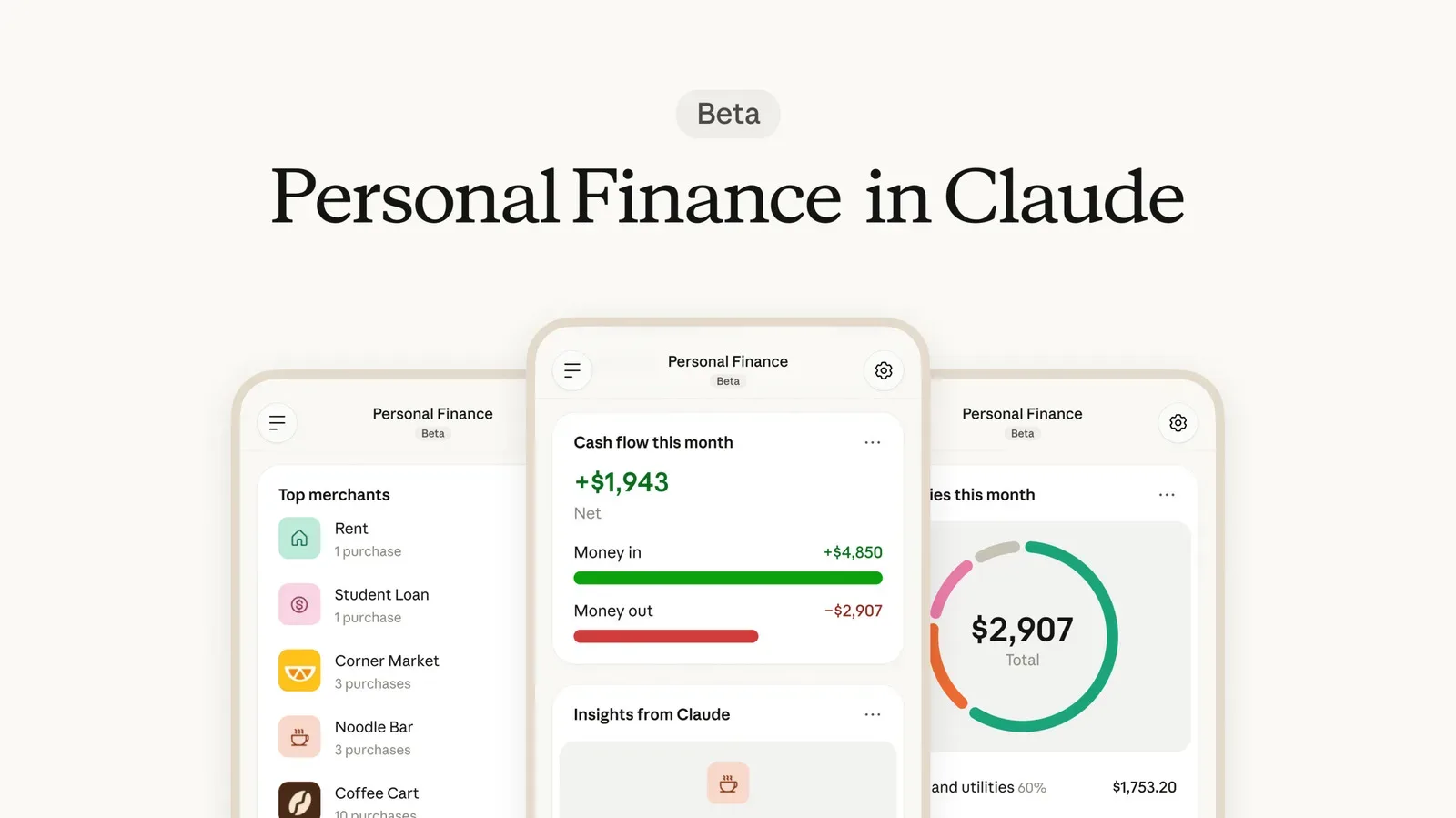
That makes the tool less like handing an AI the controller to a player’s entire wallet and more like opening a detailed stats screen. Claude can be used to sort spending into categories, flag upcoming bills, surface unusual purchases, look for fees and rising charges, and identify subscriptions. It can also produce charts, calendars, and dashboards from the connected account information.
Personal Finance is rolling out in beta to Claude Pro, Max, and Ultra subscribers in the United States. The plan limitation, beta status, and US-only rollout mean it should not be treated as a universal Claude capability at launch.
What Claude can see—and what it cannot do
The accounts are linked through Plaid. In this setup, Claude does not receive a user’s bank password. The information available to Claude includes the bank name, account name and account type, balances and credit limits, plus as much as two years of transaction history for bank accounts.
That is a substantial data set even without credentials. A transaction history can reveal recurring payments, broad spending patterns, merchant activity, bill timing, and the kinds of changes that are easy to miss when someone only scans a current balance. The balance tells a user where an account stands now; the transaction record gives the tool material for identifying what has been changing over time.
Read-only access means the feature has a deliberately limited scope. It is designed for analysis and explanation rather than financial execution. A request to find a subscription, explain why a category rose, or make a calendar of known bills fits that scope. Moving money between accounts, canceling a service, paying a bill, changing a card setting, placing an order, or investing does not.
That distinction matters in practical terms. An AI-generated observation may help a person decide what to do next, but the account holder remains responsible for checking the underlying transaction and taking any action directly with the relevant bank, card issuer, or merchant.
The everyday questions this feature is intended to answer
Personal-finance tools often struggle not because account data is unavailable, but because the data arrives as a long, poorly organized list of transactions. Claude’s stated role is to translate that list into ordinary questions and answers. Someone could ask for a breakdown of spending categories, a view of bills that are coming up, or an explanation of an unfamiliar financial term.
The feature’s most useful functions are likely to be its change-detection tasks. It can look for unexpected fees, subscriptions, rising bills, and purchases that stand out from the normal pattern. None of those findings should be assumed to be an error simply because they are unusual. A one-time expense, a renewal, a changed billing cycle, or an authorized purchase can all look surprising in an account history. The value is in being prompted to inspect a potentially important line item rather than having it disappear among routine transactions.
Charts, calendars, and dashboards add a visual layer to those answers. A chart can help illustrate category spending; a calendar can put anticipated bills into a time-based view; and a dashboard can present several account-level observations together. These formats do not change the underlying account data, but they can make it easier to ask a follow-up question: whether a charge is recurring, whether a bill has increased, or whether a cluster of payments is due around the same period.
A quick guide to the terms
- Read-only access: Permission to view connected account information without permission to perform transactions or alter the account.
- Transaction history: The record of activity in an account. For connected bank accounts, Claude may receive up to two years of it.
- Credit limit: The limit associated with a credit account. It is separate from a balance, which reflects an amount currently on the account.
- Subscription: A recurring charge that the analysis may identify from repeating transaction activity.
- Out-of-the-ordinary purchase: A transaction that appears unusual against a broader pattern. It is a prompt for review, not proof of fraud or a mistake.
Privacy boundaries are part of the product pitch
Financial information is unusually sensitive, so the handling details are as important as the analysis features. Anthropic says Personal Finance conversations are not used for model training and are not added to Claude’s shared memory. In other words, chats conducted around the linked financial information are separated from two systems people may especially care about: improving the underlying model through training and retaining details for shared memory across future interactions.
The Plaid connection is another meaningful boundary. Users connect accounts through that service rather than giving Claude their banking password. That does not make connected financial data trivial or risk-free; the tool still has access to account names and types, balances or credit limits, and transaction information. It does, however, define the information pathway described for the feature and keeps bank passwords outside Claude’s view.
Before connecting any account, users should understand the categories of information involved and decide whether the analysis is worth granting access to their history. A cautious approach would be to begin with the questions that need answering: recurring charges, unexpectedly high bills, or a clearer spending overview. The tool is built to summarize financial activity, but the account holder can still validate any finding against their own bank or card records.
Why the timing of transaction data matters
Up to two years of bank-account transactions gives Claude more context than a single statement. A one-month snapshot can show that a bill is high; a longer record may make it easier to see whether it has repeatedly increased or whether the current charge is an exception. Likewise, a recurring payment may be easier to recognize when it appears across multiple periods.
There are limits to what that kind of pattern analysis can establish. A repeated charge may be intentional. A changing bill may be expected. And a categorized spending total depends on how transactions are represented and interpreted in the available data. The sensible use of an AI summary is as a starting point for investigation, especially where the system identifies a fee, subscription, or purchase that a user does not immediately recognize.
For households trying to track digital expenses, the appeal is easy to understand. Subscriptions, card renewals, monthly services, and connectivity bills can accumulate in ways that are difficult to see when examined separately. That is particularly relevant when large entertainment downloads can put a spotlight on home-internet planning, as seen in coverage of broadband preparation around a major game download. Personal Finance is not a budgeting service that pays those bills or negotiates them; it is a way to inspect the charges and ask clearer questions about them.
A growing AI feature category, with a different emphasis from banking
Claude is not alone in moving toward account-connected financial analysis. OpenAI introduced a similar finance feature for ChatGPT in May. The broader direction is clear: AI services are being positioned not only as places to draft text or answer general questions, but also as interfaces for personal data that is normally buried in specialized apps and statements.
The important practical difference is between understanding data and acting on it. Claude’s Personal Finance feature is explicitly on the understanding side. It can explain terms in everyday language, organize spending information, and call attention to charges or trends. It is not an autonomous financial agent, and it has no option to move, manage, or invest a user’s money.
That boundary may be reassuring for users who want help interpreting financial information without authorizing an AI to handle funds. It also means the tool’s usefulness will come down to the quality of its summaries, the clarity of its explanations, and the care users take when checking a recommendation or anomaly against the original account information. With the feature still in beta, its launch is best viewed as a controlled expansion of Claude’s analysis role rather than a replacement for a bank, card provider, or personal judgment.