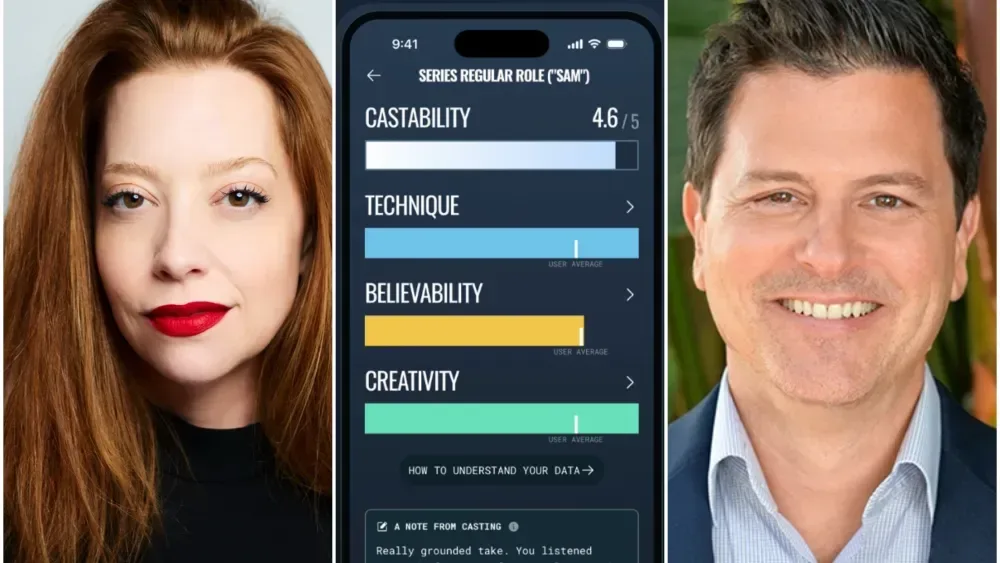
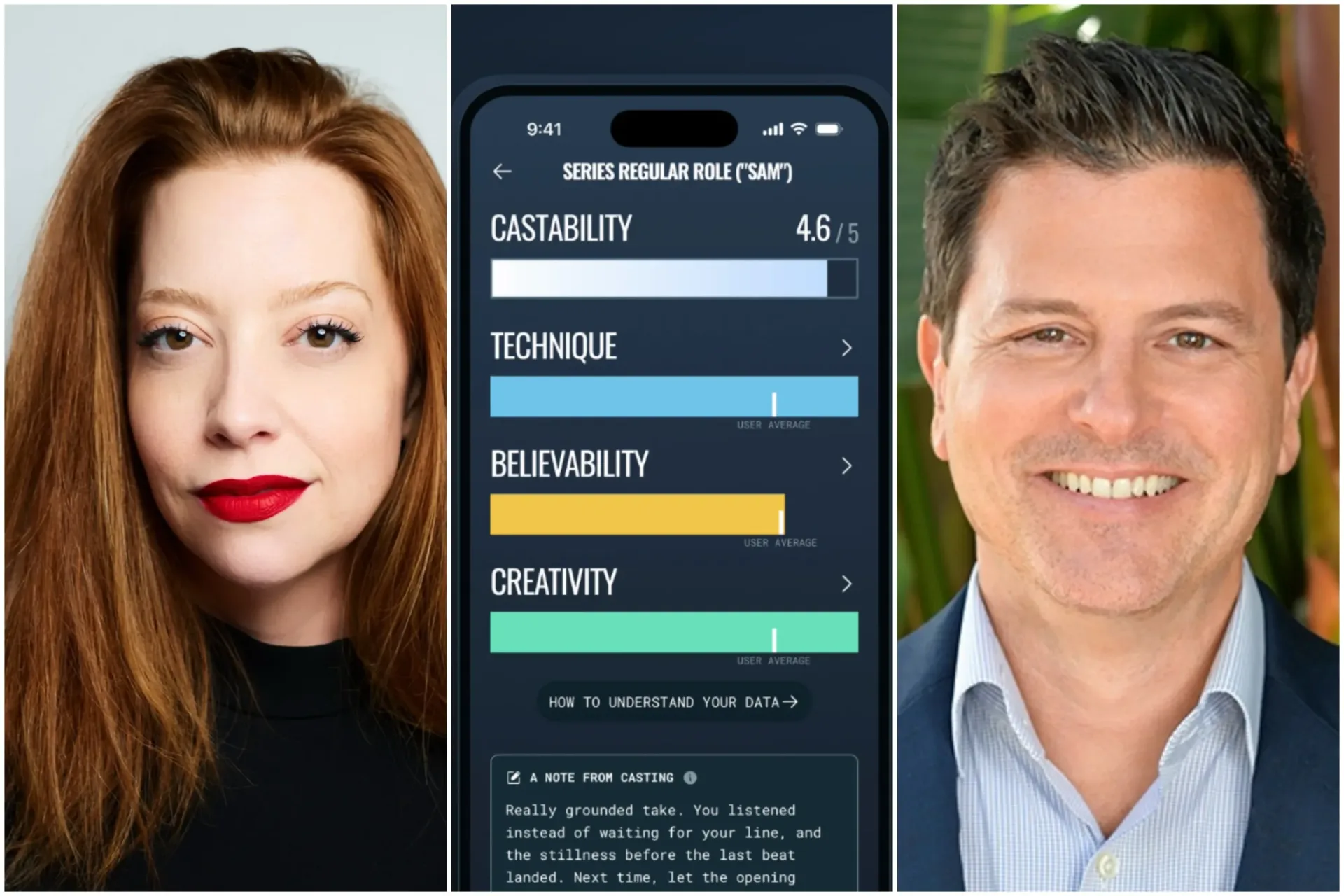
Castability, a mobile app built to give actors structured feedback on filmed scenes, has officially launched after spending several years in beta. The service is available on iPhone and Android and asks users to record original scenes on their phones before receiving critiques from professional casting directors.
The premise is straightforward, but it addresses a particularly opaque part of screen acting. Performers are regularly asked to audition, increasingly through self-recorded video submissions, yet they often do not receive a detailed explanation of how their work landed. Castability is designed around providing that missing response: users receive scores and written guidance covering what worked, what could be improved and how a performance was assessed.
Jay Boyer founded Castability, while casting director Amanda Lenker Doyle, CSA, leads the app. Boyer began developing the project about a decade ago. Early access began in November 2020, paid access followed the next year, and the product remained in beta as its team expanded the service. It has now moved to an official launch.
How Castability’s feedback system works
Castability supplies users with new scenes every week. An actor films their interpretation on a phone and submits it for review. Each submission is evaluated across three stated categories:
- Technique: the practical execution of the performance. In an acting context, this can encompass the control and choices a performer brings to the material, though Castability has not detailed a fixed public checklist for the category.
- Believability: whether the work comes across as credible and emotionally grounded within the scene.
- Creativity: the distinctiveness and inventiveness of the actor’s interpretation.
Those labels matter because they separate several things that can otherwise be folded into a vague “good” or “bad” audition judgment. A performer may have a clear, controlled approach to a scene but need a more convincing emotional connection, for example. Another may make bold interpretive choices that require more technical refinement. The app’s scoring structure is intended to make that kind of feedback more concrete.
The reviews come from casting professionals, rather than an automated score. Castability says actors receive both numerical assessments and comments identifying strengths and areas for improvement. That combination potentially gives users two ways to track progress: a recurring set of comparable category scores and qualitative notes that explain the assessment.
Rankings and highlights for top-performing actors are also being considered. The company has not said those features are currently in place, so prospective users should treat them as possibilities rather than promised launch functionality.
Why self-tape practice has become central to the app’s pitch
A self-tape is a recorded audition submitted remotely rather than performed in a room with casting personnel. The format became especially prominent when the pandemic reduced in-person casting sessions, and it has become a standard part of casting for many film and television projects.
That shift gives Castability its practical focus. Recording an audition is not merely an exercise in memorizing dialogue. The actor also has to make performance choices that read on camera and work within a short recorded format. A feedback loop based on repeated phone-shot scenes may therefore be more relevant to contemporary casting routines than a one-off critique detached from the way many auditions are now submitted.
Castability’s founders frame the service as an educational tool as much as a review platform. Boyer said actors are routinely evaluated without receiving enough information to develop from those evaluations. Lenker Doyle similarly described the lack of visibility around casting and filmmaking decisions as a major challenge for performers trying to understand the process.
“Actors are constantly being evaluated, but they’re rarely given the information they need to grow,” Boyer said in a statement.
The distinction is important. An actual audition is usually a hiring decision, with casting teams weighing the needs of a specific project. Castability is not presented as a direct replacement for that process. Instead, it offers a place to practice, submit work and receive professional notes outside the all-or-nothing circumstances of a particular role.
Access beyond the biggest casting hubs
The company also positions the app as a response to the geographic dispersion of production work. The founders pointed to the growth of work outside Los Angeles and noted that an actor in Tulsa can receive professional feedback through the same service as someone in Los Angeles or New York.
That does not eliminate the broader realities of where productions shoot or who gets cast. But it does mean the feedback element is not limited by an actor’s ability to attend a local session in a major entertainment market. For someone with a capable phone and access to the app, the essential submission process is remote by design.
This is also where the difference between access and outcome is worth keeping clear. Castability can provide access to weekly material and reviewer feedback; it does not guarantee representation, auditions, bookings or career advancement. Its value will depend on the consistency and usefulness of its critiques, as well as how individual actors apply them over time.
That remote-first model places Castability within a wider technology environment in which reliable digital services are increasingly part of professional workflows. The stakes are different from a casting practice app, but disruptions and infrastructure changes can still shape how people use online tools, as seen in this report on a network-upgrade-related Outlook outage.
The people behind Castability
Lenker Doyle’s recent casting credits include Scooby-Doo: Origins, Chad Powers, Cape Fear and Murdaugh: Death in the Family. Her role gives the platform a direct connection to the casting profession it is attempting to explain to performers.
Castability was developed by Boyer, Lenker Doyle, Cronin Cullen, Jackie Rhoads and Taylor Shurte. Goji Labs handled the app’s design and engineering.
For actors, the significance is less about a new social platform than a proposed repeatable feedback routine. Weekly scenes create an opportunity to practice with changing material, while the three-part evaluation framework gives users consistent categories against which to measure themselves. If the reviewer notes remain specific and actionable, the structure could help make the often-hidden logic of screen-performance evaluation easier to understand.
Still, scores should be read as feedback within this particular service, not as a universal verdict on an actor’s ability. Casting is inherently contextual: one project’s desired interpretation may differ sharply from another’s. The useful question for a performer is likely not simply whether a number rises or falls, but whether the notes identify patterns they can address in future taped work.
Price and availability
Castability is available for iPhone and Android. The app offers a two-week free trial, after which it costs $35 per month.
Anyone weighing the subscription should consider the practical fit: whether they want regular scene material, whether they can make time to record consistently, and whether professional notes on technique, believability and creativity are worth the recurring fee to them. The official launch follows a long beta period, meaning the service arrives after years of iteration rather than as an entirely new concept.
Its clearest promise is not to solve the uncertainty of casting, but to give actors more information than they commonly receive after being judged. In an industry where many decisions happen without feedback, Castability’s bet is that an ongoing, phone-based critique process can turn some of that uncertainty into usable practice.