The midterm election’s consequences for entertainment and media may be less immediate than a change at the White House, but they could still reshape the policy agenda confronting studios, broadcasters and public-media organizations over the next two years. A newly Democratic Congress would not automatically change who runs the Federal Communications Commission or instantly restore funding already eliminated. It does, however, change who controls committee priorities, the pace and direction of oversight, and the leverage behind negotiations.
For Hollywood, the clearest near-term issue is a proposed federal production tax incentive. For broadcasters and media companies, the major questions concern scrutiny of FCC Chairman Brendan Carr, the future of public-media support after the Corporation for Public Broadcasting’s closure, and whether congressional investigators pursue politically sensitive dealings between large media companies and the administration.
Those are related by their institutional setting, not by a single guaranteed outcome. The election has opened possibilities, but every item still faces its own procedural and political obstacles.
Hollywood’s tax-incentive push now has a timing problem
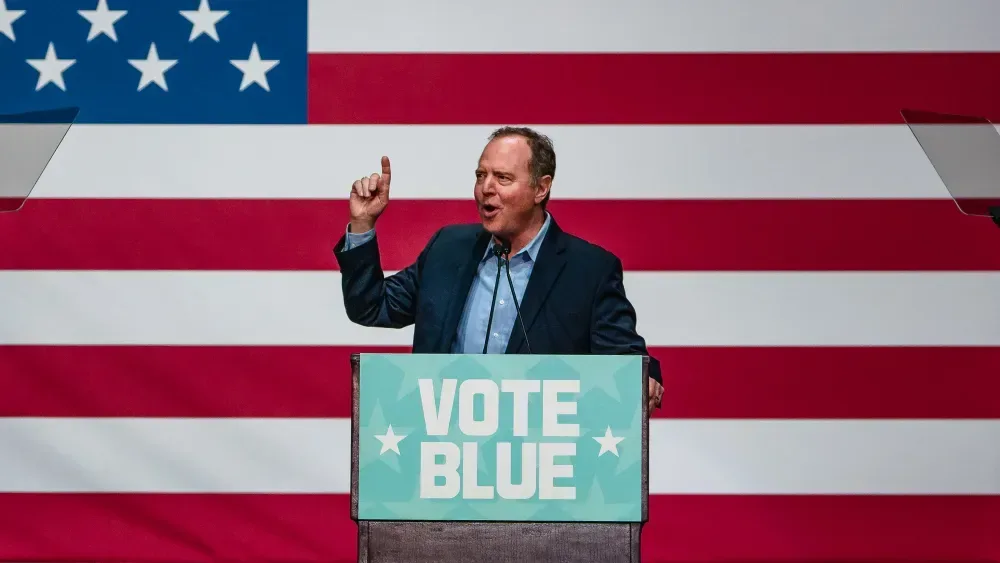
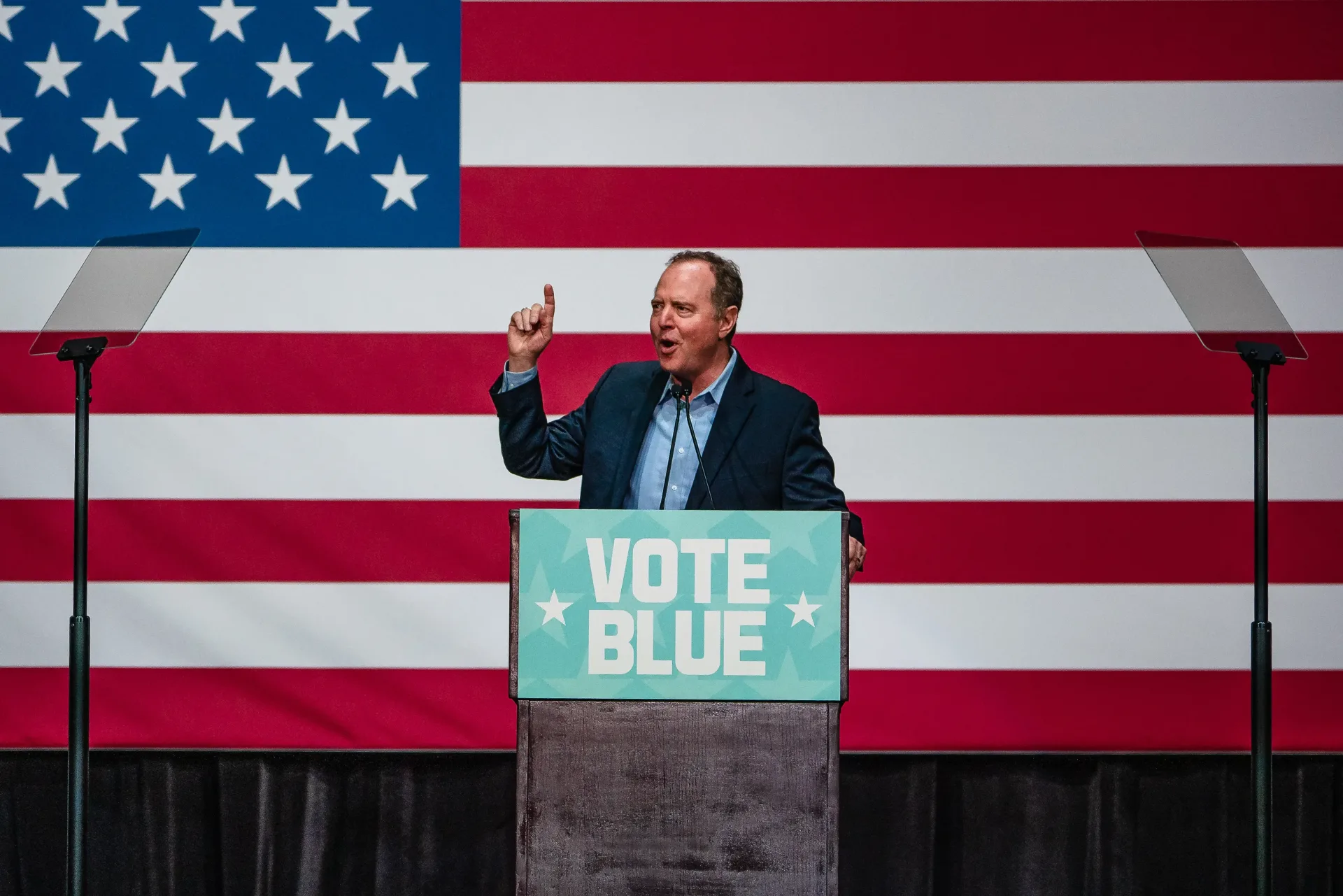
A federal tax incentive remains Hollywood’s principal legislative target before year’s end. The measure has unusual bipartisan features: it has aligned President Trump and Sen. Adam Schiff, and its backers have treated that overlap as a reason it could move despite wider partisan conflict.
A tax incentive, in this context, is a federal policy designed to reduce the effective cost of qualifying production activity. The supplied information does not establish the bill’s specific eligibility rules, credit value or administrative structure. What is clear is that the industry sees passage as time-sensitive, and that the election has complicated rather than resolved the route to a vote.
The president’s recent public comments introduced more uncertainty. At a rally, Trump said people in Hollywood were seeking tax credits and suggested he would “probably” support the idea, before questioning it to the crowd and saying the matter would need more thought. That is not a commitment, and the immediate post-election environment gives Republican lawmakers other concerns: internal recriminations and a leadership contest.
That does not mean a year-end deal is impossible. Bipartisan bills can move when their supporters decide that waiting carries a greater cost than compromising. But political bandwidth is finite. A major electoral defeat can pull members’ attention toward caucus management and leadership fights, even when a proposal has support across party lines.
There is also a strategic decision for incoming House Democrats. They could participate in a bipartisan push now, or decide that a bill is better handled in the next Congress, when they expect to possess more leverage. The latter route may offer a friendlier legislative environment for Hollywood, since Democrats are described as more supportive of the industry. It would also require the proposal to begin again rather than simply carry forward.
Related coverage includes What the Democratic Midterm Win Could Mean for Hollywood, the FCC and Public Media.
That reset has real costs. Of the 31 Republican co-sponsors across the House and Senate, 10 will not return next year. Rebuilding a coalition is not merely a matter of finding replacements; it means re-establishing urgency, priorities and buy-in in a changed Congress. Supporters have benefited from the argument that production needs demand quick action. The longer the process runs, the harder that crisis framing may be to maintain.
For companies that plan projects years ahead, the practical implication is not that a federal incentive is secured or dead. It is that the policy timetable has become less predictable. A year-end breakthrough and a next-Congress restart remain distinct possibilities, with sharply different paths to enactment.
Congress can scrutinize the FCC without flipping it
Democratic congressional control does not itself change the FCC’s leadership. That distinction matters. The Federal Communications Commission is the federal agency that oversees major communications sectors, while Congress can shape its environment through hearings, information requests, legislation, appropriations and investigations. Winning Congress is therefore not the same as immediately remaking the commission.
What is likely to change is the level of attention directed at Chairman Brendan Carr. During the past two years, Carr has pressed broadcasters over Jimmy Kimmel’s jokes and initiated inquiries involving political commentary on The View. Democratic lawmakers regard those actions as part of a broader Trump-era effort to suppress opposing viewpoints.
The relevant term here is jawboning: informal but potentially forceful pressure from public officials, rather than a formal order or rule. Critics often worry that such pressure can make regulated companies alter their behavior even when no explicit legal command has been issued. Supporters of aggressive oversight, conversely, may frame inquiries as accountability for entities operating in heavily regulated space. The supplied facts establish that Democrats expect to scrutinize Carr’s approach; they do not establish what any investigation would ultimately prove.
Subpoena authority gives congressional committees a more potent tool than rhetoric alone. A subpoena can compel documents or testimony, though disputes over compliance may take substantial time. In this situation, oversight could produce useful clarity about past interactions and decision-making, or it could become a politically charged exercise that creates more heat than factual resolution. Both are plausible, and neither should be assumed in advance.
For broadcasters, the immediate change may be a shift from an agency-facing posture to a two-front challenge: continued engagement with the FCC alongside increased congressional examination of how officials have dealt with speech, programming and political commentary. That uncertainty may influence government-relations planning even before formal hearings begin.
Public media faces a funding and design debate
The Corporation for Public Broadcasting closed last year after Congress eliminated $1.1 billion in funding. The loss endangered the budgets of hundreds of local stations, led some outlets to consolidate, and removed an important funding stream for PBS and NPR.
A Democratic Congress creates at least a possibility of restoring federal support. Possibility is the operative word. Public broadcasting remains deeply entangled in cultural and ideological conflict, with conservative critics portraying NPR and PBS as institutions of left-wing bias and indoctrination. Restoring money would require legislators to overcome that disagreement, not simply declare a new preference.
There is also a larger policy question: whether restoration should mean rebuilding the old Corporation for Public Broadcasting or creating something designed for current media habits. The CPB was created for a 1967 broadcasting environment. Supporters of a renewed approach argue that federal support should reach beyond conventional broadcast distribution and address how communities now seek local information.
Rima Dael, chief executive of the National Federation of Community Broadcasters, has called for a system built around current community needs, including access on air and online, in people’s languages, while acknowledging uneven internet access and the risk that artificial intelligence can intensify misinformation and disinformation.
That proposal points to an important distinction. Public media is not synonymous with a television channel or radio frequency. In this debate, it includes the wider question of how trusted local news, cultural programming and community information can reach people across different technologies. The unresolved tension is that online delivery can broaden access, while uneven connectivity means a digital-only strategy can leave people behind.
For local stations, the debate is consequential in a very direct sense: federal policy may determine whether the next system is a restoration of a lost financial base, a transition to a different model, or no substantial intervention at all.
Potential investigations could reach media-company dealings
The House Oversight Committee will have numerous potential corruption inquiries competing for attention. Media-related matters may or may not rise high enough on that agenda. If they do, lawmakers could examine a set of 2025 events characterized as media capitulations: the Melania documentary agreement; payouts connected to Trump’s lawsuits involving 60 Minutes, George Stephanopoulos, and his deplatforming litigation against Twitter, YouTube and Meta; and the Ellison family’s efforts to obtain Trump’s approval for the Paramount-Skydance and Paramount-Warner Bros. mergers.
The latter cases are particularly notable because merger review and political access can become intertwined in public perception even when the underlying decisions are complex. The source material does not establish wrongdoing by the companies or individuals involved. It identifies possible subjects for congressional examination.
Such probes could trigger fights over executive privilege, the doctrine presidents may invoke to protect certain confidential executive-branch communications. A claim of privilege is not automatically decisive; disputes can produce extended negotiations and litigation. If investigators succeed in obtaining material, the result could be a significant record of how major media companies navigated their dealings with the president during a period of maximum political power.
That prospect matters beyond the individual transactions. Internal communications can show what arguments companies made, what risks they perceived and how they balanced business interests against public responsibilities. But document disclosure is contingent on the committee choosing these matters, issuing demands, overcoming resistance and sustaining the effort. At this stage, an investigation remains an open political choice rather than a settled program.
What changes now—and what does not
The midterms have altered the incentives around media policy, but they have not delivered automatic outcomes. Hollywood’s tax bill may still move before year’s end, yet party upheaval and a wavering presidential signal make delay more likely than advocates would prefer. The FCC will remain in place, while its chair may face a tougher and more empowered congressional audience. Public-media funding could return to the agenda, but restoration would carry a fight over both ideology and institutional design. And potential House investigations could reveal influential corporate-government interactions, but only if lawmakers elect to devote time and subpoena power to them.
The entertainment business is used to policy questions arriving alongside corporate change. For a separate example of the sector’s continuing leadership churn, see Pixar’s recent executive transition. In Washington, though, the central lesson is simpler: control of Congress changes the menu of possible actions, not the final vote, the agency structure or the outcome of an investigation.