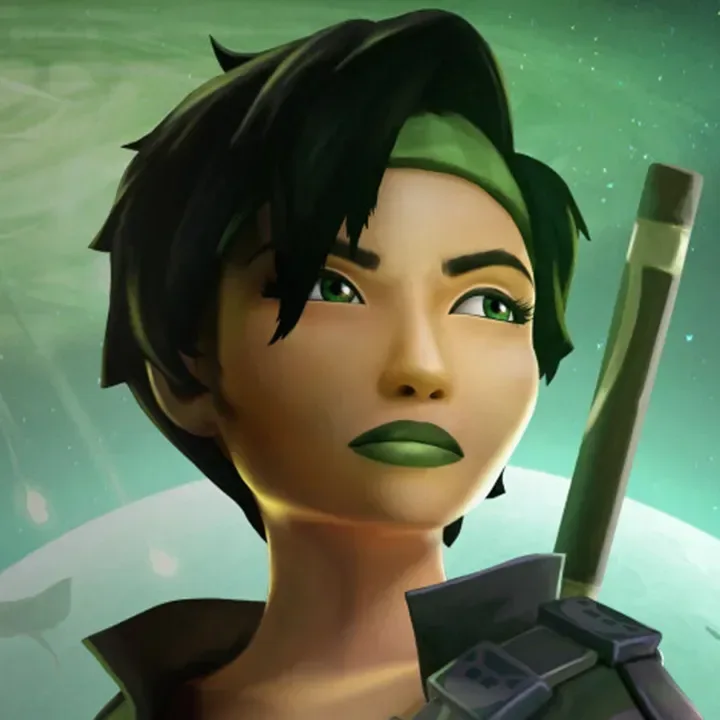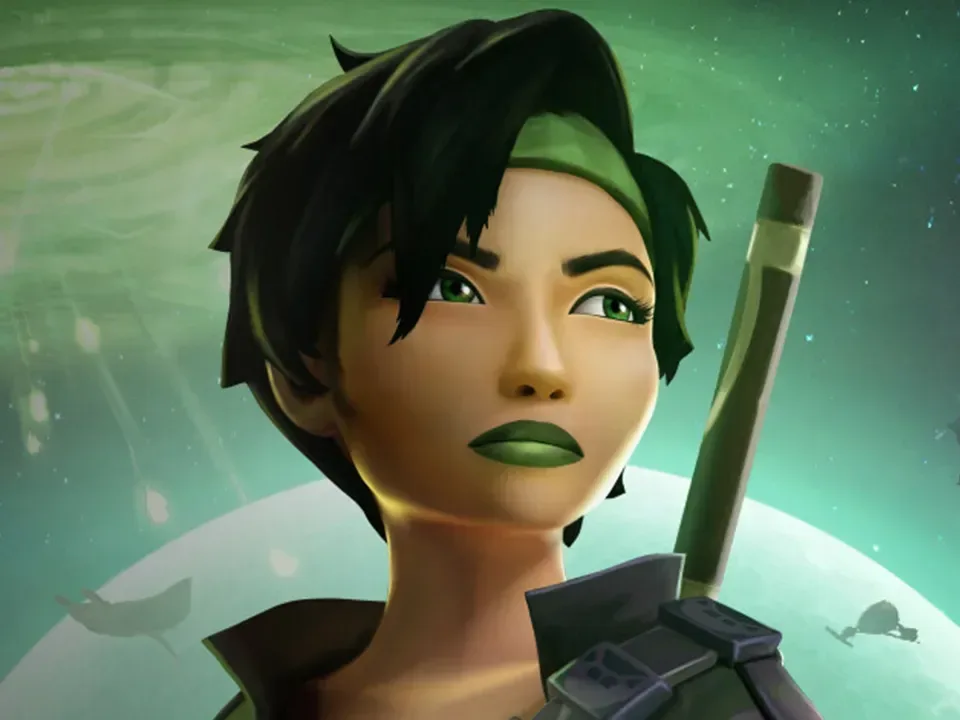
Beyond Good & Evil 2 is still being worked on. That is the modest but meaningful takeaway from a new personnel update: Rik Godwin, Ubisoft Bordeaux’s lead writer and associate narrative director, has confirmed that he joined the long-running project several months ago in a support and consulting role.
It is not a release-date announcement, a gameplay reveal, or evidence that the sequel is ready to emerge from its famously lengthy development journey. Ubisoft has not said when the game will launch, what platforms it may target, or what its final form will be. But a narrative specialist joining the effort is a concrete sign of continued work on a game whose status has invited understandable skepticism for years.
The sequel was initially announced 18 years ago and then reintroduced at E3 2016. Since then, the public picture has remained intermittent: long gaps without major updates, changing creative circumstances, and a project that has endured while other Ubisoft plans have shifted around it. The latest update does not settle the largest questions. It does, however, add to the available evidence that development has not stopped.
What Godwin’s role actually tells us
Godwin said he is working on Beyond Good & Evil 2 in a support and consulting capacity. That wording matters. A consultant is not necessarily embedded as the project’s sole narrative lead or responsible for a complete rewrite; the role can involve providing specialist input, helping solve particular story problems, reviewing material, or bolstering a team at a specific stage of production.
“Narrative” is the umbrella term for the storytelling work in a game. It can cover characters, plot structure, worldbuilding, dialogue, missions, cinematics, lore, and the ways player actions are presented in context. A narrative consultant can therefore contribute at many levels without their involvement revealing the exact scope, structure, or state of the game.
That limitation is worth keeping front of mind. Hiring or adding a writer does not, by itself, indicate a release window. Games receive writing support at different points in development, and the information here does not specify which material Godwin is advising on. It would be a leap to treat this as confirmation of a new story direction, a completed script, or imminent marketing.
Still, it is more substantial than a vague assurance that work continues. Godwin’s confirmation places a named narrative professional on the project months before the update became public. For a game so often discussed in terms of delays and uncertainty, even a small staffing development helps establish that the team is continuing to assemble expertise around the production.
Why Ubisoft Bordeaux is relevant
Ubisoft Bordeaux was founded in 2017 and has commonly supported other projects. The studio also led work on Assassin’s Creed Mirage and most recently released Claws of Awaji, the expansion for Assassin’s Creed Shadows. Godwin’s background at Bordeaux consequently connects the update to a studio with recent experience on major Ubisoft releases and expansion work.
Related coverage includes Beyond Good & Evil 2 Adds Assassin's Creed Shadows Writer as Development Continues.
That does not mean Beyond Good & Evil 2 will resemble either of those Assassin’s Creed projects, nor does it disclose the amount of Bordeaux’s involvement. The confirmed detail concerns Godwin’s individual support and consulting role. But it does make practical sense for Ubisoft to draw on personnel from a studio accustomed to contributing to large productions.
There is also a straightforward geographic element. Beyond Good & Evil 2 is led by Ubisoft Montpellier, while Ubisoft Bordeaux is also based in France. Proximity is not proof of a particular production plan, but it is a reasonable explanation for why talent at Bordeaux could be positioned to assist the Montpellier-led team.
For players, the useful reading is narrow: this is a staffing signal, not a promise. It suggests Ubisoft is investing narrative attention in the project. It does not provide a trailer, a launch target, a feature list, or confirmation of the game’s ultimate scale and design.
A project that has survived another major reset
The staffing news arrives after a period in which Ubisoft reshaped projects, brands, and development studios. Several games did not make it through that process, including the Prince of Persia: Sands of Time Remake. Beyond Good & Evil 2, by contrast, remained in development.
Surviving a company-wide reassessment is not the same as nearing completion. But it is significant in a basic, practical way: the project retained enough internal priority to continue while other plans were cancelled. For an unusually long-running production, that is an important distinction. Its future may still be unclear, yet the latest information points to an active project rather than one quietly abandoned.
Creative director Fawzi Mesmar previously addressed the cancellations and their impact on colleagues, while saying the team remained committed and focused on making a remarkable game for players. That statement should not be read as a timetable. It does establish the team’s stated intent after the broader restructuring: keep working on the game that survived it.
It is also relevant that the sequel has had a new creative director in Mesmar. Creative leadership is responsible for steering a game’s overall vision, bringing separate disciplines toward a coherent result, and making decisions when designs, art, story, and production needs collide. On a project that has been publicly associated with a very long development history, a stable and intelligible creative direction is especially important—even though outsiders cannot see the day-to-day decisions that determine whether such a direction is holding.
The 20th Anniversary Edition cameo was another small clue
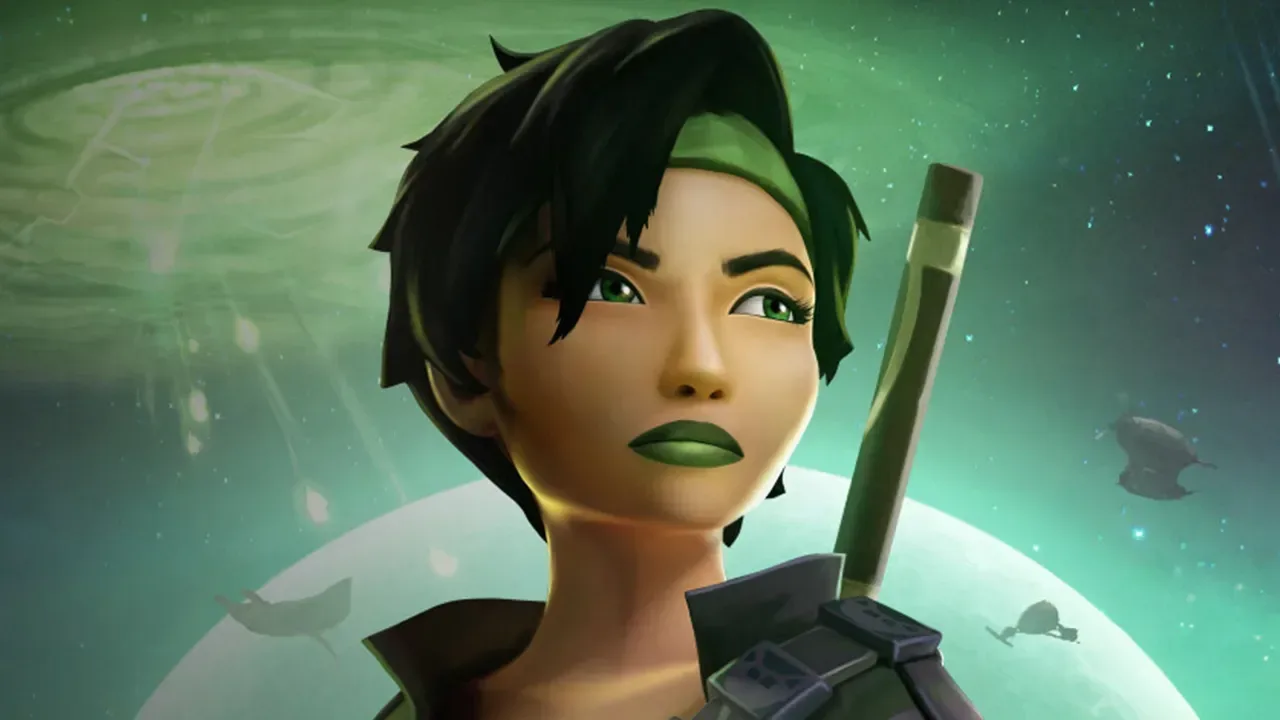
Recent signs of life have not been limited to staffing. Characters from Beyond Good & Evil 2 appeared in the newer Beyond Good & Evil 20th Anniversary Edition. Their presence did not explain when the sequel will arrive or how it will play, but it tied the sequel’s cast to a newly released edition of the original game.
That kind of cameo can serve several purposes. It can connect a current release to a future project, remind players that a dormant series still has a planned continuation, or reinforce the sense that a publisher considers the property active. It is not equivalent to a formal product reveal, and it cannot answer the question that matters most to waiting fans: what is Beyond Good & Evil 2 now?
That question remains open. The game’s exact look is not known from this update, and even whether Ubisoft will retain the current name has not been settled publicly. Those uncertainties are unusually fundamental for a sequel with such a long history. They underline why it is sensible to keep expectations tied to what has actually been confirmed rather than treat every sign of activity as a countdown to launch.
What to watch for next
There are a few types of update that would be more revealing than this one. A formal Ubisoft presentation could show the game’s current visual identity and establish whether past public impressions still apply. A platform announcement would clarify where it is intended to release. A release window, naturally, would turn “still in development” into something players can plan around.
Until then, the strongest conclusion is also the simplest: a named Ubisoft Bordeaux narrative figure is supporting Beyond Good & Evil 2, the game has remained alive through Ubisoft’s recent portfolio changes, and no launch timing has been announced. That is a cautiously positive update for a project that has spent much of its existence testing the meaning of the word “eventually.”
For a look at another game property navigating connections across formats, see our coverage of Castlevania: Belmont’s Curse and its links between games and animation.