Apple has begun a U.S.-only research effort focused on a question that matters far more than whether an AI can produce a fluent answer: can people understand, evaluate and use AI-generated health information responsibly?
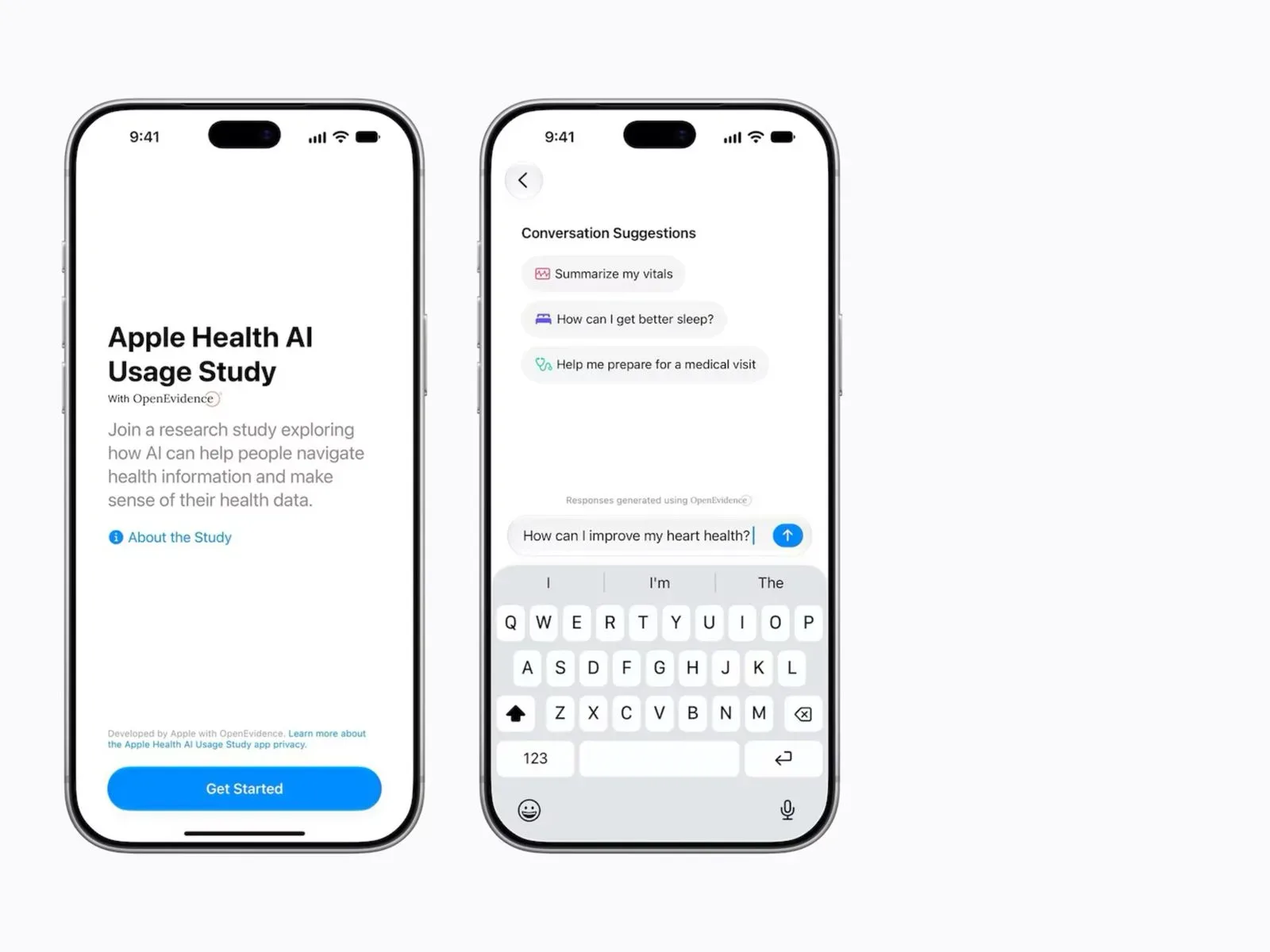
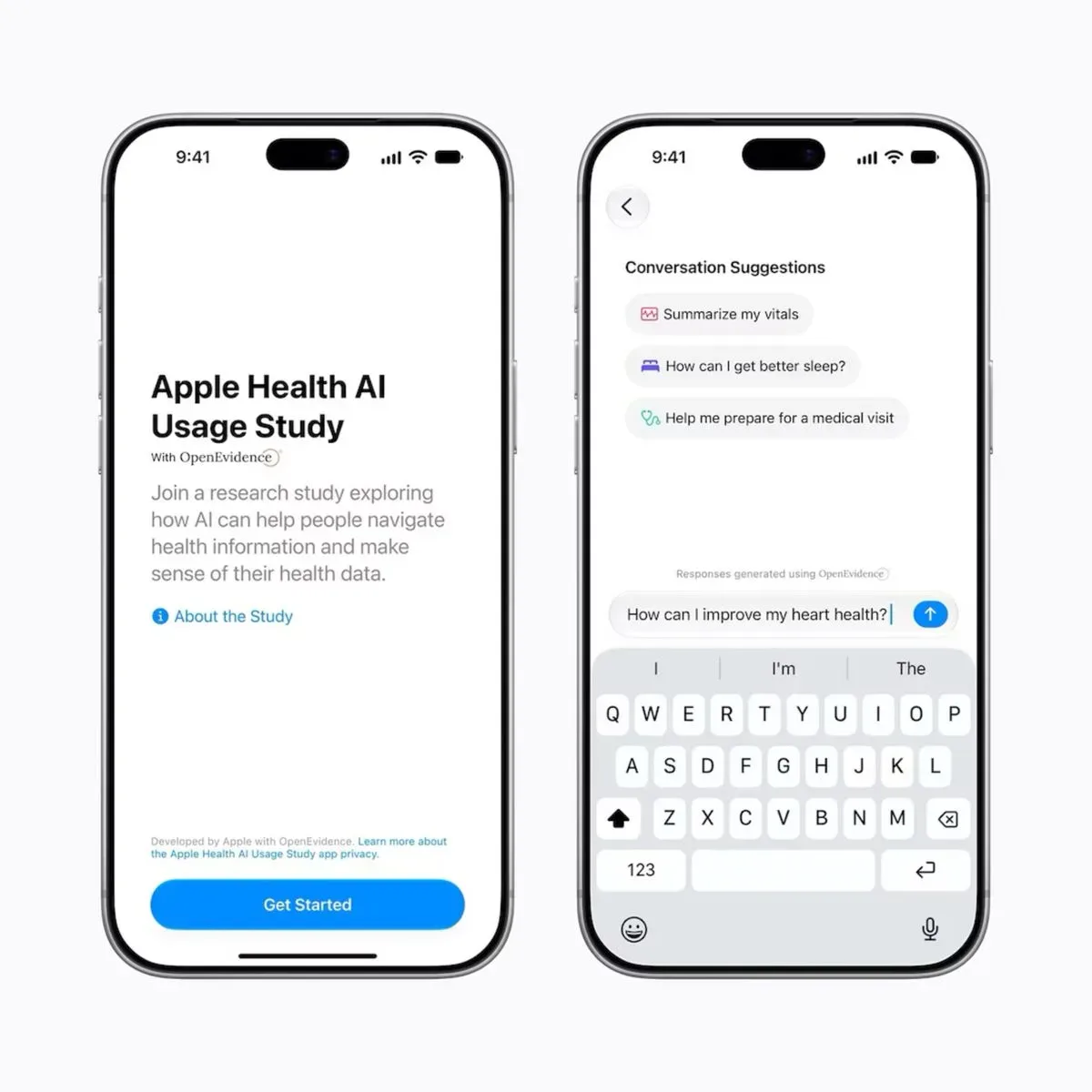
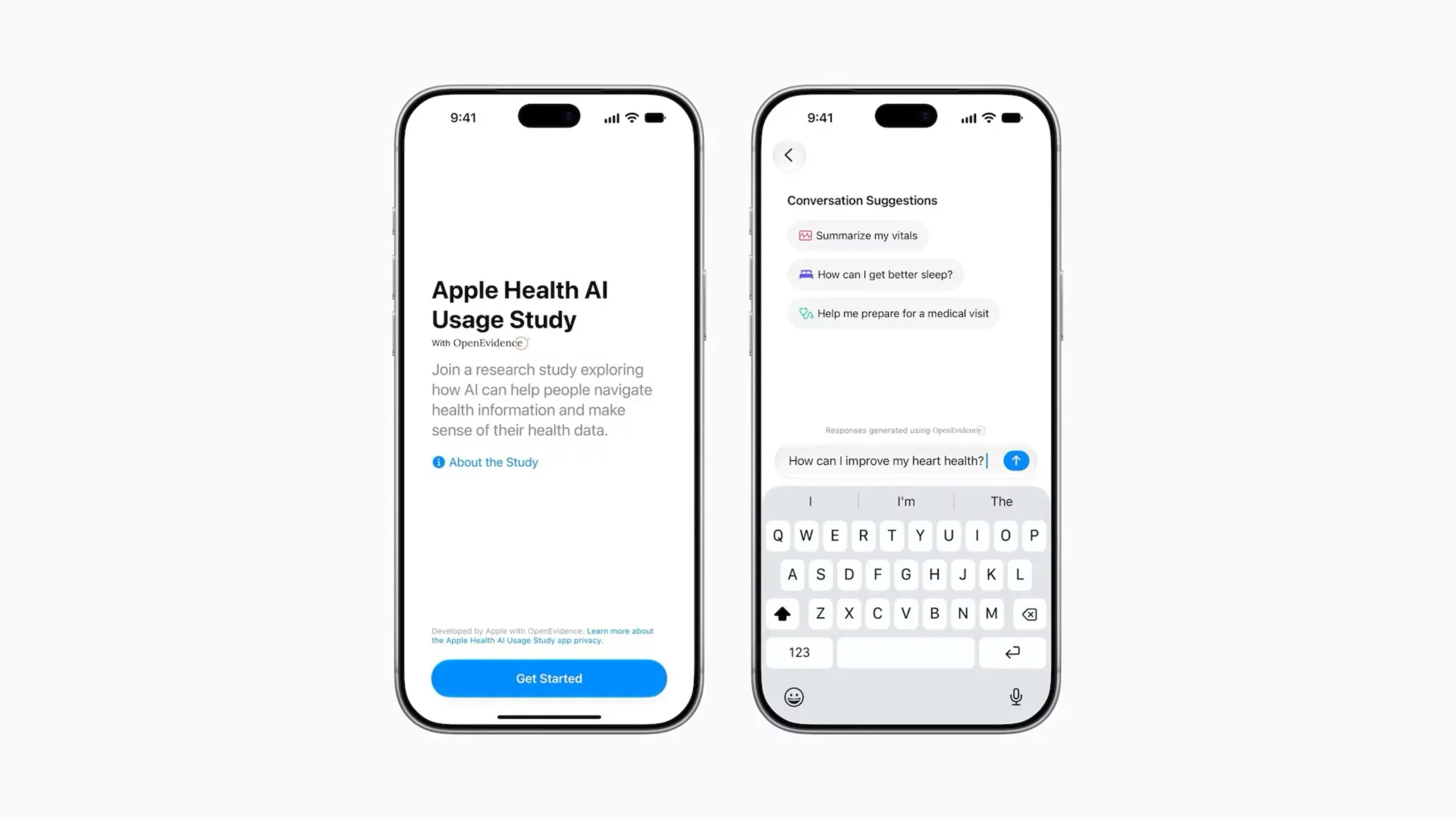
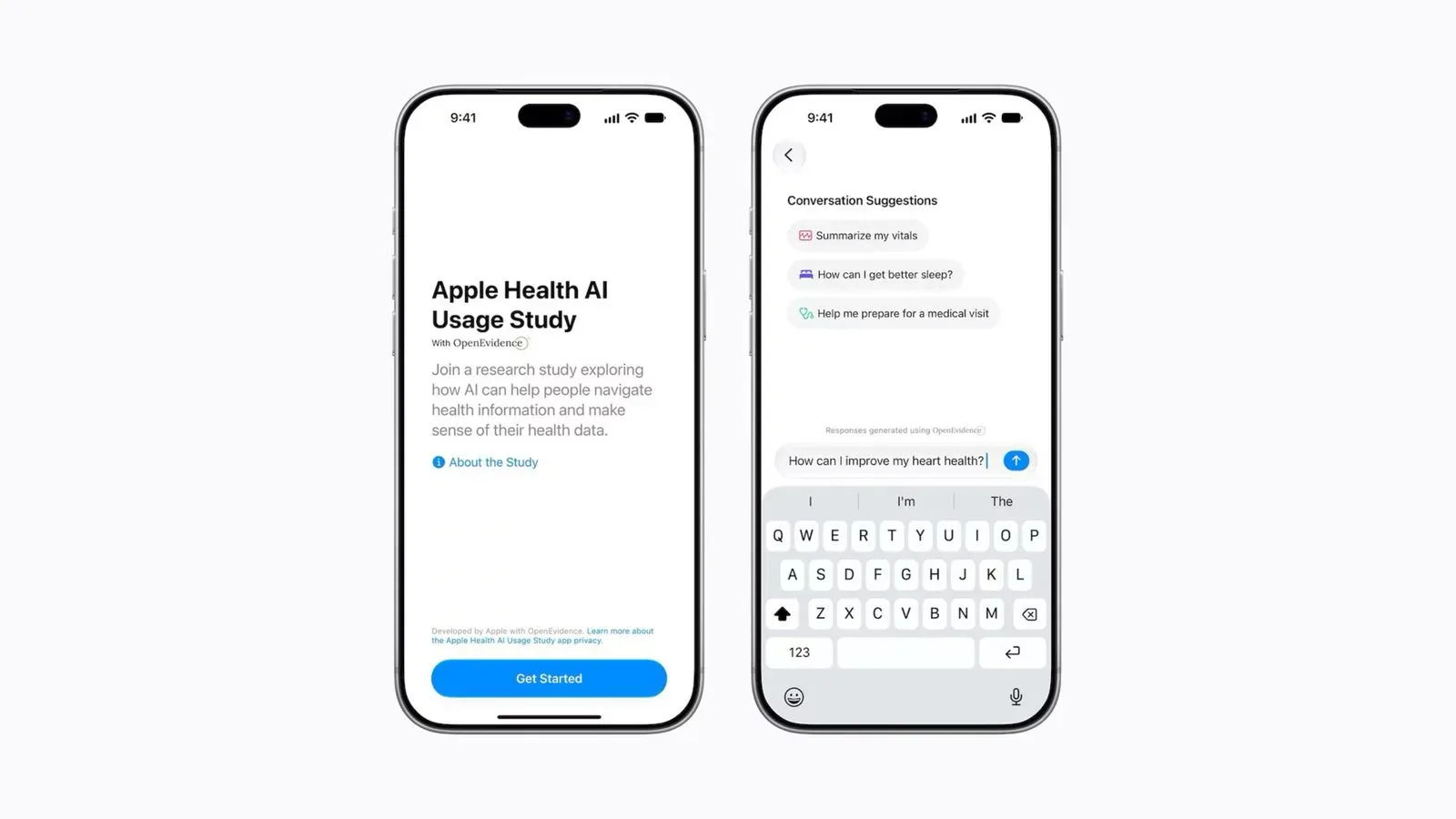
The Apple Health AI Usage Study gives participants access to a dedicated iPhone app for everyday health questions. The app uses medical research in its answers and can, if a participant chooses, incorporate that person’s Health app data. Apple is conducting the work with clinical AI company OpenEvidence, pairing its technology with an Apple-designed research experience.
That framing is important. This is described as a study rather than a consumer diagnosis product or a substitute for professional care. Its stated purpose is to examine how people engage with health AI: what they comprehend, what earns their trust, and whether the information helps them arrive better prepared for discussions with their doctors.
The central question is not simply whether AI can answer
Large language models are systems that generate text by predicting likely language patterns from what they have learned. In a health setting, a smooth, confident response can be useful when it translates difficult material into plain language. It can also create a problem: language that sounds decisive is not automatically complete, applicable to an individual, or safe to act upon.
Apple explicitly acknowledges that health tools using large language models may deliver incomplete or unclear answers. That limitation sits at the heart of this study. A response may be understandable yet omit context. It may identify a relevant topic yet fail to communicate uncertainty. And a person may interpret general educational material as tailored guidance when it is not.
The study therefore has a more meaningful target than raw answer generation. It is looking at the human side of the exchange: whether someone can make sense of an answer, how they judge its credibility and whether it supports a more productive clinical conversation. Those are separate questions. An answer can be factually grounded but poorly explained; it can be easy to read but not sufficient for a person’s situation; it can prompt a useful question for a clinician without being appropriate as a self-treatment plan.
Apple says the app is not intended to diagnose or treat medical conditions, nor replace advice from medical professionals. That boundary is not fine print. It defines the most defensible role for a tool like this: helping users investigate and organize questions, rather than presenting itself as the final authority on a health decision.
How the research app is meant to work
Participants can ask everyday health questions through the iPhone app. The resulting responses include links to peer-reviewed clinical sources, drawing from publications including The New England Journal of Medicine, JAMA and Nature. Peer-reviewed material is research or scholarship evaluated by other subject-matter experts before publication, a process intended to scrutinize methods, reasoning and claims. It is not a guarantee that every question has one simple answer, but linked clinical sources give people a route beyond the AI’s summary.
Providing links also changes what “trust” can mean in practice. Trust should not require taking a chatbot’s statement on faith. In this setting, an answer’s source trail can help users see that the explanation is connected to medical literature, identify where a claim came from and bring that material into a conversation with a clinician. The usefulness of that trail, however, depends on whether people can understand what is being cited and recognize when a source does not settle their personal situation.
Apple says the app presents complex medical information in approachable language. Translation from technical terminology into everyday wording is potentially valuable, particularly when someone is trying to formulate questions before an appointment. But approachable language must retain the caveats that make clinical information responsible. A short explanation can make an issue clearer; it should not erase uncertainty, exceptions or the need for an expert who knows the patient’s history.
Participants can rate the responses they receive and will occasionally complete surveys about their experience. Those feedback mechanisms are a major part of the research design described so far. Ratings can capture a participant’s immediate reaction, while surveys can explore how that reaction was formed: for example, whether an answer felt clear, credible or useful in preparing for care. The announced study is focused on understanding those judgments, not merely collecting prompts.
Optional Health app data is a meaningful choice
The app may use a participant’s Health app data, but sharing is optional. Apple says participants control whether to provide HealthKit metrics or survey responses. HealthKit is Apple’s framework for health and fitness data, and metrics in this context refer to the health information a participant may elect to share.
That opt-in structure matters because health information is unusually sensitive. A general question about a topic and personal health metrics are not the same category of data, and participants may reasonably make different choices about each. Someone might want educational responses without sharing HealthKit information. Another participant may decide that sharing selected information makes the study experience more relevant. The stated controls mean those decisions are presented as participant choices rather than automatic conditions of asking questions.
Apple also says that questions are processed in a way intended to remove identifying information before they reach OpenEvidence. The company further says OpenEvidence deletes question-and-response data within 24 hours, and that study data will not be used to train AI models.
Each of those claims addresses a different privacy concern. Removing identifying information is designed to reduce the chance that a question is tied to a person before it is sent onward. A 24-hour deletion window addresses data retention for the question-and-answer material. The statement that study data will not train AI models addresses whether participation feeds back into model development. Together, these measures describe a research workflow built around limiting identification, limiting retention and separating study participation from AI training.
They do not turn privacy into an irrelevant consideration. Instead, they give prospective participants concrete details to weigh: what they are comfortable asking, whether they want to share HealthKit metrics, and whether the disclosed handling practices meet their expectations. The optional nature of health-data sharing is especially relevant for anyone who sees value in testing the app’s educational function but prefers to keep personal metrics out of the experience.
Safety guardrails are part of the study’s premise
Apple says the app includes safeguards intended to detect certain concerning questions and steer users to a healthcare provider or other resources. This is a necessary distinction between an informational assistant and a system attempting to manage urgent or clinically complex situations on its own.
“Safeguards” here does not mean that the app can resolve every ambiguous situation. Apple has not characterized the tool as a diagnostic service, and it has warned that AI answers can be incomplete or unclear. The practical point is more limited: when a question triggers certain concerns, the design is intended to point the user toward human care or further resources rather than treating the generated text as enough.
For users, the safest interpretation is straightforward. The app may help translate a concern into questions worth asking and may provide research-linked background. It should not be treated as a replacement for a clinician’s assessment. That is particularly important when a person is deciding what a symptom means, what treatment to pursue or how urgently to seek care—areas the study says it is not designed to decide.
Preparing for an appointment may be the most practical use case
One of the study’s explicit aims is to learn whether AI-generated information can help people prepare for doctor appointments. That may be a more realistic and useful benchmark than expecting a health AI to deliver personalized medical conclusions.
Preparation can mean understanding unfamiliar terminology, reviewing the general background of a concern, or turning a broad worry into a clearer set of questions. A patient who enters an appointment with a better grasp of basic concepts may find it easier to explain what they want to discuss. The clinician still supplies the crucial elements an app cannot replace: professional judgment, direct interaction and the individual context needed to interpret health information.
Apple’s health leadership describes the study as an effort grounded in scientific rigor and clinical context, intended to inform how people engage with and assess health AI in daily life.
Robert M. Wachter, M.D., a professor and chair of the Department of Medicine at UCSF, has framed a related challenge: patients and clinicians are increasingly using AI tools that have been developed and evaluated separately. His view is that patient preparation and clinician conversations can improve when the underlying tools are trustworthy and connected by rigorous study. The Apple effort does not claim to solve that broader divide, but it does directly study one piece of it: how people respond to an AI system built around clinical sources and explicit guardrails.
What this could reveal—and what it will not establish by itself
The study could yield useful evidence about several practical issues: whether citations make responses more credible to users, whether plain-language explanations improve comprehension, whether participants understand the limitations of AI-generated health information, and whether optional personal data changes perceived usefulness. Feedback ratings and surveys can also help identify the gap between what an answer says and what a person takes away from it.
Just as important, the initiative should not be read as proof that AI health answers are clinically equivalent to medical advice. Apple’s own description rules that out. The project is research into use, comprehension and trust, with a deliberate focus on supporting—not displacing—the patient-clinician relationship.
For readers tracking Apple’s wider AI hardware and platform direction, the study also illustrates a different kind of question from device specifications or processor design. A recent report on Apple TV 4K’s reported A19 configuration concerns the technical makeup of a product; this health initiative concerns how people interpret and act on information generated by software. In healthcare, that human factor can be as consequential as the model or device behind the answer.
Apple’s study is limited to the United States and is being run with OpenEvidence. Beyond the details announced—an iPhone research app, research-linked responses, optional HealthKit and survey sharing, user feedback, de-identification processing, deletion within 24 hours, no AI-model training use and safeguards for some concerning questions—there is no basis to assume broader availability, diagnostic capability or a particular outcome.
What is clear is the standard the project sets for itself. It is not enough for health AI to sound helpful. People need to know what information it is built on, understand its limits, retain control over sensitive data and have a clear route back to healthcare professionals. The value of the study will rest on what it can show about those realities in everyday use.