Apple’s effort to rebuild Siri could face another leadership change before the work is complete. Mike Rockwell, the company’s vice president of Siri engineering, is reportedly still seriously considering stepping down from the role and may leave Apple altogether in 2027.
Nothing in the report establishes that a departure has been decided. That distinction matters: executives can weigh a change of role or an exit for long periods, and corporate responsibilities can move without an immediate change in employment. Still, the prospect is consequential because Rockwell was brought in to lead Siri’s turnaround after work on the assistant had been delayed for two years.
For players and everyday device users, this is not a story about a confirmed new Siri feature, a release timetable, or an imminent change to an iPhone, iPad, Mac, or Vision Pro. It is a story about who may direct an important software and artificial-intelligence effort at a point when continuity, organizational authority, and priorities are unusually important.
Why Mike Rockwell’s possible move matters
Rockwell is closely associated with the creation of Vision Pro. His subsequent assignment to Siri put an executive with experience leading a prominent Apple product effort on one of the company’s most visible software challenges. Siri is not simply a standalone app: it is an assistant whose value depends on how reliably it understands people, responds appropriately, and works across the operating systems and services around it.
That makes a leadership handoff more involved than assigning a new owner to a single feature. A Siri leader has to align engineering work with the broader software organization, define which problems get attention first, and turn ambitious AI plans into behavior that fits Apple’s products. Even when the teams and projects remain intact, a new executive can approach sequencing, staffing, and the balance between caution and speed differently.
Rockwell’s reported uncertainty also lands after a difficult period for the Siri project. The assistant turnaround was assigned to him only following what has been characterized as a two-year delay. Reports that he was considering an Apple exit had already surfaced in April. The new report suggests those questions have not simply vanished.
It would be premature to read the situation as proof that the Siri effort has failed or that a change is inevitable. Leadership deliberations are not product verdicts. But Apple would plainly prefer not to have uncertainty around the person accountable for such a central AI initiative, especially while it is trying to make Siri’s direction more credible.
The two reported paths for Siri leadership
If Rockwell leaves Apple or shifts into another position, Siri responsibility would reportedly be most likely to go to Amar Subramanya or Sebastien Marineau. They represent two different, though potentially complementary, sources of leadership inside Apple’s wider AI and software structure.
Amar Subramanya: external AI experience brought inside
Subramanya is described as a Google veteran whom Apple hired last year to strengthen its AI work. That background is the clearest reason his name carries weight in a Siri succession discussion. Building and improving AI systems requires specialized experience, but the practical executive task is broader: deciding how an AI organization operates within the constraints, product expectations, and engineering culture of the company that owns the assistant.
Should he take responsibility for Siri, the obvious reading would be that Apple wants its AI bench and Siri’s central product mission closely connected. That is an interpretation, not a confirmed plan. The report does not lay out Subramanya’s exact remit, any proposed Siri roadmap, or what responsibilities he would retain alongside the assistant.
His presence nevertheless signals that Apple has made a deliberate effort to add AI expertise. In succession terms, that matters because it gives the company an option that is not limited to the team structure established under Rockwell.
Sebastien Marineau: the iOS integration route
Marineau is a deputy to software chief Craig Federighi and leads teams working on AI integration in iOS. “Integration” is an important word here. An AI capability can be technically impressive in isolation, yet still be a poor consumer product if it arrives in the wrong place, behaves inconsistently with the operating system, or does not fit the ways people actually use their devices.
For Siri, operating-system integration is foundational. An assistant must coexist with interface conventions, system software, and the rest of the device experience. Marineau’s work puts him close to that reality. Assigning Siri to him could therefore emphasize making AI function as part of iOS rather than treating it as a separate technology program.
Marineau is also reportedly viewed by some within Apple as a possible eventual successor to Federighi and as an executive more fully committed to the AI shift. That does not mean he is next in line for either job. It does, however, make a potential Siri assignment more notable: it could further connect the assistant to the leadership layer responsible for Apple’s software experience.
AI leadership is not the same as shipping an assistant
It is easy to reduce this report to a contest between two names. The more useful lens is the work each possible arrangement would need to coordinate.
Artificial intelligence, in this context, refers broadly to the systems and product work intended to make software more capable of interpreting requests and producing useful responses or actions. That broad label can conceal several different demands: technical development, user-interface decisions, privacy and reliability considerations, and operating-system integration.
Leadership continuity means preserving clear accountability while a program moves through those demands. A team can retain talented engineers and still lose time if priorities are reset, reporting relationships become uncertain, or a new leader has to reevaluate decisions already in motion. Conversely, a fresh leader can sometimes clarify priorities and provide momentum. The report gives no basis to predict which outcome would follow at Apple; it only makes the question relevant.
Product integration means embedding a capability into the software people actually use. Marineau’s iOS role illustrates why this differs from pure AI research or model development. A useful assistant needs a coherent place within the operating system, and the people who oversee that integration can influence whether an idea becomes a practical part of the device experience.
This is why neither candidate can be evaluated solely by résumé shorthand. Subramanya’s AI background could be valuable in one dimension. Marineau’s software-integration role could be valuable in another. Apple’s eventual choice, if a choice is required, would reveal something about what it thinks Siri most needs next—but no decision has been reported.
Craig Federighi remains the key organizational constant
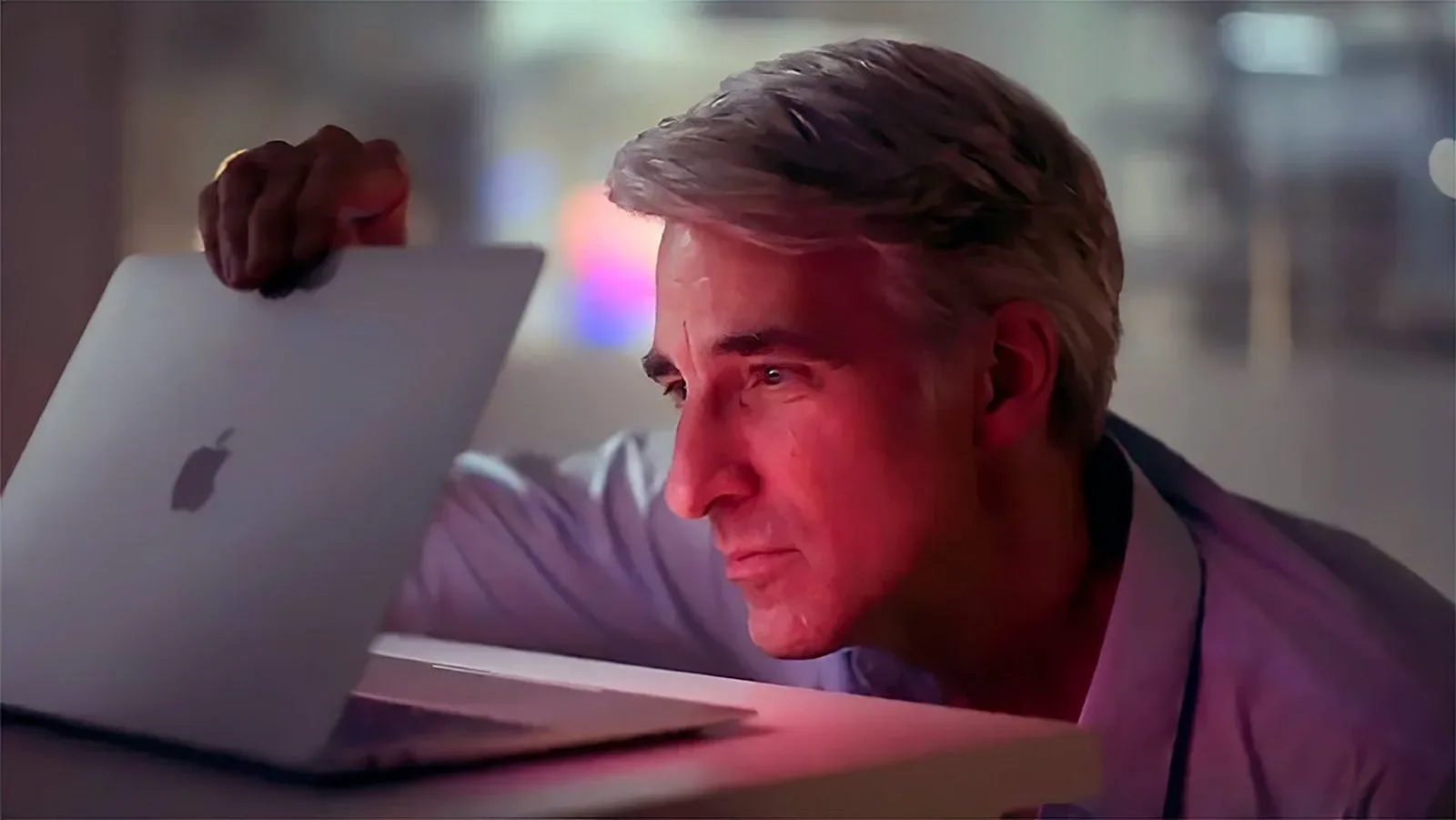
Any conversation about Siri leadership also runs through Craig Federighi, Apple’s software chief. He has led the software engineering organization for more than a decade and is reported to retain firm control over it. Marineau works as his deputy, while Siri’s future sits within the broader software and AI structure that Federighi oversees.
Reports of a possible successor to Federighi should not be confused with an active transition. A succession is characterized as a distant prospect, and there is no indication that Federighi is among senior Apple leaders considering departure in the coming years. The same reporting says he has not prioritized formal succession planning or established a clear successor path.
That creates an interesting contrast. The immediate uncertainty is around Rockwell and Siri, while Federighi’s own position is described as stable. In practical terms, that stability may limit disruption if Siri changes hands: a long-serving software chief remains above the relevant organization. At the same time, the lack of a clearly established successor underscores how much influence remains concentrated in Federighi’s leadership structure.
Marineau’s reported standing inside that structure is therefore meaningful, but it should not be overstated. Being seen by some colleagues as a possible long-term successor is not an appointment, and it does not confirm he will take over Siri. It merely places him among the plausible options if Rockwell’s role opens up.
What this does—and does not—mean for Apple users
Users should treat this as an executive-level report rather than a promise of a new assistant experience. There is no confirmed departure date for Rockwell, no announced replacement, and no disclosed change to Siri’s public release plans. The report says he could leave next year, not that he will.
There is also no basis here to infer that Vision Pro work is affected, that a particular Siri feature has been cancelled, or that Apple has chosen between Subramanya and Marineau. Those would be separate claims requiring separate evidence.
What is reasonable to watch is whether Apple eventually clarifies reporting lines around Siri and whether its AI work appears more tightly organized around either dedicated AI leadership or iOS-level integration. A confirmed role change would matter less as executive gossip than as a clue to who has authority to make trade-offs on one of Apple’s most closely watched software efforts.
The broader Siri discussion is already tied to questions of how the assistant could handle information and context. A separate report on iOS 27.3 beta code pointing to a Siri memory graph for relationships, routines and more illustrates the sort of direction that makes leadership and integration especially significant. That report is distinct from the present personnel claims, and neither one confirms the other’s outcome.
For now, the firm facts are limited. Rockwell is reportedly weighing a step down and potentially an Apple exit in 2027. Subramanya and Marineau are the reported leading internal possibilities should Siri need a new leader. Federighi remains in charge of Apple’s software engineering organization, with no reported indication that he is preparing to leave. Everything beyond that—timing, successor, strategy, and product impact—remains unresolved.