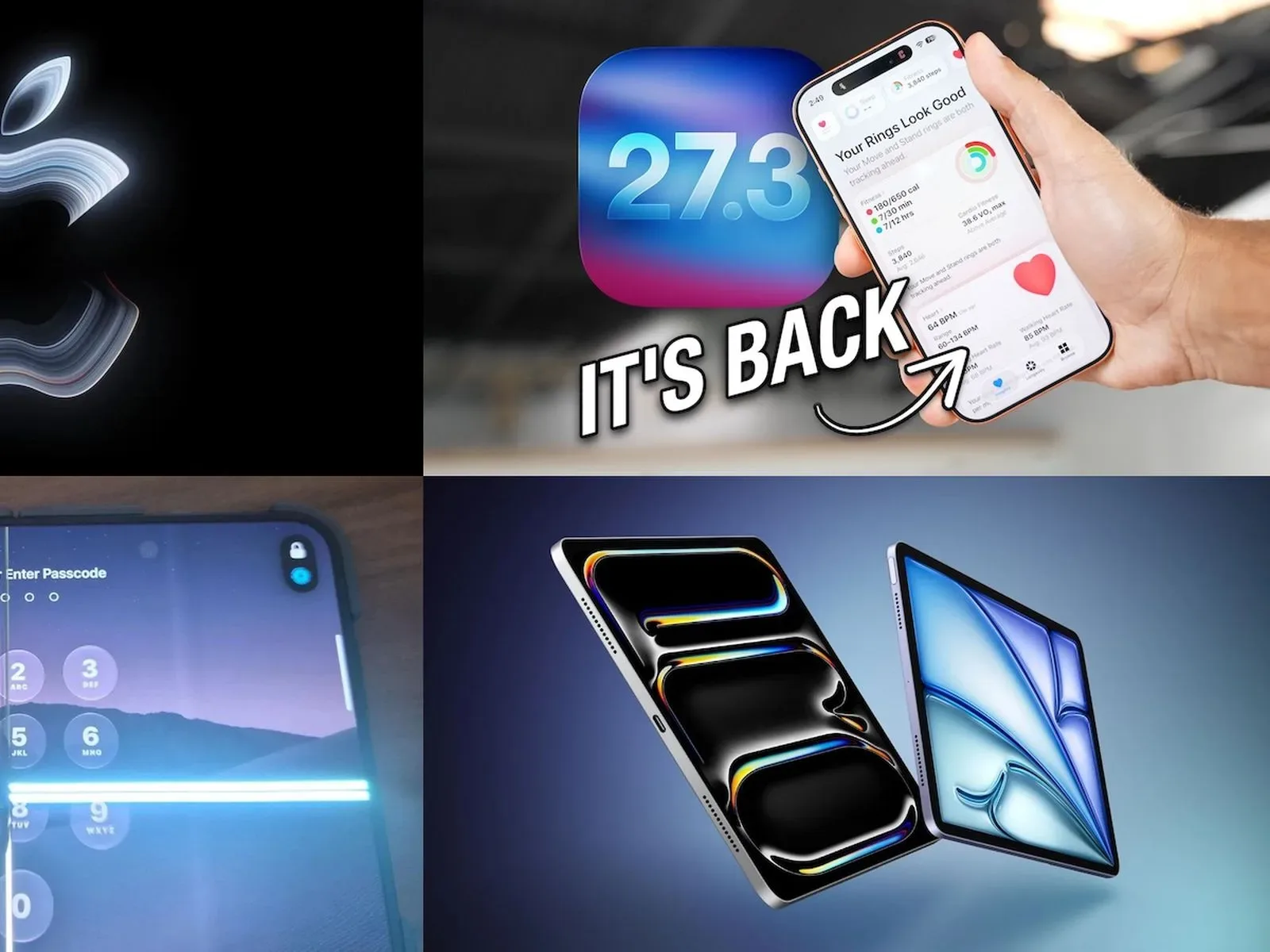
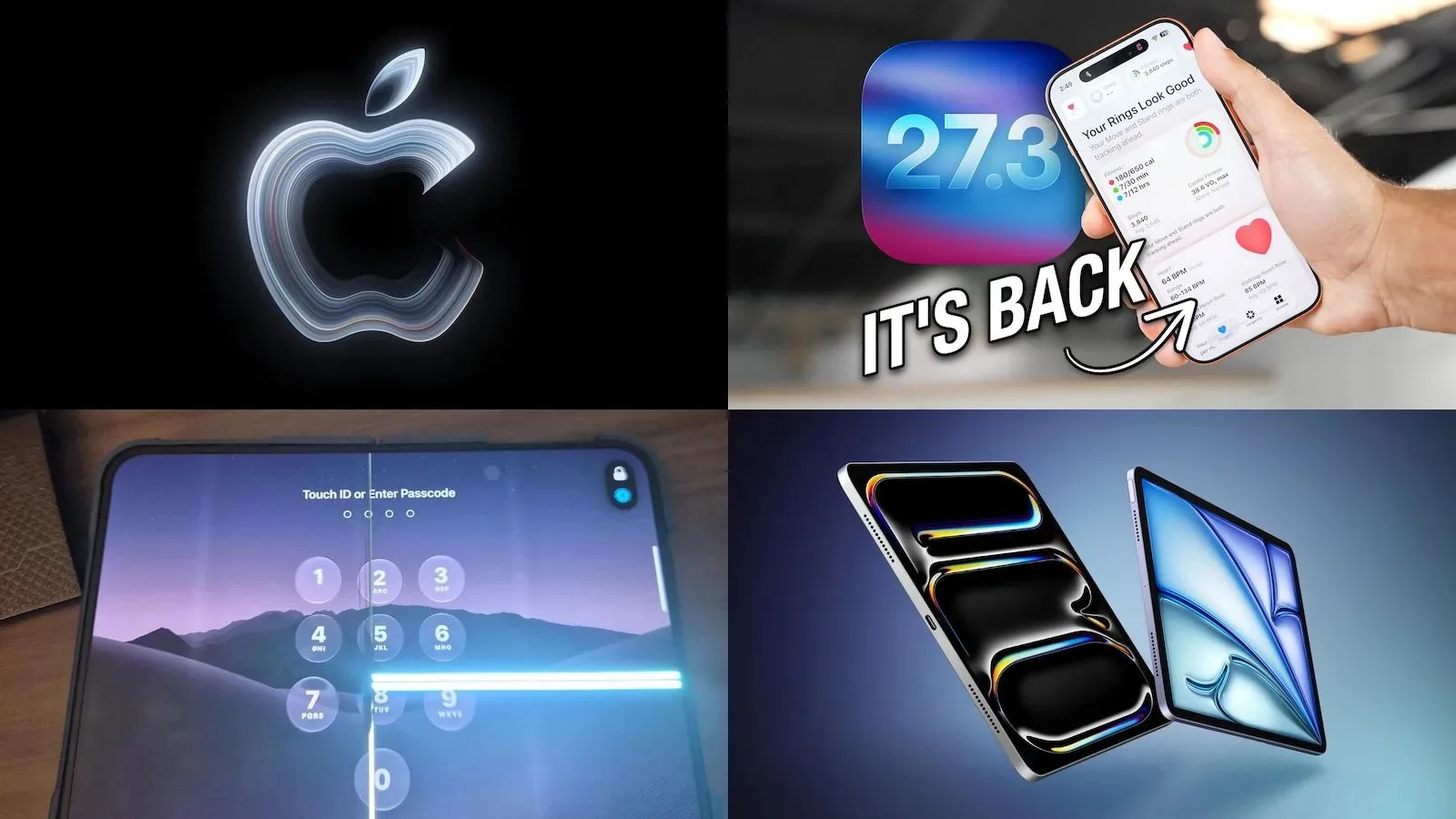
Apple’s first week of November has brought an unusually dense run of hardware and software developments: five products released on November 6, two more expected on November 13, the first iOS 27.3 beta, and fresh attention on a foldable iPhone display concern and the ongoing memory-chip shortage. For people who use Apple hardware around games, media and the smart home, the useful takeaway is not simply that there are new model names to memorize. It is that several major product lines are moving at once, with display technology, on-device interfaces, setup software and component supply all becoming part of the conversation.
The confirmed November 6 releases are an iPad mini with an OLED display and A20 Pro chip, an iMac with an M6 chip, a 14-inch MacBook Pro with an M6 chip, plus 14-inch and 16-inch MacBook Pro models with OLED touchscreens. HomeView, Apple’s smart-home hub, and an updated Apple TV 4K are scheduled to follow on November 13.
A packed Apple hardware week, led by OLED and touch
Two labels dominate the launch list: OLED and touchscreen. OLED, short for organic light-emitting diode, is a display technology in which pixels produce their own light. That differs from a conventional backlit display, where a separate light source illuminates the panel. The supplied details establish OLED on the new iPad mini and the touchscreen MacBook Pro models, but do not specify resolution, brightness, refresh rate, battery effects, pricing or gaming-specific features. Those details should not be assumed from the panel name alone.
Still, the product direction is clear enough. The iPad mini combines OLED with an A20 Pro chip, while the new MacBook Pro branch includes touchscreen variants in both 14-inch and 16-inch sizes. Apple describes these as its first touchscreen MacBook Pro models. The standard 14-inch MacBook Pro with an M6 chip is a separate release from the 14-inch OLED touchscreen model, so prospective buyers should pay close attention to the exact configuration rather than treating “14-inch MacBook Pro” as one uniform machine.
- iPad mini: OLED display and A20 Pro chip.
- iMac: M6 chip.
- 14-inch MacBook Pro: M6 chip model.
- 14-inch MacBook Pro: OLED touchscreen model.
- 16-inch MacBook Pro: OLED touchscreen model.
For a gaming-and-entertainment audience, the practical implication is primarily about interface choices rather than a proven performance conclusion. A touchscreen can change how users navigate a laptop’s apps and media controls; OLED can change the type of panel in front of them. Neither fact, by itself, tells us which games will run, how well they will run, or whether developers will change their support plans. There is no basis here for claiming that Apple has announced a particular gaming initiative alongside the machines.
That distinction matters in a launch cycle loaded with broad technical shorthand. A new chip establishes that new silicon is involved, but it does not automatically reveal graphics performance, game compatibility or thermal behavior. An OLED display identifies the screen technology, but not every specification that shapes the experience. The names are meaningful product information, not a substitute for the full specification sheets and software-support picture.
HomeView and Apple TV 4K are next on the calendar
Apple’s November 13 follow-up is expected to include HomeView and an updated Apple TV 4K. HomeView is positioned as a smart-home hub, and its software has recently received a closer public tour showing features, interfaces and apps. Apple had already demonstrated the software to selected reporters and creators, while the newer tour provided additional visibility into how the system is laid out.
The more revealing detail is the apparent setup path. HomeView units seem set to ship with software version 26.5 and then update to HomeView software version 27.2 during setup. That is notable because it means the out-of-box software may not be the version customers ultimately use once the device is configured. It also suggests that software readiness and launch timing did not line up in the simplest possible way.
HomeView had apparently been ready for release for some time while Apple waited for Siri AI to serve as its principal interaction method. “Siri AI” is the key product premise in this account: voice and AI-assisted interaction are expected to be central to how the hub is operated. The material does not set out a complete feature list, nor does it establish precisely how every HomeView function will work. It is therefore safer to view the software tour as an early look at the interface rather than a complete buying guide.
For households that already use Apple TV as part of their living-room setup, the proximity of the two releases makes the rollout worth watching. Yet HomeView and Apple TV 4K are still distinct products in the provided information. A smart-home hub is not automatically a replacement for a streaming box, and the report does not claim that it is. What it does show is Apple expanding the number of connected screens and interfaces in its ecosystem at the same time as it refreshes Macs and iPads.
iOS 27.3 testing brings Health back into the picture
On the software side, Apple has started beta testing iOS 27.3 and related updates. It is described as the biggest update to iOS 27 since the operating system launched in September, combining previously previewed items with newly added capabilities. A beta is test software: it is released ahead of the finished public version so that development and validation can continue. A feature appearing in a beta is strong evidence of active testing, but it is not the same thing as a guarantee that its behavior will remain unchanged through public release.
The clearest named change is the return of the revamped Health app. That version had appeared in the 27.2 beta, then was removed before the public 27.2 release. It is now back in the 27.3 test build and is expected to reach the public before the end of the year. The sequence is useful context for anyone tracking Apple software: a removal from one release does not necessarily mean a feature has been cancelled. In this case, it returned in the next major testing cycle.
There are important limits to what can responsibly be inferred. The provided material says iOS 27.3 contains tweaks, new features and items previously shown earlier in the year, but it does not enumerate all of them. It also does not provide a public-release date for iOS 27.3 as a whole. The Health app’s expected arrival before year-end is a specific expectation; it should not be broadened into a claimed timetable for every part of the beta.
Foldable iPhone demand meets an inner-display issue
Apple has also circulated guidance to its stores and authorized service providers concerning inner-display cracking on the iPhone Duo, described here as its foldable iPhone. The guidance covers diagnosis and how technicians should address the issue. That is a meaningful operational detail: it indicates that Apple has given repair channels a process for handling reports of this particular problem.
It does not, however, establish the frequency of cracking, the cause, or a consumer remedy in every circumstance. Those are separate questions, and none is answered by the available facts. Owners dealing with an inner-screen problem should avoid treating broad online discussion as a diagnosis; the actionable point is that Apple stores and authorized service providers have received guidance.
Supply is another uncertainty around the device. Apple CEO John Ternus said Apple cannot predict when it will be able to meet demand. Separately, reporting has said that a change from an original plan for a November launch in only two countries contributed to the difficulty. That combination suggests a product whose availability is not straightforward, but it does not support a promised restock window or a claim that demand will be resolved by a particular date.
Foldable hardware places particular attention on the inner display because it is the large screen that bends with the device. The supplied information does not explain the mechanical cause of the reported cracks, so analysis should stop there. It is reasonable to say that the issue is material for prospective buyers to follow; it is not reasonable to assign blame to a component, user behavior or design decision without supporting evidence.
More iPads are rumored for early 2027
November’s OLED iPad mini may not be the end of Apple’s tablet refresh. Reporting points to three further iPad updates in the first half of 2027: an iPad Air expected to gain an OLED display, and more modest refreshes for iPad Pro and the base iPad. These are reported plans, not confirmed releases, so names, timing and final specifications remain subject to change.
The rumor is nevertheless useful for shoppers trying to understand the shape of the range. The newly released iPad mini is the concrete current product, while the potential iPad Air, iPad Pro and entry-level iPad changes describe a possible next phase. “More modest” is comparative language, not a detailed specification. It does not tell us exactly which chips, displays or physical changes the Pro and base models would receive.
Why flash storage pressure can reach consumer hardware
A severe memory-chip shortage is the other major thread running beneath these launches. Flash storage suppliers reportedly have more leverage with Apple than they did previously because AI companies are building large data centers that require substantial quantities of flash storage and RAM. Flash storage is non-volatile memory used for retaining data even when power is off; RAM, or random-access memory, is working memory used while a device is operating. They serve different jobs, but both are key components of modern computing systems.
The reported shortage is expected to persist through 2030, with prices remaining high. This does not mean every Apple product has been assigned a new price, nor does it establish a specific change to storage capacities. It does mean the industry-level demand for memory components is relevant to the cost and availability environment surrounding consumer devices. The same AI infrastructure buildout that dominates technology planning can have knock-on consequences far beyond data centers.
That wider hardware pressure also connects to the broader technology supply story around AI computing. For related coverage of pressure surrounding major AI-chip interests, see this report on claims involving NVIDIA CEO Jensen Huang.
What is confirmed, tested and still uncertain
Apple’s November picture is best understood in three layers. First, the November 6 products are released, and HomeView plus the updated Apple TV 4K are scheduled for November 13. Second, iOS 27.3 and the returning Health app are in testing, with the Health app expected publicly before year-end. Third, the broader iPad refresh, foldable-phone supply outlook and persistence of memory shortages all contain uncertainty that should be kept separate from confirmed launch information.
For anyone deciding whether to buy now or wait, the facts support a focused checklist: distinguish the M6-only 14-inch MacBook Pro from the OLED touchscreen variants; remember that HomeView may update during its initial setup; treat iOS 27.3 as beta software rather than a final feature promise; and follow authorized repair channels for iPhone Duo inner-display concerns. The headline is a busy one, but the details matter more than the volume.