Apple has met with Thai government officials following spyware threat notifications received by politicians and other people in the country. The discussion comes after Apple issued alerts on October 29 to users in 99 countries, having identified activity it says was consistent with mercenary spyware attacks.
The episode is a useful reminder that an alarming security warning is not the same thing as a confirmed phone takeover. Apple’s system is intended to flag high-confidence indications that a person may have been singled out for an unusually sophisticated attack. It does not, by itself, establish that an attacker successfully accessed a device, identify the operator behind the activity, or tie an attempted intrusion to a specific spyware product.
What Thai officials say remains unproven
After the meeting with Apple, Thailand’s Digital Economy and Society Minister Chaichanok Chidchob said the notifications alone do not prove that recipients’ devices were breached. Authorities also said they had no evidence linking the attempted intrusions to Pegasus, surveillance software made by NSO Group.
That distinction matters. A threat notification concerns targeting: evidence that someone may have tried to direct a highly resourced attack at a particular account holder. A confirmed infection would require separate technical evidence showing that the attack got through and operated on the device. Attribution is a third, more difficult question: determining which actor conducted the operation and, where possible, who directed it.
Those questions can overlap, but they should not be collapsed into one claim. A warning can be meaningful and urgent without proving a compromise. Likewise, a past documented use of a named spyware tool in a country does not establish that every later alert involves the same tool or operator.
Why the alerts have drawn particular attention in Thailand
Thailand has previously been connected to a documented Pegasus campaign. A 2022 investigation by Citizen Lab, working alongside Thai organizations iLaw and DigitalReach, confirmed infections affecting at least 30 people between October 2020 and November 2021. Those identified included activists, academics, lawyers and other people associated with the country’s pro-democracy movement.
Apple’s warnings to Thai users in November 2021 were part of what led to that investigation, as recipients sought assistance from researchers. That history explains why a new set of notifications, particularly those involving political figures, has prompted concern. It provides important context, but the available information on the current alerts does not confirm infections or establish a Pegasus connection.
What “mercenary spyware” means
Mercenary spyware is software used in targeted surveillance operations and typically deployed against selected individuals rather than large, indiscriminate groups. Apple says these operators invest substantial resources in targeting particular people, often because of their profession or public role.
This differs from common scams that cast a wide net through fake delivery notices, password-reset messages or broadly distributed malicious links. A mercenary spyware operation is characterized by selectivity and the resources behind it. That is why an alert is especially relevant to journalists, activists, lawyers, public officials, academics and others whose work or public position may make them a focus of surveillance.
Apple has sent threat notifications since 2021 and says they have reached users in more than 150 countries overall. For the October 29 notices, the company identified activity consistent with this category of attack across 99 countries.
The company says it has high confidence when it sends a notification, while also acknowledging that detection cannot be absolutely certain. This is a careful but important standard: high confidence is not a guarantee, and a lack of public technical detail should not be mistaken for a lack of evidence. Apple intentionally does not disclose the detection methods, because publishing operational details could help spyware operators alter their behavior to avoid future detection.
Why alerts do not name attackers or countries
Apple’s notifications do not assign responsibility to a particular attacker or region. That restraint reflects both the technical and practical difficulty of attribution. Sophisticated operators may obscure infrastructure, reuse techniques, or work through intermediaries. Publicly naming a culprit based solely on an alert could overstate what can be reliably established at that stage.
For recipients and the public, this can feel unsatisfying: the alert communicates a serious risk but may not answer who was behind it or precisely how the attack was attempted. Yet withholding those details is also part of the protective design. It avoids giving suspected operators a road map to Apple’s detection capabilities.
There is a broader digital-safety lesson here for ordinary users as well. Treating every security message as automatically genuine is risky; treating every warning as proof of a successful breach is also inaccurate. Verification should be done through trusted, direct routes rather than by clicking links in an unexpected email or message.
What recipients should do
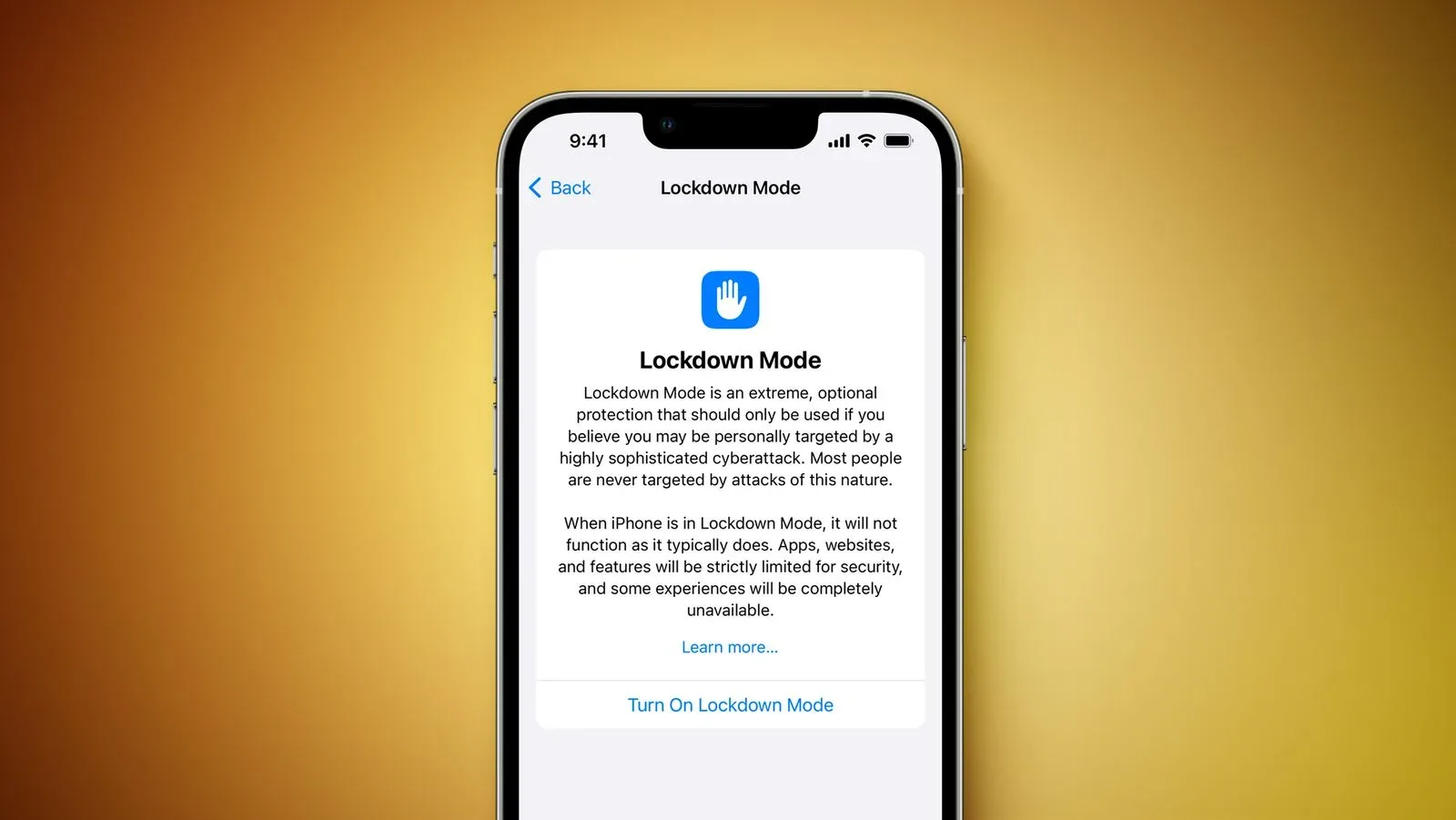
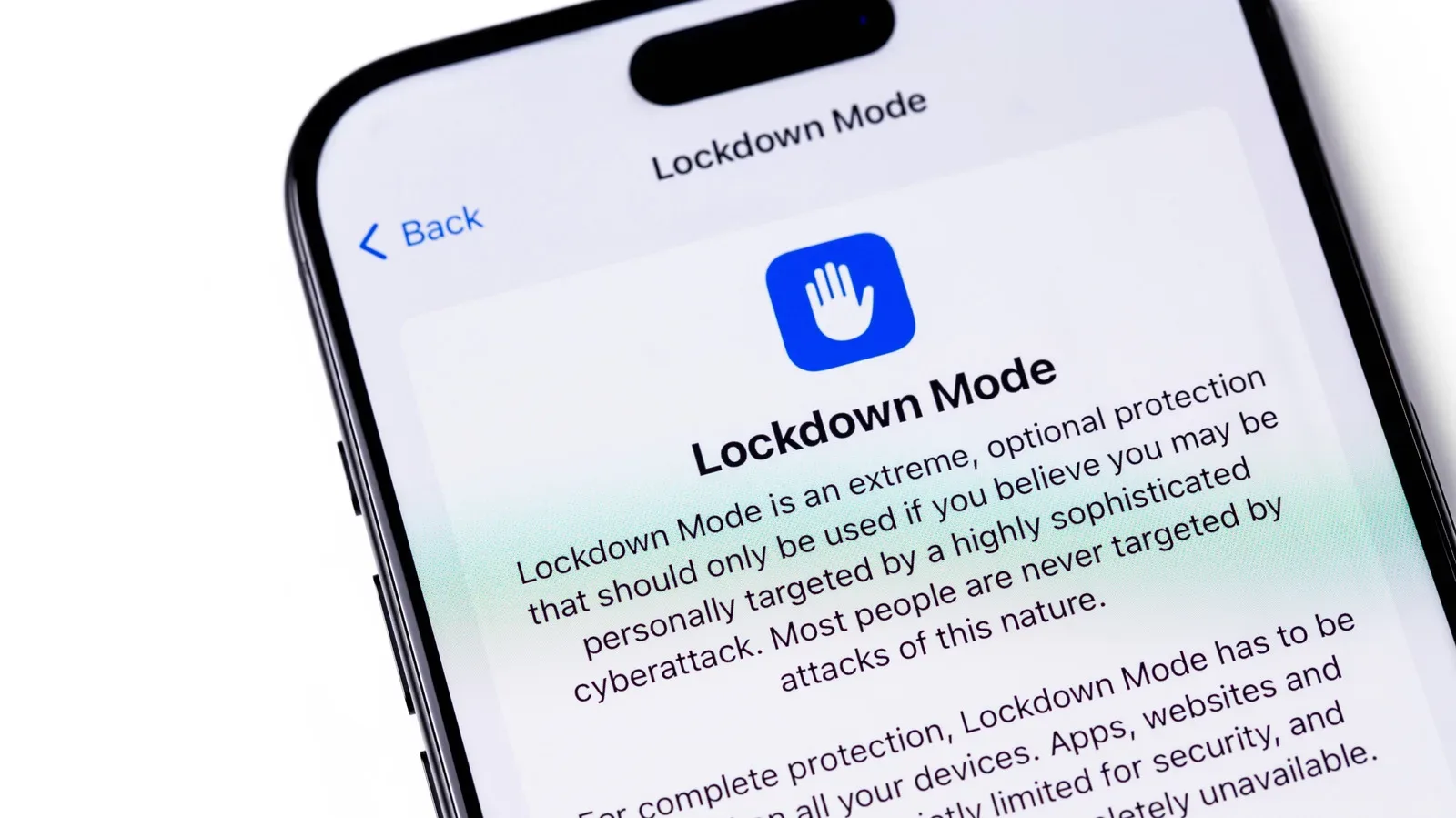
Apple advises people who receive a threat notification to enable Lockdown Mode and seek specialist assistance. Lockdown Mode is an optional security setting aimed at people who believe they may face an exceptionally sophisticated digital threat. Its purpose is to reduce the device’s potential attack surface by imposing stronger restrictions than normal day-to-day settings.
In practical terms, its relevance is not that every user needs to enable it forever. It is a defensive option for a situation where the potential threat is unusually targeted. People who receive a warning should prioritize preserving information, taking the notification seriously and obtaining qualified help rather than attempting to investigate an alleged attack alone.
A purported Apple warning can be checked by signing in directly at account.apple.com. Going to the account page yourself, rather than following a link embedded in an unexpected message, helps reduce the risk of falling for an imitation notice. That same direct-navigation habit applies to security notices from many services.
- Do not assume compromise: an alert signals suspected targeting, not confirmed access to a device.
- Do not dismiss it: Apple says its notifications are sent with high confidence.
- Verify independently: sign in directly to Apple’s account portal rather than relying on a link supplied in a message.
- Consider Lockdown Mode: it is specifically recommended by Apple for notified recipients.
- Get expert assistance: specialized support is preferable to improvised investigation when a sophisticated attack is suspected.
Security warnings need precise reading
The Thai discussions underline why language around spyware notifications needs to remain exact. The current alerts point to suspected mercenary-spyware targeting and have raised serious questions about surveillance risks for political figures and other recipients. They do not, on the information available, prove successful device access, identify a responsible party, or demonstrate that Pegasus was involved.
That precision does not reduce the seriousness of the matter. Targeted surveillance attempts are significant precisely because they are directed at specific people and can carry major personal, professional and political consequences. But careful separation of suspected targeting, confirmed compromise and attribution gives affected people a clearer basis for responding safely—and gives the public a more accurate picture of what the warnings do and do not establish.
Apple’s security work remains relevant across its device ecosystem, alongside its broader consumer hardware efforts; for more Apple-platform context, see our look at Apple HomeView and Apple TV 4K.