
Apple is releasing two new home-entertainment devices today, Friday, November 13: the Apple HomeView smart display and the fourth-generation Apple TV 4K. Both products were announced on October 13 and have been available for pre-order since mid-October. Each carries a $299 price.
The two launches share a clear theme: Apple is putting Siri AI at the center of a screen in the home. But they occupy different roles. HomeView is positioned as a dedicated display for household management and entertainment, while the refreshed Apple TV 4K is the company’s set-top box for the television, now with a faster A19 chip, Siri AI, a revised remote, and expanded HomePod mini 2 audio support.
For people building around Apple devices, the practical question is not simply which one is newer. It is whether the household needs an always-present smart display, an upgraded living-room streaming box, or both.
Apple HomeView: a shared screen designed around household profiles
HomeView is Apple’s new smart home display, designed for entertainment and managing the home. It is powered by Apple Intelligence with Siri AI and will be offered in tabletop and wall-mounted models.
The standout household feature is face recognition for up to six users. When HomeView recognizes someone, it can present that person’s personalized Home Screen. In plain terms, this is intended to make a single display feel less like a generic communal dashboard and more like a device that can surface information tailored to the person standing in front of it.
That matters because shared-room hardware has an inherent tension: it needs to be available to everyone without turning every interaction into a manual account-selection exercise. Apple’s approach is to use face recognition to identify the user and alter the starting screen accordingly. The supplied details establish the six-user limit, but do not specify exactly which individual Home Screen elements can differ, how recognition is managed, or what fallback behavior applies if HomeView does not identify someone.
Its tabletop and wall-mounted versions also suggest two distinct uses. A tabletop device can occupy a counter, desk, or side table, while a wall-mounted unit can function more like a fixed household control point. Those are placement options, not evidence that either model has additional capabilities beyond the shared HomeView feature set described here.
What Siri AI means in this launch
Siri AI is the AI-enabled Siri experience identified as part of both new products. On HomeView, it is explicitly tied to Apple Intelligence and sits within a product for entertainment and home management. The available information does not detail specific requests, connected-home standards, supported accessories, or automation controls, so prospective buyers should avoid assuming any particular new command or integration not listed for the product.
Still, the emphasis reveals the product’s intended model: voice and visual interaction are meant to work together on a screen that stays in a shared space. That can be a meaningful distinction from managing a home entirely through a phone, where the display is personal rather than communal.
HomeView will not initially be sold in the European Union
There is an important regional limitation. HomeView is not being sold in the European Union at launch because Siri AI is currently unavailable on iOS in the region due to regulatory constraints.
Apple has said it is working constructively with the EU to seek a path forward, but it has not supplied a timetable for availability. That leaves no basis for predicting when EU customers might be able to purchase HomeView. More importantly, this is not framed as a simple delayed shipment or a variation in color and configuration; the product is not being sold in the EU under the present circumstances.
The situation also illustrates how a software capability can determine a hardware product’s market reach. HomeView is presented as a Siri AI-powered device, and Siri AI’s current regional status on iOS is the cited reason it is absent from the EU. Anyone following Apple’s wider device plans can find another recent Apple hardware item in our Apple Watch Ultra 4 coverage, though the HomeView restriction is specific to the smart display and the circumstances described here.
The new Apple TV 4K adds A19 power, Siri AI and a trackable remote
The fourth-generation Apple TV 4K also arrives at $299, with 128GB of storage. Its listed upgrades are Siri AI, Apple’s A19 chip, an updated Siri Remote with Find My support, and support for four-speaker surround sound with HomePod mini 2.
The A19 is the product’s processor, or chip: the component that handles the device’s computing work. Apple has not provided performance figures in the available launch details, so it would be premature to attach a percentage uplift, frame-rate claim, or app-specific benefit to the A19. What can be said is that Apple is positioning the new Apple TV 4K with a newer chip as one of its defining changes.
For entertainment setups, 128GB is a concrete specification worth noting. Storage on a set-top box can matter for installed apps and locally held content associated with the device’s use, but the supplied information does not state how much of that capacity is available to the user after system software or how it compares with other configurations. The launch configuration named here is 128GB.
Find My comes to the Siri Remote
The revised Siri Remote supports Find My. Find My is Apple’s location-finding system, and its presence addresses a very ordinary living-room problem: a small remote is easy to misplace. The announcement does not spell out the finding process, precision level, range, or whether any conditions apply, so those details remain unconfirmed. The basic promise is straightforward: the remote can participate in Apple’s Find My system.
That upgrade is less glamorous than a new processor, but it may be one of the easiest additions for households to appreciate. A streaming box is only as convenient as its input method when someone wants to sit down and use it, and the remote is the component most likely to vanish into a sofa or move from room to room.
Four-speaker surround sound with HomePod mini 2
The other notable living-room feature is support for four-speaker surround sound with HomePod mini 2. “Surround sound” refers to an audio arrangement that uses multiple speakers to create a more enveloping sound field than a single speaker or a basic left-right pair. In this case, the relevant setup is specifically four HomePod mini 2 speakers paired with the new Apple TV 4K.
That wording is important. The stated support is for four-speaker surround sound with HomePod mini 2; it does not establish support for other speakers, other HomePod models, or every possible four-speaker arrangement. Likewise, no setup process, room-calibration behavior, codec support, or game-specific audio outcome has been detailed in the supplied information.
For players who use Apple TV 4K as part of a television setup, the prospect is potentially relevant because games and streamed entertainment share the same screen-and-audio environment. But the announcement does not make a dedicated gaming claim. The confirmed change is audio support for a four-speaker HomePod mini 2 configuration, not a promised upgrade to any named game, service, controller feature, or performance mode.
How the two $299 products differ
At the same price, HomeView and Apple TV 4K are not substitutes in a narrow technical sense, even though both are entertainment-adjacent Apple screens built around Siri AI.
- HomeView is a smart home display for entertainment and home management, offered as a tabletop or wall-mounted model. Its defining shared-device feature is facial recognition for up to six users and a personalized Home Screen for each.
- Apple TV 4K is the television-focused set-top box. Its stated hardware and experience changes include the A19 chip, 128GB of storage, Siri AI, a Find My-enabled Siri Remote, and four-speaker surround sound support with HomePod mini 2.
- Price is the same: $299 for either product.
- EU status differs sharply in the details supplied: HomeView is not being sold in the European Union at present, while the announcement only specifies that restriction for HomeView.
A household looking for a fixed shared display for home-management tasks has the clearer match in HomeView. A household looking to update the device connected to its main television has the clearer match in the new Apple TV 4K. People considering the Apple TV’s surround feature should also factor in that the stated arrangement depends on HomePod mini 2 speakers, which were announced alongside these products and launched on October 30.
A coordinated home push, with one major caveat
The timing connects all three products. Apple announced HomeView, the fourth-generation Apple TV 4K, and HomePod mini 2 on October 13. HomePod mini 2 reached launch first on October 30. Now the display and television box follow on November 13.
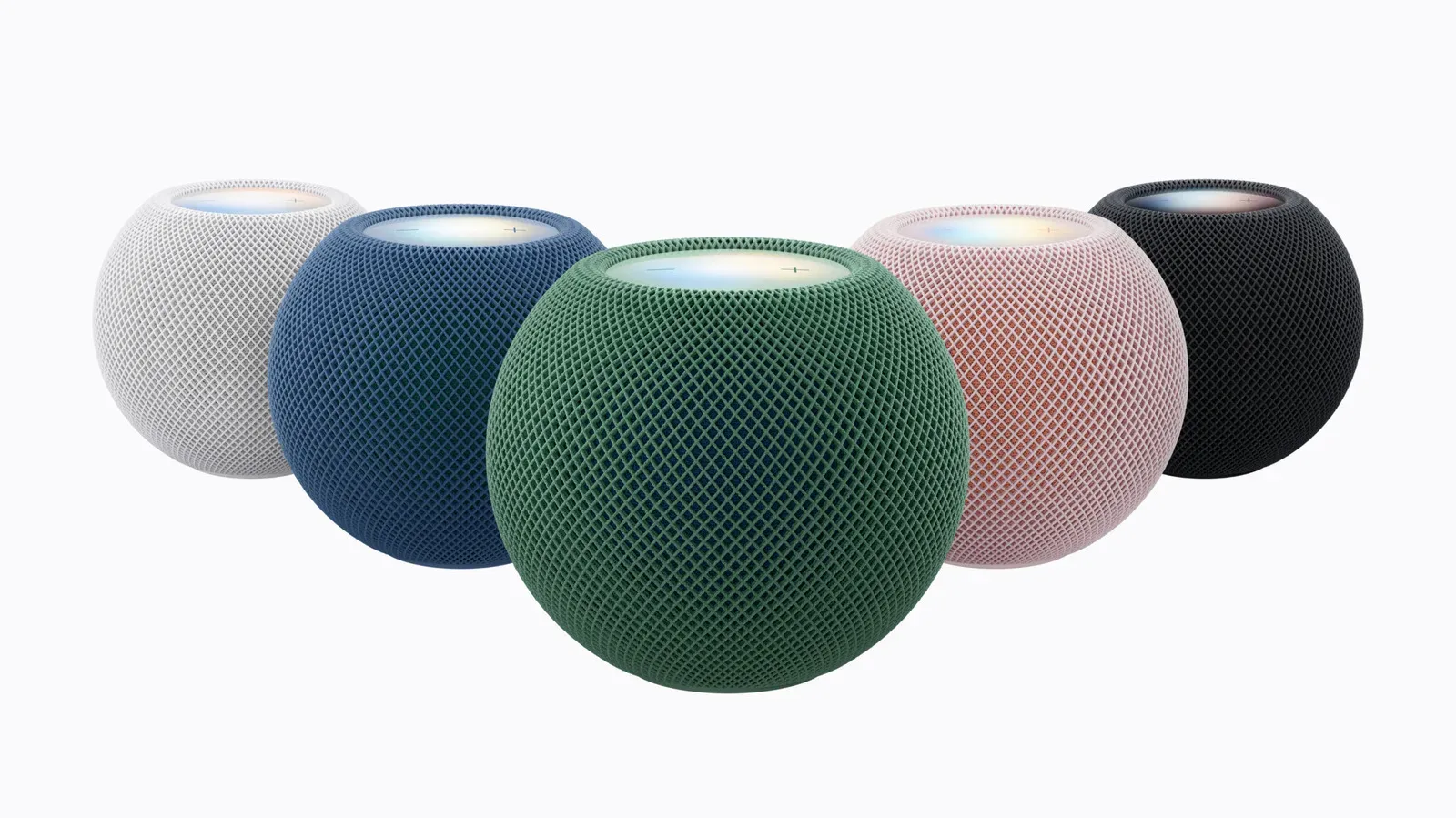
Viewed together, the releases form a home-focused group: a shared smart display, a refreshed TV hub, and the small speakers referenced by the Apple TV 4K’s new four-speaker audio support. The product details point toward an ecosystem in which Siri AI is a central interface across both the household display and the TV box.
However, the EU limitation prevents this from being a uniform rollout. HomeView’s availability is directly tied, in the information provided, to the regulatory constraints affecting Siri AI on iOS in the region. Until Apple gives a timeline or changes its sales status, prospective EU buyers should treat HomeView availability as unresolved rather than imminent.
For markets where both devices are being released, the immediate buying decision comes down to where the new screen belongs. HomeView targets the shared spaces where people handle home-related tasks and entertainment away from the television. Apple TV 4K targets the TV itself, with its A19 chip, updated Find My-capable remote, 128GB capacity, Siri AI, and a specified path to four-speaker surround sound through HomePod mini 2.