Archive of Our Own, better known as AO3, is facing a major outage that may keep the fanfiction archive inaccessible for substantially longer than first expected. The Organization for Transformative Works, the nonprofit that administers the platform, now estimates service restoration will take roughly two weeks and could take as long as four.
There is one important caveat in that update: AO3’s status account said it hopes the site can return in a degraded state sooner. That is a technical term worth taking seriously, because it does not necessarily mean every part of the archive will be fully available or reliably usable. The update also warns that there may be periods when the service is unavailable again if an early, limited restoration becomes possible.
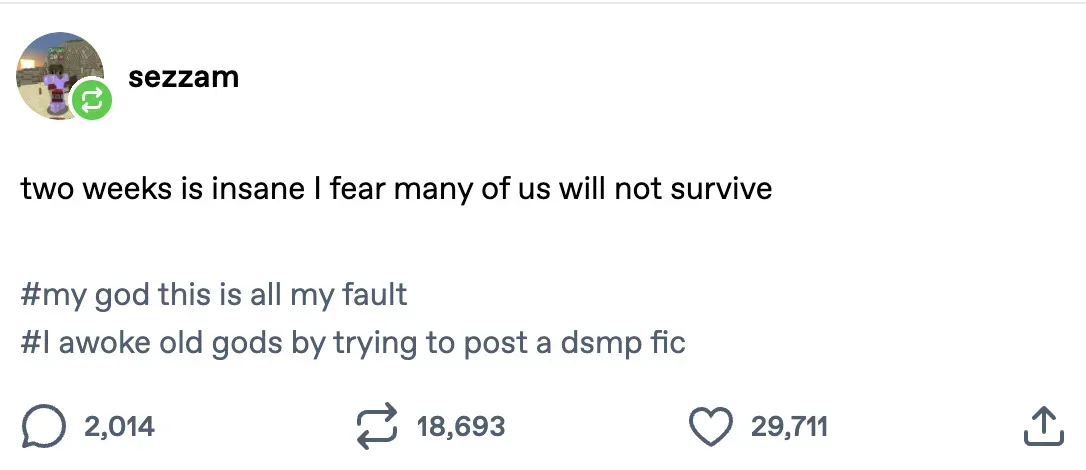
The immediate reaction from readers and writers makes sense. AO3 is not simply a place people visit for the occasional story. For many fandom communities, it is a habitual reading destination, an archive of ongoing serial work, and the place where bookmarked comfort reads, subscriptions, comments and creative communities live. A multiweek interruption does not just delay a new chapter. It temporarily cuts off access to a library that many people use every day.
What AO3 has actually said
The key facts are comparatively narrow, and it is worth keeping them narrow. The organization overseeing AO3 has identified a major outage and provided an estimated restoration window of around two weeks, potentially extending to four. It has expressed hope that a degraded version of the service could return earlier.
That is the confirmed picture. The available update does not state the underlying reason for the extended disruption. As a result, it would be premature to label it an attack, a data-loss event, a particular hosting failure, or any other specific technical incident. A long estimate is understandably alarming, but duration alone does not establish cause.
It is also an estimate rather than a promise. Restoration work can move faster than expected, but it can also uncover additional complications. Users should therefore treat the two-to-four-week period as a working range supplied by the service itself, not a precise reopening appointment.
“We estimate that service restoration for #AO3 will take around 2 weeks but it could be up to 4 weeks,” the AO3 status account said, adding that the team hopes to bring the site back in a degraded state sooner.
What “degraded state” could mean for readers
In plain language, a degraded service is a version of a site operating with reduced capability, restricted access, instability, or some combination of those things. AO3 has not detailed exactly which functions might be affected, so readers should avoid assuming that a partial return would mean normal reading, searching, posting and account activity all work exactly as before.
For an archive, that distinction matters. Reading an individual work, using tags to discover stories, logging in, leaving comments, receiving updates and posting a chapter are separate functions from a user’s perspective, even if they are connected behind the scenes. A partial restoration may prioritize bringing some access back while maintenance continues. It may also involve intermittent downtime, as the status update cautions.
The practical implication is simple: if AO3 returns before the repair work is complete, patience will still be required. Repeated refreshes or assuming an unavailable feature means a personal account problem will not make the recovery process easier. A service that is back in a limited form is not necessarily finished being repaired.
Why the outage has hit so hard
Fanfiction is often discussed as though it were a small, disposable corner of the internet. The response to AO3 being down illustrates the opposite. The archive supports readers looking for quick entertainment, writers sharing works in progress, and communities built around characters and settings that range from video games and comics to novels, television and beyond.
That variety is part of why the interruption feels so broad. People do not use an archive like AO3 for one uniform purpose. One person may be midway through a long-running story; another may be waiting for a subscribed creator’s next update; another may be looking for a particular trope, pairing or tag after a difficult day. Some are likely returning to works they have read repeatedly. The archive’s value is not only the newest upload. It is also the accumulated ability to find something specific in an enormous body of free, volunteer-maintained creative work.
Gaming fandom is part of that larger ecosystem. Games produce characters, worlds and unresolved narrative spaces that invite players to keep interpreting them after the credits roll. That impulse is visible across game criticism and community discussion, whether people are unpacking a famously unsettling opening such as Silent Hill’s alley introduction or creating their own stories around the worlds that stay with them. Fan work is one route through which that conversation continues.
None of this makes an outage less inconvenient, but it explains the unusually intense response. Online jokes about being unable to cope are jokes with a real foundation: a central routine and an established social space have suddenly vanished for an uncertain period.
A previous outage is not an explanation for this one
AO3 has suffered high-profile downtime before. In 2023, a hacktivist group claimed responsibility for a distributed denial-of-service, or DDoS, attack that made the site unavailable for several hours. The group also allegedly sought a $30,000 ransom.
A DDoS attack generally works by overwhelming a service with traffic or requests, making it difficult or impossible for legitimate users to access it. That historical episode is relevant background because it demonstrates that a widely used archive can become inaccessible abruptly. It should not, however, be used to fill in missing details about the present event.
The currently available information does not identify a DDoS attack, a ransom demand, or a responsible party. Treating the 2023 incident as confirmation of the cause today would turn history into speculation. The most responsible reading is that AO3 has experienced significant downtime before, while the reason for this longer projected outage remains unstated in the information available so far.
What readers and writers can do without making things worse
There is no evidence in the current update that ordinary users need to take emergency action concerning their accounts. In the absence of a specific notice from AO3, people should be cautious about anyone claiming to offer a workaround, a special mirror, account recovery help, or a shortcut to restored access.
- Follow official status updates: The platform’s status communication is the useful place to watch for changes to the estimate, any partial restoration, and notices about intermittent availability.
- Be skeptical of explanations without evidence: The cause of the outage has not been supplied in the available update. Posts that claim certainty should be treated carefully unless confirmed through official communication.
- Expect limitations if access returns early: A degraded state may be unstable or incomplete. Saving expectations for a fully normal experience until service restoration is complete will reduce confusion.
- Respect the maintenance window: A volunteer-run archive being repaired under difficult conditions is not helped by harassment. Frustration is understandable; directing it at people doing restoration work is not.
Writers may also be feeling a distinct kind of anxiety. AO3 is a publishing venue as well as a reading site, and a prolonged interruption disrupts routines around chapter releases, reader feedback and community events. But no current information establishes that user works have been lost or that creators need to repost material elsewhere. Those are separate questions from site availability, and the present update speaks to restoration timing rather than the status of individual works.
The central issue is reliability, not just entertainment
When a platform becomes a home for a large creative community, downtime is never merely about whether someone can pass the evening reading. It raises the uncomfortable reminder that access to online culture depends on infrastructure that can fail, require maintenance or face threats. An archive can feel permanent from the reader’s side while still relying on people and systems that need repair.
AO3’s importance comes partly from the scale and persistence of what users have placed there: fiction, feedback, recommendations and years of shared fandom history. That is why the outage has prompted both genuine concern and the kind of dark, exaggerated humor internet communities use when a favorite routine disappears. The jokes are a response to a real loss of access, even if it is temporary.
For now, the honest answer is also the least satisfying one. AO3 may be back in a reduced form before the full repair is finished, but its own estimate places complete service restoration at around two weeks, with a possibility of up to four. Until further details are provided, readers and writers have a timeline, an acknowledgment that partial access may come first, and no confirmed explanation for what caused the disruption.