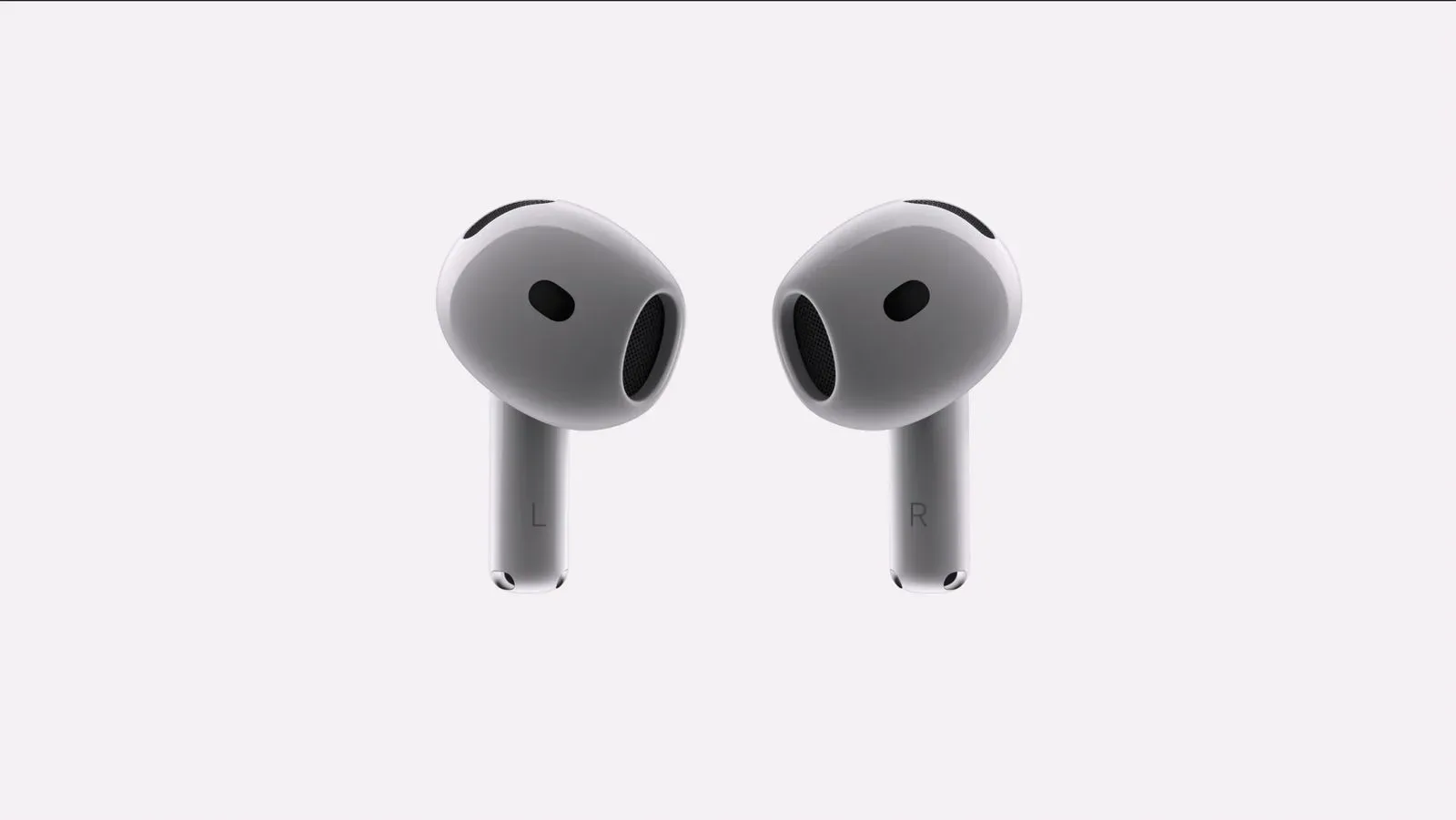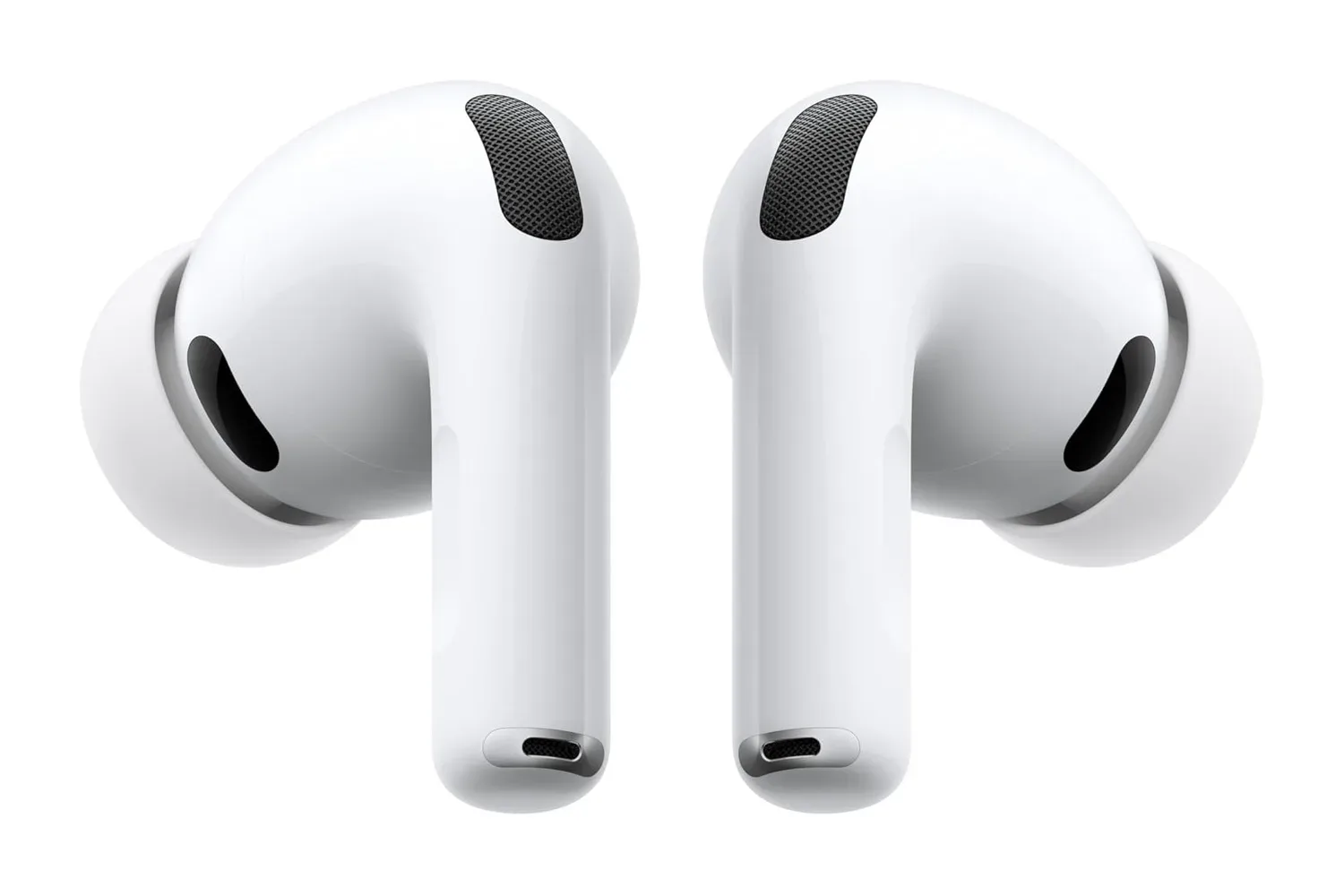
Wireless earbuds are usually judged on a familiar checklist: sound, fit, battery longevity, call quality, and whether active noise cancellation can stop a train carriage from becoming an unwilling guest vocalist in every album. Apple’s AirPods Pro 3 add a few more items to that list. The latest Pro model pairs noise-control features and a revised selection of ear tips with heart-rate monitoring, Live Translation capabilities, and an IP57 rating for both the earbuds and their charging case.
A listing has placed the AirPods Pro 3 at $199, compared with a stated usual price of $249. That is a $50 reduction, or 20% off. As ever with retail pricing, shoppers should check the current listing, seller, color or configuration details, and delivery information before treating a displayed deal as locked in. The more important part of the product story is what Apple is trying to put into a very small pair of earbuds: a fitness sensor, an audio-control system, and a travel-oriented translation helper, all without asking the wearer to balance a miniature computer on their ear like an old-timey radio operator.
Heart-rate data moves from the wrist to the ear
AirPods Pro 3 include photoplethysmography, or PPG, sensors in each earbud. In straightforward terms, the system sends infrared light into the ear canal and measures the amount reflected back. That information is used to assess blood flow and derive heart-rate data.
During a workout, the earbuds can send the collected information to the Apple Fitness app. For Apple users who dislike wearing a watch while running, training, or simply attempting to avoid another rectangular screen on the body, that is the central appeal. The earbuds can provide measurements from the sensors rather than relying on an estimated figure generated without a dedicated heart-rate reading.
It is worth separating that convenience from broader health promises. Heart-rate monitoring can be useful fitness information, but the details here describe workout tracking through Apple Fitness, not a replacement for medical equipment or professional advice. The practical question for prospective buyers is simpler: would earbud-based tracking make it more likely that they would actually record a workout? For someone already wearing headphones at the gym or on a run, the answer may be yes. For someone who hates in-ear buds, no sensor wizardry will successfully negotiate that relationship.
Live Translation targets the real-world travel conversation
Live Translation is another headline feature, designed for conversations between people who do not share a native language. With the AirPods in use, a wearer can hear a translated version of another person’s speech at a reduced volume. Their iPhone can then display or speak the translation of the wearer’s own response.
The feature’s promise is clear: less time passing a phone back and forth, less frantic app navigation, and fewer universal hand gestures while trying to order a meal, ask a question, or get through a routine exchange abroad. The iPhone remains an important part of the process, since it handles the visual or spoken output for the user’s translated speech. It is not presented as an entirely earbud-only conversation system.
Translation tools also work best when treated as assistance rather than a flawless substitute for shared language. Names, slang, noisy environments, regional expressions, and fast talkers can make even a clever digital interpreter sweat metaphorical silicon bullets. Still, embedding the listening side into earbuds is an appealing direction for travel and daily accessibility: it aims to make the flow of a conversation feel less like opening a settings menu in the middle of a side quest.
Apple-device owners following the company’s wider software plans may also be interested in signs that its voice and AI approach could be evolving. Recent iOS 27 and macOS Golden Gate code hints point to possible Siri AI changes, though those reported software indications are separate from the features described for AirPods Pro 3.
Noise cancellation gets help from foam-infused tips
Apple says AirPods Pro 3 deliver its strongest noise cancellation so far. The design change with the most immediate physical logic is the use of foam-infused ear tips. A more secure seal can reduce the outside sound that reaches the ear before active noise cancellation has to process anything electronically. That passive isolation is a useful foundation; the cleverest cancellation system still benefits from not beginning its job with every ambient sound already barging through the door.
There are five tip sizes, rather than forcing users to choose among a smaller set and hope one is merely tolerable. Fit affects more than comfort. It can influence stability during movement, low-frequency sound response, and the effectiveness of noise cancellation. More options do not guarantee every ear will find its soulmate, but they improve the odds that buyers can find a seal that works without settling for the least inconvenient choice.
The model supports three primary listening approaches:
- Active Noise Cancellation, intended to reduce surrounding sound.
- Transparency mode, which lets outside audio remain audible.
- Adaptive Audio, which blends elements of the other two modes in response to changing surroundings.
Conversation Awareness adds another layer. When the wearer starts speaking with someone, it reduces the audio playing through the earbuds. That is meant for those quick counter, office, transit, or household exchanges where removing an earbud is possible but mildly inconvenient. It is a small quality-of-life feature, but small quality-of-life features are often what separate “these are technically good headphones” from “these rarely annoy me,” which is arguably the true premium-audio endgame.
Eight hours with ANC enabled and flexible charging
Apple lists up to eight hours of playback with active noise cancellation enabled, compared with six hours for the second-generation AirPods Pro. Battery claims vary with volume, calls, features, and environmental factors, so “up to” deserves its usual asterisk-shaped halo. Nevertheless, the stated increase matters because noise cancellation is most useful on the days when a recharge is least convenient: long travel, busy work sessions, or a schedule constructed entirely out of errands.
The charging case provides additional charges before it needs outside power. It can be charged over USB-C or on a Qi charging pad, offering flexibility for people who already have a cable at a desk, a shared charging mat at home, or a travel bag that is one connector away from becoming an archaeological dig.
For buyers comparing current premium earbuds, the package is not solely about one major headline feature. The proposition is cumulative: longer stated ANC runtime, more fit options, environmental listening modes, workout heart-rate readings, translation assistance, and charging convenience. Someone who only needs earbuds for occasional podcasts may not require every part of that list. Someone who moves between commuting, gym sessions, calls, travel, and focused work may see the overlap as the point.
IP57 extends protection to the case, too
Both the AirPods Pro 3 earbuds and the charging case carry an IP57 rating. The rating indicates protection against dust ingress and resistance to temporary immersion in water under the conditions covered by the standard. In ordinary ownership terms, this is positioned as better peace of mind for sweat, rain, or an accidental puddle encounter than earlier AirPods generations offered.
That does not turn the set into aquatic listening gear. A rating is a defined durability classification, not an invitation to make a charging case the star of a backyard submarine experiment. But protecting the case as well as the earbuds is meaningful. The case is the part likely to live in a pocket, backpack, cup holder, or the chaotic bottom layer of a bag, where spills and bad weather have a habit of staging surprise boss fights.
Who the AirPods Pro 3 suit
At the reported $199 price, AirPods Pro 3 make the most sense for people who specifically value the combination of Apple Fitness integration, Apple-device translation support, active noise control, and the new fit and durability features. The heart-rate functionality could be particularly compelling for runners and gym users who prefer not to wear a smartwatch. Live Translation could matter to frequent travelers or multilingual households. And for listeners in loud environments, the foam-infused tips, five-size selection, and claimed ANC improvements may be more important than either of the marquee extras.
Potential buyers should be realistic about their priorities. A secure in-ear seal is necessary to get the most from this type of product, and personal comfort remains deeply individual. Translation is useful support, not magic. Health-related readings are fitness data, not a clinical diagnosis. And a discounted price is still an expense worth comparing against how often the earbuds would be used.
Even with those sensible caveats, AirPods Pro 3 present a notably broad set of functions for a pair of in-ear headphones. They are built not just to play audio, but to follow a workout, soften a noisy environment, make brief conversations easier, and withstand the kind of weather that tends to arrive exactly when hands are full. At $199 versus the stated $249 regular price, the listing gives Apple-centric buyers a lower entry point into that all-purpose earbud pitch.
Shop the products
Check current price, model and availability at the retailer.