Two high-profile game series have become the latest flashpoints in the fast-moving world of generative-AI-assisted development. Bethesda and Activision, both owned by Microsoft, have taken action against separate projects that were presented online as AI-built recreations or reconstructions of Fallout and Call of Duty: Modern Warfare 2.
The episodes are notable not merely because the projects invoked major game properties, but because their creators framed AI as the thing that made them possible at unusual speed and scale. One effort attempted to bring a Fallout-like open world to a web browser without conventional texture or sound assets. The other was described as an AI-agent-assisted decompilation of the original Modern Warfare 2 on PC. In both cases, public posts, footage, and access to the work appear to have vanished or been curtailed shortly after gaining attention.
That leaves a practical lesson for anyone experimenting with AI coding tools around familiar games: generating material with new tools does not erase the intellectual-property questions created by rebuilding a recognizable game, using its identity, or distributing a project tied to its code and assets. The technology may accelerate prototyping; it does not make a franchise owner’s concerns disappear.
A browser project called Fallout: New York is abandoned
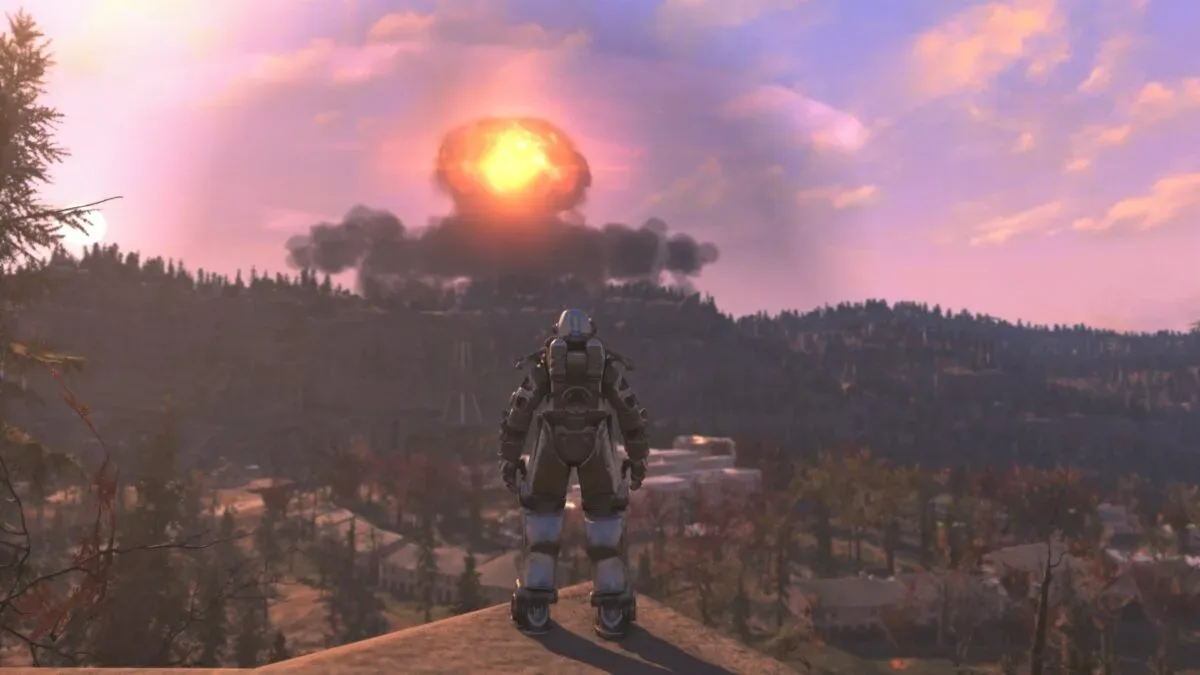
The first project, Fallout: New York, was shared online by a creator using the name ChrisFirst. It was presented as an attempt to recreate the open-world shooter experience in New York City in a form playable in a browser. The creator said Claude Opus 5.5 was used to code it.
The pitch leaned heavily on the claim that the game had been generated rather than assembled from a conventional bank of game assets. ChrisFirst listed quests, dialogue trees, V.A.T.S., and a functional Pip-Boy among its systems, while saying the project used no texture files or sound files. In the creator’s description, buildings, weapons, faces, and sounds were generated by code.
Those details help explain why the clip travelled quickly. A browser-playable experiment that appears, at a glance, to evoke a sprawling, recognizable role-playing series is an easy demonstration of how far rapid AI-assisted development can seem to go. The September 28 post drew more than 3.5 million views.
But the project’s public life was brief. On October 1, ChrisFirst said the work was being abandoned after what was described as a cease-and-desist notice from Bethesda over infringement of its intellectual property. The creator shared a screencap characterized as the legal threat and apologized to people who had enjoyed the project.
It is important to keep the limits of the public record in view. The available account establishes that the creator said a notice was received and that the project was abandoned; it does not provide a complete legal filing, a court ruling, or a detailed public explanation of every element that prompted Bethesda’s objection. Still, the outcome is immediate enough for the project itself: the public experiment was halted.
Related coverage includes Bethesda and Activision Move Against AI-Driven Fallout and Modern Warfare 2 Projects.
Why the “no asset files” claim is not a clean dividing line
In game-development terms, assets are the individual materials that make up a game’s presentation and content: textures, sound effects, music, 3D models, animations, interface artwork, and more. A project that does not directly copy such files may be making a different technical claim from one that simply redistributes extracted data.
That distinction can matter technically, but it does not by itself settle broader questions around a project’s identity or what it reproduces. The Fallout name, the Pip-Boy, V.A.T.S., and the series’ overall recognizable presentation were central to the project’s own public framing. The episode therefore illustrates a basic problem with describing something as “generated from scratch”: a project can be newly generated at the file level while still being marketed or understood as a recreation of an existing property.
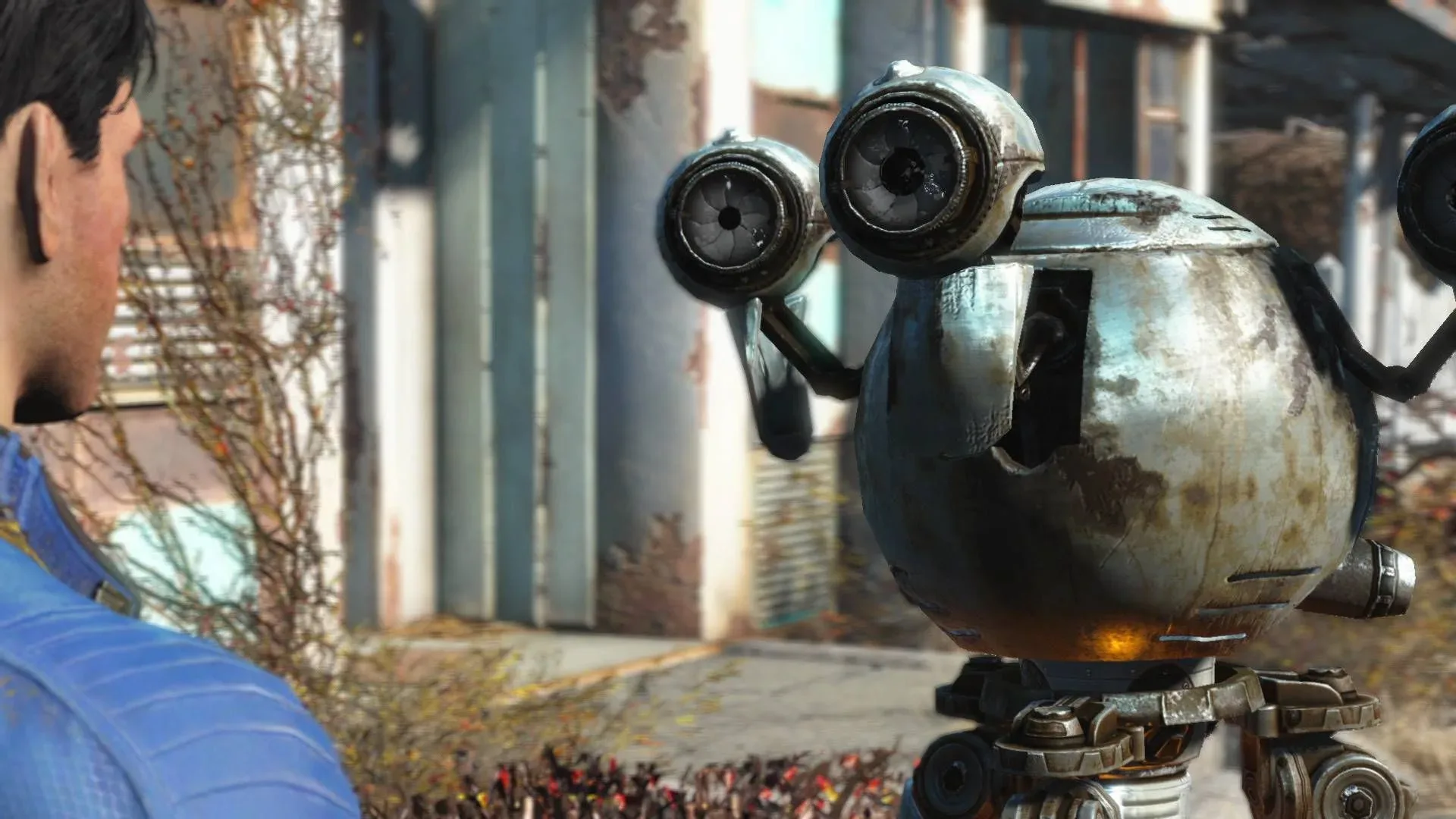
V.A.T.S., for example, is the targeting system strongly associated with Fallout, while the Pip-Boy is the franchise’s signature wrist-mounted interface. Naming those systems was an effective shortcut for explaining the demo to viewers. It also made the relationship to Fallout explicit rather than incidental.
Modern Warfare 2 footage is disabled after an AI decompilation claim
A separate project involving the original Modern Warfare 2 was shared by Maurice Heumann on September 30. Heumann said generative AI was being used to decompile the PC game’s source code, with 17 agents working in parallel. He characterized the project as fully playable, said most visible bugs had been resolved, and said he had achieved a nuke kill streak.
Decompilation is the process of attempting to turn compiled software—code transformed into a form a computer can run—back into a human-readable or higher-level representation. It is not the same thing as writing an inspired game from a blank document. A claimed decompilation of an existing commercial game is inherently much closer to the original software than a loose genre homage, which is why the description drew obvious attention.
The role of “agents” also deserves translation. In this context, the word refers to AI systems assigned tasks as part of a broader workflow, rather than one person manually progressing through every task alone. Heumann’s claim of 17 parallel agents conveys the perceived advantage: simultaneous work on several problems, such as reconstruction, bug fixing, and testing. It is a model of development that can make a technically ambitious claim sound less out of reach for a small project.
Activision subsequently had the footage in Heumann’s post disabled. In place of an apparent kill-streak clip, the platform displayed a notice stating that the media had been disabled following a report by the copyright owner. A link that was said to host the code was also no longer reachable.
Again, the visible result is clearer than the complete legal story. The notice signals a copyright-owner report and the disappearance of a purported hosting destination. It does not, on its own, reveal every allegation, the precise contents of the code, or the ultimate legal merits of any dispute. What it does demonstrate is that a project can lose its public showcase and distribution route very quickly once a rights holder intervenes.
“Vibe coding” is fast, but public attention can be faster
Both projects have been grouped into the broad, often imprecise label of vibe coding. The term generally describes a workflow where a creator tells an AI system what they want in natural language and iterates on the result, instead of personally authoring every line of code. It can involve an experienced programmer using AI for support, a non-programmer directing tools through prompts, or a hybrid approach. It is not a precise technical standard, and it says little by itself about quality, ownership, or legality.
What is clear from these two cases is the collision between that accelerated workflow and the attention economy. A traditional fan experiment might take a long time to reach a convincing visual state, if it gets there at all. AI-assisted tools can make a provocative prototype, clip, or claim feel shareable before its creator has fully assessed the consequences of associating it with a major franchise.
Visibility is a double-edged advantage. ChrisFirst’s Fallout clip reached millions of views before the project was abandoned. Heumann’s posts similarly publicized not only the claimed technical progress but also the connection to a specific Call of Duty game and the fact that it was being decompiled. In each instance, the public demonstration made the project easier for interested players to discover—and easier for a rights holder to identify.
There is also a gulf between a proof of concept and a sustainable release. A short video can communicate the broad idea of a browser Fallout or a rebuilt Modern Warfare 2. A lasting public project needs ongoing hosting, stable access, further development, and a distribution plan. Those are exactly the points at which ownership claims and takedown processes become operational rather than theoretical.
What creators can take from the two takedowns
Neither episode establishes a universal rule for AI-assisted game creation. They do, however, point to practical boundaries worth considering before a project is promoted.
- Avoid presenting a project as a recreation of a protected game. The more directly a prototype relies on a franchise title, recognizable systems, or claims to reconstruct a particular release, the more obvious its relationship to that property becomes.
- Do not assume generated output resolves the underlying issue. The Fallout project’s claimed absence of texture and sound files did not prevent a reported cease-and-desist from ending the public effort.
- Be especially cautious with code reconstruction claims. A project described as decompiling an existing PC game invites a very different level of scrutiny from one that uses an original setting and independently designed mechanics.
- Plan for the consequences of going viral. A large audience can validate interest in a prototype, but it also concentrates scrutiny. Links, clips, and social posts can all become points where access is interrupted.
- Build original ideas around original names and presentation. This is not a guarantee against disputes, but it is a materially different creative posture from advertising a remake, clone, or reconstructed edition of a named commercial game.
The wider policy argument remains unsettled. One response to the latest removals compared the situation to the music industry’s battles during the Napster era and argued that publishers were pursuing individual creators rather than the technology itself. The supplied information does not show that Activision, Bethesda, or other major publishers have launched comparable legal action against AI companies over these kinds of outputs. It does show that rights holders can target specific public projects now.
That difference matters. A broad fight over AI models would be a systemic dispute about tools and training. These actions are narrower and more immediate: a named project, visible footage, a reachable link, and a copyright-owner complaint or reported legal notice. For companies, that may be a more direct way to respond to a work that appears to trade on a known property. For creators, it means the speed promised by agent-driven coding may be matched by the speed at which a public project can be taken offline.
The tension is likely to continue as AI systems make it easier to mock up mechanics, interfaces, environments, and game-like experiences from simple prompts. Readers following the broader conversation around powerful AI deployment can also see why release practices and safeguards are receiving attention in this discussion of redundancy in frontier AI releases. For game creators, though, the near-term takeaway is more concrete: a rapid prototype may be technically impressive, but attaching it to an established franchise can make it short-lived.