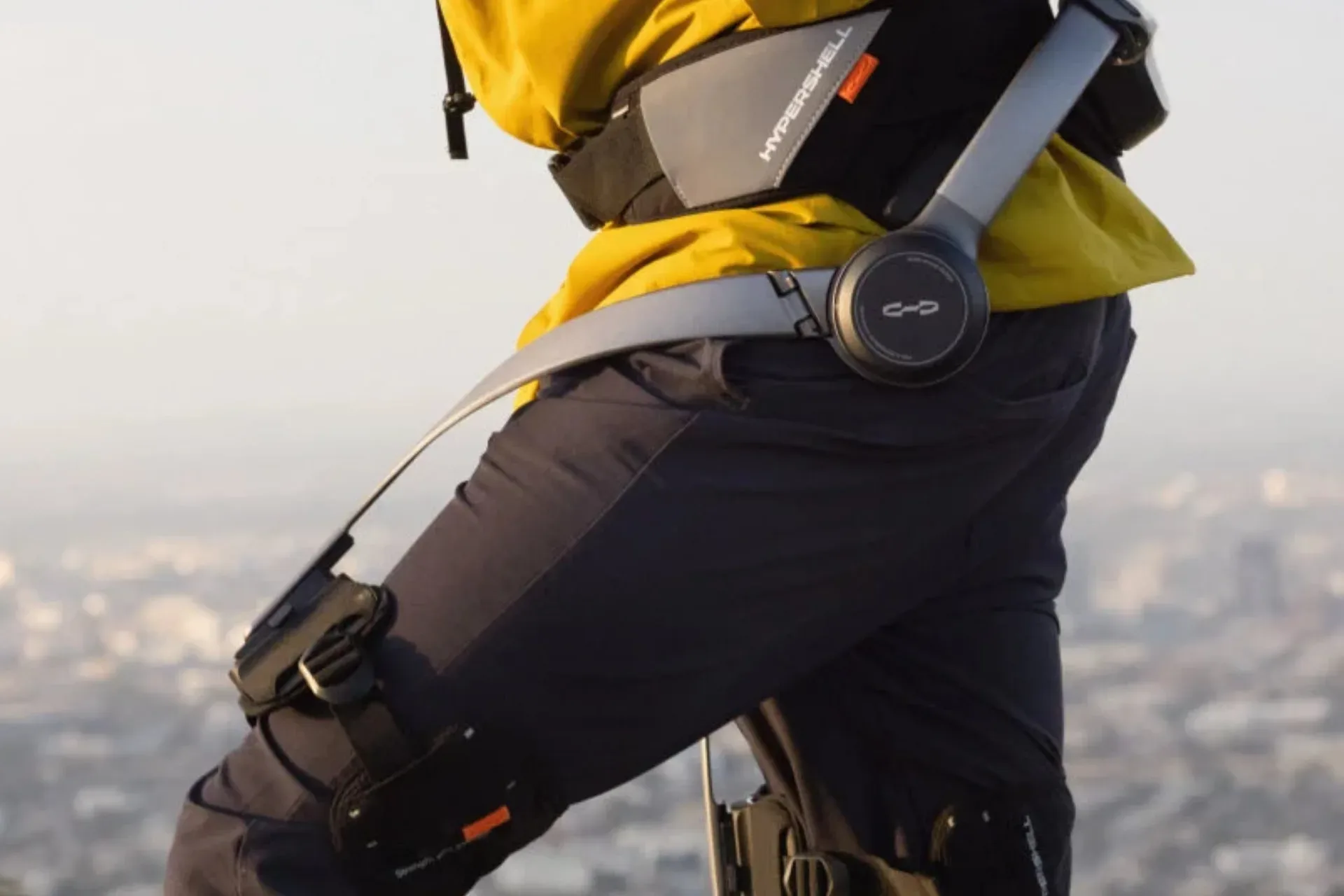
Video games have spent decades making powered legs look either miraculous or deeply inconvenient: huge armored frames, hydraulics loud enough to alert every enemy in the area, and a battery that somehow lasts exactly through the important cutscene. Hypershell’s X Series takes a far less theatrical route. These are wearable lower-body exoskeletons intended to support walking, hiking, climbing and carrying rather than replace the person inside them.
For Black Friday, Hypershell’s three X Series models are listed at reduced prices through November 30: the X Pro S at $799, down from $999; the X Max S at $1,199, down from $1,499; and the X Ultra S at $1,699, down from $1,999. The offer began November 19 and is available through Amazon.
That still puts the hardware firmly in specialist-gadget territory, not casual impulse-buy territory. But the appeal is clear for anyone whose game inventory habits have made a normal backpack feel like a missed opportunity. This is a real-world device designed to lend powered assistance to the legs during long days on foot, with each model targeting a different mix of everyday walking, hikes, steep terrain, loads and distance.
A powered assist, not a walking replacement
The key idea behind an exoskeleton such as the X Series is assistance. The wearer remains responsible for moving, balancing and walking. Hypershell describes the equipment as amplifying natural motion so that the legs do the work with less strain, rather than acting as a machine that pulls someone along.
That distinction matters. “Power armor” is an entertaining shorthand, especially for players familiar with cargo-hauling journeys in Death Stranding, but it can imply capabilities not described here. The X Series straps around the wearer’s waist and legs. Its stated physical design includes a soft-pack suspension system, a three-zone waist pad, lower-back support and anti-slip honeycomb silicone at contact points. Those details point to the basic challenge of any body-worn device: power is only useful if it remains comfortable and stable while the body changes pace and position.
Hypershell says its HyperIntuition End-to-End AI System reads movement and activates assistance within 0.31 seconds. The company also says the system remains aligned with a user’s gait 97.5% of the time across varied terrain.
Here, gait means a person’s pattern of walking: the timing and rhythm of steps, including how legs move through each stride. Synchronizing with that rhythm is important because delayed or poorly timed help could feel awkward rather than supportive. The 0.31-second response time and 97.5% gait-sync figure are manufacturer claims, useful as a description of the intended behavior but not a guarantee that every wearer will experience the same result on every surface.
What the durability language means
Hypershell says the X Series operates from -4°F to 140°F and carries an IP54 rating. The temperature range gives a stated operating window for outdoor use, while the IP rating addresses resistance to particles and water.
Related coverage includes Hypershell’s X Series exoskeletons drop to $799 and up for Black Friday.
IP54 is a protection classification. In this case, the “5” indicates protection against dust sufficient to prevent harmful deposits, while the “4” refers to protection against splashing water. It does not mean that the exoskeleton is described as waterproof or suitable for submersion. For a product positioned for hiking and outdoor movement, that is a practical boundary worth keeping in mind: mud, dust and rain splashes are not the same conditions as immersion.
The company says TÜV Rheinland and SGS independently certified reductions in muscle load, with measurements of up to a 42.7% reduction in average heart rate and up to a 39.2% reduction in oxygen consumption. These are substantial figures, but the wording matters: “up to” describes a maximum measured outcome, not a result promised to all users. Individual outcomes can vary with route, pace, terrain, carried weight and the person wearing the device. The supplied details do not identify the test conditions or protocol, so the numbers should be read as performance claims associated with testing rather than a universal expectation.
Three models, separated mostly by output and range
The X Series lineup is relatively straightforward on paper. The step up from Pro to Max increases claimed power and range, while Ultra keeps Max-level power but adds a second battery and a higher claimed assist speed.
Hypershell X Pro S: walking and lighter hikes
The entry model is the Hypershell X Pro S, listed at $799 during the promotion. Hypershell positions it as an all-round model for daily walking and lighter hiking.
- Claimed maximum power: 800W
- Claimed physical-exertion reduction: 30%
- Claimed assist speed: up to 12.4 mph
- Claimed range: about 10.9 miles per charge
- Black Friday list price: $799, reduced from $999
Watts, abbreviated as W, are a measure of power: the rate at which the device can deliver energy. They are not a simple measure of how far it can travel. That is why the separate range figure is important. For someone considering the Pro S, the quoted 10.9-mile range is likely the more immediate planning number, although actual distance can reasonably depend on how much assistance is used and the conditions of the trip.
Hypershell X Max S: more range for tougher routes
The Hypershell X Max S is aimed at long treks, trail running and steep climbs. It is listed at $1,199 for the sale, a $300 reduction from its $1,499 regular price.
- Claimed maximum power: 1,000W
- Claimed physical-exertion reduction: 39%
- Claimed assist speed: up to 12.4 mph
- Claimed range: about 18.6 miles per charge
- Black Friday list price: $1,199, reduced from $1,499
Compared with the Pro S, Max S retains the same stated 12.4 mph assist-speed ceiling but raises maximum output from 800W to 1,000W. More notably for planning a day outdoors, its claimed range rises from roughly 10.9 miles to 18.6 miles. Hypershell also assigns it a higher stated exertion-reduction figure, 39% rather than 30%.
None of that means the Max S is automatically the right purchase for every walker. If the normal use case is shorter, lighter outings, a larger range specification may be capacity that goes unused. Conversely, users choosing it for longer or steeper trips should regard the figure as a stated estimate rather than a substitute for route preparation and an awareness of battery limits.
Hypershell X Ultra S: the second-battery option
The Hypershell X Ultra S is the expedition-oriented version. It is listed at $1,699, reduced from $1,999, and is intended for heavy loads, difficult terrain and extended excursions.
- Claimed maximum power: 1,000W
- Claimed physical-exertion reduction: 39%
- Claimed assist speed: up to 15.5 mph
- Claimed range: about 37.3 miles
- Battery arrangement: second battery, stated to double range
- Black Friday list price: $1,699, reduced from $1,999
Ultra does not increase the stated output beyond the Max S’s 1,000W, nor does it raise the listed exertion-reduction claim above 39%. Its defining difference is endurance: Hypershell says the second battery doubles the range to about 37.3 miles. It also raises the claimed maximum assist speed to 15.5 mph.
That makes the Ultra’s higher price a range-and-mobility decision more than a raw-power decision. Buyers comparing the Max S and Ultra S should focus on whether the second battery and higher assist-speed claim fit their actual outings. A model designed around long expeditions is difficult to justify on specification alone if it will spend most of its life walking flat city blocks.
How to read the headline numbers
The X Series specifications use several different measurements that should not be blended together. Power in watts concerns output. Miles concerns estimated travel distance on a charge. Assist speed is the stated speed up to which the system provides help. Exertion, heart-rate and oxygen-consumption reductions describe reported physiological effects in particular measured circumstances. Each answers a different question.
For prospective buyers, the sensible starting point is the intended activity. The Pro S is positioned around routine walks and easier hikes. The Max S is framed for longer treks, trail running and steep climbs. The Ultra S adds the second battery and is positioned for heavy loads, challenging terrain and extended expeditions. The company also points to intelligent assist modes and a companion app, though the supplied information does not specify what those modes do or which details the app provides.
The product’s appeal is therefore less about turning a person into a game character than about a pragmatic promise: a compact wearable system that may reduce some of the effort involved in covering ground. There is a familiar technology-shopping trap in treating a maximum number as the whole story. With an exoskeleton, fit, comfort, route type, battery needs and the kind of activity being assisted all appear at least as significant as the largest wattage figure.
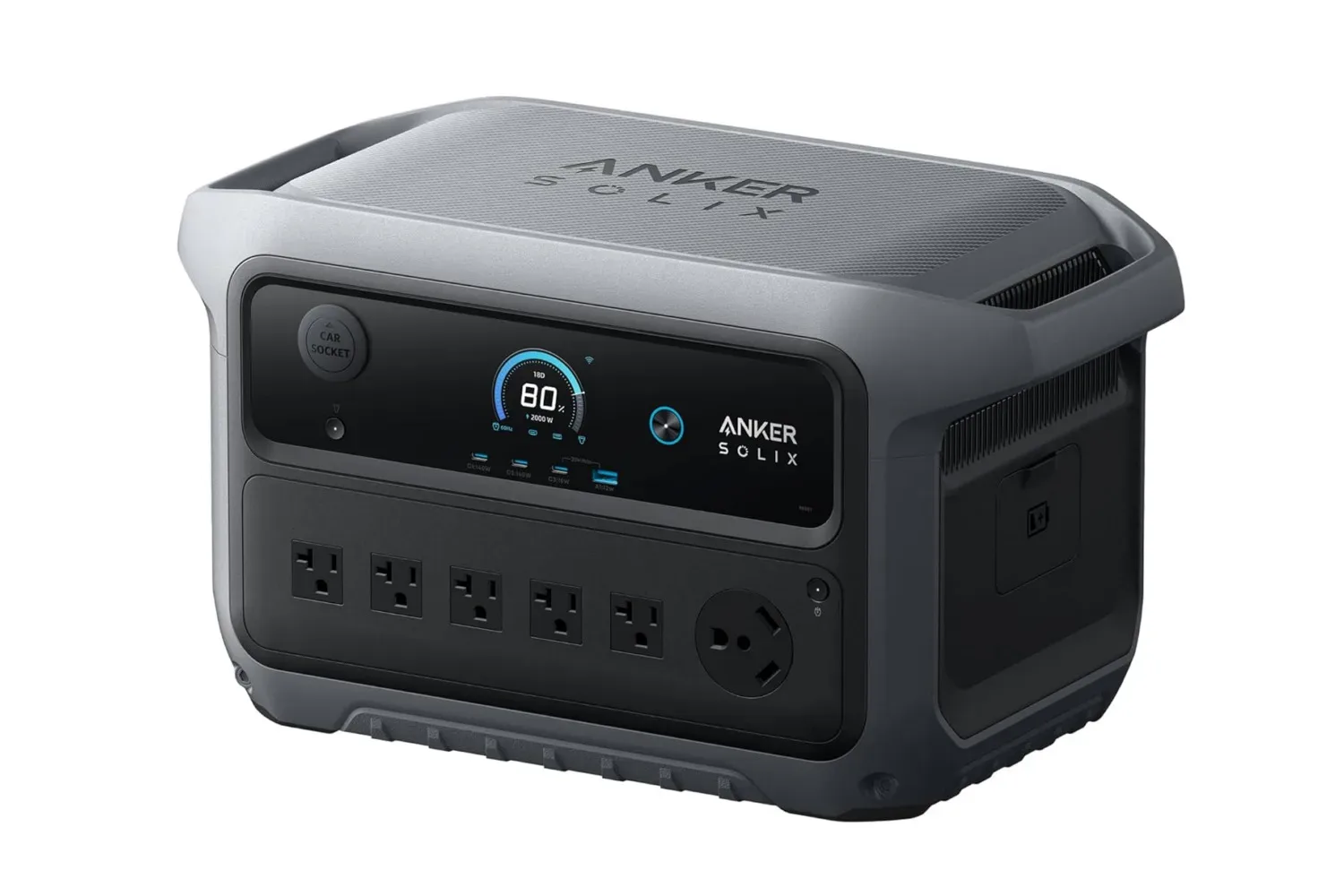
There is one small comparison point for shoppers scanning Black Friday specifications across very different categories: a watt number does not carry the same meaning from one product class to another. A wearable exoskeleton’s output cannot be directly compared with the output rating of a home backup battery system, such as the one discussed in this backup-power listing. The shared unit measures power, but the devices serve entirely different purposes.
The practical takeaway from the sale
All three Hypershell X Series exoskeletons are listed at their stated Black Friday prices from November 19 through November 30. The Pro S is $799, the Max S is $1,199 and the Ultra S is $1,699. The price gaps are $400 from Pro to Max and $500 from Max to Ultra, so the decision is meaningful rather than incremental.
For gaming-minded readers, the closest analogy is equipment selection before leaving a safehouse: do not pay for the longest range merely because the stat is bigger if the mission is a short walk, and do not assume a lighter build is suitable for a demanding route just because it costs less. Hypershell’s claims make the X Series an intriguing example of a real product borrowing the fantasy of powered movement while staying rooted in walking assistance, wearable comfort and battery planning.