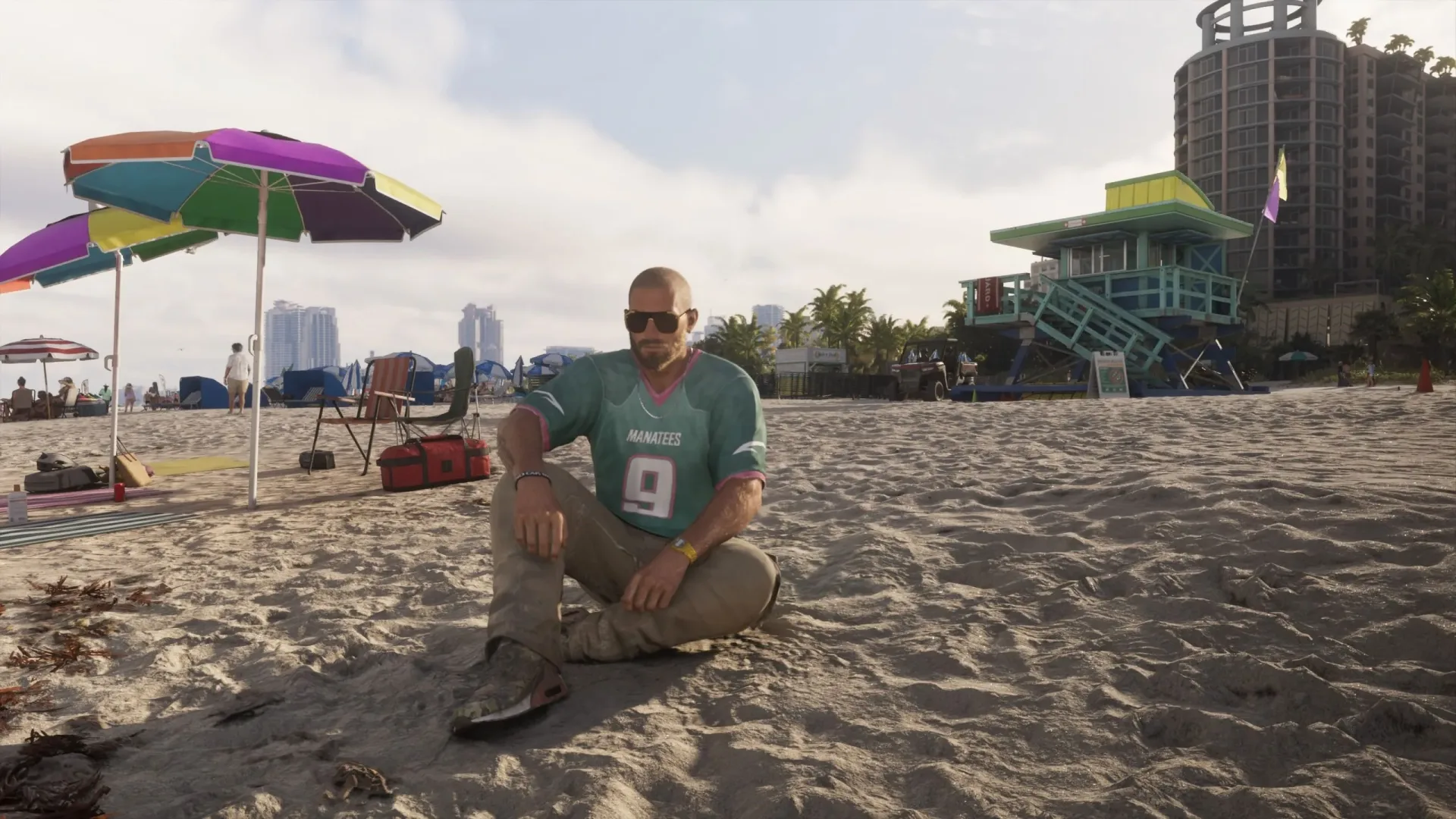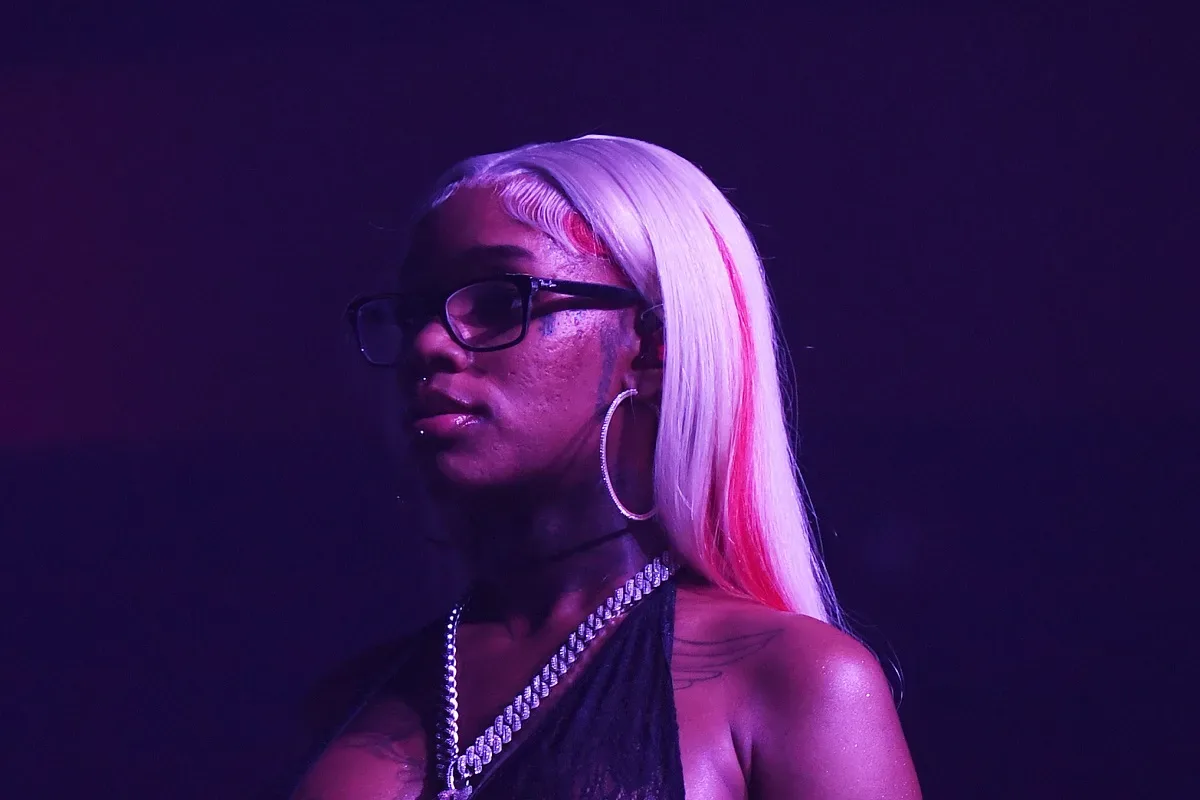

Some game roles arrive with an audition script, a character name and a clear description of the project. Krissy Celess’ route to Grand Theft Auto VI apparently began at the opposite end of that spectrum: a direct message from a casting agent, an invitation to audition, and no indication of what she was auditioning for.
Celess, who plays Roxy Rashad in GTA VI, described the process during a livestream with DDG. Her account offers a small but useful window into the deliberately guarded machinery behind a major game production. The artist said it took roughly two years from that initial outreach before she received an official casting agreement.
Roxy Rashad appears alongside Hood Brat’s Bae-Luxe as the rap duo Real Dimez. Players encounter the pair in missions during the game’s middle portion. Celess and Hood Brat have drawn praise for those portrayals, but Celess’ comments underline how long the work can begin before an audience knows a character exists—let alone before it hears the performance in context.
An audition with no project attached
The striking detail in Celess’ story is not simply that a casting agent contacted her through a DM. It is that the agent would not identify the project. That lack of detail can sound unusual from the outside, but it fits the intense confidentiality associated with a game on GTA VI’s scale.
Confidential casting is a useful term here: it describes a process in which a performer may be asked to read, respond or otherwise audition without being told the final title, the full role, or the larger story. The practical objective is information control. If a game, character name, plot point or collaborator is identified too early, even a routine audition can become a route for details to spread beyond the production.
What Celess has described does not reveal the material used in her audition, how many stages it involved, or what happened during the period before her agreement arrived. Those details remain unknown. Still, the broad outline is clear: an early, unidentified invitation became a prolonged casting process, and then a formal agreement made the role official.
That distinction matters. An invitation to audition is not the same as being hired, and a casting agreement is not merely a ceremonial email. It is the point Celess identifies as the official confirmation after a long stretch of uncertainty. For performers, that gap can mean balancing an opportunity that cannot be publicly discussed with the ordinary reality that nothing is settled until it is settled.
Why Real Dimez benefits from performers with music-world experience
Real Dimez is not presented merely as background radio flavor. Roxy Rashad and Bae-Luxe form a rap duo that players work with in several missions. That setup asks for characters who can sit naturally at the intersection of music, performance and the game’s fiction.
Related coverage includes Krissy Celess Details Her Long Road to Playing Roxy Rashad in GTA VI.
Celess had already been building a career in rap before the GTA VI role. Her casting consequently reads as an example of a production looking beyond conventional voice-acting lanes when a character’s identity is tied closely to a contemporary musical scene. That is analysis rather than a claim about the selection criteria: the available account does not say why Celess was chosen, who else auditioned, or whether her own music was part of the evaluation. But her existing background gives the eventual fit an obvious logic.
There is also an important difference between a musician appearing in a game and a musician performing a character within it. A cameo can be limited to a name, likeness or isolated contribution. A character role requires a sustained fictional identity: dialogue needs to land as dialogue, relationships need to feel believable, and a mission appearance needs to serve the player’s progress through the story. For Roxy, that work is shared with Hood Brat’s Bae-Luxe, since the two characters function as a duo rather than as disconnected guests.
The source material establishes that the performers have received positive attention for their work, though it does not provide a numerical assessment, a critical consensus, or a breakdown of which scenes have resonated most. It is therefore safest to say their reception has been favorable, not to turn that response into a definitive ranking of GTA VI performances.
Secrecy is part of the story, not a missing detail
It would be easy to treat the two-year timeline as a mystery to solve. But the central takeaway may be simpler: Celess’ story demonstrates why externally visible timelines rarely capture the full shape of casting for a tightly protected project.
Games combine many moving parts. Character work may depend on story development, mission structure, scheduling and contractual steps. None of those factors are confirmed as the reason for this particular timeline, and it would be speculation to assign the delay to any one of them. What Celess does confirm is the duration and the eventual agreement. That alone is enough to show that “cast in a game” can conceal a much longer process than the final credits suggest.
Her anecdote also gives viewers a useful reason to resist reading silence as a lack of activity. For about two years, she says, the role was somewhere between an initial approach and an official agreement. In a confidentiality-heavy environment, performers cannot necessarily explain where they are in that process—or even acknowledge that a process exists.
For readers exploring other parts of the game, our guide to GTA 6 controls and world details worth trying in Leonida focuses on the player-facing side of the experience. Celess’ account points toward the less visible layer: the extended human work that can sit behind characters encountered during a normal run through missions.
Celess praises the working relationship
Beyond the path to the role, Celess said she enjoyed working with Rockstar Games and spoke positively about the company as a collaborator. That is a direct assessment of her own experience, not a complete picture of every department or production role. It is nevertheless meaningful testimony from someone involved in the game’s character work.
Her comments provide a grounded counterweight to the mystique surrounding blockbuster development. The secrecy around the audition may be the headline-worthy detail, but the performer’s own summary is positive: an unexpected approach turned into a formal opportunity, and the resulting work is now audible in the game.
For players, the practical implication is modest but worthwhile. Real Dimez can be read not only as mission characters but as roles shaped by artists with an existing connection to rap performance. The available information does not establish how much creative input Celess or Hood Brat had in writing, music, character design or mission construction, so those questions should remain open. What is known is more specific: Celess is Roxy Rashad, Hood Brat is Bae-Luxe, their characters are Real Dimez, and Celess’ route to the job started with an intentionally vague message before reaching a formal agreement about two years later.