
Grand Theft Auto 6’s first-day critical reception may have put it at the top of Metacritic’s all-time rankings, but its user-review page is telling a much messier story. A wave of zero- and one-point user ratings has pushed discussion far beyond the usual argument over whether Rockstar’s latest open-world blockbuster lives up to its hype.
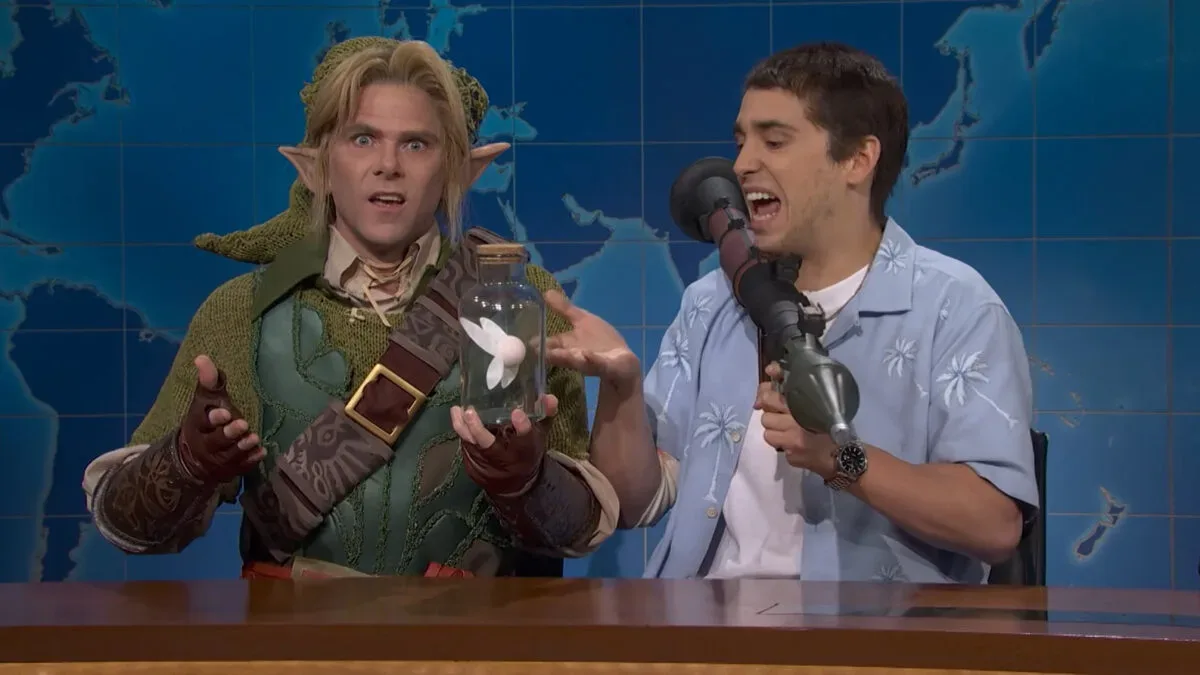
More unusually, the dispute appears to have spilled onto the page for Nintendo’s recent The Legend of Zelda: Ocarina of Time remake. Its user score reportedly moved from 9.6 a few days earlier to 8.3, while a number of negative entries reportedly make little attempt to discuss Zelda itself. Instead, they invoke GTA 6, criticize Nintendo, or use generic praise for Rockstar’s game.
That makes this less a conventional disagreement about two games than an example of how public score systems can become battlegrounds when a launch attracts an enormous audience and a heated online response.
What a review bomb is—and what it is not
A review bomb is a coordinated or loosely coordinated flood of unusually negative user ratings, generally directed at a game, developer, publisher, or platform over an issue that may only partly concern the game’s quality. The defining feature is not simply that people are unhappy. Players can absolutely have legitimate reasons to criticize a release. The issue is the pattern: rapid clusters of very low scores, frequently paired with sparse explanations, repeated talking points, or comments about matters outside the work being rated.
GTA 6’s user ratings reportedly include complaints tied to perceived political views of its developers. Other posts raise concerns that are more directly related to the product, including the game’s console-only availability and a 30-frames-per-second cap. Those are separate complaints and should not be flattened into one category. Platform availability and performance targets are concrete consumer issues; they can shape who is able to play a game and how responsive it feels to players.
But a score page does not automatically explain the weight or credibility of each complaint. A one-point rating can represent a player’s deeply held dissatisfaction, a protest vote, an attempt to influence the aggregate, or simply a drive-by post. Without a meaningful written review or a verification system that confirms play, the number alone offers limited evidence about the game’s actual strengths and weaknesses.
Why Zelda’s score became collateral damage
The unusual part is the apparent targeting of Ocarina of Time. The negative posts described on its page reportedly include brief references to GTA 6 rather than substantive criticism of Nintendo’s remake. Some use variations of “GTA fan” as usernames, while others offer short, slogan-like messages rather than an explanation of gameplay, design, technical performance, or the remake’s changes.
That is important because an aggregate user score is supposed to summarize reactions to the specific game on its page. When voters arrive mainly to make a statement about an unrelated release, the score becomes less useful for anyone trying to decide whether the Zelda remake is worth their time.
Related coverage includes GTA 6 User Review Bombing Spills Over to Zelda: Ocarina of Time.
The score movement from 9.6 to 8.3 is substantial in numerical terms, even if an 8.3 remains a strong rating in most ordinary contexts. It also demonstrates a basic weakness of averages: they can look precise while being highly sensitive to a sudden influx of extreme ratings. A visitor who sees only the final number may reasonably assume it reflects widespread changes in player opinion, when it could instead reflect a temporary campaign, heightened visibility, or an unusually active faction.
There is no need to pretend that every negative Zelda rating is illegitimate. Some players may have real objections to the remake. The problem is that the visible off-topic language makes it harder to distinguish genuine game-specific criticism from score manipulation. That ambiguity is the practical damage caused by a review bomb.
Console exclusivity and 30fps are different debates
The GTA 6 user-response story also risks bundling every criticism together. Two recurring concerns—console exclusivity and a 30fps limit—deserve to be understood on their own terms.
Console exclusivity
Console-exclusive means the game is available on consoles rather than every major platform, such as PC. For players who use a different platform, the frustration is straightforward: they may be unable to buy or play the game in the way they prefer. That can be especially frustrating for a release with GTA 6’s scale of anticipation.
Still, lack of access is not quite the same claim as a game being poorly made. A user score can communicate consumer dissatisfaction, but it is not a clean replacement for a review of the game’s content, design, or execution. Readers looking for practical purchase information should identify whether a review is addressing the game itself or the release strategy around it.
Frames per second
Frames per second, usually shortened to fps, measures how many individual images a game displays each second. A 30fps cap means the game is designed not to exceed 30 frames per second in the mode being discussed. Frame rate can affect perceived motion smoothness and controller response, so it is a meaningful point of discussion—particularly in a game built around driving, action, and quick camera movement.
Yet it is also only one part of technical performance. A frame-rate number does not by itself establish whether the experience is stable, whether performance varies during demanding scenes, or what visual compromises may be involved. A useful user review should say what was experienced rather than treating “30fps” as a complete verdict.
For players weighing GTA 6’s broader content against specific in-game activities, our GTA 6 Missing Persons guide covers the Port Gellhorn cases and the Alvan West choice.
How to read volatile user scores more carefully
The clearest lesson from the GTA 6 and Zelda pages is not that user reviews are worthless. They can be useful because they can surface recurring problems, accessibility concerns, platform-specific issues, and reactions that a critical average may not capture. They work best when readers treat the aggregate as a starting point rather than a final judgment.
- Read the newest reviews, not only the total. A sudden surge of extreme ratings may reveal whether a score has been affected by an organized reaction.
- Look for game-specific detail. Concrete discussion of missions, controls, performance, story, features, or bugs is more informative than a number alone.
- Separate access complaints from quality claims. A platform decision can be a valid reason not to purchase, while still being different from an assessment of the game’s craft.
- Watch for repeated phrasing and unrelated slogans. Posts that mention a rival game or an outside grievance without addressing the title being rated offer little guidance to prospective players.
- Give the score time to settle. A user average can move quickly around high-profile launches, particularly when public arguments are active.
A score page can become part of the spectacle
GTA 6 is not a normal-sized release in terms of attention, and its record-setting critical start ensured that every change to its public reputation would draw scrutiny. That visibility can turn a user-score page into a venue for protest, counter-protest, fandom rivalry, and humor at the expense of the original purpose: helping prospective players understand how people feel about a game.
The Zelda spillover is especially revealing because the two pages serve different audiences. Someone checking Ocarina of Time wants an impression of Nintendo’s remake, not a referendum on Rockstar. When comments about GTA 6 help shift Zelda’s number, the score no longer neatly describes Zelda sentiment.
At the moment, the reported 8.3 score means the Zelda remake has not been reduced to the same position as GTA 6’s embattled user rating. But the drop illustrates how quickly a highly visible average can be altered when off-topic participation overwhelms ordinary reviewing behavior. The most sensible response is neither to dismiss every criticism nor to accept every number at face value: read the comments, check whether they are actually about the game in question, and remember that an aggregate is only as meaningful as the ratings feeding it.