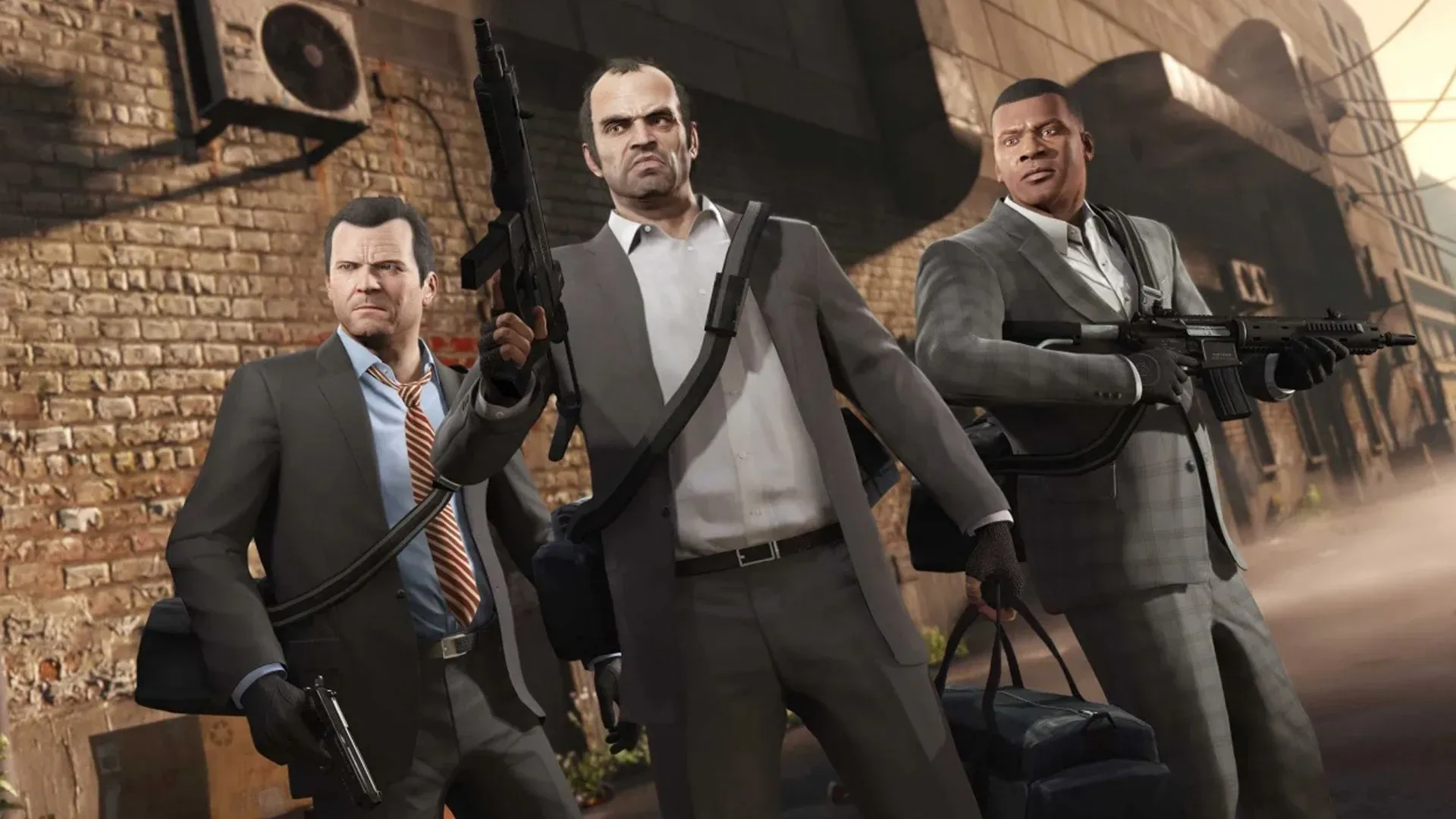
Grand Theft Auto 6 is expected to make November an unusually intimidating month for anyone planning a game launch. Its scale is hard to dispute: even people with little interest in Rockstar’s crime series are likely to encounter the conversation around it. Yet the conventional wisdom that every other publisher should evacuate the calendar deserves more scrutiny.
Mat Piscatella, a veteran games analyst and Circana’s games lead, argues that the industry’s anxiety has grown beyond what the market itself necessarily supports. GTA 6 will be a huge release and a major cultural event, he says, but that does not turn every potential customer into a GTA customer—or turn every game released nearby into an automatic casualty.
“The fear of many teams to put their game in the same window as GTA is completely overblown,” Piscatella said, while acknowledging that GTA itself will be massive.
That distinction is the heart of the argument. A blockbuster can dominate attention without satisfying every player’s tastes, platform needs, or reasons for buying a game. The biggest launch of the season may be the loudest thing in the room; it is not necessarily the only thing players want to bring home.
A giant audience is not one audience
Piscatella pointed to an estimated 49 million people in the United States who own a PlayStation 5 or Xbox Series system. That is a huge pool of potential customers, but it is not a single, interchangeable audience. Some will be intensely interested in GTA 6. Others may prefer a shooter, a life simulation game, or a cozy game. Some will simply be looking for a different kind of experience at that moment.
This is an important difference between reach and audience overlap. Reach is the number of people a release can potentially put a message in front of. Audience overlap is the portion of those people who might realistically choose between two particular games. GTA 6 will have extraordinary reach. A smaller game’s risk depends much more on overlap: whether it is chasing the same players, on the same hardware, with a similar promise of entertainment and a similarly urgent reason to buy immediately.
A cozy game is not asking players for the same mood as a vast crime game. A life sim has different routines, pacing and long-term appeal. Even a first-person shooter, while plainly a large-scale commercial genre, may appeal to people who want a different style of play. None of that guarantees success. It does mean that “GTA 6 exists” is not, by itself, a complete business case for moving a launch.
Players also do not make choices in a vacuum where one release consumes all interest. They may follow several genres at once, have different games in mind for different moods, or decide that the blockbuster everyone is discussing is precisely not what they feel like playing. The central point is not that GTA 6 will have limited pull. It is that a release of unprecedented pull still leaves room for preferences that do not line up with it.
Related coverage includes Analyst Says GTA 6 Launch Fears May Be Overstated as Other Games Seek November Audiences.
Platform separation matters
Platform is one of the clearest practical limits on direct competition. Piscatella specifically highlighted the Switch audience, noting that players there will be looking for other games because they will not be able to play Grand Theft Auto. He also flagged PC as part of the broader platform picture.
That does not make a November release on a different platform immune to the wider noise around GTA 6. News coverage, social media discussion and consumer spending can all be affected by a release that large. But it does change the nature of the decision. A Switch-focused launch, for example, is not simply entering a head-to-head contest for the same immediate purchase. It may be serving players who are excluded from the game at the center of the conversation.
For teams choosing a date, this makes platform availability more than a line in a store listing. It is part of market positioning. A game that cannot be played by a particular audience cannot directly displace another game on that hardware. Developers and publishers still need to assess visibility, marketing capacity and their own genre—but they should not treat all November customers as though they have exactly the same options.
Why the calendar has reportedly thinned out
The more intriguing part of Piscatella’s observation is not just that studios are worried. It is that their collective caution may create an opening. He said developers had moved away from the window as he predicted last year, leaving GTA 6 with a comparatively open November calendar.
That is a familiar competitive trap: each company can make a defensible individual decision to avoid a perceived threat, yet the combined effect can reduce the competition that remains. If many releases leave at once, a project that stays may have fewer alternative launches competing for coverage, storefront attention and players’ time.
That does not automatically make the open slot the right one. A smaller game cannot assume it will benefit merely because other publishers departed. GTA 6’s attention will still be immense, and any launch needs a clear pitch. But a sparse calendar changes the question from “Can anything survive beside GTA?” to “Which games have enough distinction to use the space everyone else abandoned?”
For independent teams in particular, the answer would depend on factors not settled by a calendar alone: whether the game can communicate its appeal quickly, whether it is aimed at an identifiable community, and whether its platform audience is actually able and inclined to buy it. Those are normal launch concerns, not problems created solely by Rockstar’s release.
What “fear” gets right—and wrong
The caution is understandable. Piscatella described GTA 6 as the kind of game the industry has not seen at this magnitude in 13 years. A release with that profile can dominate conversations far beyond its established fans, and no developer wants a carefully prepared campaign to be drowned out during its most important sales period.
But understandable caution can become an overly broad rule. Treating every genre, platform and target customer as a GTA 6 rival ignores how fragmented player interests are. A person choosing a slow-paced life sim or a cozy game may not be making a substitute purchase at all. They may never have intended to buy GTA 6. Likewise, a player without access to the game on their preferred platform remains a potential customer for releases that do arrive there.
There is also a difference between attention competition and purchase competition. Attention competition is unavoidable: GTA 6 will command public discussion. Purchase competition is narrower: it concerns the people who genuinely see two releases as alternatives for the same money and time. A game can face the first problem while having much less exposure to the second.
That is not an argument for pretending launch timing does not matter. It matters greatly, especially when marketing budgets are limited. Rather, it is an argument for specificity. Teams should ask who they want to reach, what hardware those players use, what kind of game they seek, and whether their product has a message distinct enough to cut through. “Avoid GTA 6 at all costs” is simpler advice, but it may be less useful advice.
November still needs games that are not GTA
Piscatella’s examples—cozy games, life sims and first-person shooters—underline a basic but frequently neglected fact: the games business is not a single contest to make one type of player happy. Different games can be successful in the same period because they meet different needs. A gigantic release can expand the month’s overall gaming conversation while still leaving demand for everything it does not offer.
The reported November slate also includes a remake of The Legend of Zelda: Ocarina of Time, another reminder that nostalgia, genre and platform communities can direct interest in different directions. Its presence should not be taken as proof that any launch will thrive beside GTA 6. It does, however, challenge the notion that November can only contain one meaningful game conversation.
The wider industry has more difficult pressures than release-date nerves alone. Studios are also operating amid concerns such as the cybersecurity incident recently acknowledged by Warhorse Studios, where operational stability and communication can matter just as much as a crowded calendar. Timing is a strategic variable, not a magic shield against the risks facing game development and publishing.
Piscatella’s forecast is ultimately a challenge to reflexive retreat, not a prediction that GTA 6 will fail to reshape November. It will reshape it. The question is whether every other game must surrender the month in response. His view is that the answer is no: the cultural event will be enormous, but the market beyond it remains made up of many audiences, many platforms and many reasons to play something else.
For publishers weighing that decision, the useful takeaway is cautious rather than reckless. Do not underestimate GTA 6. Do not assume its presence erases every other opportunity, either. In a month where much of the industry may be looking away from the same enormous target, the games with the clearest identity could find that the remaining space is more valuable than the fear suggested.