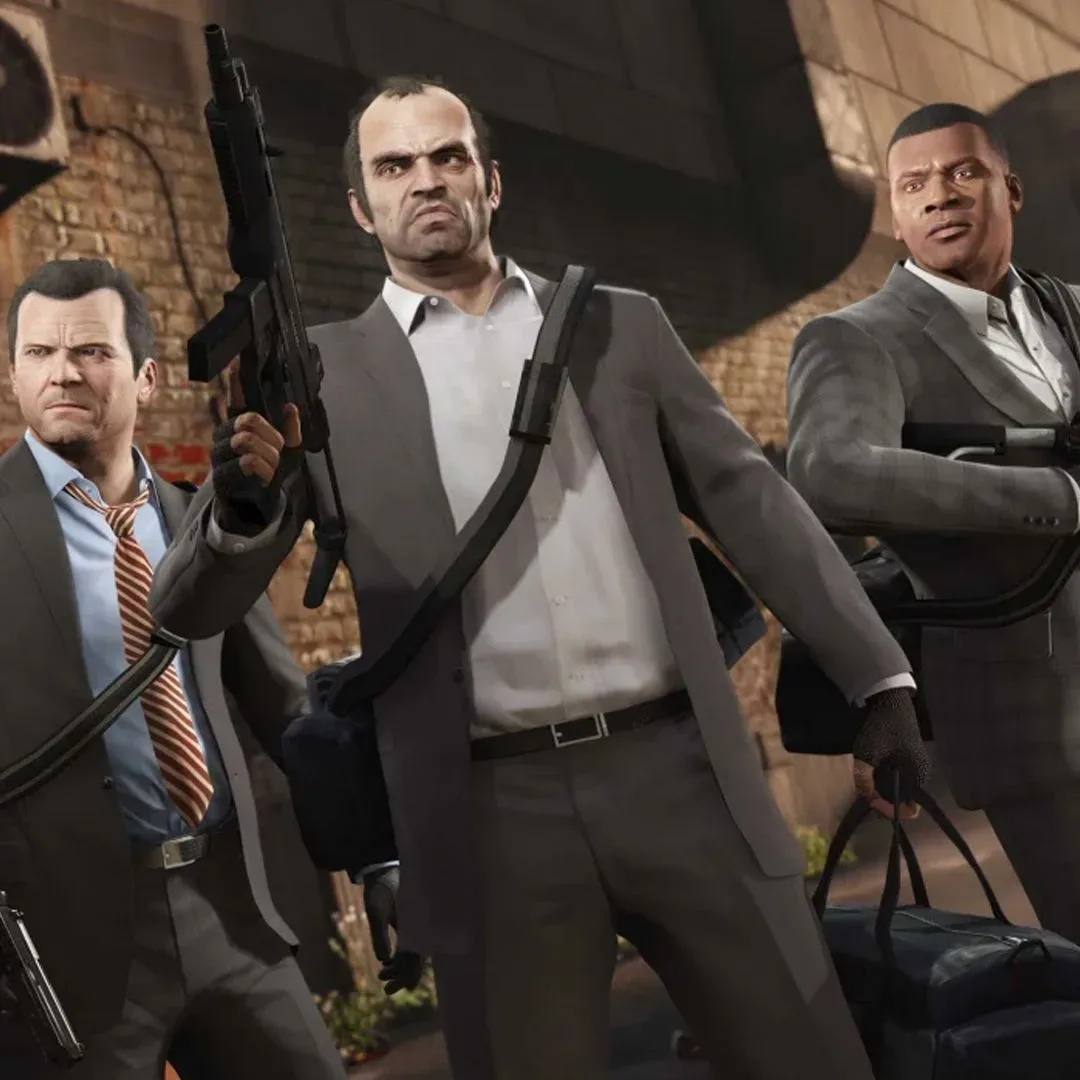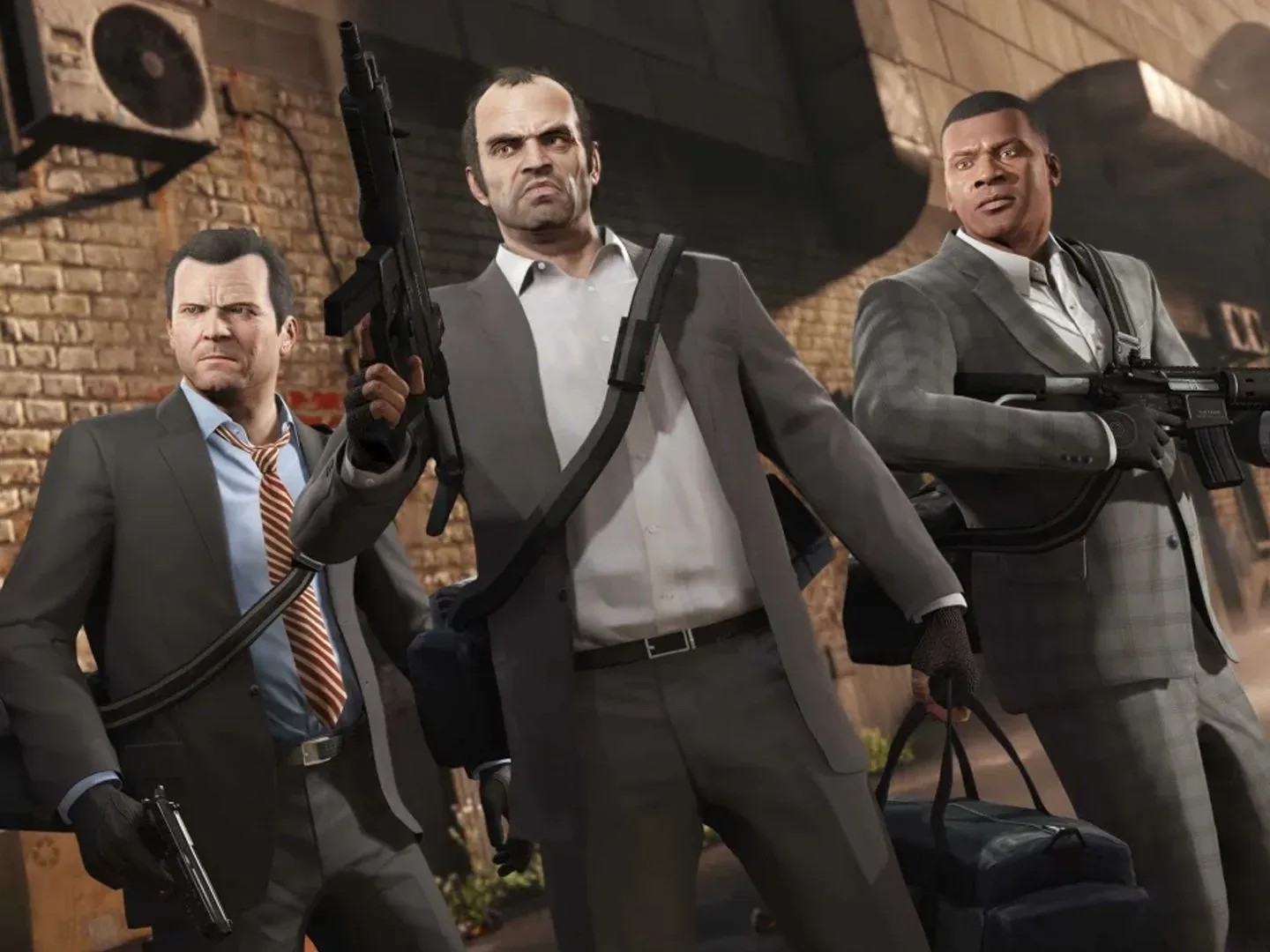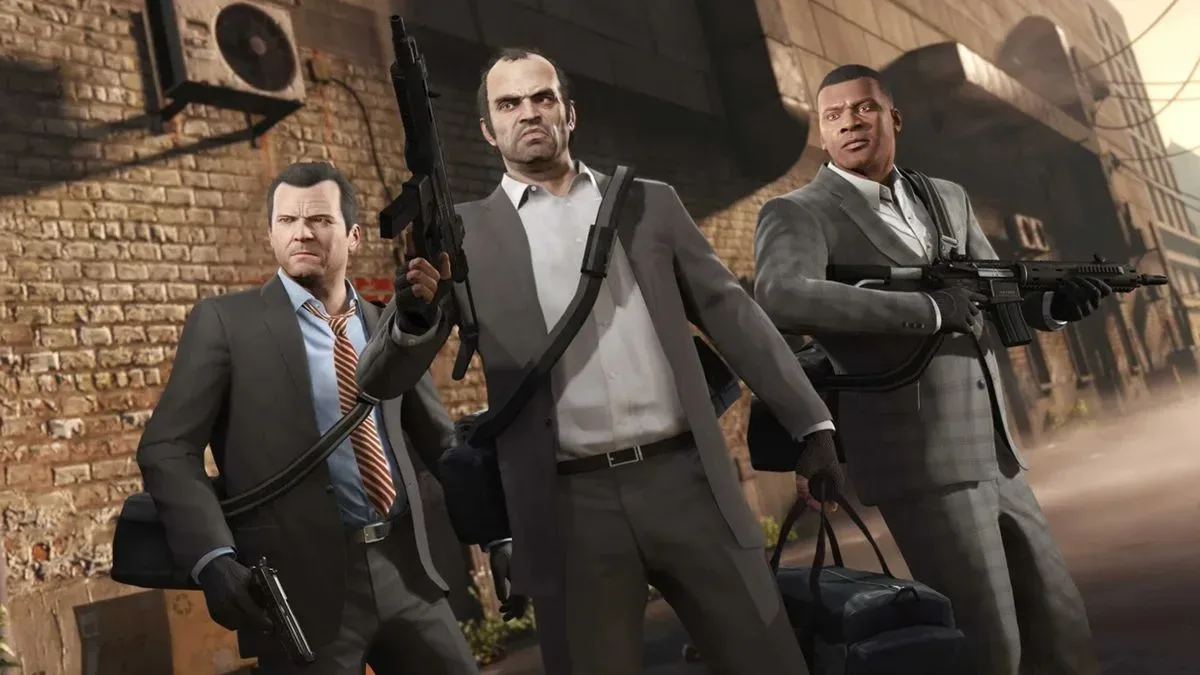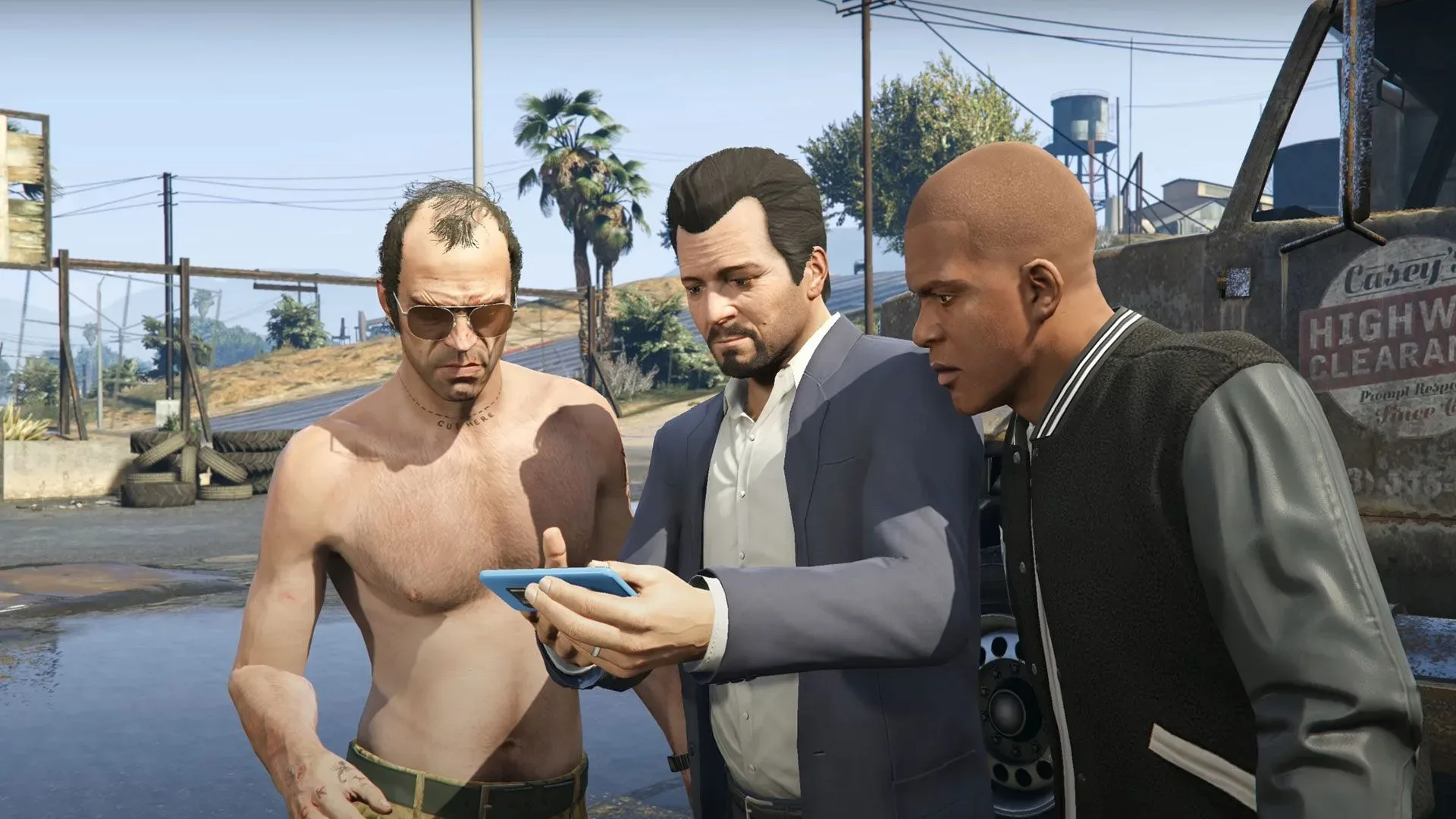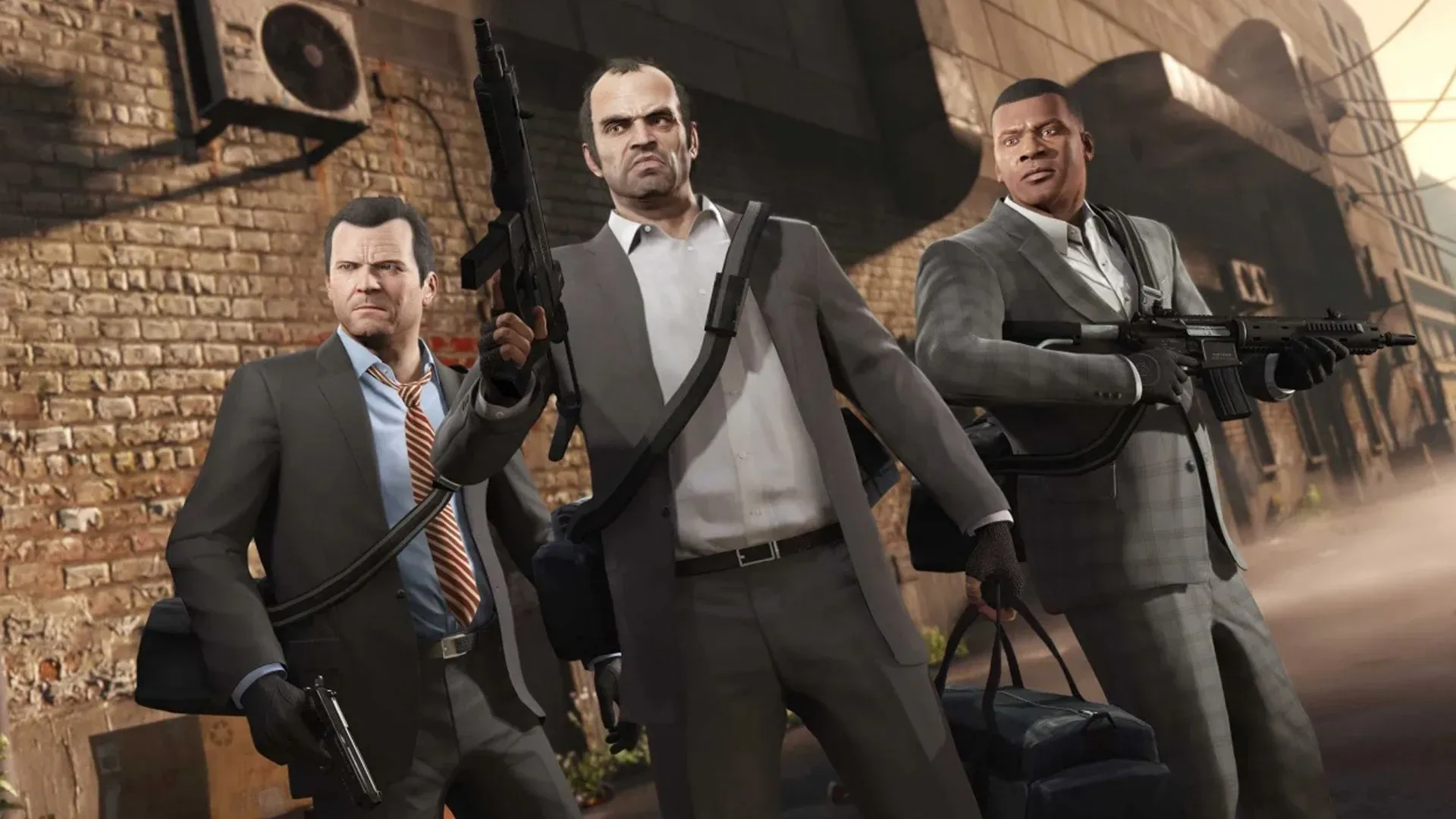
The people who have played some of Grand Theft Auto’s most enduring protagonists have a concise message for the performers set to take on GTA 6: enjoy the work, listen to Rockstar, and brace for what follows.
Ned Luke, Shawn Fonteno and Steven Ogg—best known to players as GTA 5’s Michael, Franklin and Trevor—joined Young Maylay, the voice behind Grand Theft Auto: San Andreas protagonist Carl “CJ” Johnson, for a discussion about the incoming game’s leads. The performers’ names have not been officially confirmed, even as fan speculation continues around the game’s central duo. But the veterans did not need names to describe the scale of the experience ahead.
Luke’s advice was simply to “have fun.” Maylay’s was equally short: “get ready.” Fonteno expanded on that point, saying the new leads should listen to Rockstar because the studio will guide them in the right direction. He also described the experience as a ride that could last for a long time.
That may sound like straightforward encouragement, but it comes from actors whose characters did not stop existing when the credits rolled. In Grand Theft Auto, a lead role can become a lasting public association. Players reuse lines, revisit missions, wear character imagery and bring memories of a game into conventions and online conversations years later. The advice is less a prediction about a specific plot or performance than a reminder that a landmark game can connect its cast to multiple generations of players.
What “get ready” means in a Grand Theft Auto role
Grand Theft Auto protagonists are unusual pop-culture figures. They are not generally framed as mythic saviors or costumed superheroes; their appeal often rests on personality, place and the player’s time spent inhabiting a sprawling criminal satire. That grounded, character-led quality can make a line delivery or a distinctive voice stick with audiences.
CJ is one clear example. The phrase “Aw shit, here we go again” remains widely recognizable, even though San Andreas is now about 20 years old. Its continued circulation shows how a brief moment can detach from its original mission and become part of gaming’s wider shared language. For Maylay, that longevity is visible in person as well as online.
“You’re going to grow with your fanbase.”
Maylay described meeting longtime players at conventions, including fans with gray hair who still recognize him as CJ. His point was not that a newer game erases an older one. Instead, he argued that different eras of Grand Theft Auto can continue alongside one another. A new cast may inherit enormous attention, but it does not require audiences to abandon Michael, Franklin, Trevor or CJ.
Related coverage includes GTA Veterans Tell GTA 6's New Leads to 'Get Ready' for the Long Ride Ahead.
That is an important distinction for a series with a long memory. Fan attention can look competitive online, especially during a build-up to a major release. Yet the convention experience Maylay described suggests something broader: people carry their attachment to a game forward. Players who met San Andreas in one stage of life can still want to celebrate the character and the performance years later, while newer players form their own connection to later entries.
Veterans speaking from different GTA generations
The group’s perspective covers two especially prominent points in the series’ history. Maylay’s CJ comes from San Andreas, while Luke, Fonteno and Ogg formed the three-protagonist core of GTA 5. Their roles differ, but together they illustrate how Grand Theft Auto can support sharply different lead performances.
A protagonist is the principal character through whose actions a story is largely experienced. GTA 5 complicated that singular term by using three central playable characters: Michael, Franklin and Trevor. A multi-protagonist structure asks audiences to follow several points of view, and it gives each actor an especially distinct space in the game’s identity. Michael, Franklin and Trevor are remembered not just as story functions but as contrasting personalities.
San Andreas took a different route with CJ as its focal character. Whether the format is one lead or several, the practical lesson from these veterans is similar: players are likely to remember the human texture of the role long after they forget individual missions. A voice, an attitude, a reaction and a repeatable line can become inseparable from the game’s cultural footprint.
The conversation also puts a useful boundary around expectations. The performers were offering career and fan-community advice; they did not reveal new GTA 6 story details, cast information, mechanics or platform plans. The incoming leads remain officially unnamed in the material at hand. That uncertainty matters. Enthusiasm around a highly anticipated game can encourage speculation to harden into assumed fact, but the cast’s identity should remain clearly separated from fan theories until it is formally established.
Why trusting the studio is practical advice
Fonteno’s instruction to listen to Rockstar is practical rather than mysterious. Large character-driven games are made through a process in which writing, performance, animation, direction and mission design have to align. An actor may arrive with a strong instinct for a line, but the final scene has to work with material the performer cannot fully see in isolation: the surrounding dialogue, the mission’s pace, the camera work and the broader arc of the character.
That is what makes “listen to Rockstar” a sensible piece of guidance from someone who has been through this kind of production. It does not mean performers have no creative identity. Rather, it recognizes that a game character is built collaboratively. Direction can help maintain consistency across scenes, while the actor supplies the performance that gives the written character a living presence.
There is also a historical reminder in the broader discussion around the series. Rockstar co-founder Dan Houser has said Grand Theft Auto: Vice City’s writing was “awful,” while crediting Ray Liotta with making it sound good. The comment is a pointed example of performance’s potential impact: delivery can shape how dialogue lands, including material a performer did not write.
It should not be read as a direct judgment on GTA 6, nor as evidence about the new game’s script. It does, however, reinforce why the veterans’ advice has weight. The actor’s job involves more than recording words. Timing, tone and conviction can turn a scene into something players remember. Anyone following the series’ Vice City associations may also want to see how Vice City-style color has recently turned up in Xbox controller design, another small sign of the setting’s continued visual pull.
A role can outlive the release cycle
Maylay’s warning to the GTA 5 trio was notably forward-looking: just as he now meets fans who see him as CJ decades after San Andreas, he expects them to occupy a comparable place once GTA 6 arrives. It is a reminder that franchise succession is not necessarily replacement. The arrival of another major entry changes the immediate conversation, but earlier characters can remain meaningful reference points.
For the next leads, that could mean living with a very public version of their work for years. Their performances may be replayed, clipped, quoted and discussed by people who experience the game at different times. Some will be there at launch; others may encounter it later through friends, streams, memes or a return to the series. The particular paths are unpredictable, but the enduring visibility is exactly what these earlier performers recognize.
The strongest common thread in their comments is therefore not pressure for pressure’s sake. “Have fun” sits beside “get ready.” The veterans acknowledge the opportunity as well as the attention. A Grand Theft Auto lead can become part of a huge cultural conversation, and that conversation may keep growing rather than ending when the next game arrives.
With GTA 6 said to be roughly a month away in the discussion, the advice arrives at a moment when interest in the new protagonists is naturally intense. Still, the old hands’ perspective offers a calmer frame for the transition: trust the team making the game, enjoy the work, and understand that players may remember the character—and the person who brought them to life—for a very long time.