Warning: this article discusses story and world details from Grand Theft Auto VI and Red Dead Redemption 2.
Grand Theft Auto VI players have found a particularly substantial Red Dead Redemption connection—not merely a familiar-looking prop or a passing wink, but a readable in-game text that treats one of Red Dead Redemption 2’s gunslingers and several of its places as history.
The book, located at Brian’s Marina in Key Lento, concerns the life and death of Flaco Hernandez. That name will be immediately familiar to Red Dead Redemption 2 players: Hernandez is one of the veteran gunslingers Arthur Morgan can track down during The Noblest of Men, and a Woman, the Stranger mission tied to writer Theodore Levin’s pursuit of old gunfighter stories. In GTA 6, the material reportedly presents an account from a new character, Rust McCreary, who encounters Hernandez’s body at Cairn Lake.
That is the important part. The book does not simply borrow a name for an Easter egg. It places Hernandez at the site associated with his Red Dead Redemption 2 death, describes the corpse in the snow, and refers to locations including New Austin, Armadillo, and Blackwater. Taken together, those details make a much stronger case that GTA 6 recognizes Red Dead’s events as part of its own past.
It remains wise to distinguish a compelling in-game connection from a complete map of Rockstar’s canon. Nothing in this discovery establishes family relationships between modern GTA protagonists and Red Dead characters, nor does it resolve every inconsistency fans have spotted across the games. But it is a strikingly specific piece of lore—and one that could recast the Western as historical background for GTA’s modern world.
Why the Flaco Hernandez reference carries more weight than a typical Easter egg
An Easter egg is generally a hidden joke, nod, or reference included for players to find. It can acknowledge another game without saying that both stories literally happened in the same fictional reality. A poster, costume, or surname may be enjoyable fan service while leaving canon untouched.
This book is more consequential because it works as diegetic lore: information that exists inside the fictional world and is encountered by its inhabitants. A GTA 6 character can find and read this account. Within the game’s setting, then, the text appears to record Flaco Hernandez as a real person and Cairn Lake as a real place.
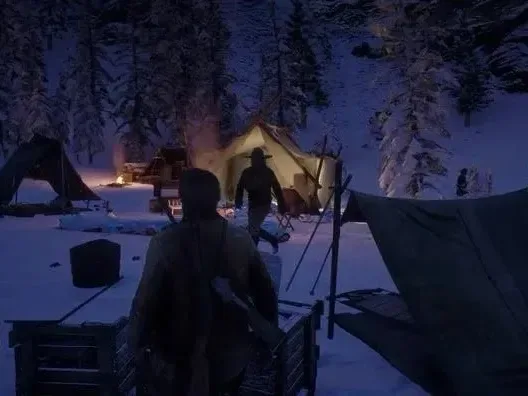
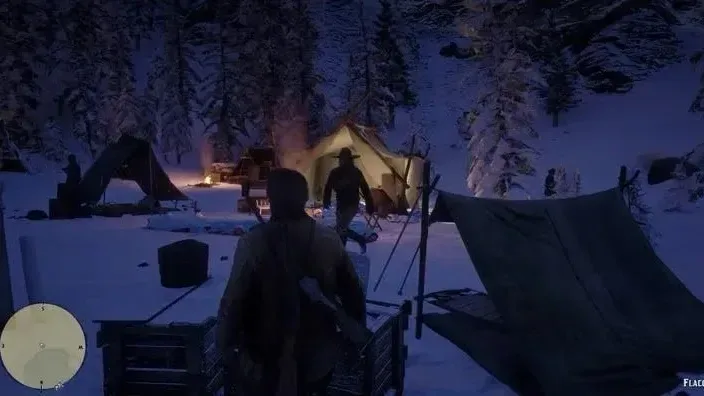
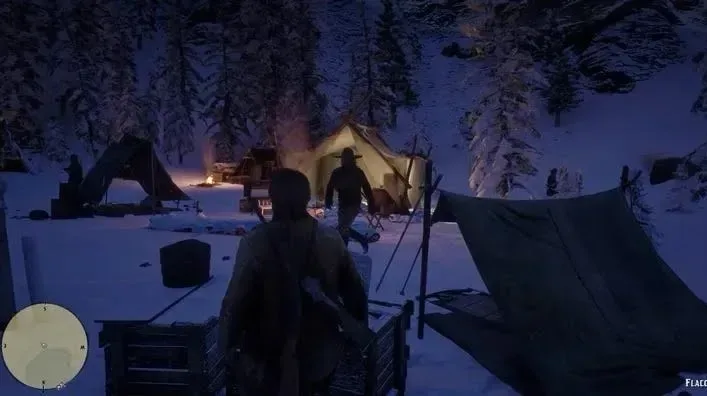
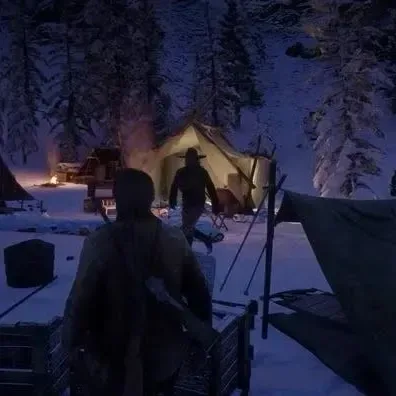
The degree of specificity also matters. Hernandez is not an abstract legend. In Red Dead Redemption 2, Arthur travels to the cabin at Cairn Lake in Grizzlies West to confront him. The GTA 6 book has Rust McCreary find his body there, with a bullet wound in the middle of his forehead. It even turns a possible player action into an amusingly precise historical detail: a centered headshot is treated as the outcome preserved by the account.
Related coverage includes GTA 6 Book Discovery Builds a Striking Bridge to Red Dead Redemption 2.
That does not necessarily mean every player’s exact Red Dead Redemption 2 playthrough is now formally canon. Games routinely have to choose a single outcome, or a broadly recognizable version of one, when later material refers back to an interactive story. Here, it does mean that the text is not acting like a vague allusion. It is describing a recognizable aftermath of a mission, at a recognizable location, involving a named participant.
There is a second layer to the find. The book may be the chronicle Theodore Levin was assembling when Arthur pursued the gunslingers, or it may be a later reworking of that project. The available evidence does not settle which interpretation is correct. Either possibility, however, frames the GTA 6 text as an artifact from a world where the stories connected to Levin, Arthur Morgan, and Flaco Hernandez have entered the historical record.
New Austin, Armadillo, and Blackwater turn one character reference into a world reference
The location names are what make the argument broader than Flaco alone. New Austin, Armadillo, and Blackwater are all associated with the Red Dead setting. Their appearance in a GTA 6 book implies that the text is not merely invoking a fictional tale called Red Dead Redemption. It is using the geographic vocabulary of that world.
Players have also identified New Austin license plates in GTA 6. On their own, the plates could be interpreted as another playful callback. Alongside a written historical account that names New Austin and other Red Dead places, they become supporting evidence for the same conclusion: GTA 6 may be treating New Austin as an actual state or region within its wider setting.
That is a useful way to evaluate this discovery. The book is the central item because it supplies narrative context. The plates are corroborating environmental detail because they suggest the place-name also exists in the contemporary era. Neither finding tells players exactly how every part of the combined world works, but both point in the same direction.
If that reading holds, Red Dead Redemption becomes a distant predecessor to the modern criminal stories of GTA 4 and its successors. The appeal is not that every gunfighter needs to be secretly related to every GTA character. It is that the world gains a historical horizon. The 19th-century frontier stories could sit behind the later cities, roads, businesses, license plates, books, and cultural memory of GTA 6.
What this does—and does not—confirm
The careful answer is that GTA 6 now has unusually persuasive evidence of a Red Dead connection, but not a master key to every continuity question.
- It supports: Flaco Hernandez, Cairn Lake, New Austin, Armadillo, and Blackwater being acknowledged by GTA 6’s in-world text.
- It supports: the possibility that at least some Red Dead Redemption 2 events are remembered as history in the GTA 6 setting.
- It supports: reading the New Austin license plates as more than an isolated nod.
- It does not establish: that Jason is descended from Arthur Morgan, or that any other character genealogy is canon.
- It does not establish: a complete chronology for every Rockstar game or every GTA era.
- It does not erase: apparent naming conflicts that fans have raised involving real-world place names in Red Dead and fictionalized equivalents such as San Andreas and Leonida in GTA.
That last point is significant. Shared-universe theories often run into terminology problems. GTA commonly uses fictionalized places such as San Andreas and Leonida, while Red Dead Redemption 2 has references that some fans regard as real-world geographical naming. A book and a license plate can provide a strong positive connection, but they do not independently reconcile those details.
In practical terms, the best reading is not “all questions have been answered.” It is “the evidence for a shared continuity is now much more direct than a simple cameo.” Retcons, alternate naming conventions, historical usage, or unresolved continuity wrinkles remain possible explanations for the mismatch. The discovery is evidence, not an official continuity chart.
The earlier John Marston GTA Online detail is a useful precedent, not final proof
There is also prior connective tissue between the series. In the first iteration of GTA Online, the character creator let players use John Marston’s genetics as a visual basis for an original character. John Marston is the protagonist of the first Red Dead Redemption, making the option an obvious bridge for players who wanted their online avatar to resemble him.
That older feature showed Rockstar was comfortable putting Red Dead material close to GTA. Yet its meaning was always open to interpretation. Character-creation ancestry is a playful system-level reference and not necessarily a declaration that John’s biography belongs to the same timeline as every GTA story.
The Flaco book is different in form. It is written fiction inside GTA 6’s world, grounded in an event and geography players know from Red Dead Redemption 2. That distinction is why the newer discovery has generated more excitement. It looks less like a menu-level crossover joke and more like a document from the shared world itself.
What players should look for next
For lore hunters, the useful question is no longer whether a single reference exists. That question has a meaningful answer in the readable book. The next step is determining whether GTA 6 offers other material that behaves in the same way: newspapers, plaques, archives, books, broadcasts, vehicles, or official documents that describe Red Dead people and places as factual history.
Context will be crucial. A reference gains evidentiary value when it has a clear in-world speaker or author, a date or historical framing, and details that cannot be reduced to a name-only wink. Multiple independent references to the same region or historical event would be more revealing than a pile of unrelated props.
It is also worth recording uncertainty accurately. Rust McCreary does not appear in either Red Dead game, based on the material around this find. That makes him a new narrative voice rather than an established eyewitness players already know. His account may still be intended as accurate history, but the evidence currently identifies him as the book’s viewpoint character, not as a previously verified participant in Red Dead’s story.
GTA 6’s world is already inviting close reading through small environmental details. The Flaco Hernandez text gives that habit a genuine payoff: a frozen lake, a dead gunslinger, and a book in a marina may be enough to join two enormous Rockstar settings across time. For more GTA 6 story connections, see our report on Niko Bellic’s reported GTA 6 credits appearance.
For now, the sensible verdict is measured but enthusiastic. The book does not prove every theory fans may build around it. It does provide a detailed, in-universe reason to think that Red Dead Redemption’s frontier is not merely being referenced by GTA 6—it may be part of the past that GTA 6’s world remembers.