Free convention swag is supposed to be the easy part of a show floor: attend an activity, take home a memento, and perhaps wear it until it becomes a paint-splattered household shirt. At Tokyo Game Show 2026, several limited giveaways instead became a sharp illustration of how quickly a promotional extra can turn into a resale commodity.
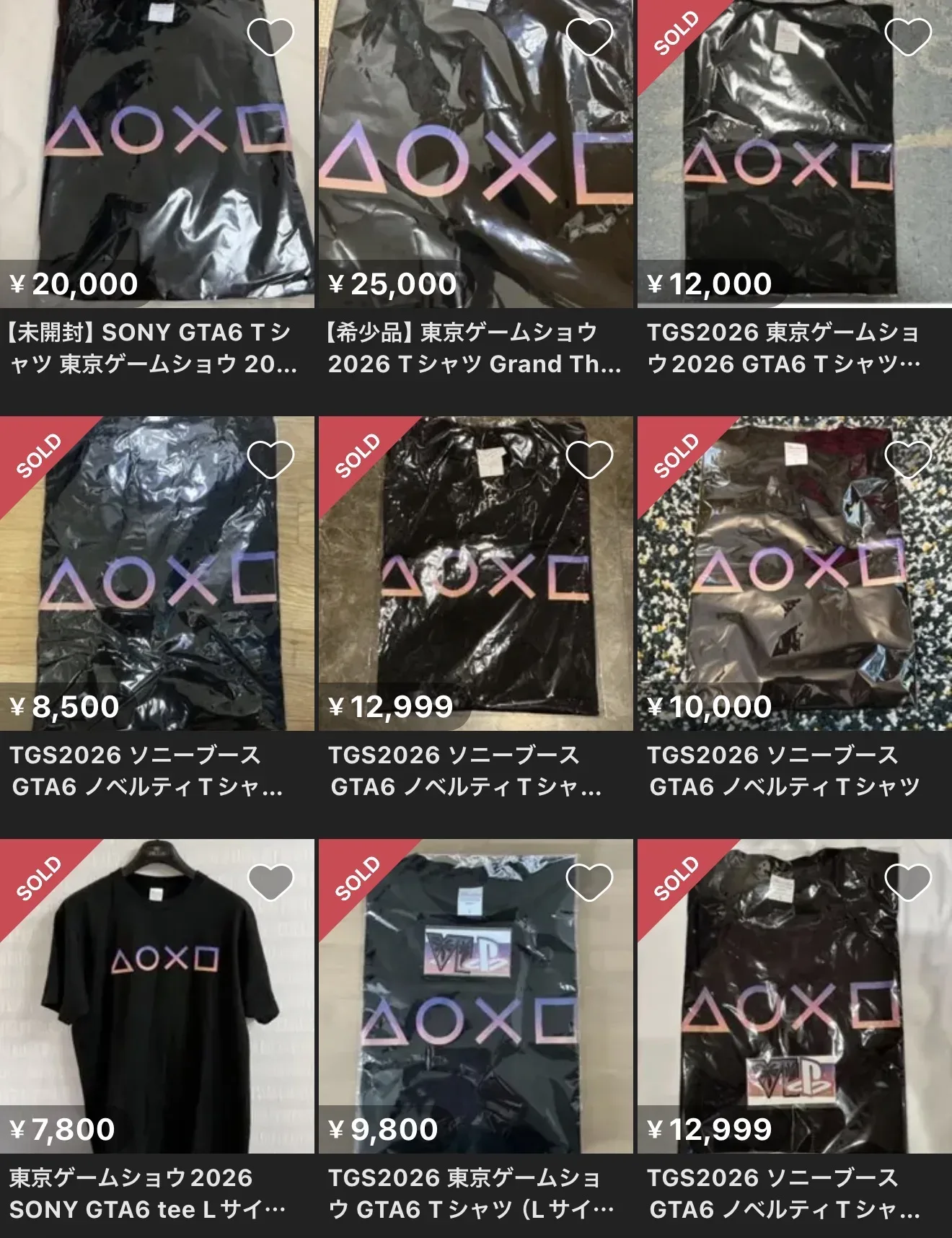
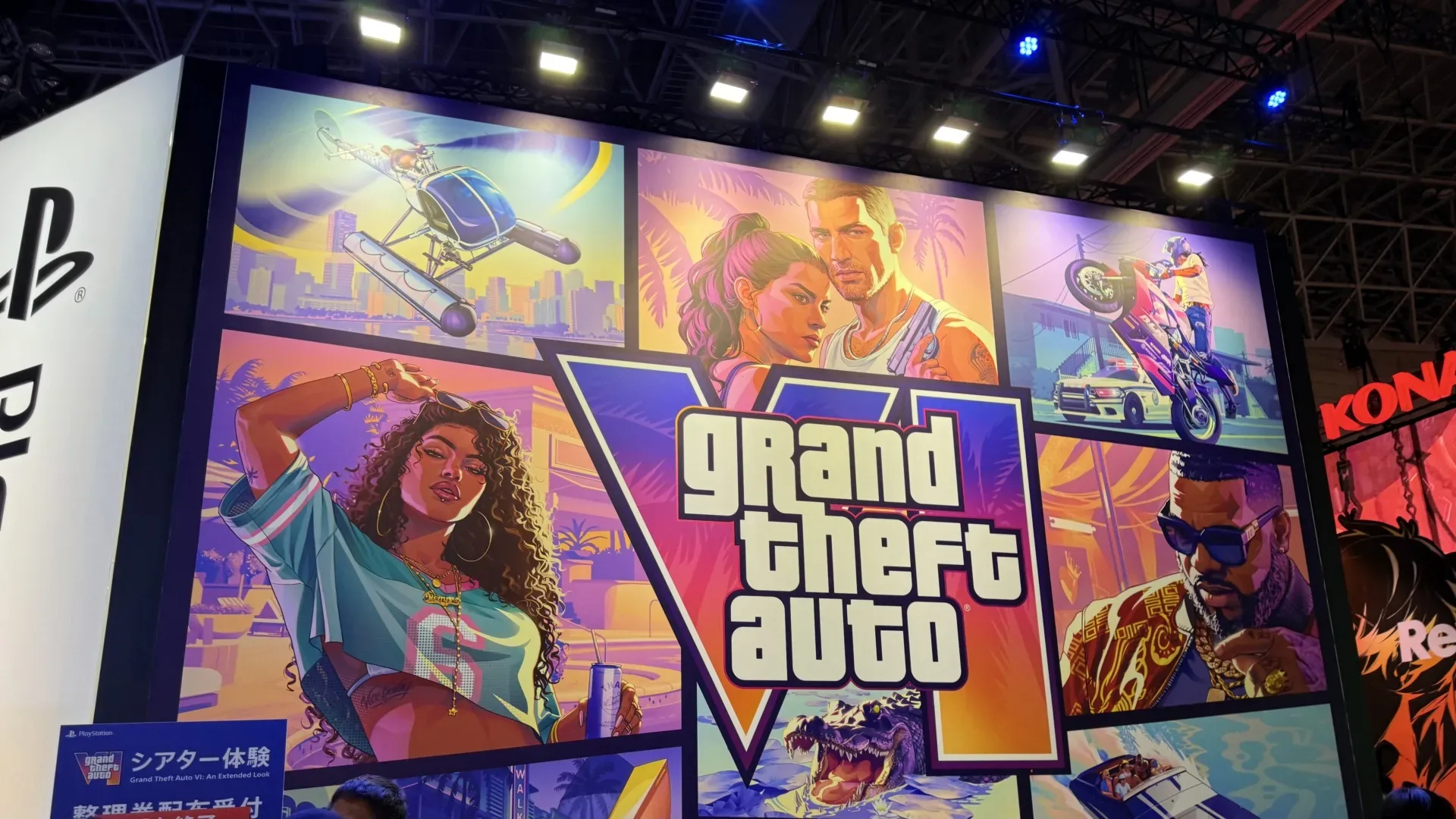
The most visible example involves a Grand Theft Auto 6-themed T-shirt offered through a PlayStation booth experience. Attendees who entered a special theater presentation received a shirt decorated with PlayStation button symbols in a color gradient associated with the game. Listings for the shirts appeared on Mercari, a Japanese marketplace, for more than ¥12,000—roughly $76 at the stated conversion. The scramble was not confined to online listings: entry tickets for the experience on the first public day were reportedly exhausted amid a rush to get in.
That is a small garment carrying a much larger problem. When people believe an item is scarce, easily portable and immediately resellable, the giveaway itself can become the main event. Fans who want a keepsake are suddenly competing not only with other fans, but also with people treating the line as inventory acquisition. The practical result is frustration at best—and dangerous crowd pressure at worst.
A promotion becomes a scarce good
Scalping, in this context, means obtaining a limited item primarily to sell it on at a higher price. It is distinct from an attendee later deciding to sell something they no longer want. The concern at a live event is the incentive created by predictable scarcity: a free item with limited distribution can still command a real price once it is detached from the experience that originally earned it.
Importantly, a listing price is not proof that an item sold for that amount. The available evidence shows T-shirts being offered for more than ¥12,000, not a confirmed record of completed transactions at every listed price. That distinction matters when judging a market. Still, rapid resale listings can be enough to advertise perceived value and encourage a wider rush for the next distribution window.
The PlayStation experience itself was built around an immersive screening of a recent Netflix Grand Theft Auto presentation, using haptics and surround sound. Haptics are physical feedback effects—often vibrations or other sensations synchronized to what is happening on screen. In a booth setting, that kind of presentation gives visitors an activity rather than a simple handout counter. But attaching a desirable, limited shirt to that activity can shift the incentive from “I want to see this” to “I need to secure the item.”
Grand Theft Auto 6 is an obvious lightning rod for such demand. The shirt’s appeal is not merely that it is free; it is an event-specific object connected to a major game and a PlayStation activation. Its limited nature is part of its appeal, but it is also exactly what makes it vulnerable to the resale cycle.
Overcrowding moved beyond gaming merchandise
The issue was not isolated to GTA-related apparel. A Red Bull area had planned to give visitors light-up metal tumblers alongside free energy drinks. Distribution was halted after dangerous overcrowding developed, then resumed later that day. Tumblers from that activation also appeared in Mercari listings above ¥6,000, or about $38 at the stated conversion.
Related coverage includes GTA 6 Promo Shirts Spark Scalper Rush and Crowd Concerns at Tokyo Game Show 2026.
This is the more serious part of the story. Resale is irritating; unsafe density in a queue or giveaway area is an operational problem with immediate consequences. A pause in distribution indicates that the initial setup could not safely handle the crowd at that moment. It also shows why organizers have to weigh the value of a memorable freebie against the effect it may have on crowd behavior.
Conventions are especially exposed because their limited items are often available only in a narrow place and time. Visitors may have to queue, collect timed entry tickets or complete a specific activity. When a giveaway is seen as scarce, people may arrive earlier, cluster around the location, or race toward ticket distribution. None of those behaviors require malicious intent. The pressure can arise simply because fans do not want to miss out, while resellers see an opportunity in the same scarcity.
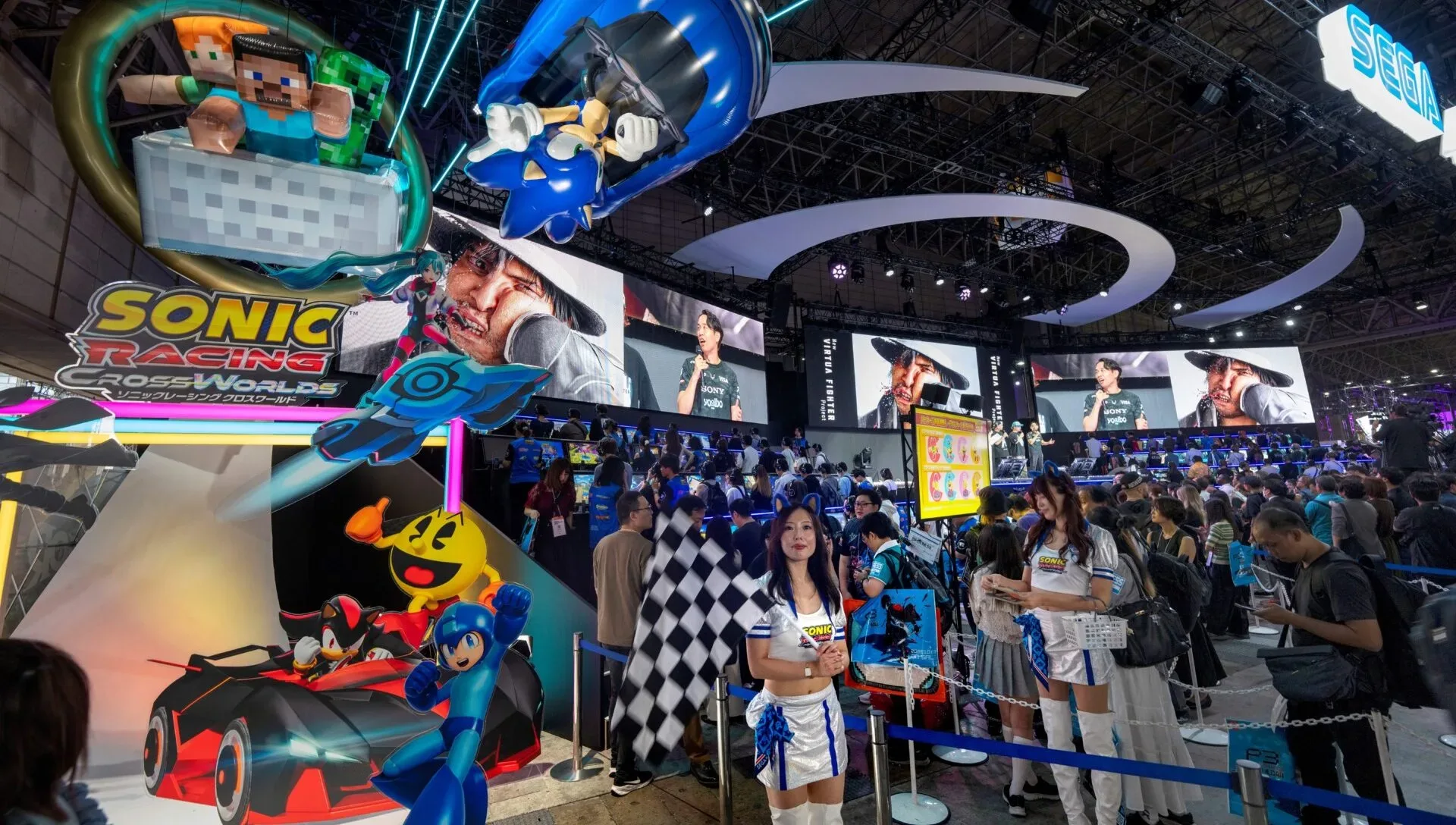
Tokyo Game Show’s 30th-anniversary event had already drawn strong crowds, and the show’s added fifth day was subsequently canceled because of an approaching typhoon. For attendees keeping up with the broader scheduling disruption, the final-day cancellation adds another complication to the 2026 show. In that environment, any attraction capable of generating a sudden surge deserves extra caution.
Cards, magazines and the wider aftermarket
Other show-related items also entered the resale conversation. Promotional cards tied to Palworld and Final Fantasy trading-card experiences were among the items appearing in listings. There were also resale listings for a new issue of an early Game Freak doujin magazine themed around the company’s weather-related mobile game.
These examples help explain why giveaways are so tempting to resellers. A promotional trading card has built-in collector appeal: it is compact, easy to store, clearly linked to a particular event, and potentially difficult to obtain after the show. A limited magazine issue carries similar traits, especially when it connects a company’s early creative history with a current project. A shirt or tumbler may be less standardized as a collectible, but its event-only status can produce the same urgency.
Not every person who collects or resells an event item is necessarily a scalper, and collecting itself is not the problem. The dividing line is the effect on access. Someone who attends an experience, receives one item and later trades it is different from a pattern of acquiring limited quantities or rushing distribution points because resale value is the main goal. Organizers cannot easily identify motive in a crowd, which is why their systems must be designed around behavior and capacity rather than assumptions about each attendee.
Why conventional giveaways may need a redesign
The immediate temptation is to stop offering physical freebies. That would be understandable, but it would also be a loss for fans. Promotional objects give an event personality that a digital confirmation email cannot replicate. They can reward people for trying a demo, watching a presentation or discovering a game they might otherwise skip.
The more useful response is to make distribution less dependent on speed, crowd positioning and resale-ready scarcity. The evidence from this year’s show does not establish what specific changes exhibitors will make, if any. But the underlying design problem is clear: a giveaway works best when it rewards participation without turning attendees into competitors for a limited line.
Potential approaches in principle include timed reservations, clearer queue management, allocations spread across multiple sessions, or post-event fulfillment for verified participants. Each comes with trade-offs. Reservations can exclude people who cannot plan ahead. Wider distribution can raise costs. Shipping adds logistical burdens. Yet those frictions may be preferable to a setup where a single shirt or tumbler causes a rush that staff must interrupt for safety.
There is also a communication challenge. If an exhibitor emphasizes an item’s rarity before a show, it can inadvertently turn the giveaway into the headline. If it says little, visitors may still learn about it through social posts and marketplace listings. The goal is not to pretend demand does not exist, but to avoid a distribution format that amplifies it into a crowd-control hazard.
The cost of treating fans as a resale supply chain
There is a longer-term risk for exhibitors. The source material notes that Metal Gear Solid T-shirts have faced similar problems at recent shows. Repeated incidents may make companies more reluctant to attach high-demand physical goods to booth experiences. If that happens, the people most likely to lose out are ordinary attendees who would have treasured a no-cost souvenir, not the resellers able to pursue the next limited product.
That is why the GTA 6 shirt situation matters beyond one day’s listings. A convention freebie can be a playful reward, a piece of marketing and a collectible all at once. Once the item becomes valuable enough to reshape crowd behavior, though, the fun part of the equation gets squeezed out. The best answer is not to blame every person who wants a limited item; it is to recognize that demand, scarcity and safety have collided, then build future activations with all three in mind.
For now, the PlayStation shirts, Red Bull tumblers, promotional cards and magazine listings show the same uncomfortable pattern: “free” no longer means low stakes when an item can be converted into online resale value within hours. At a crowded public event, that value can have consequences far beyond the marketplace.