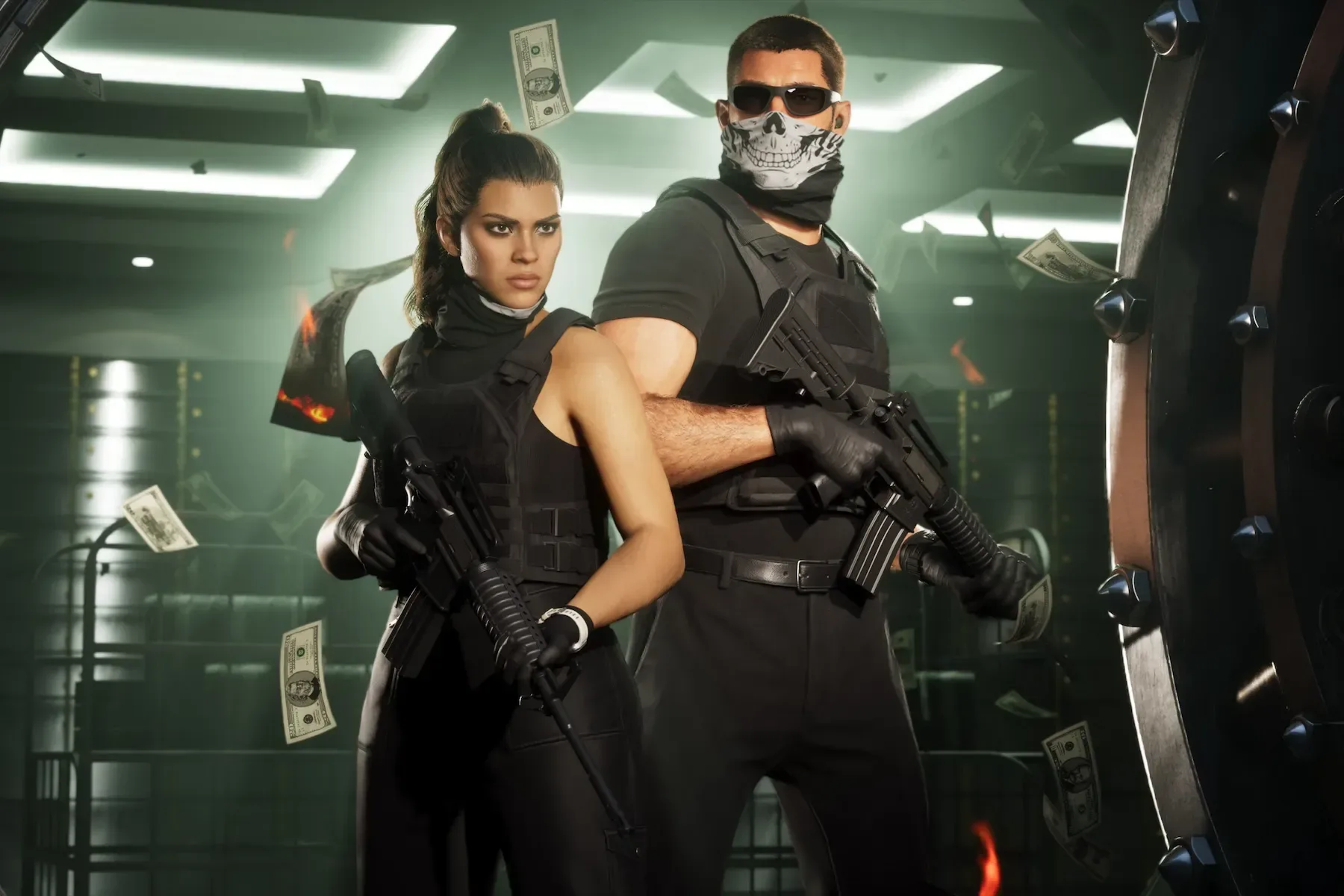

Grand Theft Auto 6 may have entered general release with an extraordinary commercial head start. Third-party estimates point to roughly 20 million preorders before launch, following a reported 17.07 million copies sold by November 16. The estimate is not an official sales disclosure from Rockstar Games or parent company Take-Two, so the final confirmed number remains to be seen. But the reported pace—more than one million preorders per day in the final stretch—suggests that the 20 million mark was within reach before players could buy the game at general release.
That scale matters because a preorder is more than a signal of broad awareness. It is a purchase commitment made before the full post-launch picture exists: before sustained player response, before the first weeks of technical reporting, and before word of mouth has time to spread beyond the series’ most engaged audience. In this case, the reported figure indicates that GTA 6’s audience arrived in exceptional numbers before those usual launch-day forces had fully entered the equation.
What the estimate says—and what it does not
The reported 20 million total is an analyst estimate, rather than a publisher-issued milestone. The underlying data placed sales at 17.07 million copies on November 16, a few days before the game’s general release, and observed daily preorder sales above one million at that point. Extrapolating that late momentum produces the headline estimate, but an extrapolation is not the same as a final audited result.
That distinction is important. Publishers can define and report sales metrics in different ways, while outside firms are working from their own data models and observations. A future update from Take-Two may confirm a similar figure, revise the picture, or use a different measurement altogether. For now, the most accurate framing is that GTA 6 was estimated to approach 20 million preorders, while official numbers had not been released.
The reported revenue estimate is similarly substantial: more than $1.6 billion before general release. Revenue refers to the money associated with sales, not necessarily a publisher’s final recognized income after every business arrangement or accounting step. It is also not a substitute for unit sales. A game can generate a high revenue total through a combination of copy volume and the mix of editions purchased, whereas the preorder estimate is focused on the number of copies.
PlayStation 5 accounts for the larger reported share
The platform split in the reported data is striking. PlayStation 5 accounted for 75% of sales, while Xbox Series X/S represented the remaining 25%. Put simply, the estimate describes a three-to-one advantage for PS5 in preorders.
That does not establish why players selected one console version over another. The available figures show the split, but do not provide evidence for a single explanation involving hardware ownership, regional preferences, retail availability, marketing influence, or any other factor. It would be easy to turn the ratio into a broader verdict on the current console market; the more careful interpretation is narrower. Among the preorders measured in this estimate, PS5 was the dominant platform.
For prospective buyers, the result is a practical reminder that launch conversations, player-made clips, and technical discussion may be especially concentrated around the PS5 edition. That should not be confused with evidence that one version is necessarily better than the other. The preorder split measures where purchases were made, not game performance, feature differences, or a quality ranking between platforms.
Related coverage includes GTA 6 Preorders Estimated at 20 Million Before Launch.
Why the final days before release matter
Late preorder acceleration is a useful indicator of anticipation, particularly for a release with a long public buildup. People who wait until close to launch may be responding to final marketing, newly published reviews, social discussion, or simply the approaching release date. When that final window is reportedly producing more than a million orders per day, even a short period can materially move the total.
The reported reviews also gave the game another boost in attention. GTA 6 was described as tied for the highest-rated game of all time after reviews were published. Reviews do not directly prove sales, and the reported preorder trend was already formidable, but major critical reception can reinforce confidence among customers who had been waiting for early verdicts before committing.
There is a timing lesson here, too. Preorders capture demand before launch, while launch-week sales capture both that preexisting demand and buyers who decide after release. Neither figure alone tells the entire long-term commercial story. The first establishes how much momentum arrived at the starting line; the second shows how effectively that momentum converts into a broader release-week result.
Take-Two’s market response reflects rising expectations
Investors have also been watching the release closely. Take-Two’s share price had been climbing across the month, though it remained below the company’s all-time high from around the same period a year earlier, during the height of GTA 6 anticipation. Following the publication of reviews, the stock reportedly rose 6%, moving from a low of $203 on November 17 to $222 at the close of the next market session.
A share-price move is not a direct scoreboard for a game’s quality or even a final sales count. Public markets react to expectations: what investors think a launch could mean for future revenue, the company’s broader business, and its capacity to meet prior assumptions. In a case like this, reported preorder strength, strong critical reception, and public confidence from leadership can all contribute to that expectation-setting process.
Earlier in the month, Take-Two chief executive Strauss Zelnick said preorders were running far above the company’s initial expectations and that he felt optimistic about the launch. That statement is more concrete than reading a stock chart, although it still does not replace a detailed official unit-sales announcement. Together, the executive comment and the third-party estimates paint a consistent picture of demand well beyond a routine release cycle.
What to watch for next
The key next step is an official update from Take-Two or Rockstar. It may clarify preorder units, launch-period sales, revenue, or the terminology being used for sales performance. Until then, it is sensible to separate three layers of information:
- Reported estimates: approximately 20 million preorders, more than $1.6 billion in revenue, and a 75%/25% split between PS5 and Xbox Series X/S.
- Company commentary: preorders were said to be far above initial expectations.
- Still unconfirmed details: Rockstar’s own final preorder tally and the game’s official release-period sales results.
The commercial conversation will naturally continue past that first disclosure. A huge preorder base establishes a remarkable opening, but it does not answer every question about the game’s ongoing performance. Official data, subsequent company reporting, and the shape of demand after general release will provide the fuller picture.
Meanwhile, GTA 6’s immense player attention is extending beyond sales talk. The community has already been picking over the game world for possible long-running secrets, including the strange monument markings found in Leonida. That kind of forensic fan interest is not a sales metric, but it does illustrate the unusually large spotlight surrounding this release from its opening days.
For now, the headline deserves both recognition and restraint: GTA 6 is estimated to have secured around 20 million preorders before general release, a remarkable claim supported by reported late-stage sales momentum. The official confirmation, and the longer-term sales record, are the next numbers to watch.