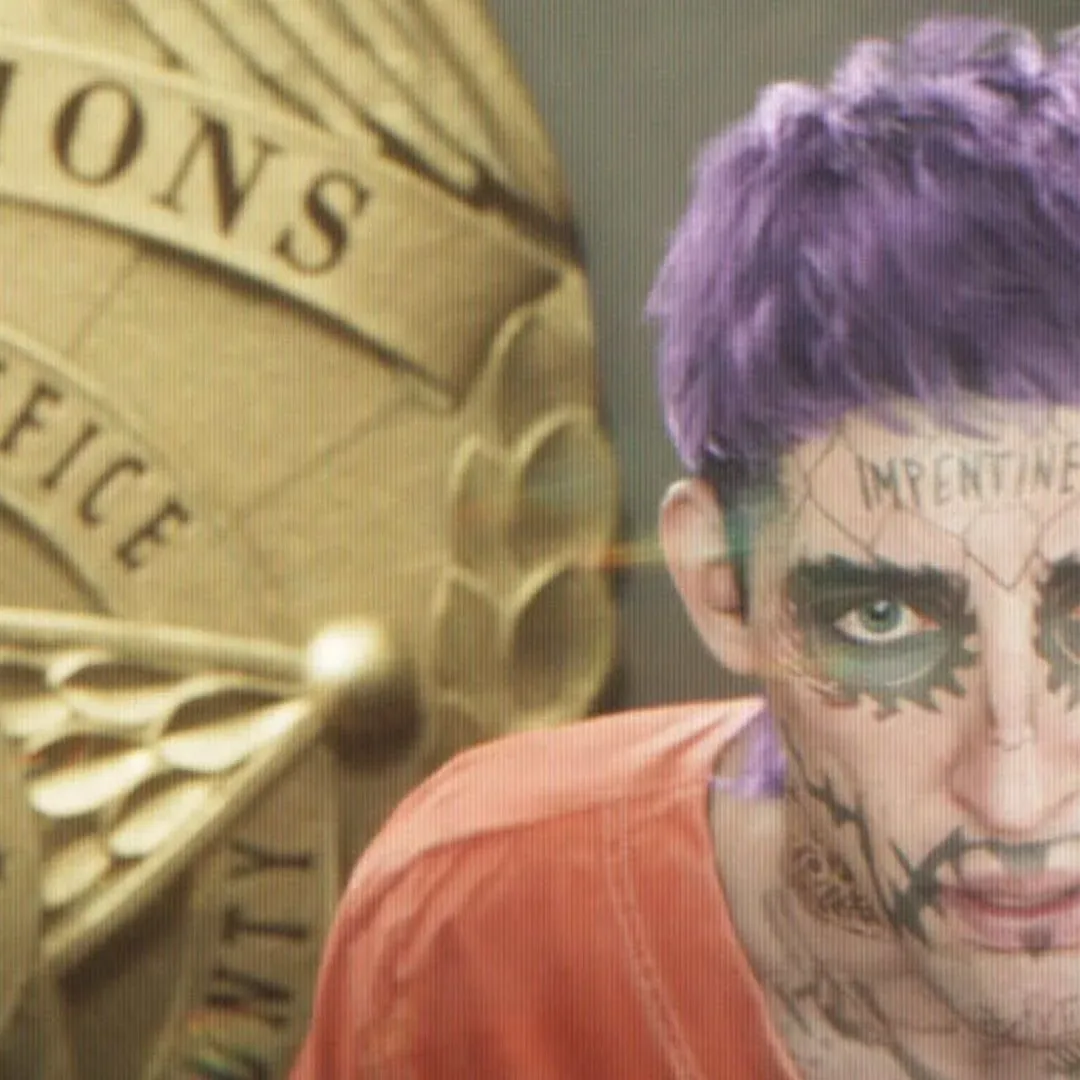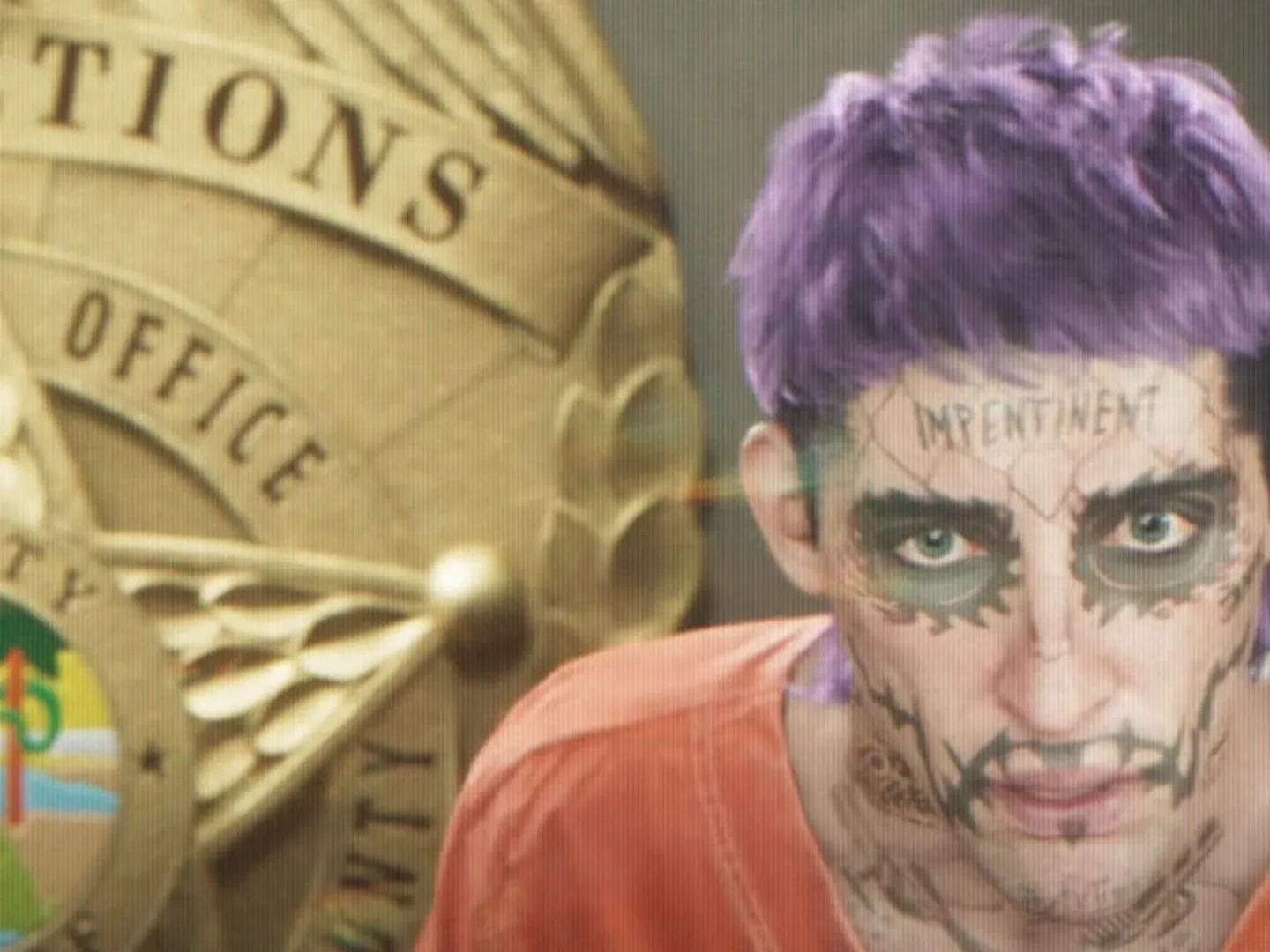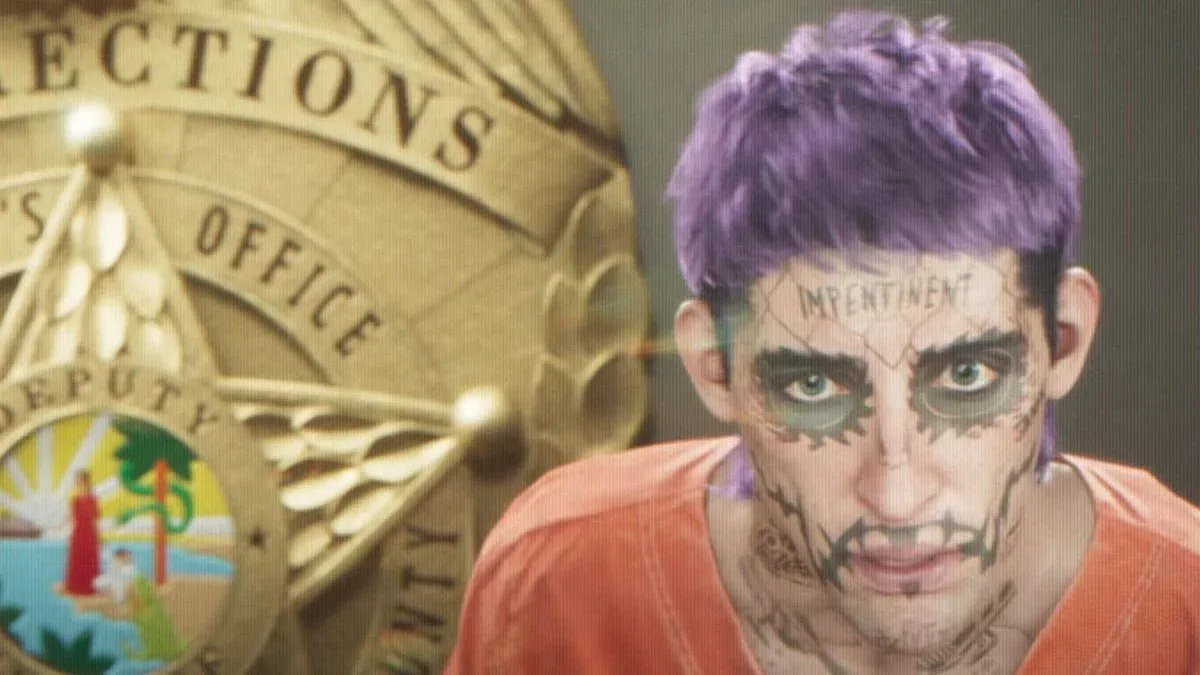
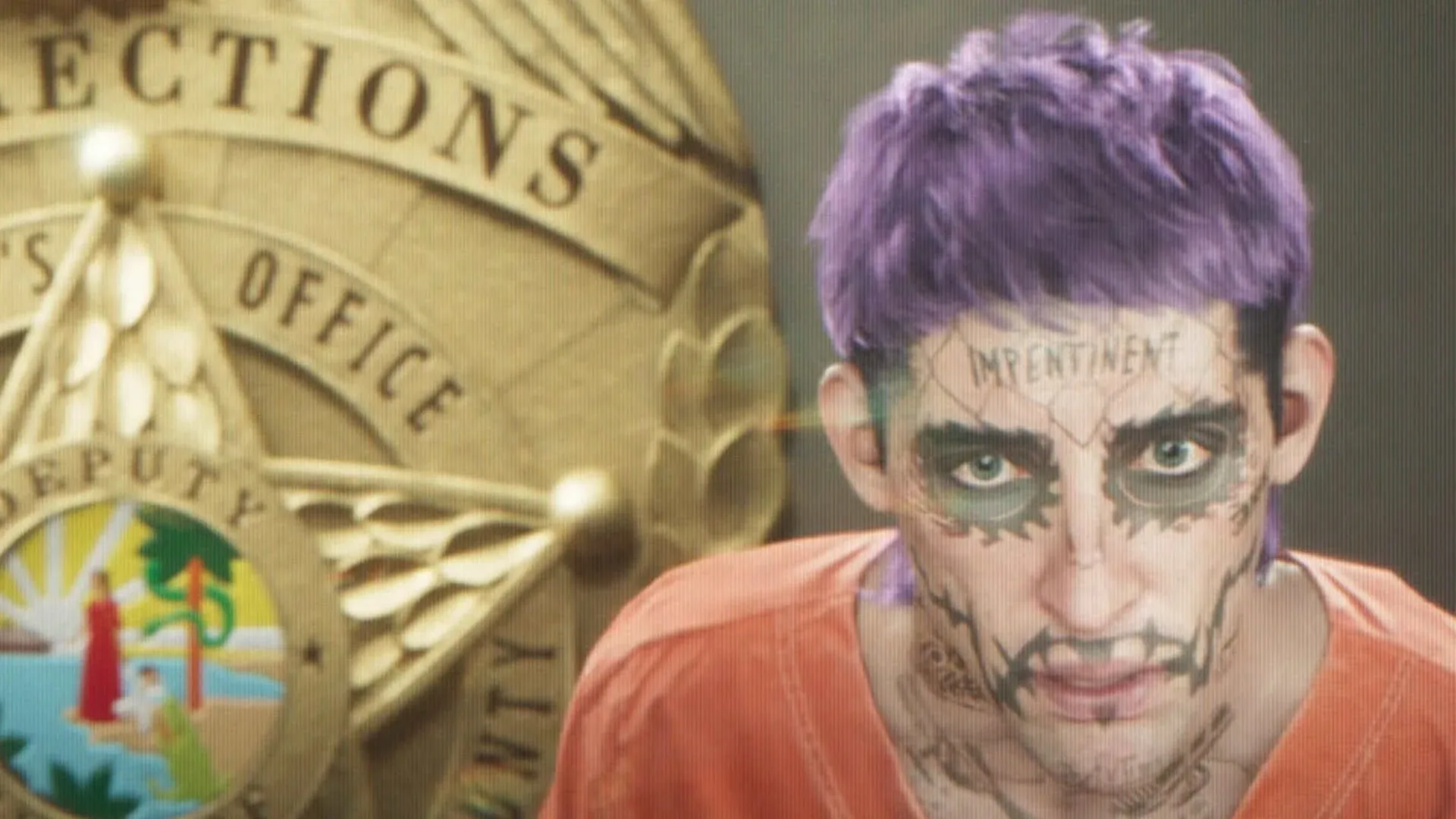
Lawrence Sullivan, the internet personality widely known as Florida Joker, says he has ended up in Grand Theft Auto VI after all—not merely as the subject of a long-running fan comparison, but as a voice performer for the game’s purple-haired lookalike.
Sullivan announced his involvement in a social-media video, describing himself as an official voice actor on GTA 6. His name is also listed in the game’s credits among performers for the “local population,” the broad group of voices that helps fill an open world with pedestrians, bystanders, brief scenes and ambient characters.
The role appears connected to an in-game Snapmatic video—a fictional social-media format used inside the game—in which a purple-haired character confronts another man over allegedly copying his appearance. The confrontation ends with the other man being knocked out and the purple-haired character later being arrested. During the scene, Sullivan can be heard challenging the supposed imitator and telling him to remove the “fake” tattoos.
From trailer resemblance to a credited role
Sullivan became known as Florida Joker after his mug shot circulated online. His distinctive face tattoos and brightly colored hair drew comparisons with the Joker character from DC, though the nickname refers to the viral online image rather than a formal character identity.
When the first GTA 6 trailer featured a purple-haired man with facial tattoos, viewers quickly connected the character to Sullivan. The apparent resemblance was particularly notable because Grand Theft Auto has long built fictional worlds from recognizable slices of public culture: local trends, social-media behavior, public spectacle and exaggerated regional archetypes. A visual echo can be powerful in that kind of satire even where a game does not explicitly identify the real-world figure behind it.
Rockstar did not confirm that the trailer character was based on Sullivan. That distinction still matters. A resemblance, even a close one, is not the same thing as an official statement that a fictional character is a direct portrayal of a particular person. The available evidence establishes that Sullivan believes the character is his lookalike, that he now says he performed the voice, and that his name appears in the credits. It does not establish the precise creative path behind the character or an official declaration that the character is Sullivan himself.
Still, the outcome is striking because Sullivan’s public position initially looked much more confrontational. He had said he intended to pursue $10 million over the perceived use of his likeness. He later shifted toward a different request: involvement in the game itself, including voicing the character, participating in meet-and-greets and helping promote the release.
His newly stated acting role suggests that the public dispute eventually moved toward participation rather than the legal fight he had floated. Sullivan celebrated that change in his video, pushing back at people who had doubted that he would appear in the finished game.
Related coverage includes Florida Joker Says He Voices His GTA 6 Lookalike After Likeness Dispute.
What a “local population” credit means
“Local population” is useful wording for understanding the scale of this appearance. It indicates that Sullivan is credited as part of the world’s wider civilian cast, rather than being presented in the available material as one of the game’s principal named characters.
That does not make the contribution insignificant. In a game built around a large, reactive city, local voices do a great deal of the texture-setting work. They populate short clips, background exchanges and passing encounters; they can make a fictional feed, neighborhood or public disturbance feel less like a blank game system and more like a place with its own noisy culture.
The Snapmatic appearance gives Sullivan’s contribution a more specific frame than a purely ambient line would. Rather than simply being one voice among general street chatter, his performance is tied to a compact piece of comic conflict about imitation, authenticity and conspicuous self-presentation. Those themes closely mirror the real-world conversation that brought attention to the character in the first place.
There is an added layer to the joke: the character apparently complains that somebody else has stolen his look, while the character’s own similarity to Sullivan prompted public arguments over where the inspiration came from. It is precisely the sort of circular, self-aware gag that fits a series interested in turning viral attention into fictional entertainment.
The difference between a cameo and a confirmed real-person character
It is tempting to call the appearance a straightforward cameo, and in ordinary conversation that description is understandable. Sullivan says he voices a figure that audiences had associated with him, and the scene itself appears to wink at the resemblance. But the more exact description is narrower: Sullivan is a credited voice actor for a purple-haired local-population character whom he regards as his lookalike.
That careful phrasing separates three related but distinct ideas:
- Likeness: the visual traits that lead people to recognize or associate a fictional character with a real person.
- Voice performance: acting work in which a person supplies dialogue or vocal sounds for a game character.
- Official character identity: a direct confirmation that the fictional character is intended to represent a named real person.
The first two are supported by the public circumstances around Sullivan’s appearance. The third has not been confirmed in the information available. For players, that distinction is less about spoiling the gag and more about accurately reading the credit: Sullivan’s involvement is real, while the exact status of the fictional character’s inspiration remains unconfirmed by Rockstar.
A small scene with an unusually public backstory
Most background-character credits arrive without a public history. A performer records lines, a character appears briefly, and the player may never know the story behind either. Sullivan’s situation is unusual because the public saw the apparent visual resemblance first, then watched a potential likeness dispute unfold, and now has a credited performance and an in-game clip to connect back to that debate.
That makes the scene more memorable than its size alone might suggest. Players who recognize Sullivan’s history can read it as a meta-joke about internet fame and the strange business of becoming recognizable through a viral image. Players who do not know that history can still understand the immediate gag: a heavily tattooed man accuses someone of copying him, throws a punch, and winds up in trouble.
That two-level structure is important for a game-world parody. The scene can function on its own, while also rewarding anyone aware of the wider reference. It does not require a real-world explanation to make sense, but the explanation adds a second punchline.
The credits also provide a practical answer for anyone trying to verify Sullivan’s claim. His name is included with the game’s local-population performers, which is stronger evidence than a social-media declaration alone. It confirms participation as a voice actor, even though it does not provide a complete account of how the character was conceived or how extensive the part may be.
Why the moment matters for GTA 6 players
For players, the clearest takeaway is simple: the purple-haired figure is not only an old trailer talking point. Sullivan says he voices him, and the credits support that he was part of the game’s voice cast. The Snapmatic clip turns what was once speculation around a resemblance into an identifiable performance within the finished world.
It also illustrates how GTA 6 uses its fictional social-media spaces. A Snapmatic clip can do more than deliver a throwaway joke; it can frame a miniature story, present a local personality and place a piece of the game’s satire in a format that resembles the rapid-fire viral videos being parodied. In this case, the format is especially fitting given that Sullivan’s own public identity was shaped by viral circulation.
Anyone tracking the game’s smaller references may also want to see how other details are being interpreted, including the Flaco Hernandez book and its possible Red Dead connection. Sullivan’s role belongs to a different kind of reference, one rooted not in another Rockstar fiction but in an internet figure who became part of the conversation surrounding the game before its release.
For Sullivan, the result is a notable reversal from a threatened $10 million claim to a credited in-game role. For the game, it is a compact example of satire feeding back into the culture that inspired it: a public resemblance dispute transformed into a performance about somebody furious that another person copied his style.