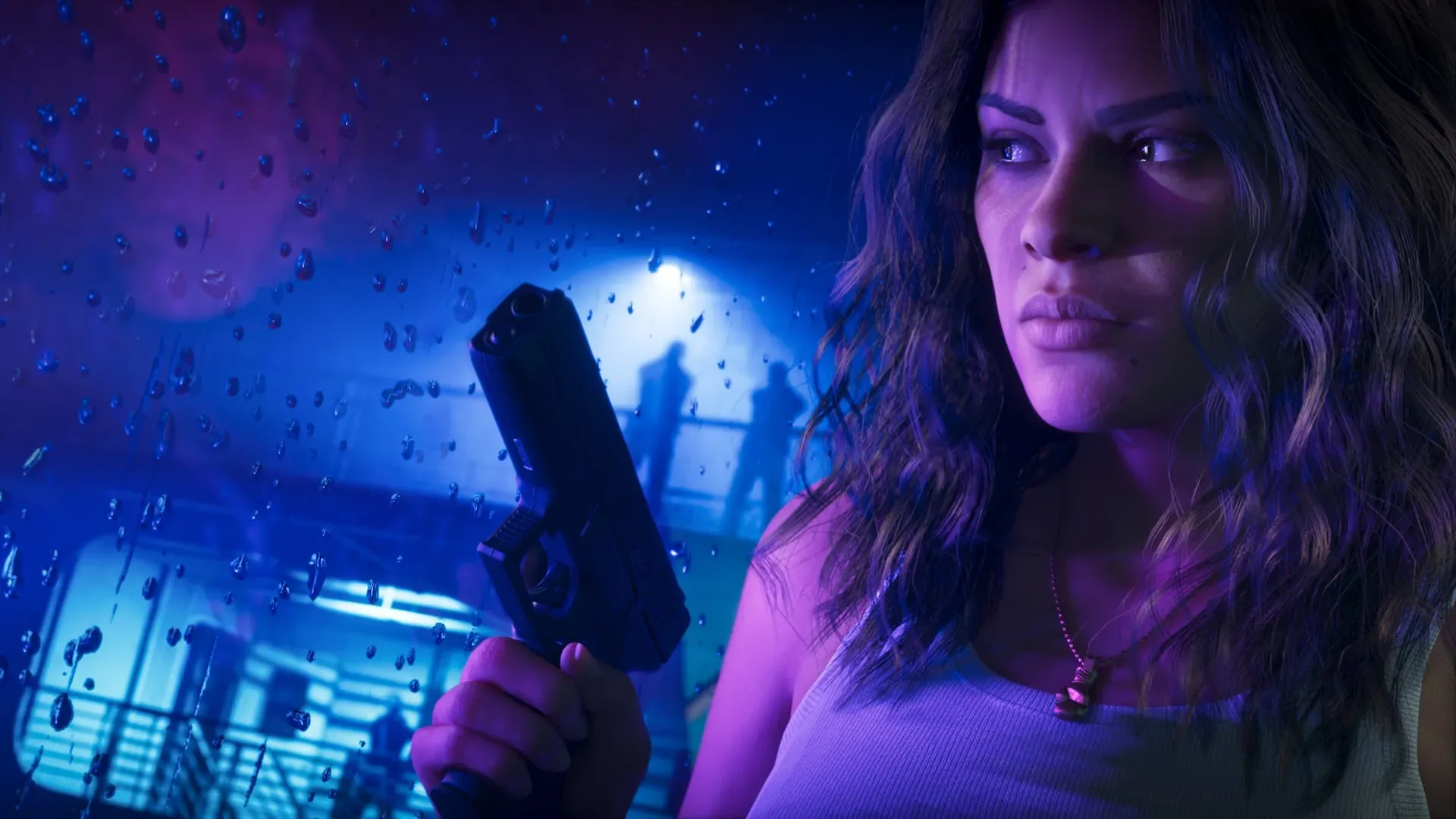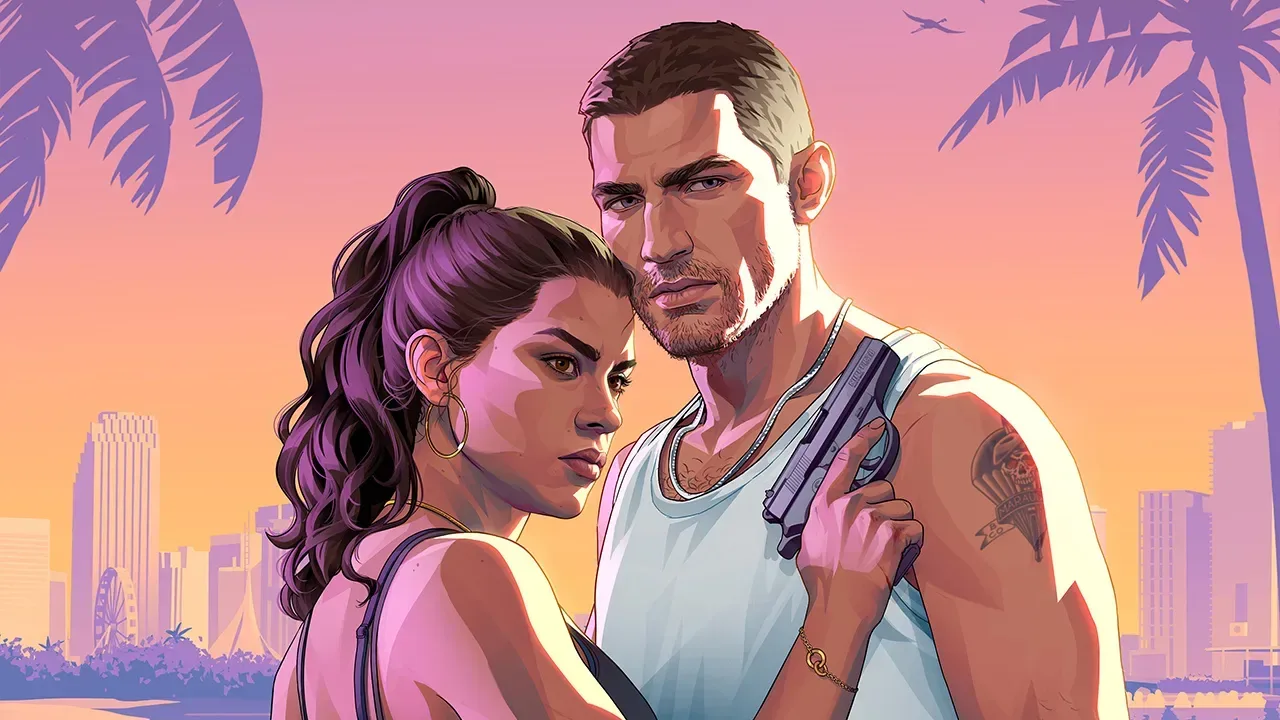
D’Angelo approved the completed version of “Kamikazi” for Grand Theft Auto VI in November 2024, nearly a year before his death, according to a statement from his estate. The song, credited jointly to D’Angelo and Slingbaum, first reached listeners through the game’s radio before arriving as a standalone RCA single on November 23.
The approval is an important clarification around a posthumous release. Luther Archer Jr., D’Angelo’s brother, said that Michael Archer—D’Angelo’s legal name—had personally signed off on the exact form of the song now being heard. That makes “Kamikazi” more than an unfinished archival recording later assembled without the artist’s participation: the supplied account describes it as a version D’Angelo explicitly cleared for release as part of Rockstar’s next Grand Theft Auto soundtrack.
For players, that means the track’s debut is tied to one of the series’ most recognizable musical traditions. Grand Theft Auto radio stations do more than place songs in the background. They create a moving, player-directed listening context: a song can arrive during a long drive, a sudden escape, or an otherwise quiet stretch of open-world travel. “Kamikazi” was first heard on Worldwide FM, the in-game station associated with Gilles Peterson.
That placement also puts the song into a larger continuation of D’Angelo’s relationship with Rockstar. His earlier contribution, “Unshaken,” appeared in Red Dead Redemption 2 in 2018 and later became available on streaming services in January 2019. Archer has also said that he and D’Angelo played Grand Theft Auto: Vice City together more than any other entry in the series. The new track therefore connects an approved late-period release to both an existing creative partnership with Rockstar and a personal history with Grand Theft Auto.
A track revived and completed for GTA VI
“Kamikazi” began as an earlier sketch recorded by D’Angelo with Slingbaum and longtime engineer Ben Kane. The recording was initially set aside rather than immediately finished. In November 2024, D’Angelo returned to the material with the specific goal of presenting it to Rockstar’s soundtrack team, and Slingbaum was brought in to complete the track.
That sequence matters because “finished” can mean several different things in music production. A demo may establish a melody, lyric, vocal performance, chord progression, beat, or general arrangement, yet still be far from the mix intended for public release. A final master, by contrast, is the completed version prepared for listeners after the various performances, production choices, editing, balancing, and approval stages have been settled.
The available details indicate that D’Angelo approved “Kamikazi” at that latter stage. Kane characterized it as one of very few releases D’Angelo had explicitly authorized. The estate’s statement is even more specific: it says D’Angelo approved the track in its current form for inclusion in Grand Theft Auto VI.
That does not turn every production choice into a mystery-free document of intent; collaborative recordings necessarily involve multiple musicians, producers, engineers, and coordinators. But it does establish a clear distinction between this release and material that might be issued posthumously from incomplete sessions, fragments, or concepts without a final artist-approved destination.
Related coverage includes D’Angelo Estate Says He Approved “Kamikazi” for GTA VI.
How the dual-drum performance was constructed
One of the most revealing production details concerns the drums. Slingbaum proposed using two drummers playing against the same beat D’Angelo had programmed. Yussef Dayes and the late James Gadson recorded their parts from separate studios, with Dayes heard on the left and Gadson on the right.
In practical audio terms, this is a stereo placement decision. Stereo mixes use left and right channels to create a sense of width and position. When instruments or performances are placed differently across those channels—a technique often called panning—listeners can perceive them as occupying distinct areas of the sound field. Here, the arrangement gives each drummer a defined side while keeping both tethered to D’Angelo’s programmed rhythmic foundation.
The phrase “against the same beat” is also worth unpacking. It does not necessarily mean the two players duplicated each other note for note. The supplied production account frames the programmed beat as the shared reference point, while the separate drummers add their own performances around it. That can create friction, complement, variation, and conversation inside the rhythm without abandoning the core pulse.
James Gadson’s contribution carries additional weight because he is described as late. The recording preserves his performance as part of a deliberately structured ensemble rather than as an incidental add-on. Dayes, meanwhile, occupies the opposite channel, making the two-drummer idea audible as a compositional feature, not merely a list of personnel in the credits.
Layered rhythm has obvious relevance to a game-radio setting. In a driving game, music has to work in motion: it may be heard in full attention, partly masked by vehicle and city sounds, or entered halfway through during a station change. A distinct programmed pulse combined with distributed live percussion gives “Kamikazi” several rhythmic points of entry. That is analysis of the arrangement described, rather than a claim about a particular gameplay moment or in-game scenario.
The collaborators behind “Kamikazi”
The recording also features a broader circle of vocal collaborators. Nick Hakim assembled several backing singers, including Jermaine Holmes, keiyaA, and June McDoom. Backing vocals can serve many functions: reinforcing a lead line, adding harmonic color, creating a call-and-response texture, or turning a solo vocal performance into a more communal sound. The available credits do not specify the precise arrangement of every vocal part, but they confirm that “Kamikazi” was built with a substantial supporting cast.
D’Angelo and Slingbaum had worked together before. Their previous connection included “Behoove,” from Slingbaum’s 2020 vinyl release, which also featured Erykah Badu. The pairing on “Kamikazi” is therefore not a newly assembled credit created solely for the GTA VI placement; it continues a prior collaboration.
D’Angelo had also discussed bringing guitar into his work and looking back at Voodoo in a conversation with Nelson George at the Brooklyn Museum. While that discussion provides useful context for his ongoing interest in instrumental choices and his own catalog, it should not be used to assign unconfirmed guitar details to “Kamikazi.” The confirmed picture of this track is more specific: a D’Angelo-programmed beat, two separately recorded drum performances, Slingbaum’s completion work, and a group of backing vocalists organized by Hakim.
Why approval matters especially for posthumous music
Posthumous releases can prompt understandable questions: Was the artist still developing the recording? Did they approve the mix? Was it intended for the public? Did collaborators finish a concept after the fact? In this case, the estate’s confirmation directly addresses the central question. D’Angelo approved the version released for Grand Theft Auto VI in November 2024.
That context is particularly significant because “Kamikazi” follows another posthumous D’Angelo appearance. He appeared as a guest on “This Woman,” released by Busta Rhymes and J Dilla in August. The two releases are not presented as the same type of project: “Kamikazi” is billed to D’Angelo and Slingbaum and has a specifically stated GTA VI approval history, while “This Woman” is identified as a guest appearance.
Careful distinctions like those matter for listeners deciding how to understand a release. “Posthumous” only describes timing—it means the work emerged after an artist’s death. It does not, by itself, explain whether the artist completed, approved, or even intended the public version. Here, the stated approval provides unusually direct context.
What it means for GTA VI’s radio identity
Grand Theft Auto’s radio format can give a song a different kind of introduction from a playlist or conventional album rollout. Rather than selecting “Kamikazi” from a search screen, players initially encounter it through Worldwide FM while moving through the game world. That makes the station itself part of the track’s first public setting.
Worldwide FM’s involvement follows its prior association with Peterson, who had played “Behoove.” There is a throughline in the people around the music, but no need to overstate it: the confirmed link is that “Kamikazi” premiered on Peterson’s in-game station and that Peterson had previously played the earlier D’Angelo/Slingbaum collaboration.
The song’s arrival also offers a different angle on GTA VI’s expanding atmosphere. Discussion around the game often centers on systems and world details—such as the localized conditions explored in GTA 6’s thunderstorms and local weather—but radio is another layer that shapes how players experience a virtual place. A soundtrack is not simply promotional material surrounding a game; in a series structured around cars, travel, and station surfing, it is part of the environment players repeatedly inhabit.
“Kamikazi” arrives with a meaningful degree of certainty behind it. The estate says D’Angelo heard and approved the final form intended for GTA VI. Its credits point to a collaborative process that joined an earlier D’Angelo sketch to Slingbaum’s finishing work, programmed rhythm, live drumming from Dayes and Gadson, and a coordinated backing-vocal ensemble. And its first placement on Worldwide FM gives the record an entrance designed for the particular rhythm of Grand Theft Auto: one more song discovered not just by pressing play, but by tuning in.