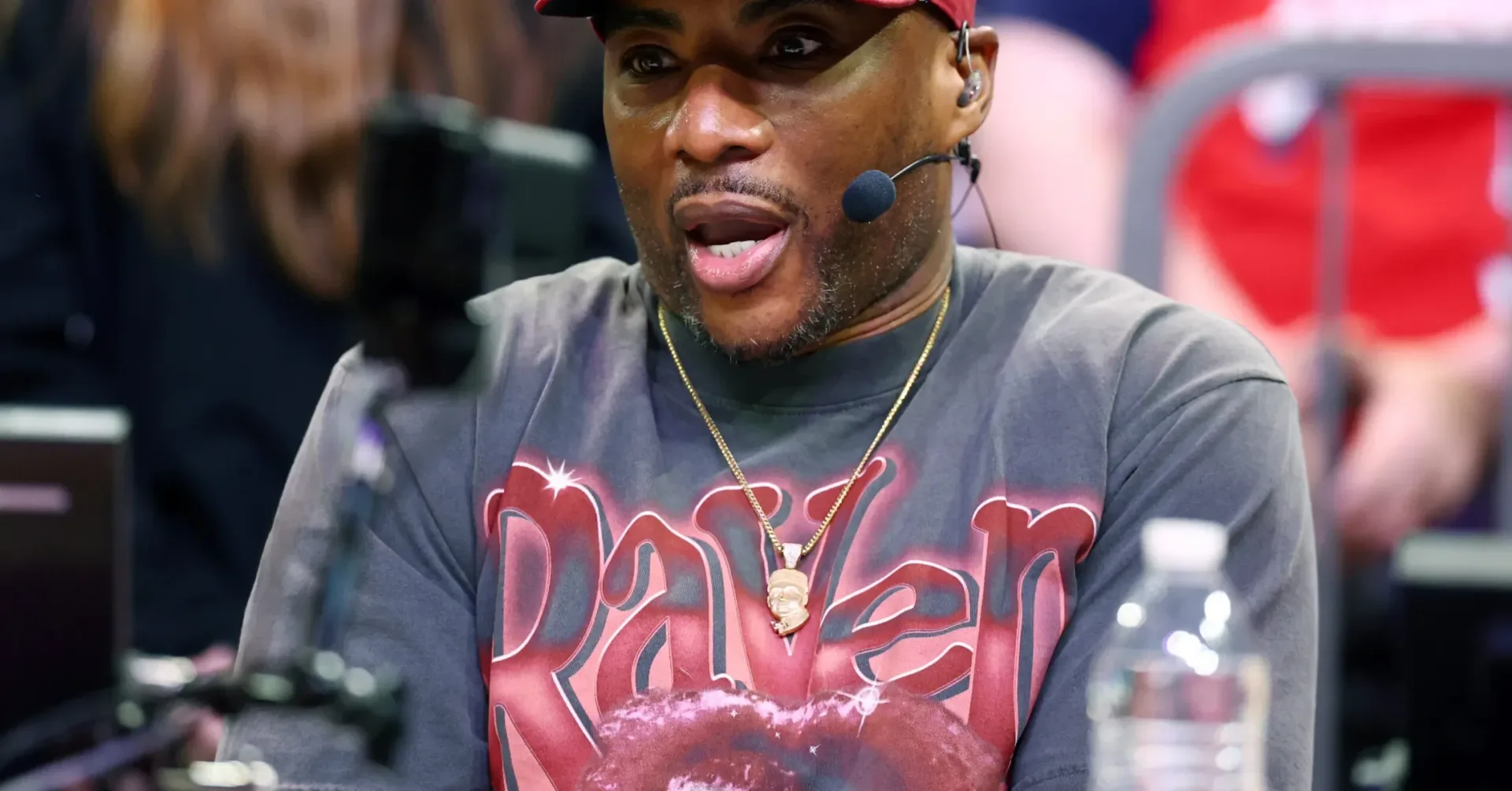
Grand Theft Auto’s radio has long done more than fill the silence between missions. It is a delivery system for music, jokes, fictional advertising and the sort of aggressively confident commentary that makes a city feel as if it is continuing to argue without the player. In Grand Theft Auto VI, Charlamagne Tha God is part of that machinery: he appears on Vice City Rap Radio, co-hosting the in-game Early AF Radio program with Ivy Rivera.
The cameo places a recognizable media voice inside the fictional world rather than simply beside it. Players who want to hear him should switch to Vice City Rap Radio while driving. The Early AF Radio segments include chatter around invented news events, as well as references to characters and brands that exist within the game’s satirical version of Vice City.
That is the important distinction. A celebrity cameo can be a quick moment of recognition, but the material described here is constructed to serve the game’s setting. Charlamagne and Rivera are not presented as stopping the action to discuss the real-world release; they are voices on a station, reacting to a world populated by fictional stories, people and consumer culture.
Where to find Charlamagne Tha God in GTA VI
The route is straightforward:
- Enter a vehicle with access to the radio.
- Tune the dial to Vice City Rap Radio.
- Listen for the Early AF Radio segments hosted by Charlamagne Tha God and Ivy Rivera.
There is no supplied indication that the program is tied to a mission, a collectible, a map location or a particular point in the story. It is a radio-station appearance, so the practical answer is to keep Vice City Rap Radio on as you travel. As with the medium generally, hearing a particular talk segment may depend on the station’s programming rotation.
Early AF Radio’s role in the game’s satire
The segment reportedly touches on fake news stories taking place in GTA VI’s world. It also refers to DWNPLY and a sneaker collaboration with Eris, a fictional spoof on Nike. Those details may sound incidental, but they illustrate how the game’s pieces connect. The joke is not only that a sneaker brand has been parodied; it is that a radio show can discuss a character-linked product as though it belongs to an ongoing local news-and-culture cycle.
World-building is the useful term here. In games, world-building means the accumulation of details that establish a place’s culture, institutions, habits and contradictions. It does not require every detail to advance a mission. A radio mention of a sneaker release can make the setting feel commercially noisy and socially interconnected, even if the player never pursues that reference further.
That approach suits a series built around a heightened reflection of American public life. Fictional radio programming is particularly effective because it can communicate several things at once: a genre and mood through the music, a point of view through its presenters, and a running commentary on the city through interstitial conversation. It is optional for the player, but it can be among the most persistent ways a game speaks while the player is simply moving through the map.
Related coverage includes Charlamagne Tha God Puts GTA VI Above the World Cup.
A recognizable voice, used as part of the format
Charlamagne said he had to keep the appearance private before the game became available, including when it released early in New Zealand on November 18. That secrecy is familiar to big entertainment projects, but it also explains why players encountered the performance in context rather than through advance discussion of every cameo.
Afterward, he discussed GTA VI’s scale on The Brilliant Idiots with Andrew Schulz. Charlamagne argued that the game represented the largest “monocultural” event in the world, putting it above events including the Super Bowl and the World Cup. Schulz pushed back, arguing that the World Cup was bigger.
The disagreement is more useful as a debate about terms than as a contest with a clean numerical answer. Monoculture usually describes a moment, work or event that commands unusually broad shared attention across audiences. It does not necessarily mean every person participates, or that it exceeds every other event by every possible measure. Sports tournaments, for example, can have vast international viewership, while a game launch can dominate a different kind of conversation: play, streaming, online clips, music discussion and the social sharing of discoveries.
Charlamagne’s claim underscores the ambition attached to GTA VI, but it remains an opinion. The supplied account also says the game had already sold more than $4 billion worth of copies. That figure is presented as a claim in the available information, not a number independently substantiated here. It should therefore not be treated as a verified basis for settling the World Cup comparison.
Why radio cameos can matter more than a one-scene appearance
A scripted cameo in a cinematic sequence is seen once by many players and missed by others. Radio operates differently. It accompanies routine play: driving to a destination, escaping trouble, wandering, or simply spending time between major objectives. A host’s cadence, jokes and recurring topics can become part of the texture players associate with a place.
That makes the partnership with Ivy Rivera relevant as well. The supplied details characterize their on-air dynamic as having solid chemistry. For a radio format, interaction is the point: a station gains identity through the relationship between its hosts, not just through one famous name reading isolated lines. If their conversations keep returning to the same fictional public sphere—news stories, local figures and branded objects—the program can make Vice City sound like it has its own media ecosystem.
It is also a reminder that GTA’s satire is often environmental. Players do not need to chase down every reference to understand that the city is crowded with exaggerated commerce, celebrity and information. A branded sneaker collaboration mentioned on the radio is enough to suggest an economy of hype around it. A fictional news item is enough to imply competing narratives and public gossip. The player is invited to overhear the world, not merely to complete tasks within it.
What players should take from the cameo
For listeners hoping for a direct route to Charlamagne Tha God’s contribution, Vice City Rap Radio is the key. For everyone else, the appearance is a small example of GTA VI’s larger design logic: celebrity recognition is being used to reinforce the fiction, not replace it.
The Early AF Radio material connects a real media personality to invented headlines, an in-game character and a parody brand. That layered approach helps explain why radio remains an important part of an open-world game’s identity. The station is not merely a playlist; it is a compact piece of civic background noise, delivered from the dashboard.
For another look at how domestic routines can reveal character and tone in the game, see this examination of Jason and Lucia’s missing proper dinner.