A purported Rockstar Games data leak is circulating online with claims that it contains roughly 192GB of material tied to both Grand Theft Auto VI and Grand Theft Auto V. The alleged archive is said to include early GTA 6 assets alongside older GTA 5 material, including dialogue, development tools and source code.
Those are substantial claims, but they remain unverified. A large file size, screenshots, filenames, mission lists or social-media posts do not independently establish that material is genuine, complete, current or representative of plans that ever reached production. Readers should treat every purported detail as provisional unless Rockstar or its parent company confirms it.
What the alleged archive is said to contain
Discussion around the alleged leak places its size at precisely 192GB, though it has often been described more broadly as a nearly 200GB collection. Reported contents include early GTA 6 map-related assets, GTA 5 dialogue, Rockstar development tools and source code.
In game development, an asset can mean a wide range of production material: a model, texture, animation, audio file, environment component, interface element or other content used to build a game. An early asset is not necessarily a promise of a final-game location, mechanic or mission. Development teams routinely create, alter, replace and remove material while a project changes.
Source code, meanwhile, refers to the human-readable instructions programmers write before those instructions are compiled into the software players run. Claims involving source code are especially serious because it can expose internal implementation details and tools. But the presence of an alleged file, or claims about one, should not be mistaken for confirmation that it is authentic or that it applies to a current build.
The reported material has drawn attention partly because it spans two eras of Rockstar’s Grand Theft Auto work: an upcoming game and content associated with its enormously successful predecessor. That combination naturally makes the story tempting for fans looking for GTA 6 clues and for GTA 5 players still curious about ideas that did not make it into the released game.
Liberty City speculation needs a very large asterisk
One widely discussed claim is that the material offers a view of an expanded Liberty City that may have been considered for GTA 5 before being abandoned. Liberty City is therefore at the center of a familiar kind of Grand Theft Auto speculation: whether a prior setting could return through a later expansion.
At present, that is only speculation. Even if files relating to an expanded Liberty City concept are authentic, they would indicate that an idea was explored at some stage, not that it was approved for GTA 5, not that it was close to release, and certainly not that it is planned for GTA 6.
Related coverage includes Alleged 192GB Rockstar Leak Points to Early GTA 6 Assets and Scrapped GTA 5 Plans.
That distinction matters. Cut content can be useful evidence of a studio’s experimentation, but it is weak evidence for a future roadmap. The reasons an idea may be dropped are numerous: scope, scheduling, technical constraints, a change in creative direction, shifting priorities, or simply a decision that the concept works better elsewhere. Without an official statement, the alleged files cannot settle whether Liberty City will appear in any future GTA 6 content.
The same caution applies to early GTA 6 map material. Map assets may suggest that particular environments were prototyped, but they cannot reliably tell players how the final game will be structured, what areas will be playable, or whether a given asset survives in the launch version. Early development is full of placeholders and experiments, especially for open-world projects.
The reported Agent Trevor material revisits a long-running GTA 5 question
The alleged collection also reportedly includes material related to the canceled Agent Trevor DLC concept for GTA 5. The proposed expansion has been described as having a spy-thriller or James Bond-like flavor, with Trevor at its center. Posts discussing the claimed archive highlight what is presented as a mission order and mission names connected to that project.
There is useful existing context for why fans find that particularly plausible: former developers had previously said that the Trevor expansion was canceled because it could not compete with the commercial momentum of GTA Online. That does not authenticate any newly circulated list, but it explains why purported planning material for a canceled single-player expansion is attracting interest.
It also illustrates the limits of interpreting development artifacts. A mission list, if real, can show an outline at one point in production. It cannot reveal how far individual missions were built, whether their order changed, which elements were placeholders, or whether the plan would have resembled a finished release. A title on a list is a planning clue, not a playable chapter.
Why fans should separate evidence from inference
Leaks create an unusually messy information environment because three different things are often blended together:
- The claim: someone says an archive exists and identifies its contents.
- The material: snippets, filenames, images or descriptions are circulated as evidence.
- The inference: observers turn those fragments into predictions about a game’s final design, release plans or expansions.
Only the first category is clearly present here: reports of an alleged archive and claims about what it contains. The second is difficult for the public to validate responsibly, and the third is where rumors most quickly become overstated. “An early file exists” can become “this feature is coming,” even though those statements have very different evidentiary standards.
That is particularly important for GTA 6. Earlier purported GTA 6 material circulated before an official extended look appeared on Netflix, and some observers saw overlap between the two. That may make new claims feel more credible to some fans, but it does not verify every later file or prediction bundled into online discussion. Each claim needs its own evidence.
For people following game-development mysteries, the practical approach is straightforward: do not download or redistribute alleged proprietary data; do not treat file names and unfinished assets as launch features; and wait for official communication before making purchase, platform or story expectations around a rumored detail. That approach protects against both misinformation and the tendency for unfinished work to distort perceptions of a game before its creators are ready to present it.
What this does and does not tell us about GTA 6
If authentic, the alleged materials could eventually offer historians and curious players a look at how concepts change during the making of major games. They may also document abandoned GTA 5 ambitions that have been discussed for years. But that is a very different proposition from a confirmed GTA 6 feature list.
The report does not establish that GTA 6 will receive a Liberty City expansion. It does not confirm a specific map, mission, system, platform plan or post-launch schedule. Nor does it establish that the purported GTA 6 material reflects the game in its present form.
The more immediate takeaway is that Rockstar is again dealing with public claims about internal material at a sensitive time for one of gaming’s most closely watched releases. Until there is a formal response or independently credible confirmation, the sensible label for the reported 192GB collection is exactly the one it deserves: an alleged leak, full of potentially interesting leads but short on verified answers.
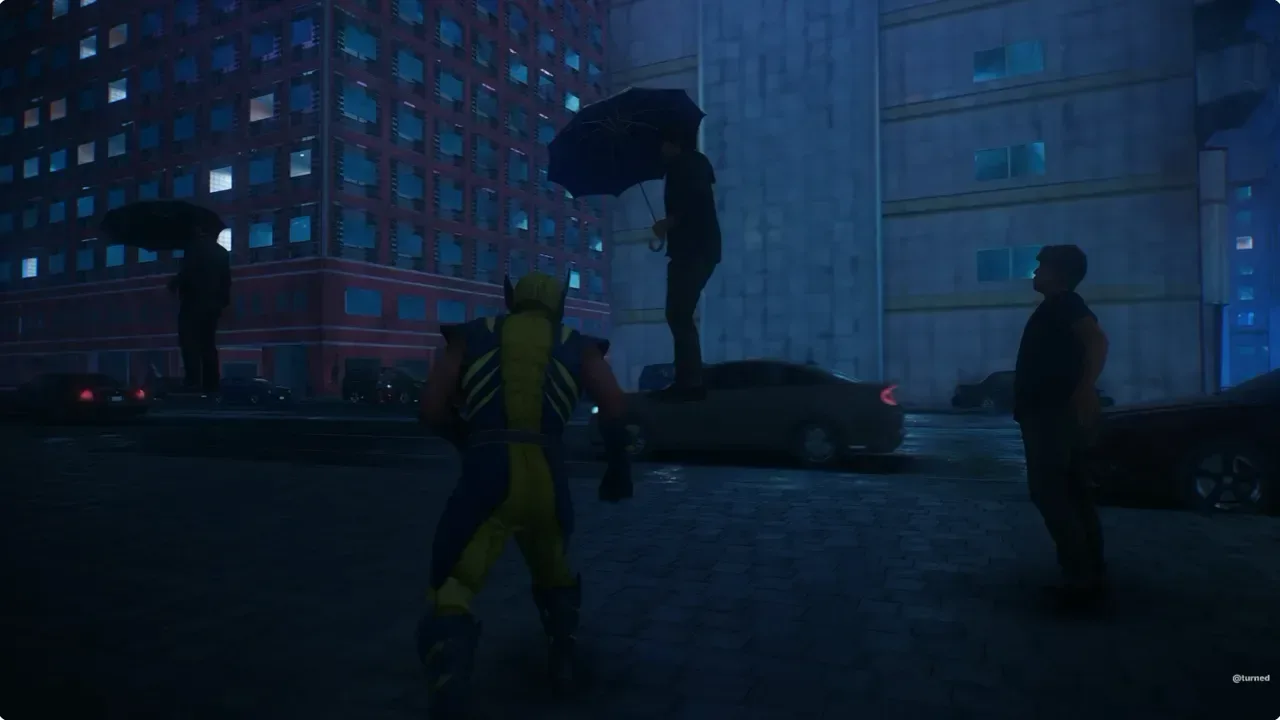
For a reminder of how odd unfinished game spaces can look when material reaches the public, see our coverage of out-of-bounds footage and unfinished-world behavior in Marvel’s Wolverine. Development artifacts can be revealing, but they are rarely a clean preview of what players will eventually receive.