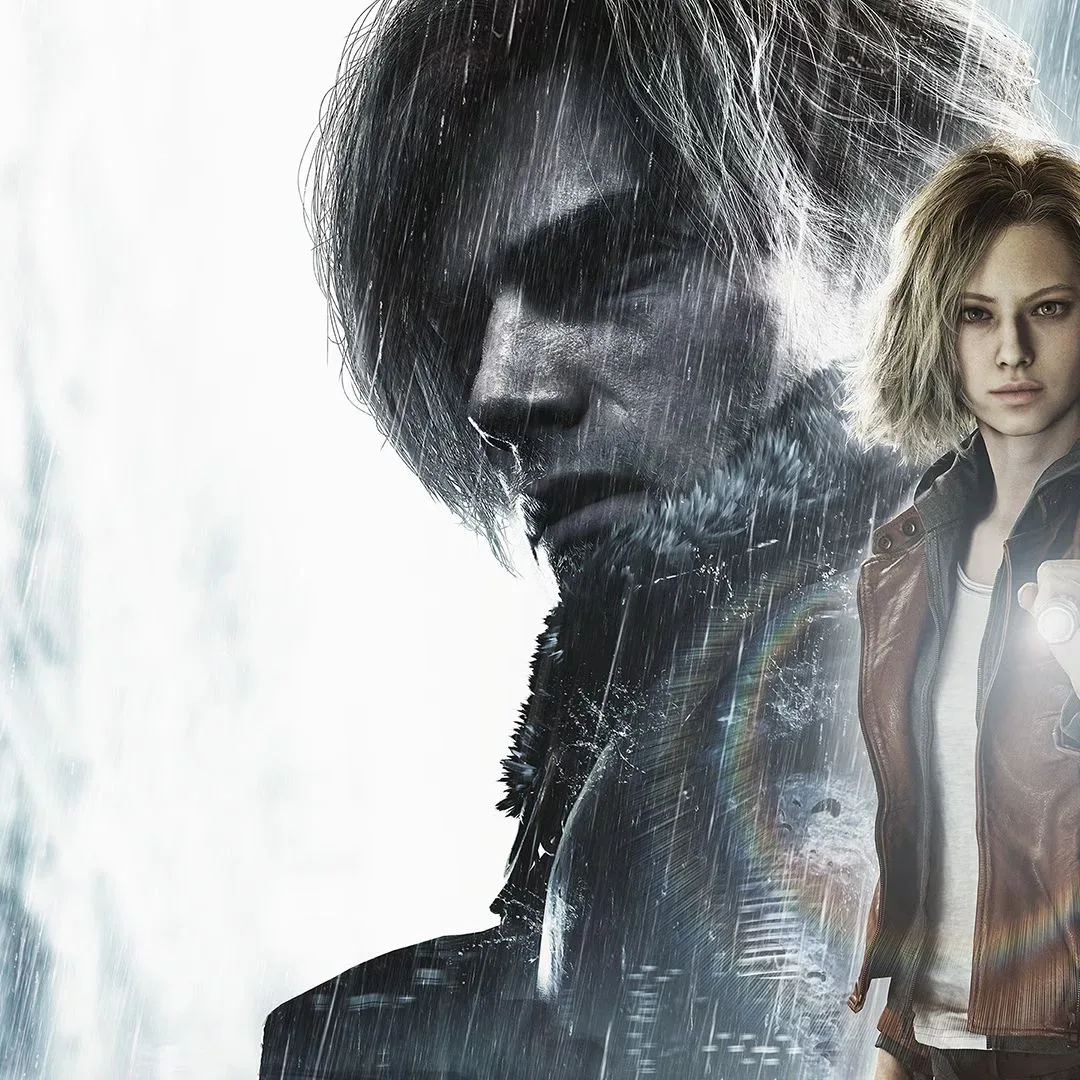

Resident Evil has never lacked for survivors, but its most durable protagonists tend to survive in very different ways. Leon Kennedy is synonymous with practiced confidence and spectacular physicality; Grace Ashcroft, the new central character of Resident Evil Requiem, is defined by a much less polished kind of resilience. Angela Sant’Albano, who portrays Grace, believes there is still substantial room for the character to grow—just not by remaking her in Leon’s image.
That distinction matters. Sant’Albano’s vision for Grace does not dismiss progress, competence or courage. Instead, it frames them as things Grace can develop through self-trust and self-forgiveness after the events she endures. The actor also sees potential in the protagonist’s relationships with Leon and Emily, suggesting that Grace’s future could remain personal and character-led even inside a series famous for increasingly capable heroes.
There is no confirmation that Grace will appear in another Resident Evil game. Capcom has not revealed the next mainline entry, and the next major Resident Evil release identified after Requiem is Resident Evil Veronica, a remake of Code Veronica. Still, Sant’Albano’s comments provide a clear sense of the avenues she would like to explore if Grace does return.
Growth does not have to mean becoming Leon
Sant’Albano was direct about the boundary she sees between Grace and Leon. She does not expect Grace to become the kind of action lead associated with roundhouse kicks and effortless combat prowess. That is not a prediction of weakness; it is an argument for preserving the character’s identity.
“I don’t think she’ll ever be a Leon character,” Sant’Albano said. “She’s never going to be badass, you know, doing roundhouse kicks.”
The important follow-up is that Sant’Albano still expects Grace’s courage and self-esteem to grow. In her view, that progression is tied to Grace learning to trust herself and forgive herself for the burdens holding her back. In other words, the proposed destination is not a fearless super-agent. It is a person more able to act despite fear, doubt and trauma.
That is a useful distinction for horror storytelling. An action hero’s appeal often comes from mastery: the sense that they know how to enter a dangerous room, deal with its threats and leave standing. A horror protagonist can create a different kind of tension when the audience understands that every decision is difficult and each act of resistance has a cost. Grace’s journey in Requiem reportedly moves from anxiety-induced paralysis to the shaky confidence needed to defend herself with a gun. That trajectory already establishes courage as something earned rather than assumed.
For a future appearance, the challenge would be maintaining that emotional logic. Grace can become more prepared, decisive and capable without suddenly behaving as though the experiences that once overwhelmed her never mattered. A character does not need to stay static to remain recognizable. In fact, the strongest continuation would likely let Grace’s improved confidence change how she responds to danger while retaining the vulnerability that makes her perspective distinct.
Related coverage includes Resident Evil Requiem's Grace Ashcroft Has Room to Grow Beyond Her First Nightmare.
What “a long way to go” can mean for Grace
Sant’Albano’s assessment that there is “a long way to go” with Grace is not a confirmation of a sequel storyline. It is an actor’s view of the character’s remaining potential. That potential is rooted in internal development as much as external danger.
Self-esteem, in this context, is not simply bravado. It can mean believing one’s choices have value, accepting the ability to protect oneself and others, and refusing to be defined solely by a past crisis. Self-forgiveness is similarly more complicated than forgetting what happened. The wording suggests that Grace carries guilt or emotional weight that needs to be confronted before she can fully trust her own judgment.
These are useful dramatic stakes because they cannot be solved by increasing firepower. A larger weapon, a more acrobatic move set or a higher body count would not inherently address the emotional barriers Sant’Albano identifies. If the character returns, her growth could be expressed through choices: speaking up sooner, taking responsibility without self-punishment, accepting help, or making a difficult call with more confidence than she could during her first nightmare.
That does not mean a future story would need to abandon survival mechanics or combat. Grace already reaches a point where she can defend herself with a firearm. The meaningful question is what that capability represents. For Leon, physical confidence is part of a familiar identity. For Grace, the act of steadying herself enough to use a gun can carry a different dramatic charge: it is evidence that fear has not made action impossible.
Leon and Grace: mentorship rather than replacement
The most specific relationship Sant’Albano hopes to see expanded is Grace’s connection with Leon. She described the bond developing between them as a beautiful mentorship with an almost brother-and-sister quality. That language points away from a simple veteran-rookie setup in which Grace exists merely to be trained into a Leon substitute.
A mentorship can work because it allows two characters to illuminate each other without flattening either one. Leon’s experience could give Grace practical support and a steadier point of reference. Grace, meanwhile, can keep the relationship from becoming a one-way lesson if her fears, values and decisions challenge the assumptions of a more seasoned survivor. The appeal is not that Leon can turn her into an action hero. It is that he may be someone she can learn from while still becoming herself.
The “brotherly, sisterly” framing is also important because it describes emotional safety and mutual regard rather than an obligation to escalate the relationship in another direction. Sant’Albano is talking about possibilities, not confirming a future plot. But the type of connection she outlines would fit a story interested in Grace’s ability to rebuild trust after trauma.
For fans, the practical takeaway is restraint: do not treat these comments as proof that Leon and Grace will share the next game. Capcom has not confirmed Grace’s return, much less detailed a future cast. The comments are most valuable as a creative reading of what the existing dynamic could support.
Emily could open another side of Grace
Sant’Albano also wants to know what happens with Grace and Emily. She has developed a close friendship with Emily performer Emma Rose, and she would like to see Grace take on a more maternal role and carry that forward.
“Maternal” does not necessarily mean that Grace needs to become a conventional caretaker or that a future story must revolve around parenthood. In this case, the word is best read as a desire to explore nurturing responsibility: protection, patience, empathy and concern for another person’s wellbeing. Those qualities can be particularly meaningful for a character whose first major arc involves regaining control of her own fear.
There is also a useful contrast between the two relationships Sant’Albano highlights. Leon represents mentorship and a near-sibling bond, while Emily could invite Grace to provide care rather than receive guidance. Taken together, those possibilities position Grace in the middle of a network of relationships instead of leaving her defined only by isolation and survival.
That would be a natural way to show change without erasing the premise of the character. A more confident Grace does not have to announce that she is fearless. She can demonstrate growth by becoming dependable for someone else, while still facing moments when she needs help herself.
A major awards night, but not a sequel announcement
Sant’Albano recently received the Golden Joystick Award for Best Lead Performer. Resident Evil Requiem also won Ultimate Game of the Year. Those wins make the conversation around Grace’s future especially understandable: the character and performance have received high-profile recognition, and Sant’Albano clearly has ideas for where the role could go.
However, awards recognition is not the same as a production roadmap. It does not establish that Capcom has committed to another Grace-led story, that Leon or Emily will be involved, or that any specific character development is in development. The confirmed point in the provided information is narrower: Resident Evil Veronica, a remake of Code Veronica, is the next major Resident Evil game expected after Requiem, and Grace is not expected to be part of it.
That leaves Grace’s status in an intriguing place. She has a complete enough initial arc to move from paralysis toward self-defense, but Sant’Albano sees that as a beginning rather than an endpoint. The character may have found the capacity to survive; the proposed next step is learning to believe in that capacity.
Why keeping Grace distinct would be the smarter path
There is an understandable temptation in long-running game series to turn every popular newcomer into a version of the established icon. It is easy to communicate and can make a character feel immediately “useful” in an action-heavy setting. Yet Sant’Albano’s comments suggest a more interesting route for Grace: preserve the contrast.
Leon’s confidence and Grace’s uncertainty need not compete for the same role. Their differences can make a shared story richer, particularly if mentorship is used to support Grace’s voice rather than overwrite it. Grace becoming more courageous is compelling precisely because it is not presented as a switch that converts her into a roundhouse-kicking clone.
For now, the future remains speculative. No additional Grace appearance has been announced, and the next identified release has a different focus. But Sant’Albano has articulated a credible foundation for a return: deepen the bonds with Leon and Emily, let Grace’s self-trust develop, and treat bravery as persistence through fear instead of the absence of it.
For more on another major game currently mapping out its locations and modes, see Crazy Taxi: World Tour’s final international map.