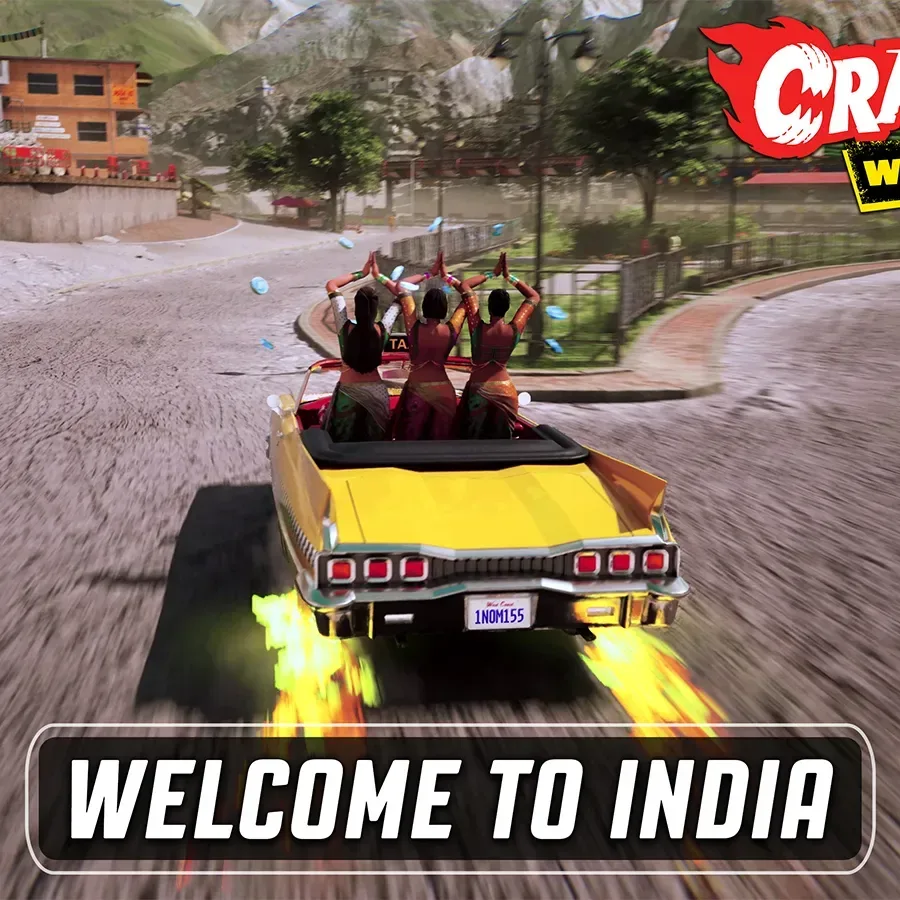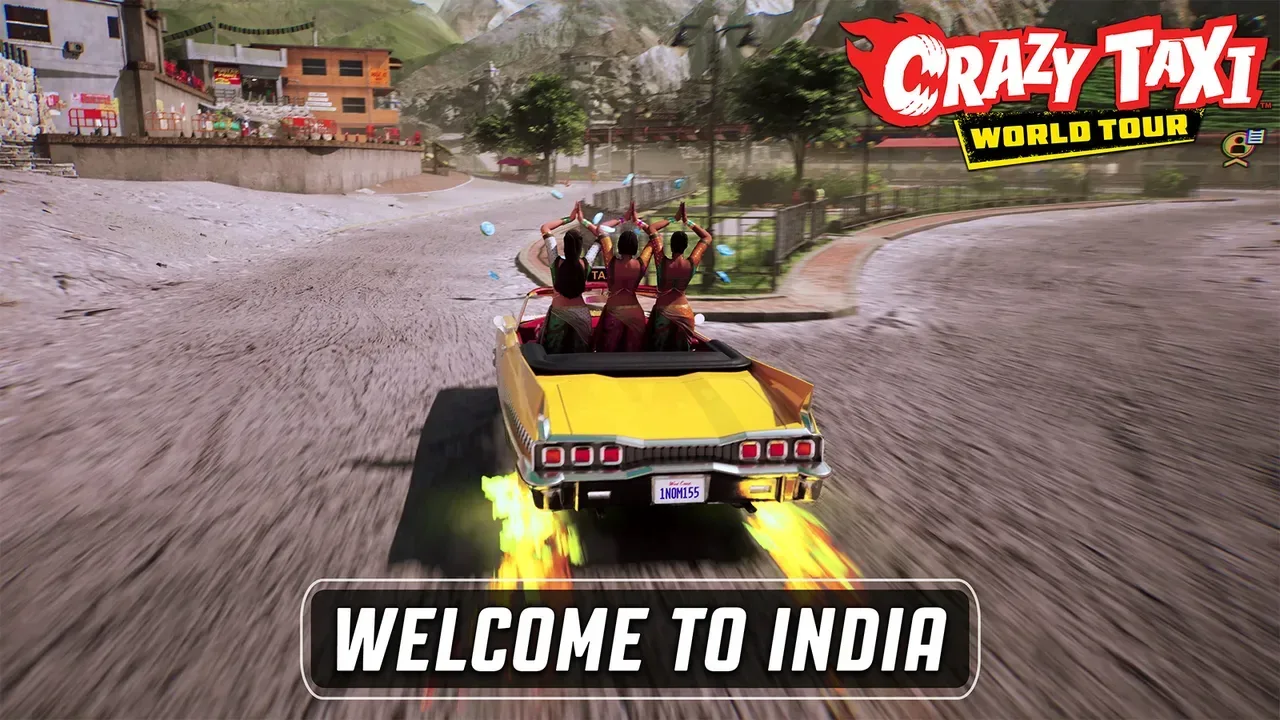
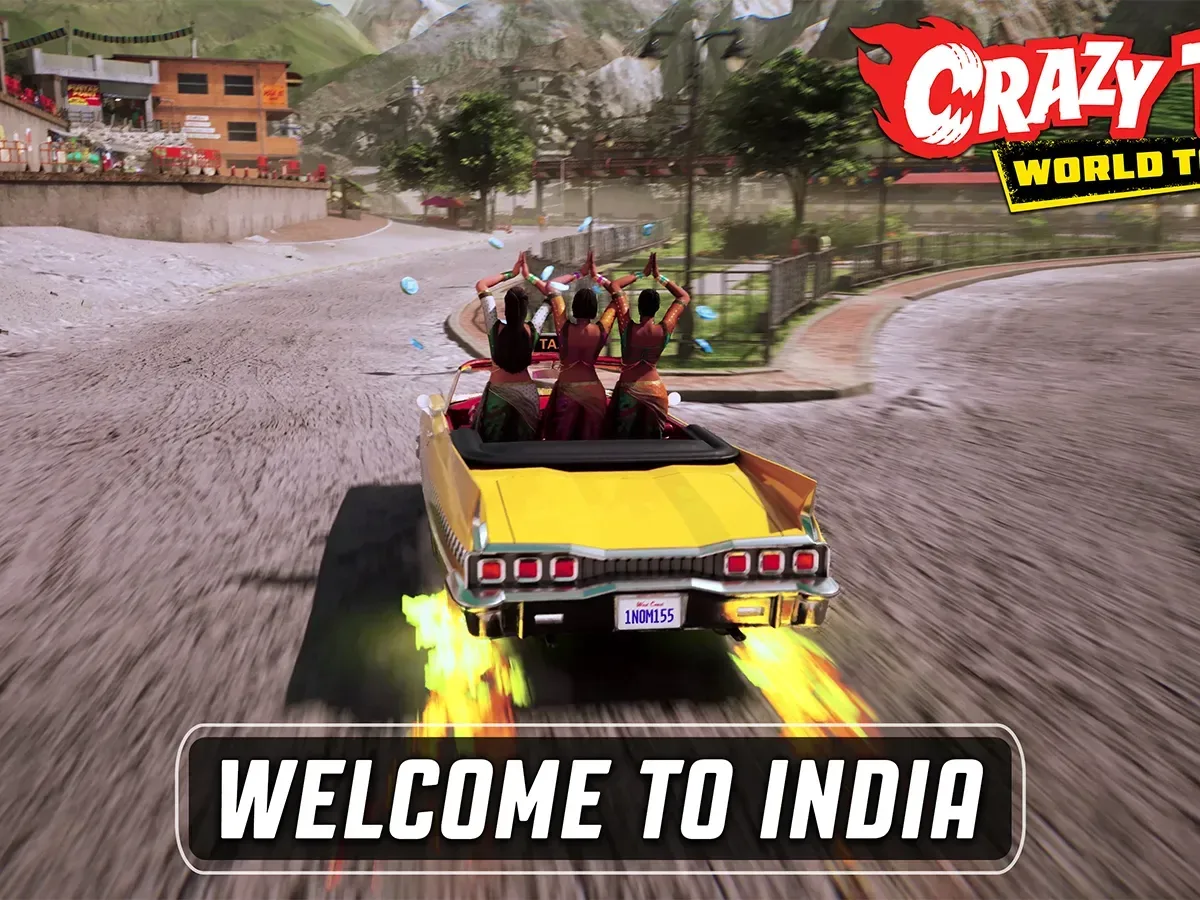
Crazy Taxi: World Tour has filled in the last stop on its announced five-map itinerary: India. The newly detailed destination joins the US West Coast, Germany, Japan and Brazil, and it is structured around three named zones: City, Countryside and Industrial.
That setup is significant because it points to a map designed around changing environments rather than one uninterrupted urban space. The City area is described through crowded marketplaces, nightlife and distinctive architecture. Countryside shifts the route toward natural scenery and ancient temples. Industrial, meanwhile, centers on trade and commerce hubs and includes a look at one of the world’s oldest trains.
For a series built on delivering passengers fast, every setting is potentially more than sightseeing. A marketplace implies dense activity and tight routes; open natural landscapes can suggest a different rhythm of driving; and commerce-focused districts are a fitting backdrop for a game in which fares and cash are central. Those are reasonable implications of the map descriptions, not a confirmation of individual roads, missions, shortcuts or mechanics. The details released so far establish the zones’ themes, but not how each will play.
India completes the announced world tour
The five locations give the game an explicitly international framework. Axel, the game’s main character, is pursuing a gang of international car thieves in the story mode after his own ride is stolen. Passenger drop-offs remain part of that journey across the various countries, so the setting is tied directly to the premise rather than serving only as a menu of disconnected tracks.
India’s three-part design also gives the final revealed map a clear visual range. City is positioned as the high-energy destination, combining markets, nightlife and architecture. Countryside brings in temples and the natural landscape. Industrial turns toward infrastructure, trade and commercial activity. The old-train element adds another recognizable landmark to that latter zone, though there is no confirmation that it will be drivable on, interactive or part of a particular objective.
That distinction matters with a driving game. A trailer can establish mood, passenger types and landmarks without promising that each item is a gameplay system. For now, the dependable takeaway is the map’s zone structure and the broad subjects each zone is meant to represent.
A Bollywood set is teased, not fully explained
The India-map trailer also hints at a Bollywood film-set scenario. A passenger shown carrying a camera appears to be a movie director, while the footage suggests that players may end up on a film set.
It is an appropriately theatrical image for Crazy Taxi’s passenger-driven format: an urgent fare can be as much about the personality and destination as the route itself. But the footage does not establish whether the set is a fixed location, a special mission, a background gag or a larger story sequence. It is best treated as a tease of the map’s character rather than a fully specified feature.
Related coverage includes Crazy Taxi: World Tour Reveals India as Its Fifth International Map.
“Bollywood” is commonly used as a shorthand for India’s Hindi-language film industry. In this context, the reference helps signal the entertainment-world flavor the trailer is invoking. It should not be read as confirmation of licensed films, actors, music or a dedicated filmmaking mode; none of those details have been announced.
Multiplayer is built around fares and pursuit
World Tour is not limited to its globe-spanning story. A closed beta signup page outlined two multiplayer modes: Pickup Race and Cops ‘N’ Cabbies.
Pickup Race supports up to six players. Competitors aim to deliver as many passengers as possible within a set time limit while making as much cash as they can. In other words, it turns the core taxi loop—find a passenger, get them to the destination quickly, earn money—into a direct score competition. The emphasis is not merely finishing one route first. It is on maintaining a productive run of fares before time expires.
Cops ‘N’ Cabbies instead divides players into two opposing teams, with cabbies attempting to evade cops who are in pursuit. The available description does not explain team sizes, win conditions, vehicle abilities or whether passenger transport is part of the mode. Still, its name and premise make the contrast clear: one mode rewards efficient passenger service, while the other is based on a cops-versus-cabbies chase.
Those modes suggest that the game’s multiplayer direction is drawing from the identity of the series instead of simply attaching generic races to taxi vehicles. Pickup Race keeps the fare-and-cash objective intact, whereas Cops ‘N’ Cabbies makes police pressure the heart of the contest. More specifics will be needed before players can judge how much either mode changes the familiar arcade formula.
Why the uncomplicated arcade focus matters
Crazy Taxi has long been associated with immediate, score-minded driving, and World Tour’s revealed elements continue to point in that direction. Players are moving passengers, racing the clock and making money; even the story’s international car-thief chase keeps Axel on the road and transporting riders as he travels.
An earlier preview characterized the game’s appeal as straightforward arcade fun, specifically noting the absence of the skill trees, crafting systems and similar progression layers that often dominate contemporary games. That does not mean World Tour has no systems beyond driving—multiplayer, story progression and map structure are already known parts of it. It does mean the available description presents its central appeal as accessible momentum rather than an elaborate web of upgrades and resource management.
Arcade racing generally describes racing or driving games that favor instantly understandable controls, fast restarts and exciting moment-to-moment play over detailed simulation. For Crazy Taxi, the key tension is the clock: getting a rider where they need to go is only half the job if a faster route can improve the result. World Tour’s Pickup Race description preserves that score-chasing logic in competitive play, with cash serving as the measure of a successful run.
The India map’s varied districts could be a useful fit for that design. Different-looking zones can make a larger location easier to read at speed, while changes from busy city spaces to countryside and industrial settings may keep trips from feeling visually uniform. That is analysis based on the announced themes, not a claim that the zones will have specific handling, traffic or route rules.
Platforms and release window
Crazy Taxi: World Tour is scheduled to launch in early 2027 for Xbox X|S, Nintendo Switch 2, PlayStation 5 and PC. No firmer date is included in the information currently available.
The PS5 version will arrive amid a continuing flow of releases for the platform; readers tracking other PlayStation technical news can also see the latest on QSSR support planned for several base PS5 games. That separate update does not indicate that Crazy Taxi: World Tour uses QSSR or has any related feature.
For now, India’s reveal completes the stated international map list and gives a clearer picture of how broad World Tour wants its road trip to be. City, Countryside and Industrial provide the map’s confirmed foundation; the Bollywood set tease adds a splash of showbiz; and the known multiplayer modes show that the new game is looking beyond solo drop-offs without abandoning the passenger-first idea at the series’ center.