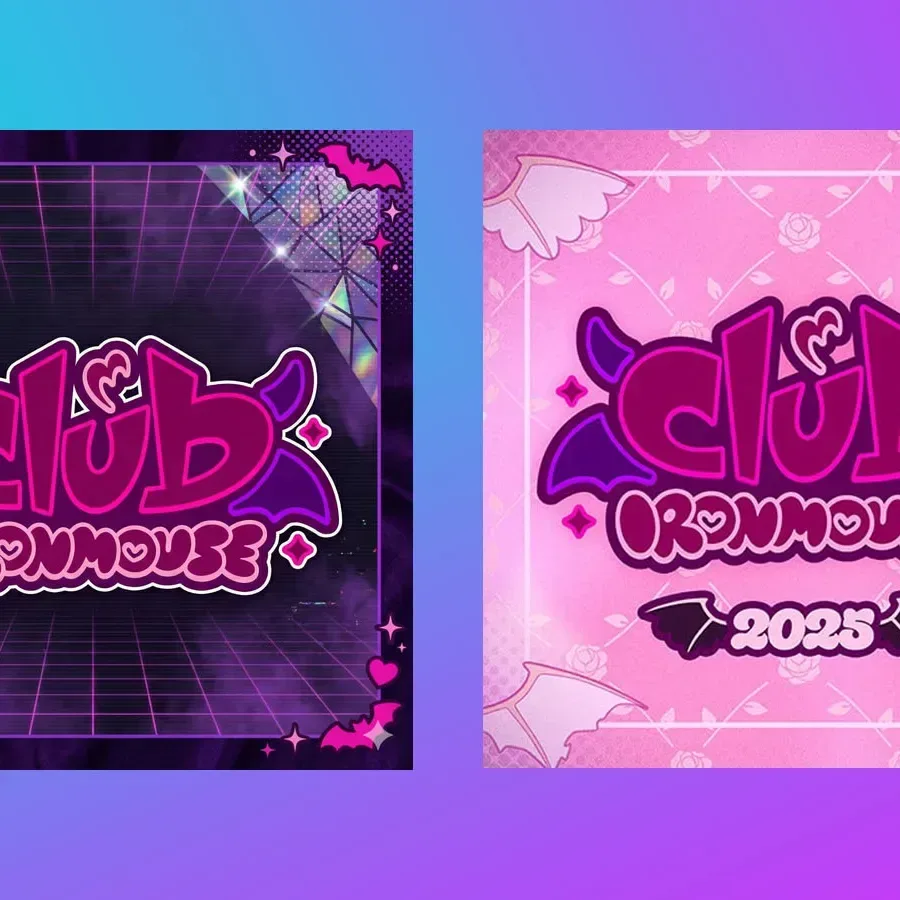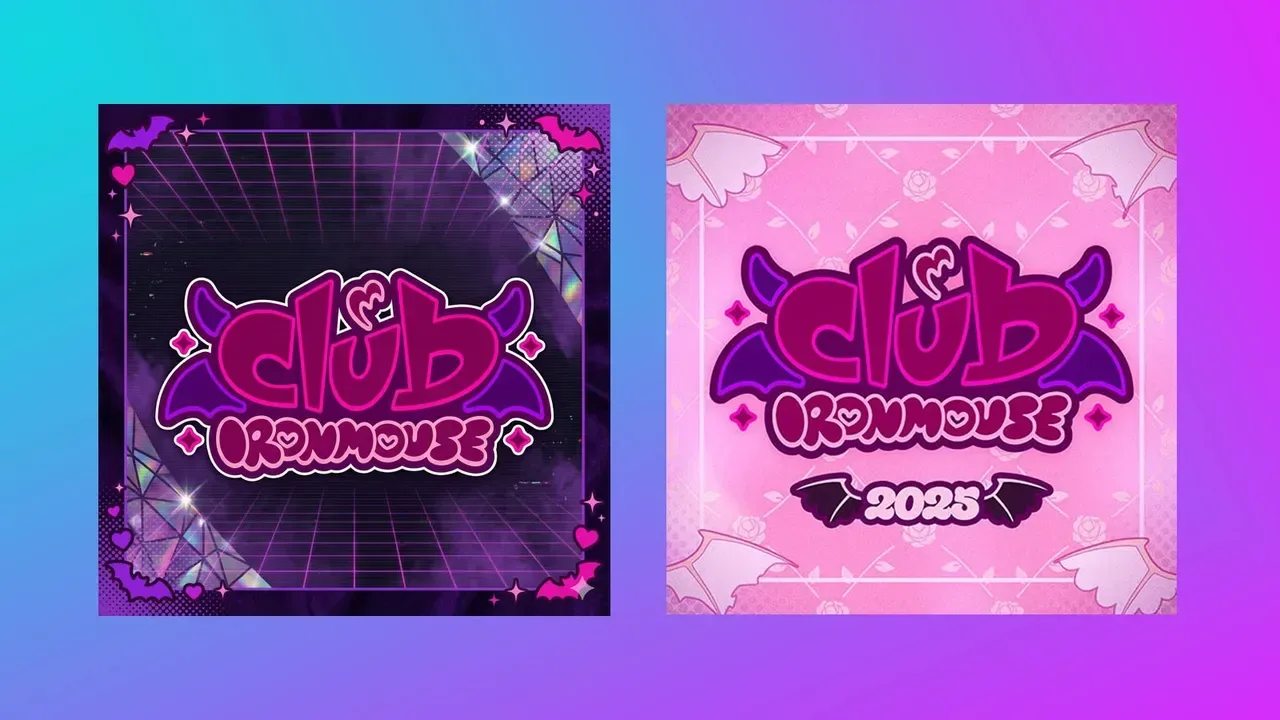
Fortnite has replaced the in-game artwork used for the music track “Meow” by Ironmouse, Sleeping Forest and HalaCG after players spotted a visible Google Gemini watermark in the original image.
The track arrived in Fortnite last month, and its initial art displayed the telltale Gemini mark in the lower-right corner. It attracted wider attention over the past weekend through social media and Reddit, where the image became another flashpoint in the continuing argument over generative AI artwork in a game built around a constantly refreshed stream of cosmetics, music, collaborations and visual assets.
An alternative image without the watermark is now used in Fortnite. That change is straightforward enough for players: the conspicuous mark is gone from the game. The fuller context matters, though. The same Gemini-marked artwork appears with the track on Spotify, indicating that Fortnite incorporated pre-existing art supplied for the release rather than necessarily creating that particular image itself.
A replaced image, not proof of Fortnite-made AI art
The most important distinction is between an image appearing in Fortnite and an image made by Epic Games. The available evidence places the Gemini watermark on the original track art used beyond Fortnite as well. That makes it inaccurate to treat the watermark alone as proof that Epic generated the piece for the game.
In music distribution, a track’s cover art can travel across multiple services and storefronts alongside the audio release. A game integration can therefore inherit an artist or label’s existing visual package. Here, Fortnite’s original listing apparently used the art already associated with “Meow,” watermark and all.
That does not make the replacement insignificant. Fortnite is a highly visible destination, and its menus, lockers and music listings are part of the player-facing presentation of the game. Once the watermark became widely noticed, keeping it in place would have made the asset look either insufficiently reviewed or unnecessarily confrontational amid an already touchy discussion.
The removal instead suggests a practical editorial decision: whatever the artwork’s origin, Epic did not want an obvious generative-AI marker remaining in Fortnite’s presentation.
What the Gemini watermark means in this case
A watermark is a visible identifier embedded in or placed over an image. It may identify a tool, platform, creator or ownership status. In this instance, players recognized the mark as associated with Google Gemini, which is why the image quickly became a subject of scrutiny.
Related coverage includes Fortnite Replaces 'Meow' Track Art After Google Gemini Watermark Is Spotted.
That visibility is central to why this case drew attention. Discussions about whether a visual asset was AI-assisted often turn on inference: unusual anatomy, strange textures, inconsistent lettering or other flaws that can be suggestive but do not establish how an image was made. A direct platform mark is much more legible to viewers, even when it still does not answer every question about who created, commissioned, edited or delivered the final asset.
For Fortnite, the immediate issue was less a forensic ruling on every step of the art’s creation than a plainly visible association with an AI product. A watermark can become a message in itself, especially in a live-service game where fans routinely inspect new additions in detail.
The replacement also does not establish that the new artwork was made without AI assistance. No such claim has been made here, and the absence of a watermark should not be treated as a production disclosure. It only confirms the obvious visual identifier is no longer part of the Fortnite listing.
Why AI art remains a sensitive Fortnite subject
Fortnite’s scale makes even small pieces of art unusually visible. The game is continually updated with items, event material, music, character-related presentation and world-facing imagery. Players often encounter that material repeatedly in menus and social spaces, meaning a small visual error can become a broader debate about quality control and the people behind the game’s art.
Fans have previously highlighted an in-game poster featuring a hammock-bound character with nine toes as a suspicious example. Such images have fed concerns that generative tools could be used in ways that produce errors human review would ordinarily catch, or that AI production might replace work by human artists.
Epic has not strictly confirmed individual in-game artworks as AI-generated. At the same time, an official developer video has shown that the company experiments with AI during the conceptual stage of creating characters and in-game locations.
Conceptual work refers to early visual exploration: establishing the broad look, mood, shapes or directions for a character or setting before a final asset is produced. It is distinct from a finished image that players see in-game, though the divide can be difficult for audiences to assess without clear disclosure. A company may use tools during ideation while relying on artists to revise, select and turn those ideas into production-ready work. Conversely, a finished-looking asset may conceal a varied and unknown process.
That ambiguity is a large part of the friction. Players see the completed artwork, not the approvals, revisions and contributors behind it. When a visible watermark or anatomical oddity appears, it can become shorthand for wider anxieties about craft, attribution and oversight.
The quality-control question is bigger than one music listing
The “Meow” incident is modest in practical terms: a track image was changed, and the music itself is not the subject of the dispute. But it illustrates how an external asset can become part of a game’s own quality-control burden once it is imported into a live service.
Players generally do not separate a game’s assets into internal and third-party categories unless that information is made clear. If an image appears in Fortnite, it reflects on Fortnite’s presentation regardless of whether it originated with a developer, a musical artist, a collaborator or another rights holder.
That is particularly relevant for a game with frequent additions. A high volume of material creates more opportunities for something to slip through: a watermark, a typo, an odd detail, an outdated logo or art that does not meet the audience’s expectations. The public response to an error can then outweigh the size of the asset itself.
The update here is therefore a reminder that moderation and curation are not just about whether an asset can be legally used. They also concern whether it is suitable for the game’s overall presentation, whether it will confuse players and whether it invites an avoidable argument.
What players can reasonably infer—and what they cannot
The confirmed sequence supports a limited set of conclusions:
- Fortnite added “Meow” by Ironmouse, Sleeping Forest and HalaCG last month.
- The original artwork used in Fortnite showed a Google Gemini watermark in its bottom-right corner.
- The image attracted attention over the weekend.
- Fortnite subsequently replaced that art with another version that has no Gemini watermark.
- The watermark-bearing image is also attached to the track on Spotify.
It does not follow that Epic created the initial image, that every Fortnite asset is AI-generated, or that the replacement proves a particular production method. Those claims would go beyond the facts available.
It is also worth separating criticism of a result from certainty about a workflow. Players can reasonably dislike an image with a prominent AI watermark in a major game, or argue that it should have been caught before release. Those are judgments about presentation. They do not require speculation about which company or person was responsible for making the original art.
A small change with a clear message
Epic’s decision to swap the artwork is notable because it addresses the most visible issue without trying to litigate every broader question around AI-assisted creative work. The original asset’s apparent external origin does not erase the fact that it was displayed in Fortnite, while the removal avoids leaving an obvious Gemini identifier in front of the game’s audience.
That is likely the practical takeaway for players: Fortnite’s current “Meow” art no longer contains the watermark that prompted the discussion. The episode does not settle the larger debate over AI in game development, nor does it provide a definitive account of how either version was created. It does show how quickly an overlooked visual detail can demand attention when it lands inside one of gaming’s most closely watched live services.
For more on how persistent games depend on ongoing platform and service decisions, see our coverage of NBA 2K25’s delisting and the effect of its server shutdown on MyCAREER access.