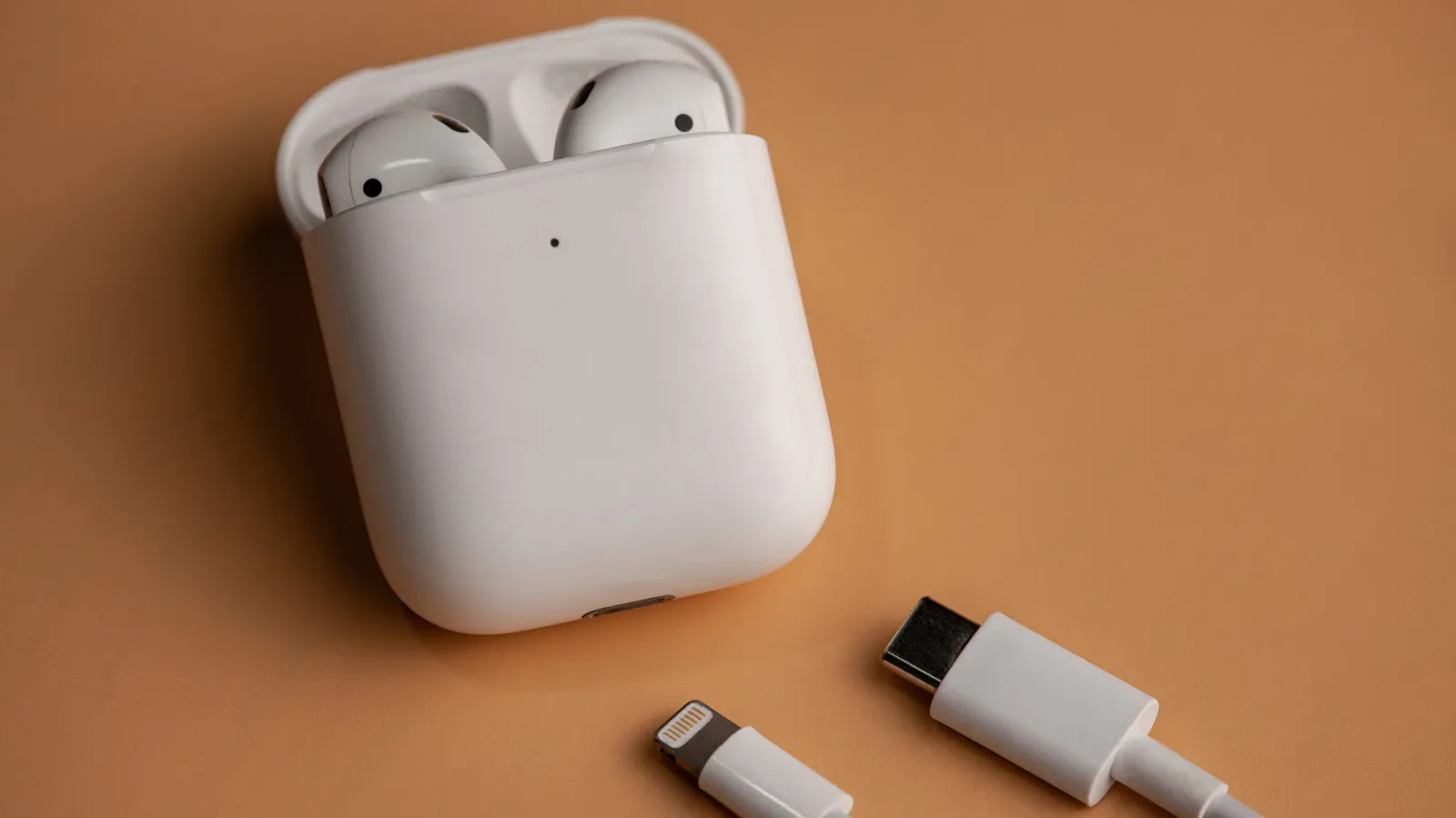
Technology forecasts have a habit of arriving later than their headlines suggest. Real-time translation is a useful reminder: Apple added Live Translation for recent AirPods in September 2025, finally making a long-promised science-fiction convenience feel plausibly mundane. Yet the leap from a compelling demo to dependable, ordinary infrastructure is usually measured in years, regulation, deployment and awkward edge cases.
That distinction is especially important for five technologies now edging into everyday use: post-quantum encryption, phone-to-satellite messaging, driverless ride-hailing, AI agents and humanoid robots. None is merely a lab experiment. Each has reached users, paying customers, operational workplaces or manufacturing plans. But “available” does not mean universal, mature, cheap or ready to replace the systems people already rely on.
For players and anyone with a connected home full of accounts, devices and payment details, the practical question is not whether these changes sound futuristic. It is where they will quietly affect security, communication, travel, online shopping and work—and where a healthy dose of skepticism remains appropriate.
1. Post-quantum encryption is already protecting some familiar services
The least visible entry may be the one closest to daily life. Post-quantum encryption describes cryptographic methods intended to resist attacks from future quantum computers. A quantum computer is not simply a faster laptop; it uses qubits, a different unit of computing information, and could eventually solve certain mathematical problems that underpin widely used security systems much more efficiently than conventional machines.
The immediate concern is known as harvest now, decrypt later. In this scenario, an attacker collects encrypted information today, stores it, then attempts to decrypt it years later once sufficiently capable quantum hardware exists. Information with a short shelf life may be less exposed, but records, private communications and other long-lived data can remain sensitive long after they were first transmitted.
This transition is not theoretical in the sense of waiting for a consumer quantum computer to appear. Chrome has used ML-KEM, a post-quantum key-exchange method, by default since late 2024. Key exchange is the process that allows two parties to establish the secret material needed to protect a connection. Apple’s PQ3 protocol has protected iMessage since iOS 17.4, while Signal extended its post-quantum protection layer to chats in late 2025.
Cloudflare said that around 70 percent of browser traffic reaching its network had post-quantum protection by late 2026. That does not mean every site, browser, device and service is fully migrated, but it illustrates how security upgrades can become widespread without users needing to learn new habits or press a special “quantum safe” button.
Why the urgency? Google researchers estimated in March 2026 that elliptic-curve cryptography, used across much of the web and by Bitcoin, could be broken with fewer than 500,000 physical qubits—roughly 20 times below earlier estimates. Such a machine does not exist today. Google’s Willow chip has 105 qubits, and Google has set 2029 as its own deadline to move services to post-quantum encryption. The gap between 105 and 500,000 is still enormous, so this should not be read as a prediction that ordinary web security is about to collapse.
It does, however, explain why migration is beginning before the threat fully arrives. Digital signatures are one crucial area: they help prove that a website is genuine or demonstrate control of a Bitcoin wallet. The U.S. National Institute of Standards and Technology has finalized guidance deprecating RSA and elliptic-curve algorithms after 2030 and barring them from federal use after 2035.
The consumer takeaway is reassuringly boring: keep browsers, operating systems and messaging apps updated. The most meaningful part of this change should happen beneath the interface. Security is also a useful reason to think carefully about how connected equipment is separated from personal devices; a dedicated smart-home Wi-Fi network can have benefits, though compatibility needs consideration too.
2. Satellite texting is making dead zones less final
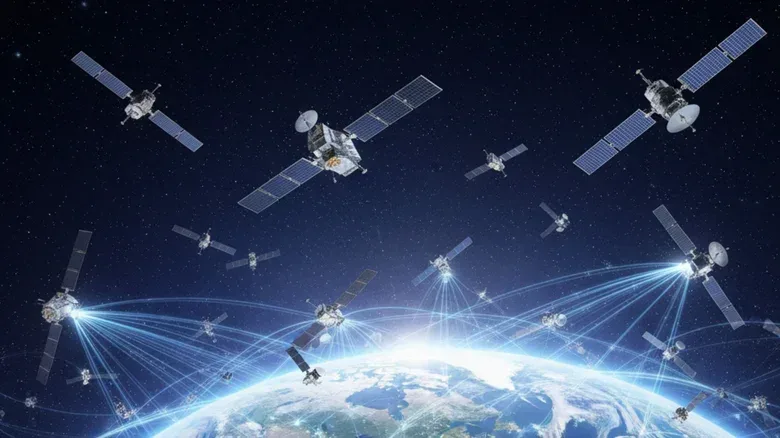
Satellite connectivity is becoming a feature of ordinary phones rather than a specialty device carried by hikers, boaters or remote workers. T-Mobile’s T-Satellite service, operating on SpaceX’s Starlink Direct to Cell network, allows many smartphones released in the past four years to send texts, photos and 911 messages where cellular signal is unavailable. Since late 2025, it has also carried data for a limited group of apps including WhatsApp and Google Maps.
The key phrase is limited group. A phone with satellite messaging is not automatically a phone with normal mobile broadband in every wilderness area. On T-Satellite, voice calling works only through WhatsApp, and apps not adapted for the service do not work. That makes the present-day use case much more about safety, check-ins, basic coordination and emergencies than casually streaming, gaming or replacing urban cell towers.
Still, the surrounding investment signals serious interest. The Federal Communications Commission approved SpaceX’s purchase of EchoStar wireless spectrum in May 2026 in a deal valued at about $20 billion. A month earlier, Amazon agreed to acquire Globalstar, which supports the iPhone’s satellite SOS capability, and said its own direct-to-phone system would follow from 2028.
There are other approaches in development. AST SpaceMobile aims to provide broadband service to unmodified phones, but had 13 satellites in orbit in August 2026, compared with a target of around 45 by the end of the year, while its U.S. service remained in beta. This is an important reminder that constellations, coverage, spectrum rights and phone compatibility all matter. The appealing phrase “connect anywhere” conceals a huge amount of physical and regulatory infrastructure.
For now, satellite messaging is best treated as an additional lifeline, not permission to assume one will have a normal signal everywhere. Before relying on it for a trip, users should verify what their carrier and handset actually support, whether messaging is limited to text or includes photos, and what happens with emergency communication. It is a backup layer—not a magic force field against a dead battery, an obstructed view of the sky or a service limitation.
3. Driverless ride-hailing has scale, but also a sharply defined operating area
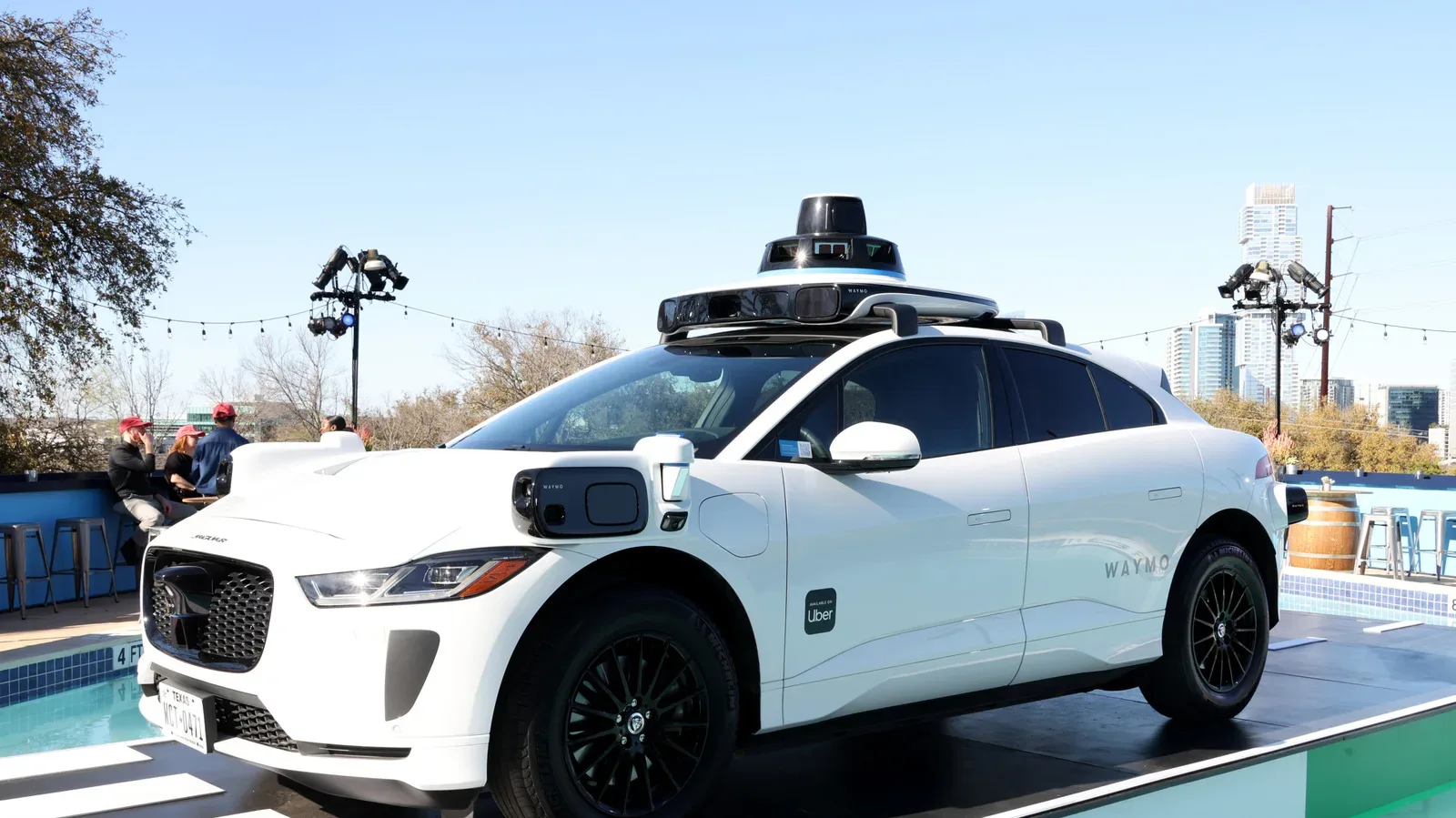
Robotaxis have moved farther than many other autonomous technologies because they can be deployed city by city, under controlled operational constraints, instead of being expected to work on every road in every weather condition. Waymo launched its first driverless ride-hailing service in Phoenix in 2020 and has since expanded into 14 additional U.S. cities, including Los Angeles, the San Francisco Bay Area, Austin, Atlanta, Miami and Las Vegas.
By September 2026, estimates placed its operation at about 500,000 paid rides per week using roughly 4,000 vehicles. In October, Waymo said it had passed 20 million trips in total and indicated plans for Madrid in 2027 and Toronto in 2028. Those totals establish that rider-only trips are no longer a novelty limited to a few invited testers.
Safety claims require careful reading. Across 271 million rider-only miles through June 2026, Waymo said its vehicles were involved in 82 percent fewer injury crashes than human drivers would be expected to have over the same distance, and 95 percent fewer crashes that caused serious injury or worse. Those are the company’s own figures, rather than an independent finding presented here, so they are meaningful data points but not the final word on comparative safety.
The technology’s setbacks are equally material. Waymo recalled about 4,000 vehicles in June 2026 after some drove onto closed freeways, and freeway rides were paused until late July. In other words, an autonomous system can be highly capable across large numbers of trips while still encountering a scenario serious enough to force a change in operations.
Regulators are also actively involved. Zoox became the first steering wheel-free robotaxi approved for paid rides after the National Highway Traffic Safety Administration granted an exemption in July covering up to 2,500 vehicles annually. Tesla’s pedal-free Cybercab began taking Austin passengers in September, but NHTSA opened an audit that month into Tesla’s self-certification process.
For riders, the practical implication is geographic rather than philosophical. A driverless trip may be an option in a supported service area, but it does not mean autonomous driving has solved every road everywhere. Expansion, oversight, recalls and route restrictions are part of the technology’s real-world story, not footnotes to it.
4. AI agents are shifting from answers to actions
A chatbot generally responds to a prompt. An AI agent is meant to pursue a goal through a sequence of steps: visiting sites, comparing options, filling forms or preparing a purchase. That difference is consequential. A wrong answer in a chat window is annoying; an incorrect action performed through a browser can spend money, disclose data or create commitments.
Google added an “auto browse” mode to Chrome in January 2026. It can take tasks such as booking an appointment or filling a shopping cart within a budget, navigate through sites and pause for approval before buying or posting. It is limited to Google’s paid AI plans in the U.S. Anthropic’s Claude in Chrome offers a similar idea through paid plans.
Meta’s Muse agents focus on shopping tasks and operate in separated virtual machines, using single-use card numbers through Stripe for payment. This architecture matters because an isolated virtual machine can help reduce the exposure created when software performs a task in a browser. It is a risk-management measure, though not a declaration that automated shopping is risk-free. More than 10 million people in the U.S. and Canada had created Muse accounts by October, with roughly a quarter using it on a given day.
The category is moving quickly enough that products are also being closed or redirected. OpenAI shut down its ChatGPT Atlas browser in August 2026, less than a year after launch, moving agent features into the ChatGPT desktop application. Google closed Project Mariner, an earlier browsing agent, in May. That churn is useful context for anyone tempted to treat a product name as a permanent platform.
There are clear boundaries. eBay has prohibited agent-placed orders that did not receive human review. Gartner expects more than 40 percent of business agent projects to be canceled by the end of 2027. The forecast is not proof that agents lack value; it does suggest that deployment demands more than a flashy demonstration.
A sensible consumer rule is simple: begin with low-stakes tasks, read the final details yourself and retain approval control for purchases, account settings and messages. Never assume that “the agent did it” removes the user’s responsibility. The useful version of this technology is an assistant operating under clear limits, not an unsupervised stand-in for judgment.
5. Humanoid robots are useful at work before they are reliable at home
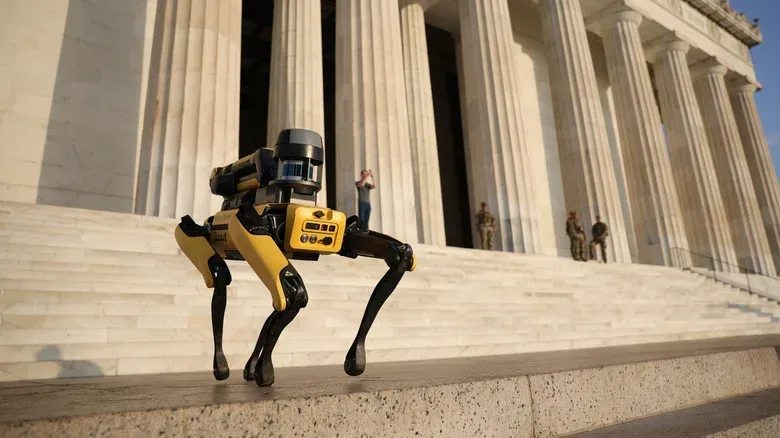
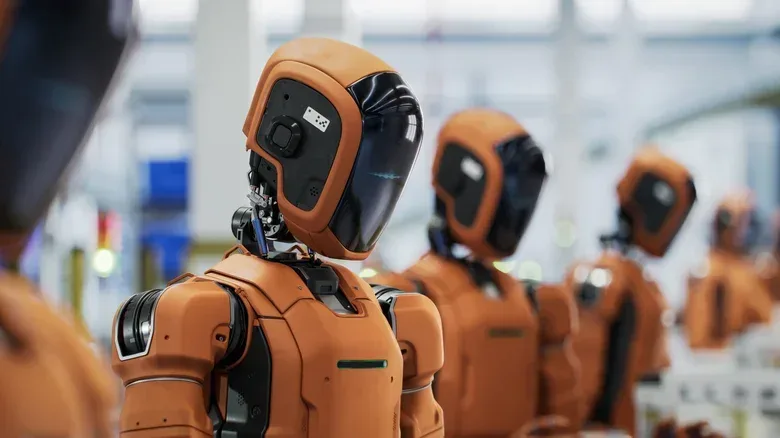
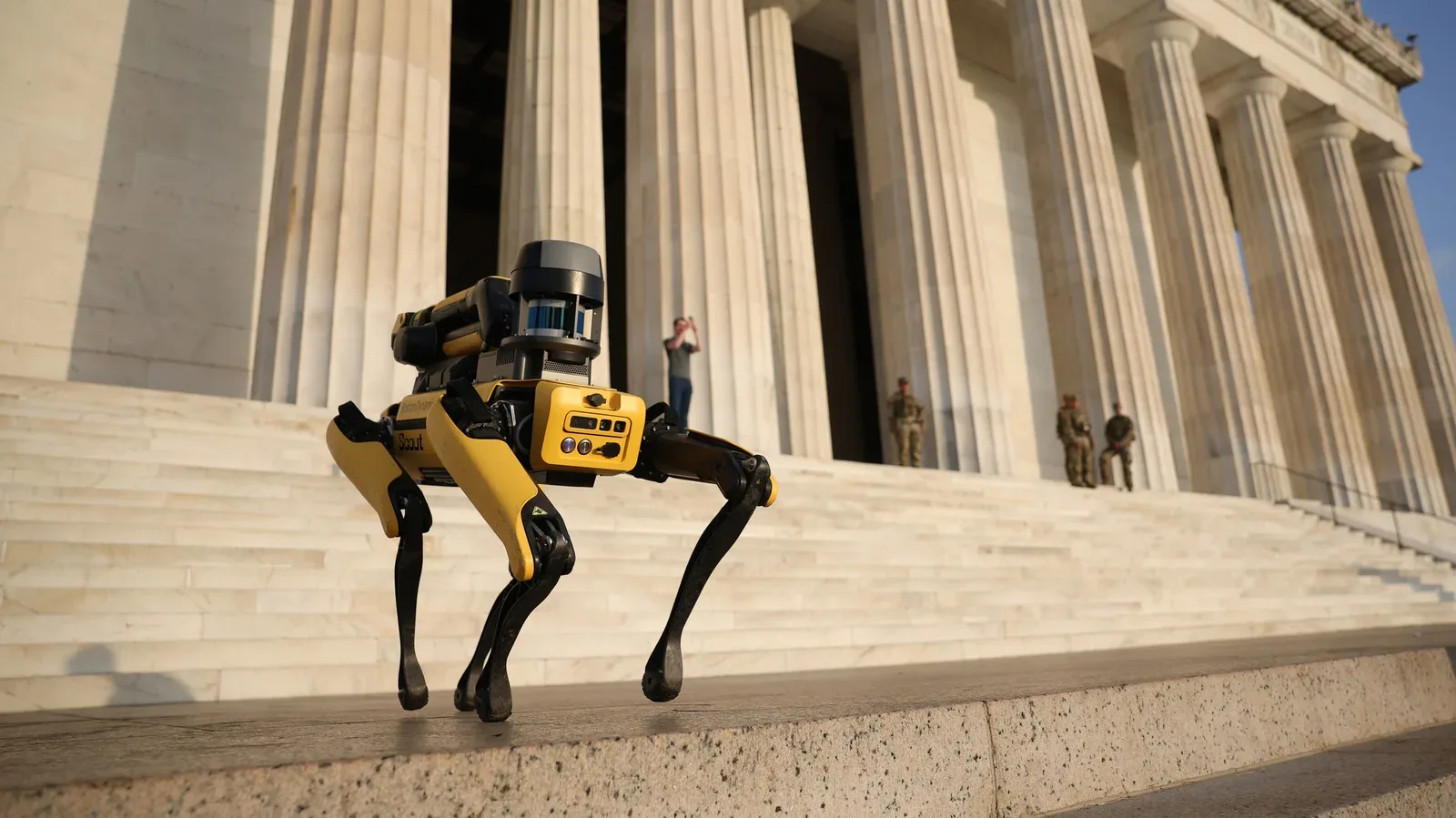
Humanoid robots are often marketed through household imagery, but their clearest current foothold is in structured industrial work. Since June 2024, Agility Robotics’ Digit has moved more than 100,000 plastic totes at a GXO warehouse in Georgia. BMW has used a Figure robot to sort parts at its Spartanburg plant after an earlier model helped build more than 30,000 X3 SUVs during an 11-month trial. Hyundai plans 25,000 Boston Dynamics Atlas robots across Hyundai and Kia factories.
Warehouses and factories make a logical early environment: the work is repetitive, objects and pathways can be standardized, and performance can be measured in concrete tasks. A home is nearly the opposite. It varies room to room, contains delicate possessions, has unpredictable layouts and introduces an obvious privacy problem when a machine carries cameras through personal space.
The 1X Neo demonstrates that trade-off. The $20,000 household robot is designed to learn chores through teleoperation, meaning a remote human can take control if it becomes stuck. That may improve task completion, but it also means an operator can see into the home through the robot’s cameras. 1X said its first year’s production of 10,000 units sold out in five days, showing interest, but demand does not settle the questions around privacy, reliability or the conditions under which remote access is used.
Figure tested its newest AI in 30 previously unseen homes in September 2026. It successfully completed tasks including towel folding and bed making 56 percent of the time, an increase from 9 percent using older training data. That is notable progress, but it is not the same as dependable domestic help. A machine that fails nearly half the time at a chore still requires attention, recovery and potentially a person on hand.
Tesla CEO Elon Musk said Optimus would not reach external customers until around late 2027, with factories receiving the robots before domestic users. The broader pattern is clear: everyday robots may arrive, but workplaces with tightly defined jobs are much nearer-term than a truly autonomous all-purpose helper at home.
Across all five areas, the recurring lesson is that adoption will be uneven. Encryption may become invisible infrastructure; satellite service may be most valuable when nothing else works; robotaxis may thrive inside defined service maps; agents may need human approval; and humanoids may earn their place in factories long before they can be trusted around the laundry basket. The future is showing up—but usually with a coverage map, a terms-of-service page, a safety review and a few very important limitations.