Bleppo Games plans to launch FIRSTS, a daily mini crossword built around a changing pool of letter tiles, on November 26, 2026. The puzzle game is set to arrive on iOS, Android and modern web browsers, giving players several ways to fit a short word challenge into a phone-first routine.
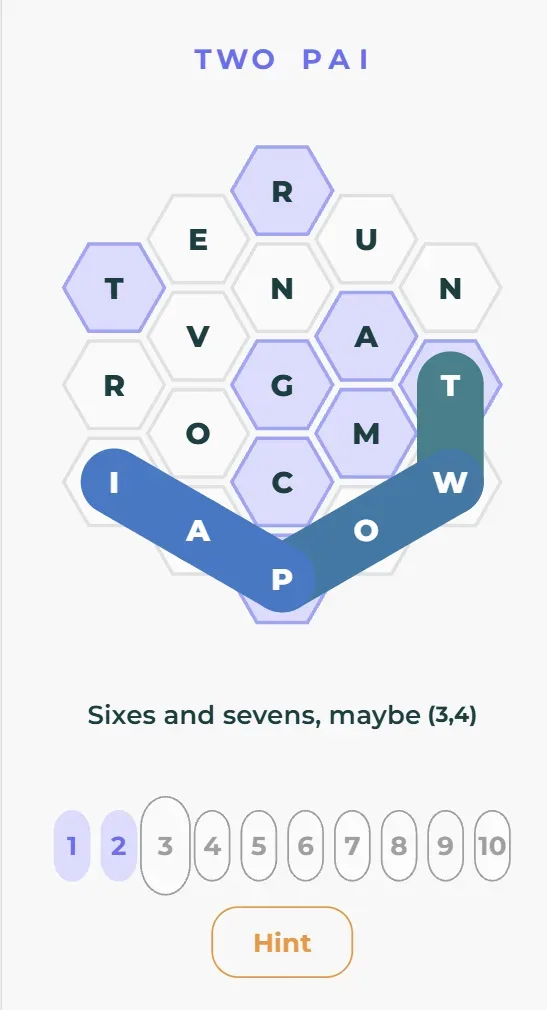
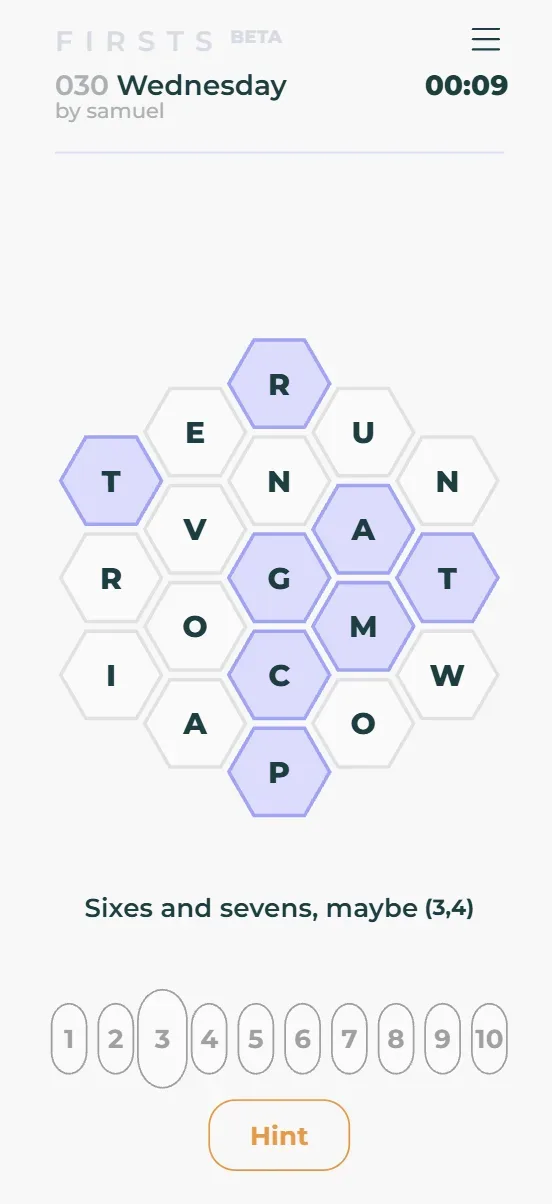
Rather than using the familiar crossword format of filling entries into a rectangular grid, FIRSTS asks players to form answers from letters arranged in a hexagonal grid. Players receive crossword-style clues, then swipe and tap through the available letters to build the answer. Its central twist is that successfully used letter tiles disappear. Each completed clue therefore changes the selection of letters available for the next one.
That disappearing-tile structure makes FIRSTS more than a conventional mini crossword transferred to a touchscreen. It creates an order-of-operations puzzle: a correct answer is also a decision that reshapes the board. The studio is positioning that shifting structure, along with quick touch controls and shareable daily play, as the game’s key distinction.
A crossword where every answer alters the board
The term mini crossword generally signals a compact, quick-to-complete clue puzzle rather than a large grid intended for a long sitting. FIRSTS retains the clue-and-answer relationship at the core of a crossword, but changes how answers are entered and how one solution affects another.
In FIRSTS, letters are connected within a hexagonal layout. A hexagonal grid is made up of six-sided cells rather than the square cells associated with standard crosswords. The announcement does not detail the rules governing every possible letter path, but it establishes the essential interaction: players string letters together to answer a clue, using swipes and taps rather than selecting a numbered space and typing with a keyboard.
Once an answer has been solved, the tiles used for it fall away. This is the mechanic likely to give the game its most interesting tension. In a standard crossword, entering an answer can reveal crossing letters that help with other clues. Here, completing an answer reduces the pool of future options. A player will need to consider not only whether a clue can be solved, but also whether using those letters leaves a useful set behind.
That does not necessarily mean every puzzle will require one exact sequence of answers; the available information does not establish how restrictive the puzzle design becomes. But it does mean the board’s state matters from clue to clue. The game’s puzzle layer is not only vocabulary and clue interpretation. It is also resource management, with letters functioning as a limited resource that is consumed after use.
Why the blue tiles matter
Each answer begins on a blue tile. Those marked cells identify the first letter of an answer and provide an immediate starting point for players. The feature also supplies the game’s name: FIRSTS.
Related coverage includes FIRSTS Brings a Tile-Falling Mini Crossword to Mobile on November 26.
In practical terms, highlighted starting letters can reduce the friction of a touchscreen word puzzle. Rather than examining the full grid with no indication of where a response might begin, players have an initial anchor for each clue. That is particularly useful in a format where letters are connected spatially rather than written into a familiar set of horizontal and vertical answer slots.
The blue starting tiles should not be confused with a full solution hint. They identify where an answer starts, not the answer itself. Players still need to interpret the clue, identify a suitable word, and trace its letters through the grid. The markers simply make the opening move clearer while preserving the deduction involved in completing the entry.
Built around phones, but not limited to an app
FIRSTS is designed natively for mobile devices. Instead of asking players to select cells and type answers, it uses tapping and swiping as its primary inputs. This design approach matters because word puzzles can feel awkward on smaller screens when they directly imitate desktop or newspaper-style interfaces. Touch gestures can make tracing a word more immediate, provided the letter layout and feedback are clear.
The planned browser version is equally notable. FIRSTS will be available through modern web browsers as well as through iOS and Android devices, so access is not restricted to people who want a dedicated mobile app. No further details have been provided about browser support, account systems, puzzle archives, monetisation or whether every version will share exactly the same features. Those are questions for the release itself rather than assumptions to make from the announcement.
Bleppo Games is also framing FIRSTS around social moments and sharing. Short daily games lend themselves to that goal because they can create a common prompt for friends, families or online groups without demanding a lengthy session. A puzzle with an evolving tile board could also make discussion more specific than simply comparing a completion time: players may want to compare clue order, identify a difficult word, or talk through why a particular choice changed the letters left on the board.
Social sharing, however, is a stated aim rather than a confirmed list of features. There is no information yet on scorecards, streaks, multiplayer modes, leaderboards, spoiler controls or direct challenge tools. The confirmed point is narrower: the game is intended to be quick, natural to play on touch devices and suitable for sharing.
Daily puzzles will be written and edited by the studio’s co-founders
Bleppo Games says every daily FIRSTS puzzle will be hand-written and edited by co-founders Samuel Johnston and Mark Wainwright. The studio also says generative AI is not used to create the puzzles.
That commitment has particular relevance in a clue-driven game. Crossword construction is not just a matter of placing words into a shape. Clues need to be understandable, appropriately calibrated, and compatible with the intended answer. In FIRSTS, construction also appears to involve planning how answers interact with the letters that remain after tiles disappear. Human writing and editing can therefore encompass both the wording of clues and the progression of the board.
The announcement does not disclose the team’s editorial process, difficulty bands, themes, answer-selection rules or how far in advance daily puzzles are prepared. It also does not promise a particular puzzle size or completion time. Still, the named authorship is a concrete indication that the daily content is being curated rather than presented as automatically generated material.
For players, that distinction may matter most when a puzzle needs to feel fair. A good clue can be challenging without being vague, and a satisfying board can narrow the available letters without leaving an answer feeling arbitrary. Whether FIRSTS consistently achieves that balance will only be clear once the daily puzzles are playable, but the studio has made an explicit editorial commitment ahead of launch.
What Bleppo Games brings into FIRSTS
FIRSTS follows the studio’s earlier word-game success, Word Salad. Bleppo Games says Word Salad reached millions of players worldwide, was published by Penguin Random House and generated around 100 million views on TikTok. Those figures do not tell us how FIRSTS will perform, but they provide context for the studio’s interest in concise, visually communicable word puzzles.
A game based on letters vanishing from a compact grid is easy to describe in a single sentence, but it has enough visible motion and decision-making to be understood in a short clip. That makes it a natural fit for a social-first presentation. More importantly, its rules appear designed for repeatable daily play rather than a one-off word challenge.
There is a broader appetite for small games that make a single idea do several jobs: explain the play, establish the strategy and create a reason to return. FIRSTS’ falling tiles fulfill that role. They are the game’s visual hook, its constraint system and its potential source of puzzle variety. The blue tiles similarly work as both a usability aid and a concise expression of the title.
For more on the wider independent-games calendar, see our coverage of One More Plate!’s award ahead of its Steam debut.
What is confirmed ahead of November 26
- FIRSTS is scheduled to launch on November 26, 2026.
- It is planned for iOS, Android and modern web browsers.
- Players solve crossword-style clues by connecting letters in a hexagonal grid.
- Tiles used in correct answers disappear, changing the letters available for later clues.
- Blue tiles mark the first letter of each answer.
- The game uses tapping and swiping rather than conventional typed entry.
- Daily puzzles will be written and edited by Samuel Johnston and Mark Wainwright.
- Bleppo Games says it does not use generative AI in puzzle creation.
FIRSTS has a clear pitch: retain clue solving, replace the traditional answer grid with a touch-friendly letter board, and make every completed word alter the puzzle that follows. Its success will depend on the quality and fairness of the daily construction, but the planned November 26 release gives word-game players a new format to watch across phones and browsers.