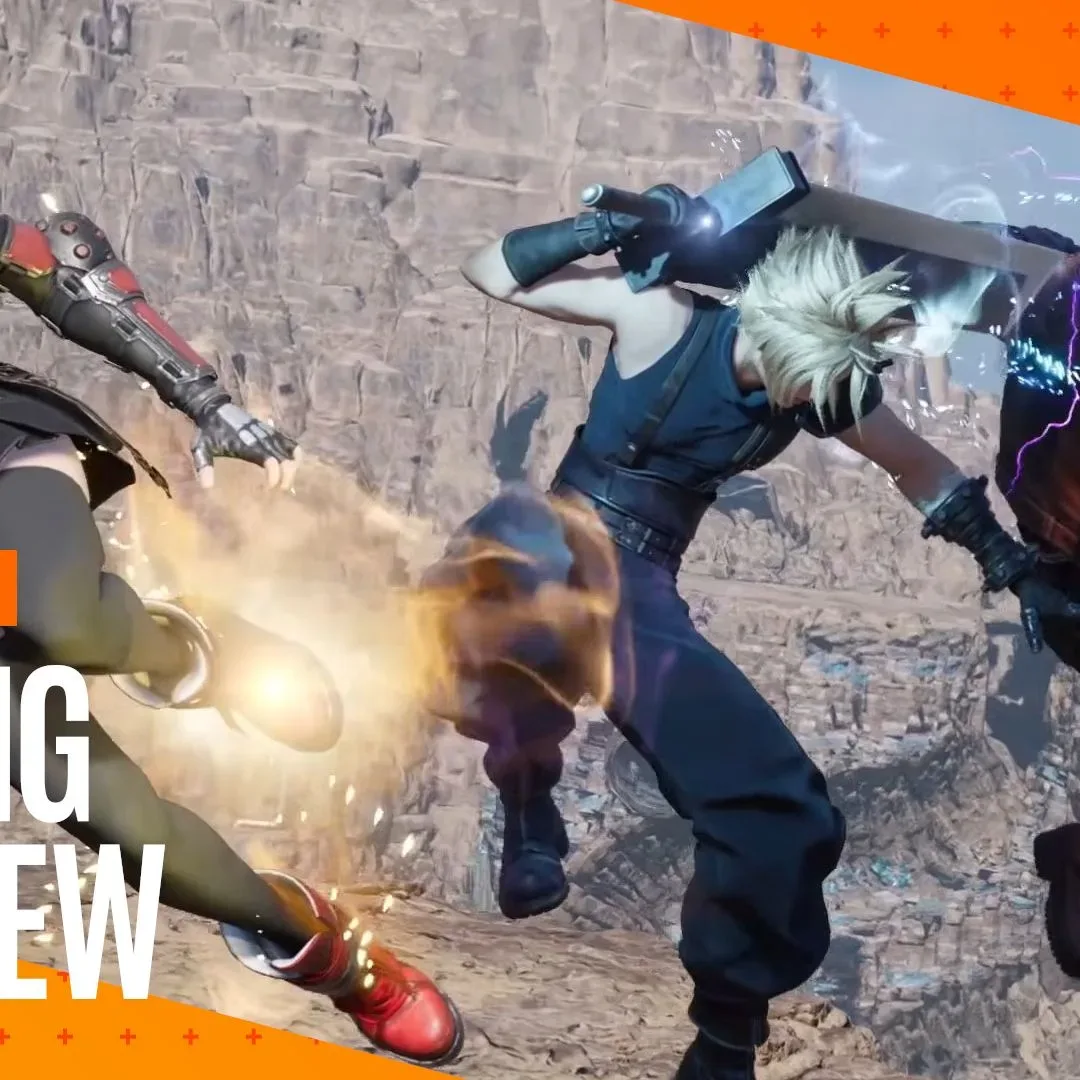

Final Fantasy 7 Revelation is positioned as the closing game in the Final Fantasy 7 Remake trilogy, but the newly detailed systems suggest Square Enix is treating it as a fresh RPG in its own right rather than a familiar final lap. The headline is scale: it is described as the largest entry in the trilogy so far, with an estimated file size of up to 200GB. More important than the storage requirement, though, is what that scale is intended to support—greater vertical exploration, a changing world, broader control over the party, and combat customization that extends beyond the systems established in Final Fantasy 7 Rebirth.
The game remains a single-player, story-driven, party-based action RPG. That wording matters. Players directly control one character while issuing commands and building resources around a wider party, rather than operating in a purely turn-based system. Revelation’s new mechanics appear designed to make that party and its world feel more flexible without abandoning the action-RPG foundation.
Some details below are established features, while others are implications of the announced systems. Where the game’s exact rules have not been specified—particularly with world changes, three-character techniques, and the limits of Materia linking—it is worth separating potential from confirmation.
The Highwind turns world travel into active exploration
Revelation adds locations including Mideel and Wutai, but the bigger structural change is the Highwind. Cid’s airship can fly over locations, and the party can jump out and parachute down in real time. Rather than treating the airship strictly as a fast-travel interface, the stated design makes it part of navigation itself.
That could have a meaningful effect on how players revisit areas. A nearby quest marker or an unexplored point at a higher elevation no longer necessarily means following the same ground route to a designated arrival spot. Players can approach from above, aim a descent toward a location, and potentially use the perspective to notice places that were less obvious from the ground.
In the original game, the Highwind’s access was constrained by where it could land. Revelation’s parachute mechanic changes the basic question from “is there a landing point?” to “can I glide there?” It is a small difference in wording with a potentially large impact on exploration. The game is not merely adding air travel; it is tying air travel to a more vertical version of the world.
Piko is one chocobo with a larger role
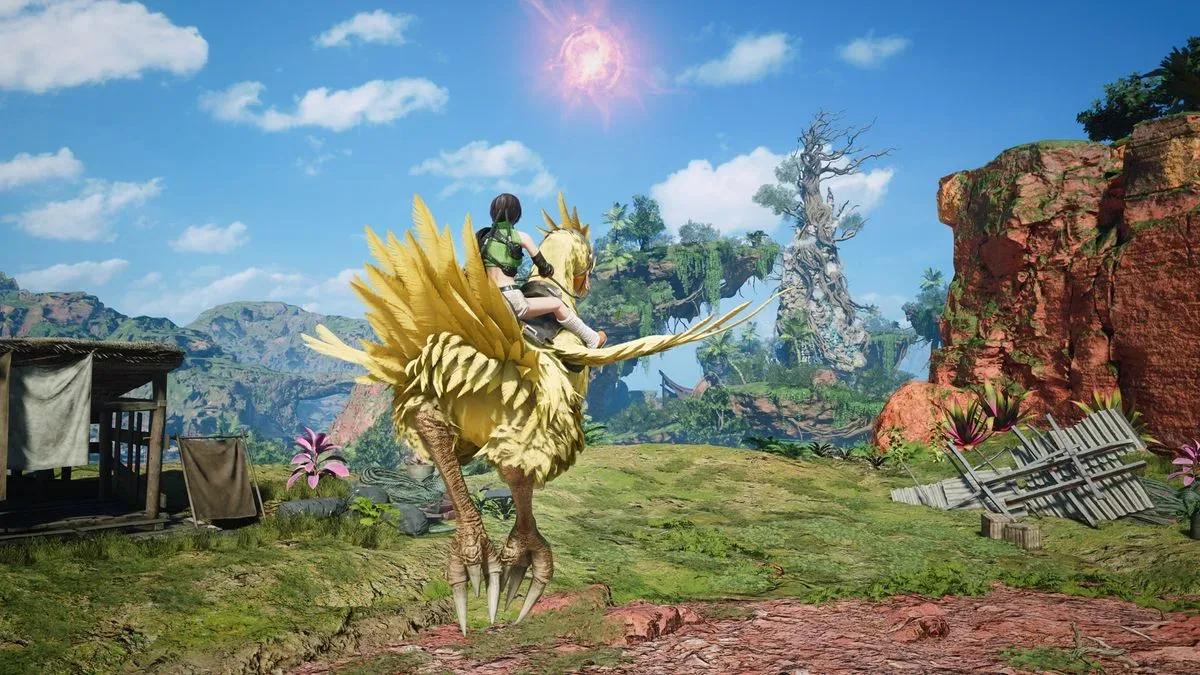
Rebirth used region-specific chocobos. Revelation instead reunites the party with Piko, the yellow chocobo associated with the Grasslands, as its single primary mount. On paper, reducing the number of mounts could sound like a simplification. In practice, Piko is meant to be more persistent: the chocobo can level up, gain abilities connected to traversal and combat, and fight beside the party.
The practical implication is a companion progression loop. Piko is not only transport between objectives; advancement may alter how players move through the world and contribute during encounters. That relationship is distinct from simply finding a better vehicle or changing mounts for a particular terrain.
Related coverage includes Final Fantasy 7 Revelation's New Systems Push the Remake Trilogy Finale Further.
It also marks a deliberate departure from chocobo breeding, a component associated with the original Final Fantasy 7. Revelation appears to exchange that broader stable-management idea for a single developing companion. Whether players prefer one approach or the other will likely come down to whether Piko’s progression has enough depth, but the design goal is clear: make the chocobo part of the active adventure rather than an interchangeable ride.
Every party member can lead exploration
Cid Highwind and Vincent Valentine, introduced in Rebirth, become fully playable party members in Revelation. Cid brings a dragoon-inspired fighting style, while Vincent can use his Galian beast transformation. The important expansion is not limited to battle. Players will be able to choose Cid, Vincent, or any other party member as their exploration character.
Earlier games made specific characters controllable in select story circumstances, including sequences where the party split up. Revelation’s approach is broader: the player’s favourite can be the character seen moving through the world during ordinary exploration. It is a quality-of-life feature, but one with real role-playing value. A party-based RPG can present a large ensemble while still making players feel locked to one protagonist outside of specially scripted scenes. Letting the party take the lead helps address that tension.
The feature also fits a story section in which Cloud is expected to be unavailable. It gives the game a mechanical route to keep the world and player agency moving through that absence, rather than framing every excursion around a character who is not currently able to act.
Character identity has increasingly become an RPG design concern, not just a narrative one. For a different perspective on how a protagonist can challenge player assumptions, see this examination of Cyberpunk 2077’s V and player headcanon. Revelation’s solution appears more straightforward: offer more direct time with the characters who usually support Cloud.
FITS brings classic jobs into the remake’s build system
The most consequential new customization feature may be FITS, short for Function-Integrated Tactical Suitwear. These are outfits or armor sets that give party members new classes drawing on familiar Final Fantasy jobs, including Knight, Black Mage, and Summoner.
In Final Fantasy terms, a job is essentially a combat role with a set of associated abilities. A Black Mage is traditionally spell-focused, a Knight emphasizes martial defense and offense, and a Summoner is associated with calling powerful entities. FITS appears to use those recognizable archetypes without completely replacing each character’s natural playstyle.
That distinction is crucial. The abilities granted by FITS are additions, not total substitutions. Tifa wearing a White Mage-oriented outfit, for example, can still retain her established physical combat options. This should make the system less restrictive than a full class swap: players can layer a job-flavoured toolset over a character’s existing identity instead of rebuilding that character from scratch.
Each outfit is designed for its individual wearer rather than making the party wear identical uniforms. There is also an accessibility benefit in the stated approach. Someone who wants to optimize builds can consider the skills a suit provides; someone who simply prefers a particular look can equip it without being forced into a deeply technical overhaul. The unanswered question is how large the trade-offs will be, but FITS has the potential to connect fashion, characterization, and tactics more closely than conventional armor.
Meteor is set to change the map, not only the story
The Black Materia and Sephiroth’s summoning of Meteor are central to Revelation’s plot. Meteor will be visible in the sky, giving the journey an ever-present visual sign of the crisis. The activation is also linked to Weapons appearing across the world.
“Weapons” here refers to the formidable entities roaming the planet, not equipment such as swords or firearms. Their presence helps turn the endgame threat into an encounter-level concern: players can come across enemies that dare them to engage before they are ready.
More intriguingly, the Black Materia’s effects may change terrain. The exact nature and extent of those alterations have not been detailed, so claims about particular routes, areas, or map transformations would be premature. Still, the combination of a mutable landscape, Piko’s developing traversal skills, and the Highwind’s freefall navigation indicates that revisiting older regions may involve more than checking off remaining tasks on an unchanged map.
If terrain shifts create new elevations or disruptions, Revelation’s traversal tools would have a clearer purpose than spectacle alone. The game could use world-state changes to make familiar spaces demand a new approach. That is analysis based on how the systems fit together, not a confirmed list of environmental changes.
Three-way Materia links could expand buildcrafting
Materia remains fundamental. These equippable orbs grant spells and other effects, and their arrangement shapes a character’s capabilities. Revelation is expected to retain the need to obtain and improve Materia as a standalone game, though the precise starting inventory has not been established.
The significant new possibility is armor capable of linking three Materia together. Earlier linked slots could connect two. Linked Materia is important because support effects can modify another orb’s function. Magnify Materia, for example, can expand an ability’s effect to multiple targets. A three-way connection could therefore enable combinations that apply a support effect across two separate spells, among other as-yet-unexplained interactions.
The precise rule set is not public, so it would be a mistake to promise any particular three-orb recipe. But even the prospect changes how players may evaluate equipment. An armor piece might be valuable not only for its base statistics but for its slot geometry—the pattern of connections that permits a particular build. This is the sort of mechanical detail that can give experienced players room to experiment while remaining largely invisible to players who prefer a simpler setup.
Triple Synergy raises the ceiling on party attacks
Rebirth introduced Synergy, a system through which two party members cooperate. Synergy Skills are real-time manoeuvres, while Synergy Abilities are more elaborate attacks with the presence of a Limit Break. Revelation takes the obvious next step with Triple Synergy, combining all three active members of a standard party.
What Triple Synergy looks like in practice remains unclear. Coordinating three characters is inherently more complicated than pairing two, and it may be reserved for a powerful ultimate-style move or particular circumstances. Nothing currently establishes its cost, activation requirements, frequency, or whether every possible trio will have a unique option.
Even with those caveats, the concept addresses a natural gap in a three-person battle party. If two characters can form a combined move, giving the full lineup a shared payoff reinforces team composition as a whole rather than only as a collection of pairs. Its success will depend on clarity: players need to understand why a Triple Synergy is available and what party choices help create it.
The challenge can be self-directed from early on
Revelation is not simply making a traditional post-completion Hard Mode available sooner. The proposed challenge comes from early freedom and an abundance of side content. Players can attempt difficult quests, bosses, and wandering Weapons even while markedly underlevelled.
That is a different kind of difficulty option. A menu-based hard mode adjusts rules globally; self-directed challenge lets players decide when to confront content beyond their current power. Players who want a smoother route can follow a more natural progression, while those seeking a test can walk into an encounter before they have accumulated levels, equipment, Materia upgrades, or a refined FITS build.
It may also make the new systems more meaningful. Tough optional foes are where Materia connections, job-derived FITS abilities, party selection, Piko’s development, and Triple Synergy are most likely to matter. Revelation’s apparent ambition is not only to offer a bigger final chapter, but to give players more ways to decide how they travel through it, who leads them, and how hard they push back against its most dangerous threats.