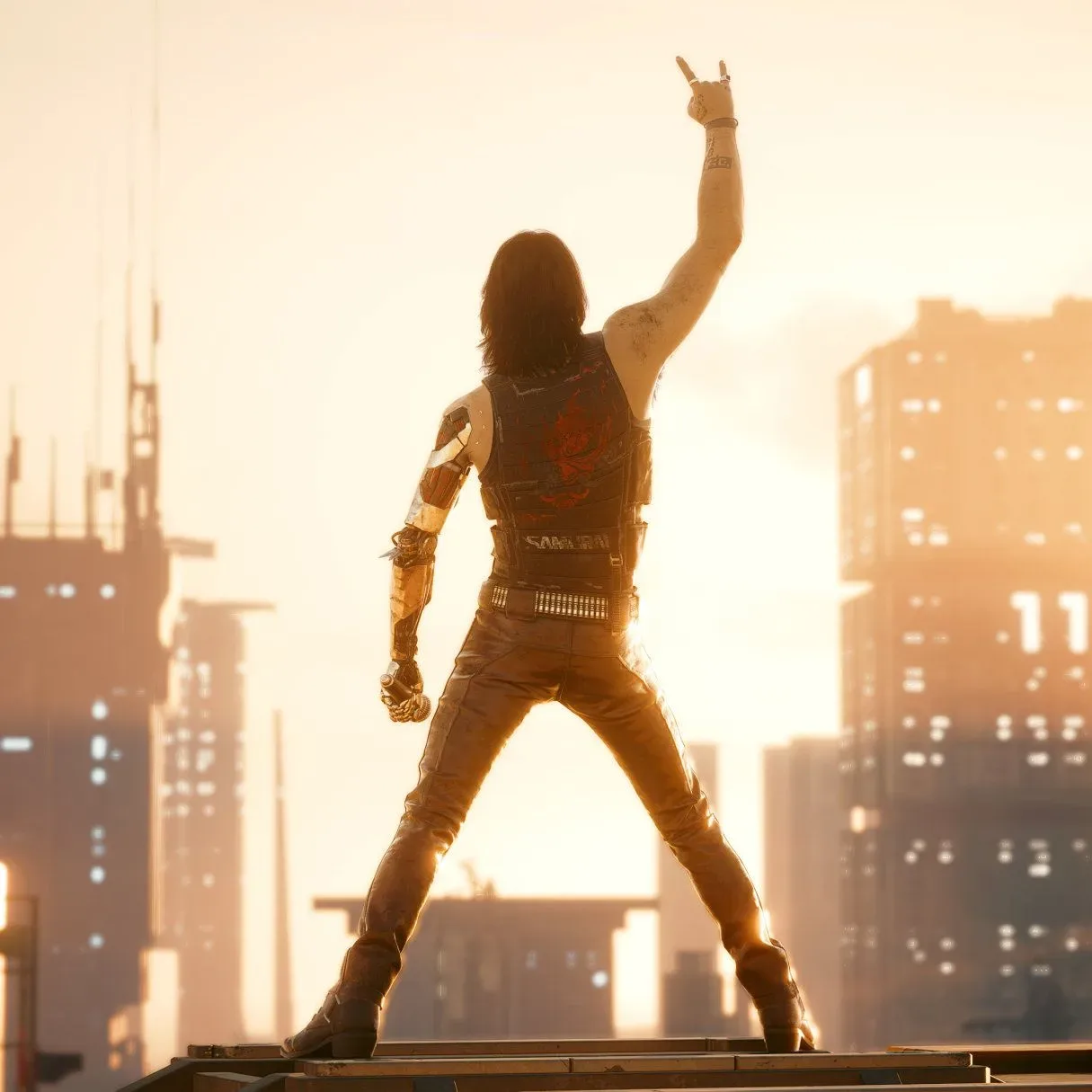

Role-playing games invite a particular kind of ownership. Players choose a look, select dialogue, develop skills and, often, fill in the unspoken parts of a protagonist’s personality themselves. That private version of a character is commonly called a headcanon: an interpretation a player holds even where the game has not explicitly confirmed every detail.
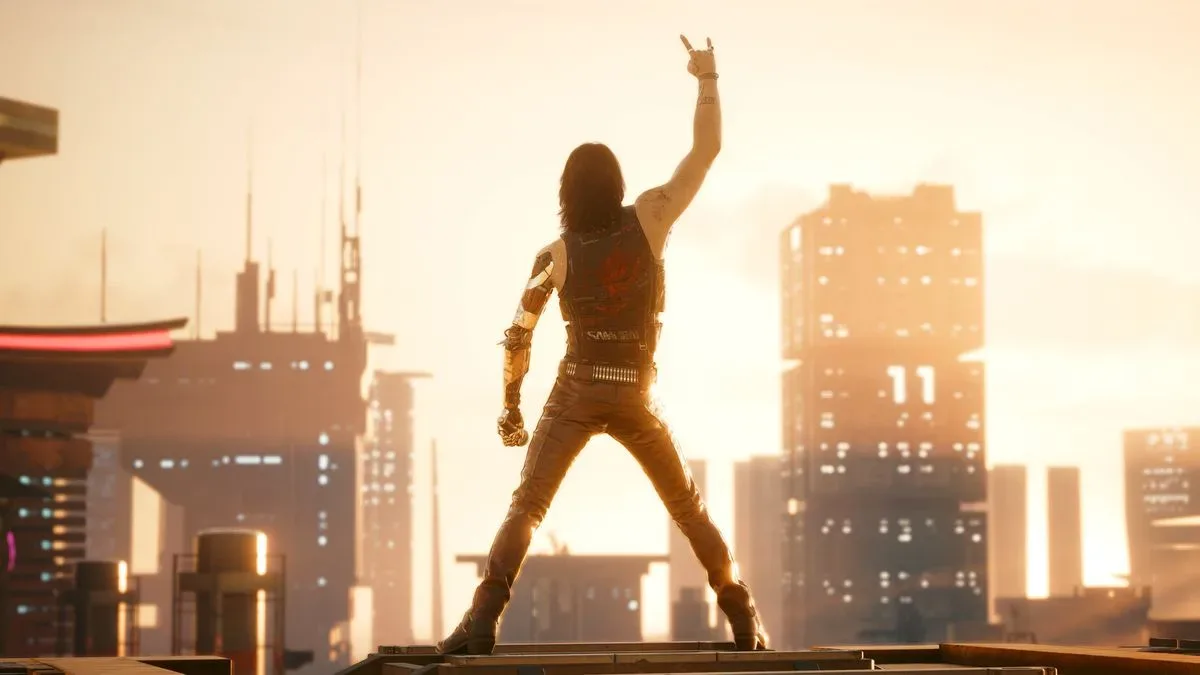
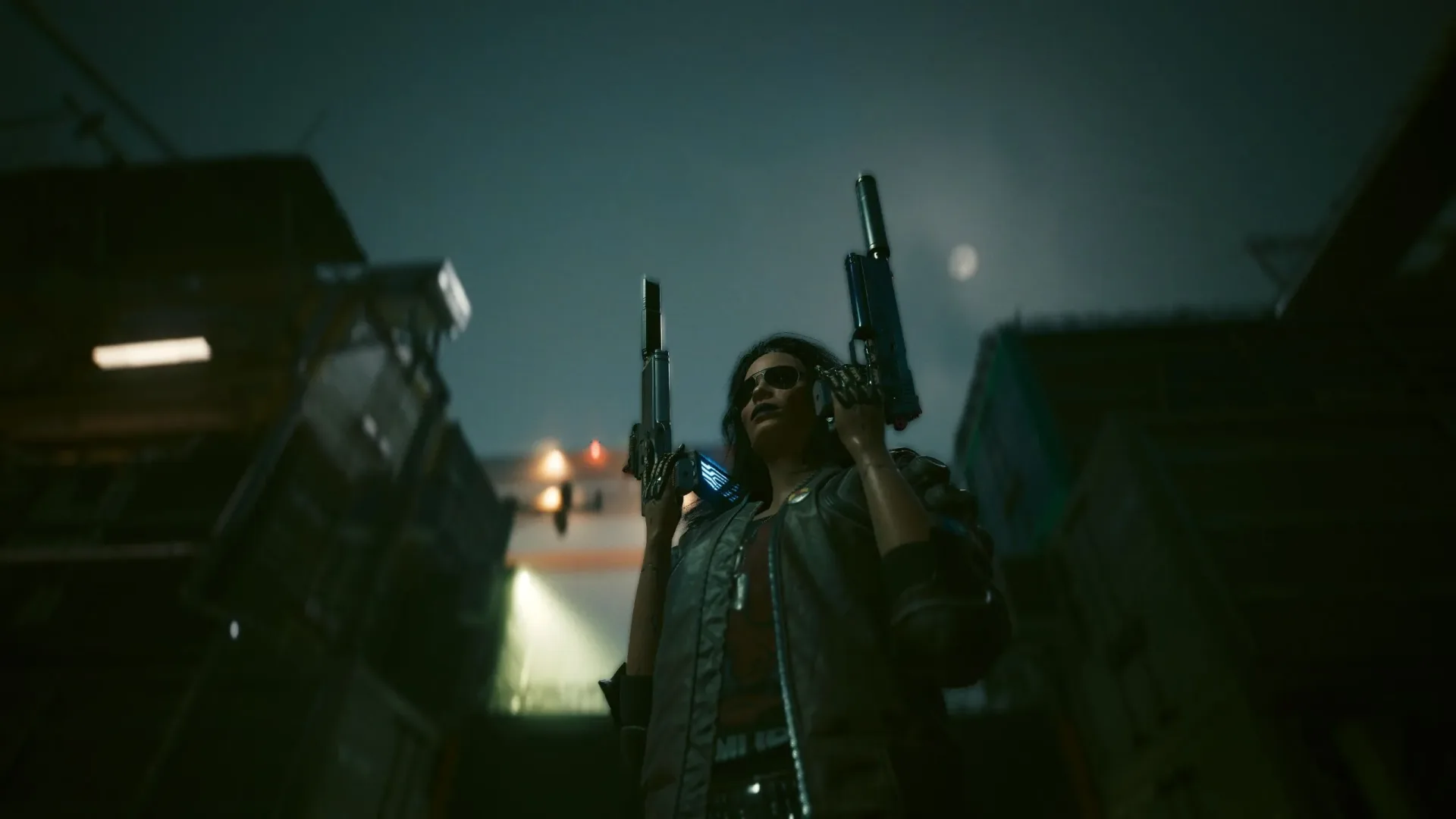
Cyberpunk 2077 gives players plenty of room to build a V of their own, but it also places unusually firm limits on that ownership. V has a written history, a voice, reactions and a crisis that cannot simply be selected away. A newly highlighted small character moment has put that tension back under the microscope: V can express that smoking is not for them, then later smoke as Johnny Silverhand’s presence increasingly overlaps with V’s consciousness.
Quest lead Paweł Sasko has said that detail was intentional. In his explanation, the point is not that V independently formed a new habit. It is a quiet signal that Johnny’s personality is gradually blending with V’s, helping shift their relationship from an early confrontation—where Johnny attempts to kill V—into something more emotionally complicated, involving empathy and regret.
For players who want a protagonist to remain completely aligned with their decisions, that may sound like a violation of the usual RPG arrangement. Sasko’s answer is direct: it is supposed to feel uncomfortable. He describes the game as using RPG mechanics to illustrate terminal illness, a condition that is not voluntary.
A deliberate limit on role-playing
The debate is not really about whether V should smoke. It is about what character authorship means when a game lets players role-play inside a story built around a loss of personal boundaries.
In a broad sense, player agency is the degree to which a player can affect events, make meaningful decisions or define a character. Agency is not the same as unlimited control. A game may give a player agency over choices while retaining authorial control over its protagonist’s core circumstances, voice and themes. Cyberpunk 2077 appears to use that distinction on purpose. Players can shape parts of V, but cannot entirely insulate V from Johnny’s influence.
That makes the smoking beat narratively useful precisely because it is so ordinary. A sweeping declaration that Johnny is changing V would be impossible to miss. A minor action is more unsettling: it suggests an alteration has happened beneath the player’s attention, in the mundane behavior that helps form a person’s sense of self. The player may have developed a clear idea of who V is, only to see the game gently complicate it.
It is also a way to make an abstract premise tangible. “Consciousness merging” is high-concept science fiction. A changed personal mannerism is immediately legible. The latter does not need a technical lecture to communicate the former. V’s behavior is carrying information about the state of the relationship with Johnny.
Related coverage includes Cyberpunk 2077's V Is Designed to Challenge Your Headcanon, Quest Lead Explains.
Why the discomfort matters
Sasko’s framing places the discomfort at the center rather than treating it as an accidental side effect. The story’s terminal-illness theme is not presented as a problem V voluntarily accepts and can simply solve through an ideal build, a favored dialogue response or a carefully protected headcanon. That lack of control is part of the dramatic subject.
In this context, the RPG structure does more than offer choices. It creates an expectation of self-determination, then lets the narrative press against that expectation. If a player feels that their V is being changed in a way they did not approve, the game has made its point through the player’s relationship with the character, not solely through exposition.
That approach will not satisfy everyone, and the objection has a reasonable foundation. Many players come to RPGs specifically to inhabit a character on their own terms. When a game establishes a personal preference for the protagonist and later overturns it, some will read the moment as the writer taking back an important part of the role-playing space.
But the disagreement also clarifies the creative trade-off. A version of the story in which V always remained fully separate from Johnny, and fully subject to player-defined personal rules, would reduce the force of a premise about unwanted mental intrusion. The narrative has to claim some space in order to depict the threat as more than a temporary plot device.
Johnny and V are not a clean player-character split
It is tempting to think of V as the player’s character and Johnny as an outside force imposed on that character. The story’s design is more complicated than that. V is already authored: a protagonist with a defined predicament, spoken lines and a personal arc. Johnny is likewise not merely an antagonist or a menu of optional influence. Their evolving connection is one of the narrative’s central concerns.
Sasko described the intended movement as a transformation from their hostile beginning into a “deep and meaningful” bond marked by braided empathy and regret. The wording matters because it does not reduce the change to simple possession or imitation. The goal is an evolving relationship, with two identities becoming entangled under severe pressure.
The smoking detail supports that reading without resolving every possible interpretation. It does not mean every action V takes belongs to Johnny, nor does it require players to abandon their own reading of V. Instead, it establishes a small but pointed example of the boundary becoming unstable. The scene can be read as evidence of influence, resistance, compromise or a frightening inability to know where one personality stops and the other begins.
That ambiguity is a stronger fit for the stated premise than a neat, measurable transfer of traits would be. A character who can always identify the exact source of every impulse has not truly lost much certainty. A subtle behavioral change is disturbing because neither V nor the player can easily file it away as someone else’s action.
Small details can carry major narrative weight
Players continue to revisit individual scenes, lines and gestures in Cyberpunk 2077, and this is a good example of why. Large story turns receive extensive attention when a game launches. Small flourishes are more likely to surface later, when someone connects a line of dialogue with a later action and asks whether it was intentional.
That kind of close reading is particularly valuable for character-driven games. It treats animation, habits and apparently incidental dialogue as potential storytelling tools rather than background decoration. In this case, Sasko’s response confirms that the connection was designed to communicate the slow blending of V and Johnny.
For returning players, the practical implication is not that there is a newly revealed mechanical choice to make. It is an interpretive one. Moments involving V’s habits and reactions can be viewed through the question of influence: is the game showing an established part of V, an accommodation made under pressure, or Johnny’s presence entering the foreground? The answer may not always be definitive, but the question is supported by the game’s narrative intent.
That is distinct from a gameplay system. Nothing in this detail suggests players can track personality blending with a visible stat, reverse it through a particular loadout, or treat smoking as an unlock condition. It is characterization, not a newly identified mechanic.
The headcanon argument will not disappear
The dispute over V is likely to persist because both sides are responding to genuine strengths of the genre. Personal interpretation can make an RPG protagonist feel intimate and singular. A strongly authored arc can give a game a focused emotional argument. Problems arise only if either expectation is treated as universal.
Cyberpunk 2077 is clearly asking players to accept a protagonist they can shape but cannot wholly possess. V is not a blank slate, and the story uses that fact to make the erosion of autonomy felt rather than merely described. Sasko’s comments make the intention unusually plain: when the game makes a player feel that their version of V has been unsettled, it is not necessarily failing to respect the role-playing format. It is using the format’s expectations as part of the story.
That does not obligate anyone to enjoy the feeling. It does, however, explain why the narrative would choose a minor, uncomfortable contradiction over a cleaner expression of player control. In a story about a mind no longer entirely its own, the unsettling details are not side effects. They are the signal.
For more current PC game coverage, see Little Corners’ Little Shops DLC adds new themed spaces on Steam.