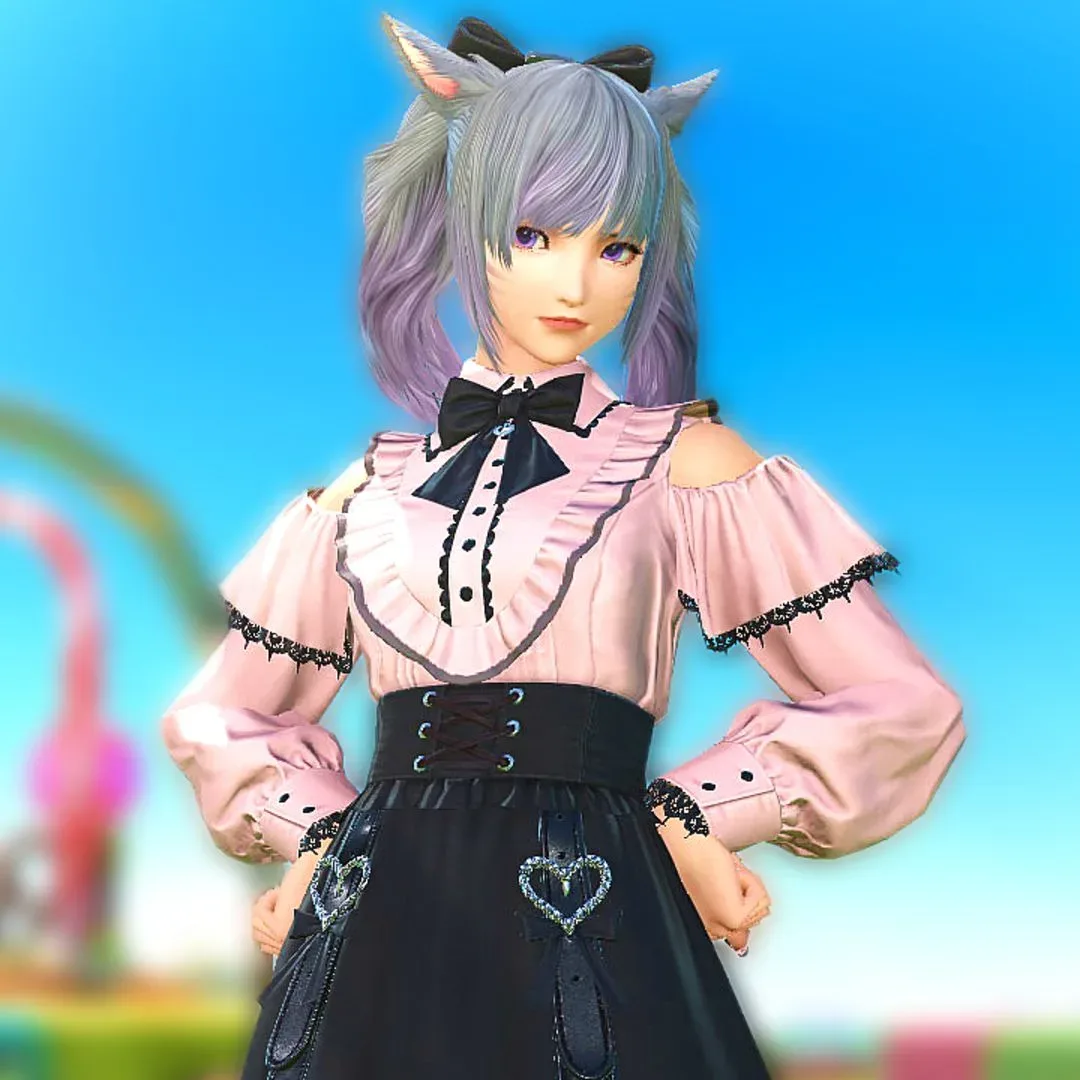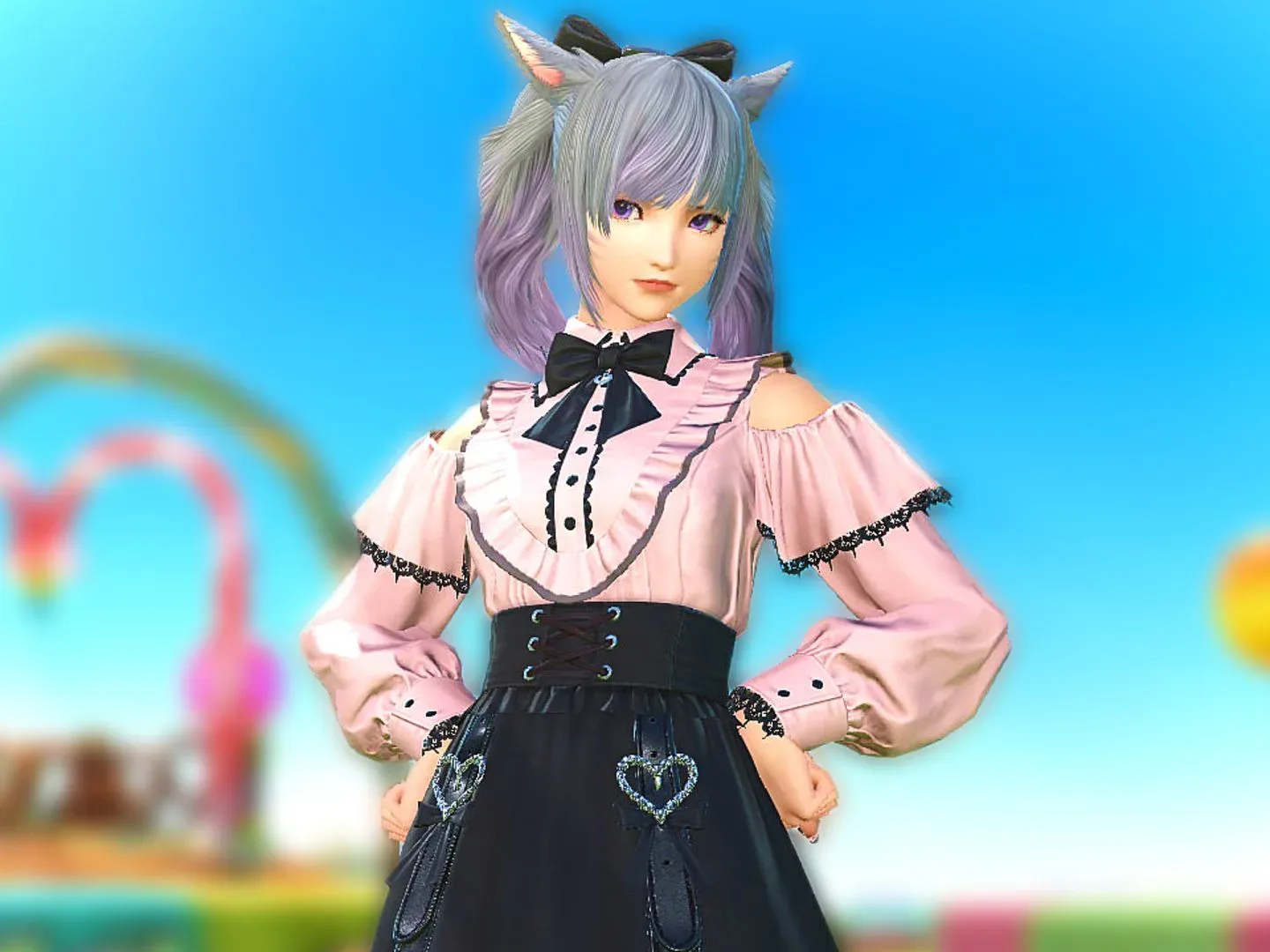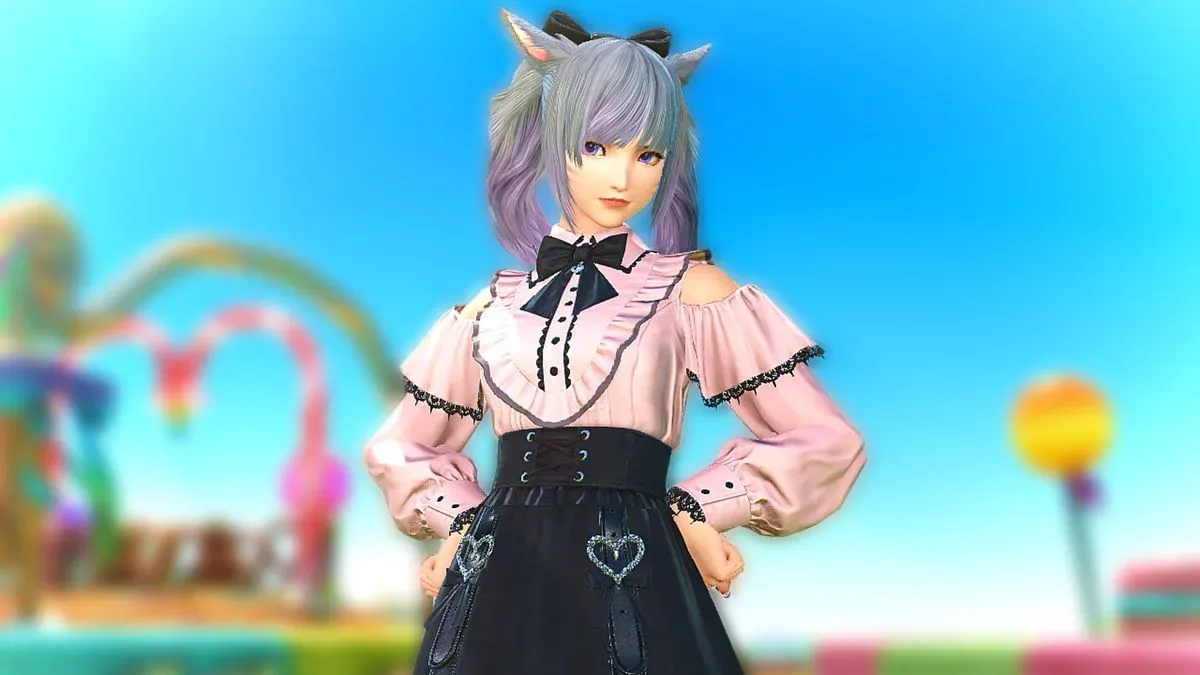
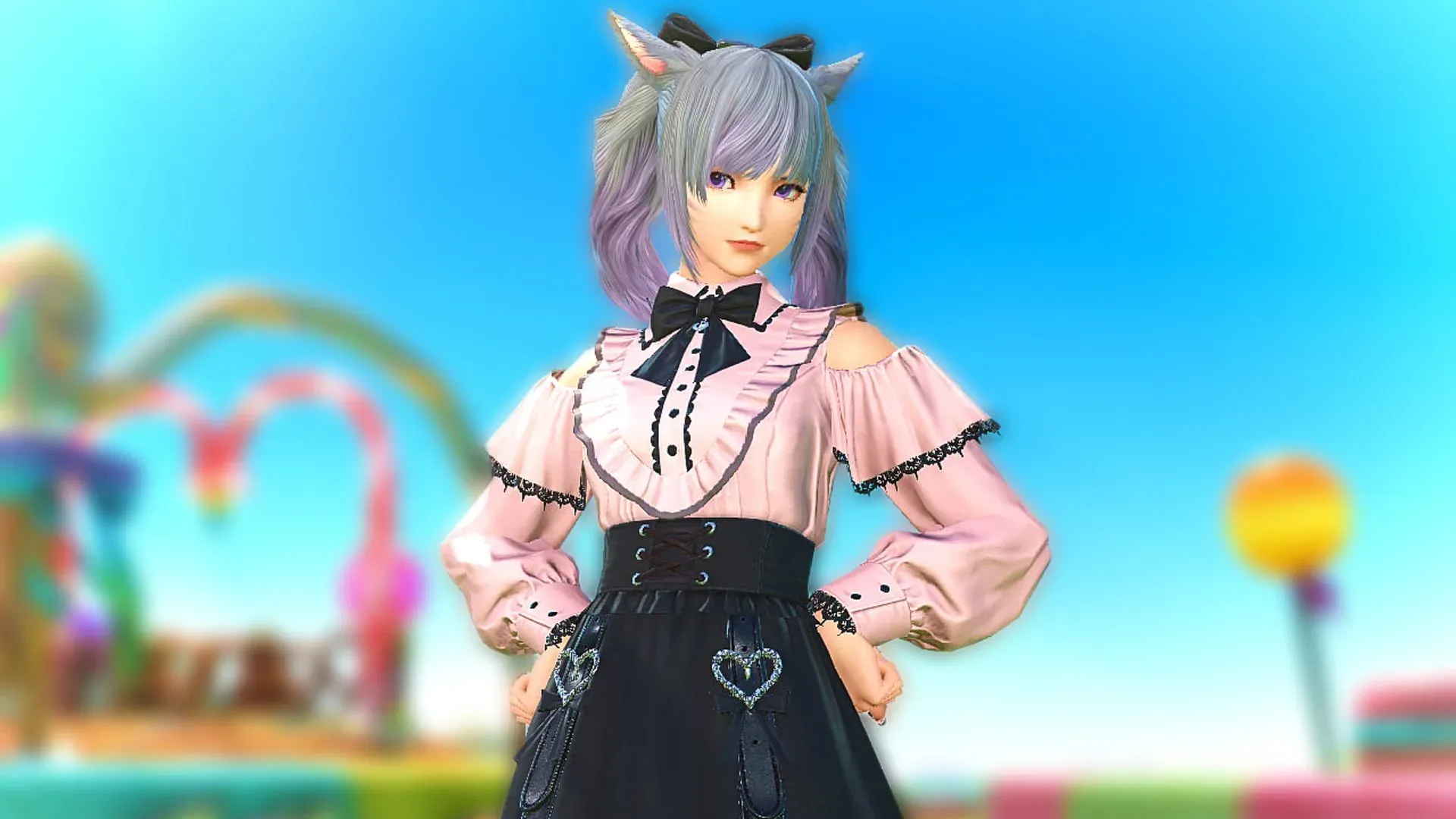
Final Fantasy 14’s newly available Alternative Dress Attire has arrived with the kind of response that makes an optional cosmetic feel less like a quiet store refresh and more like a full-scale fashion event. The $18 outfit, featuring a frilly blouse and short-skirt combination, had been anticipated since players uncovered it in a datamine in April. Seven months later, it has made the transition from unofficially discovered asset to an item players can actually add to their wardrobes through the Mog Station.
The immediate reaction has been enthusiastic, playful and extremely specific to the social life of an MMO. Community screenshots have already positioned the set as the next “mass-production Limsa e-girl outfit,” a joke that lands because character fashion, social gathering spots and posing for screenshots are all substantial parts of how many people experience Final Fantasy 14 between duties. Players have also praised how well the attire takes dyes, with pastel pink among the color choices circulating in discussion.
There is a useful distinction here: the Alternative Dress Attire is not gameplay gear in the conventional sense. It is a glamour item—part of the game’s visual-customization culture rather than a reward tied to combat progression in the information available. Glamour, in plain terms, is the appearance a player chooses for their character. A set’s success therefore rests not on statistics, damage output or raid utility, but on its visual flexibility, recognizability and compatibility with other pieces.
From datamine curiosity to a real storefront item
Datamining is the process of examining game files or data for material that has not formally appeared in the live game. It can reveal unfinished, unused or future-facing assets, but it does not guarantee that an item will eventually be released, nor establish its timing or final form. That uncertainty was central to the Alternative Dress Attire’s appeal after the April discovery: screenshots traveled widely, while players were left wondering whether the outfit would ever become purchasable.
For more context, explore Tom Brady Card Sales Put Autographs, Relics and Modern Rarity in the Spotlight.
Its eventual release gives that long-running anticipation a payoff. The time between a datamine and a confirmed storefront listing can turn a garment into a community talking point before anybody can equip it. By the time this set arrived, players had already had months to imagine outfits around its silhouette. The release did not create interest from scratch; it provided an answer to a question that had been hanging around since spring.
For anyone looking for a straightforward reference to the arrival, the Alternative Dress Attire’s Mog Station availability confirms the essential development: the once-datamined look is now a purchasable optional item. What has made the moment more notable is the speed with which player conversation moved past simple confirmation and into styling, dyeing and screenshot culture.
Why the fashion reference matters
The outfit has been described as jirai-kei-inspired. In this context, that reference helps explain the response to its design language: the attraction is not merely that it is a new dress, but that it echoes a recognizable real-world fashion-adjacent look. The frills, blouse and short skirt make a clear visual statement, and players are treating that statement as a foundation for character styling rather than a single fixed costume.
That matters in Final Fantasy 14 because an outfit can be adopted as a shared visual shorthand. Once enough characters wear a similar silhouette in public spaces, the community turns the item into an in-joke, a trend, or both. The “Limsa e-girl” label is teasing, but it also identifies the kind of setting where this sort of garment is likely to be especially visible: a social hub associated in community discussion with roleplay, idling, meeting other players and showing off glamours.
The look is already prompting jokes about Miqo’te, Au Ra and Elezen characters—as well as players taking the style into more serious content. That contrast is part of the charm. A player can wear a delicate, fashion-forward outfit while facing a major encounter such as Kefka in Ultimate-level content, creating the familiar MMO collision between high-stakes mechanics and deliberately unserious personal presentation.
Dye compatibility is more than a minor perk
Players calling attention to the set’s dye results are highlighting a practical quality that often decides whether a glamour piece remains popular. Dyes let players alter the color presentation of applicable equipment. An item that looks good only in its default colors can still be appealing, but an item that holds up across light, dark, muted or highly saturated palettes offers more opportunities for mixing and matching.
That versatility is especially important for a blouse-and-skirt design. The supplied community response points to the overall set dyeing well, and that can make it easier for players to build around a preferred color identity rather than conforming their character to one preset outfit. Pastel styling may be the most obvious early showcase, but the underlying value is choice: an adaptable piece has a better chance of appearing in varied glamours rather than being worn exactly one way.
It is also worth separating observation from certainty. Community comments and screenshots can show that an outfit produces appealing results in particular color combinations; they do not mean every color, character look or combination with other equipment will work equally well. Fashion is subjective, and clipping, proportions and the availability of matching pieces can affect any player’s final result. Still, the early praise establishes that dye behavior is already one of this set’s strongest selling points in player conversation.
An optional purchase with a clear audience
The price is an unavoidable part of the story. Alternative Dress Attire costs $18, putting it firmly in the category of optional real-money cosmetic content rather than something earned through ordinary in-game activities. Some players have openly said they could not resist it; others have responded by predicting a major wave of characters adopting the look. Both reactions underline the same point: the value proposition is visual expression, not progression.
That does not make the purchase inconsequential. Optional-store fashion is most compelling when it can be used repeatedly, personalized through dyes and incorporated into a player’s existing wardrobe. A design that sparks meme-worthy recognition while still providing room for original combinations can feel more durable than a novelty costume worn once for a screenshot. The early conversation around Alternative Dress Attire suggests players see that potential here.
It also arrives while Final Fantasy 14 players are waiting for the next expansion, Evercold, which remains a few months away. The game is also running what has been described as its longest free login period yet. In that stretch between larger releases, a cosmetic launch can offer a smaller, immediate reason for returning players to check in: not because it changes combat systems, but because it adds something new to wear in the shared spaces players already inhabit.
What the reaction says about Final Fantasy 14 glamour culture
The most interesting part of the Alternative Dress Attire launch is not that a new outfit is popular. It is that the community had already given the outfit a place in its own vocabulary before the item was available. First came the datamined screenshots and speculation. Then came the official purchasable version. Now come the dye experiments, character screenshots, roleplay-hub jokes and expectations that the set will become a common sight in glamour collections.
That sequence shows why visual items can have an outsized presence in an MMO. Combat content may be completed and moved on from, while a compelling wardrobe piece remains visible each time a character appears in a city, joins a group or poses with friends. The garment becomes part of a player’s ongoing identity, and, in a game with a socially active fashion scene, part of a wider shared visual language.
Whether Alternative Dress Attire becomes a lasting staple or a brief seasonal craze cannot be determined from the early excitement alone. The available evidence does show a strong opening: a familiar fashion influence, months of pre-release curiosity, visible dye appeal and a community already eager to label, parody and style the new set. For $18, Square Enix has not sold a new power upgrade. It has sold a conversation piece—and Final Fantasy 14 players appear very ready to make it their own.