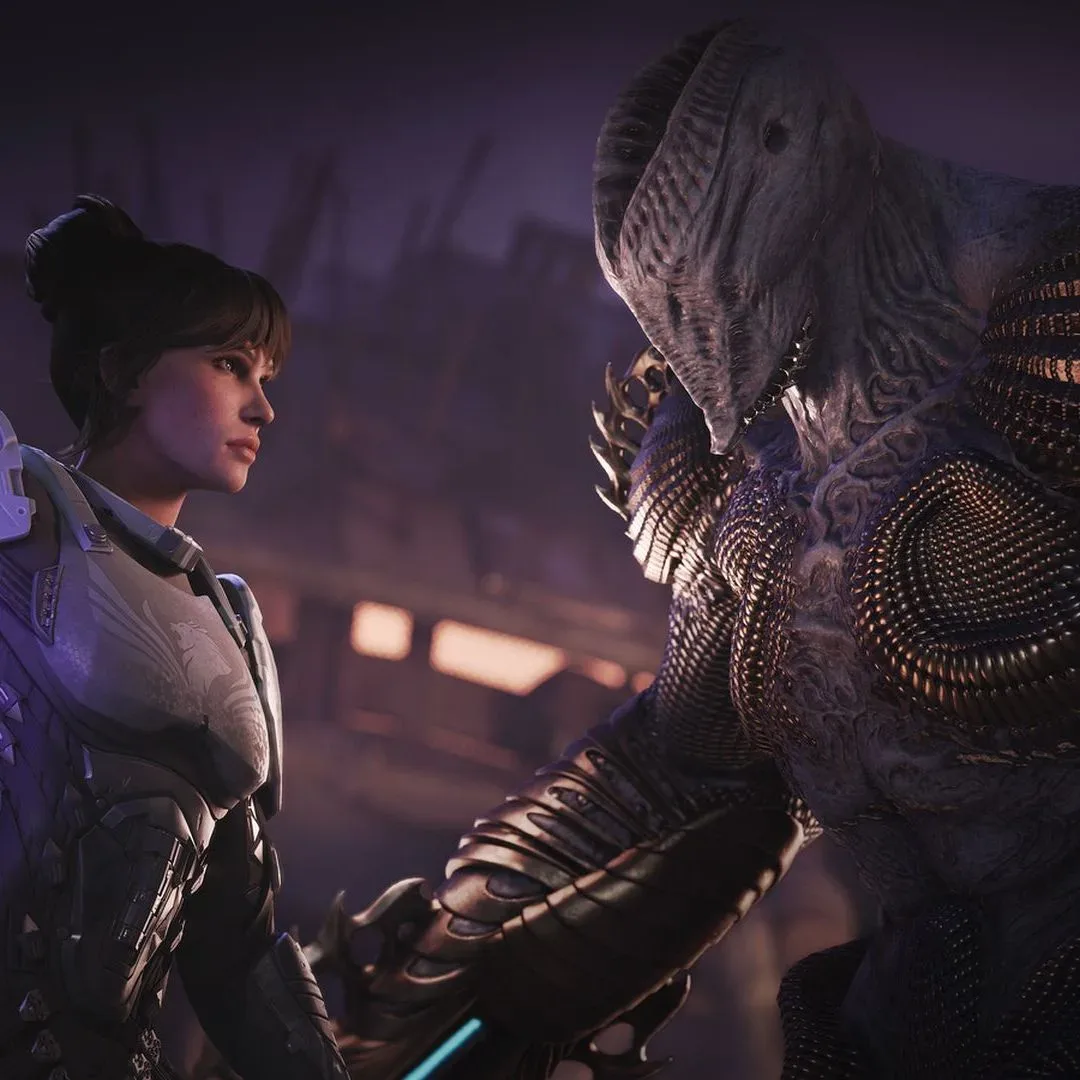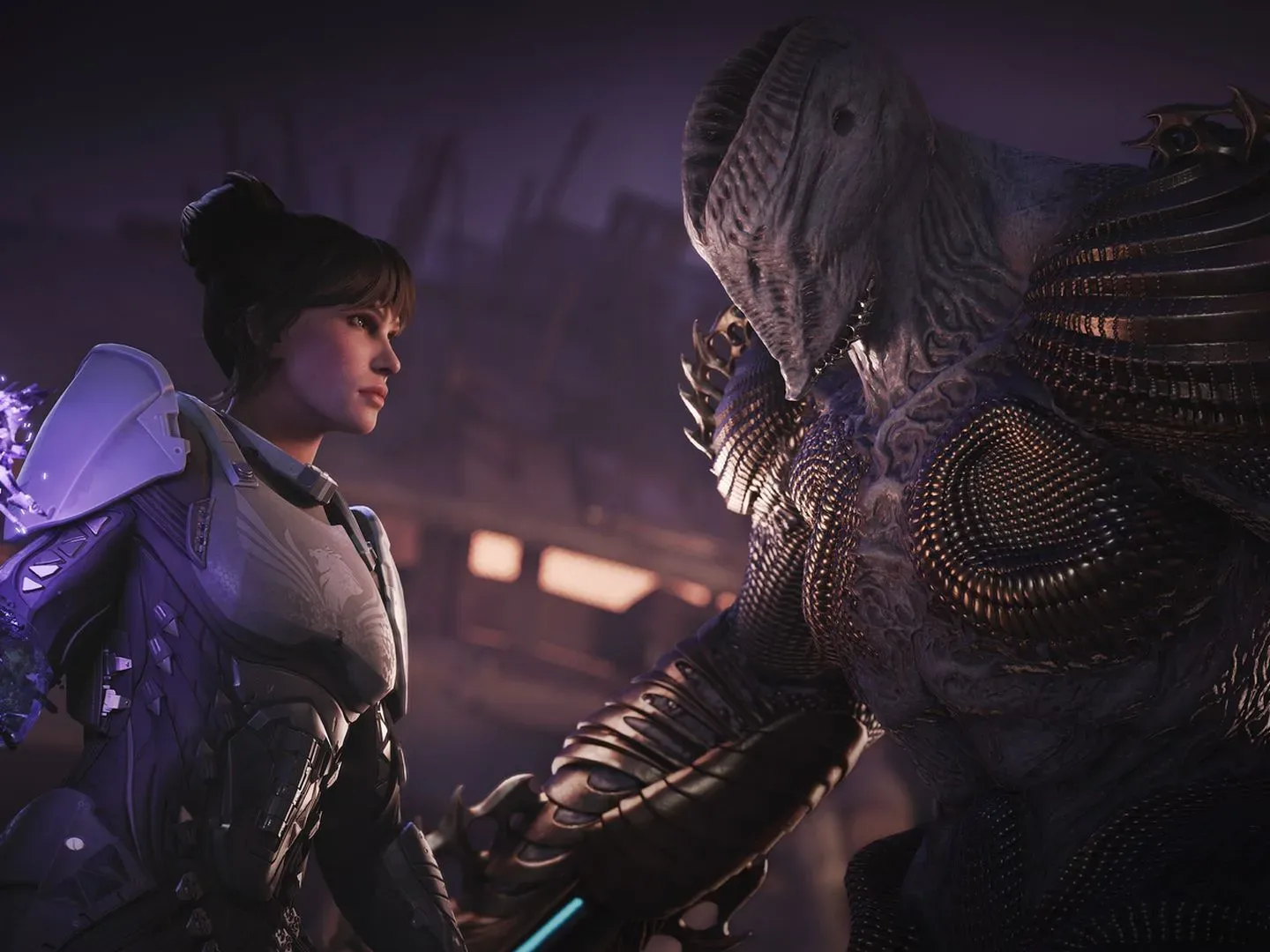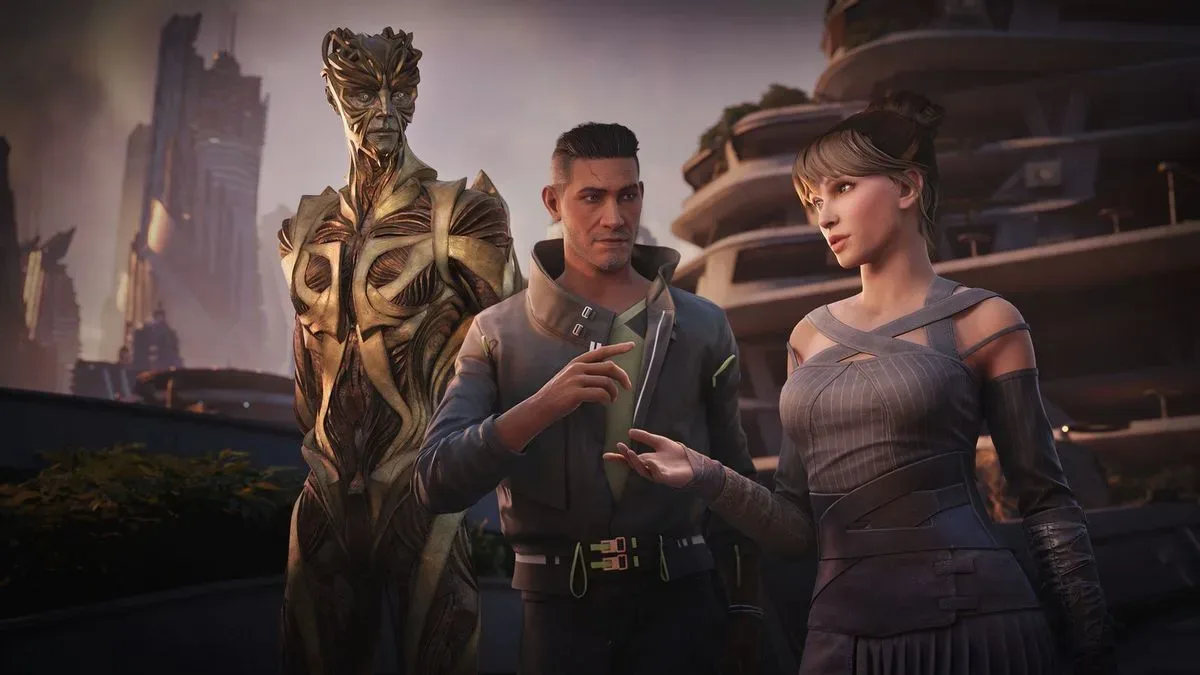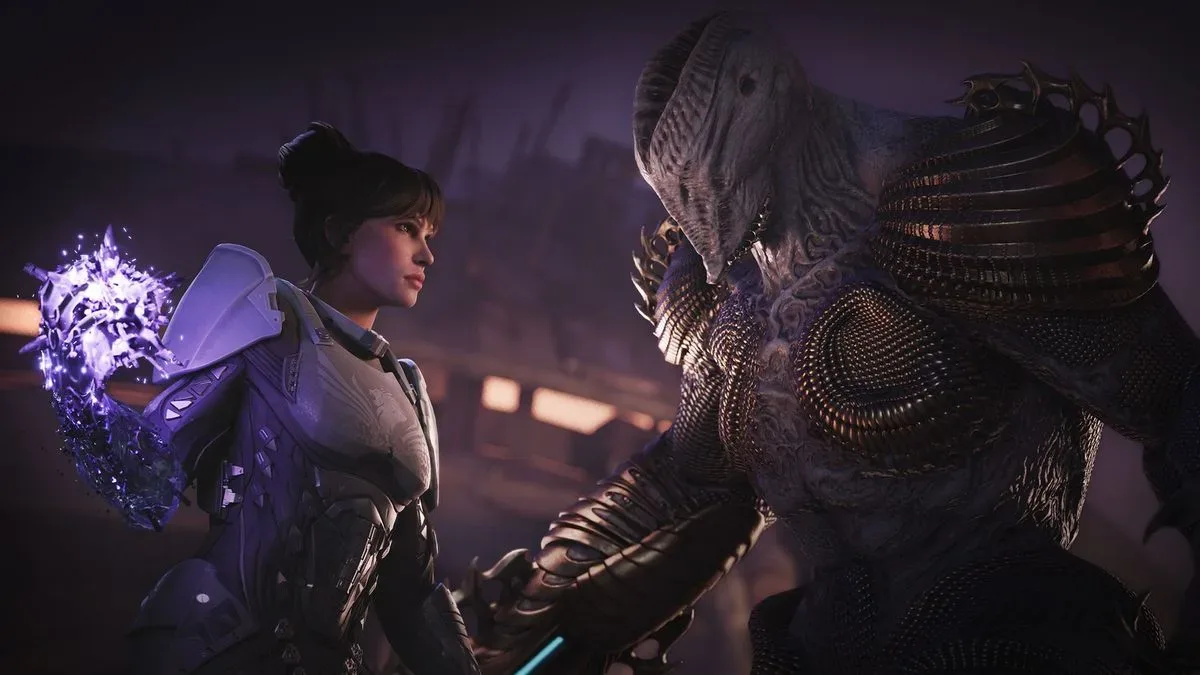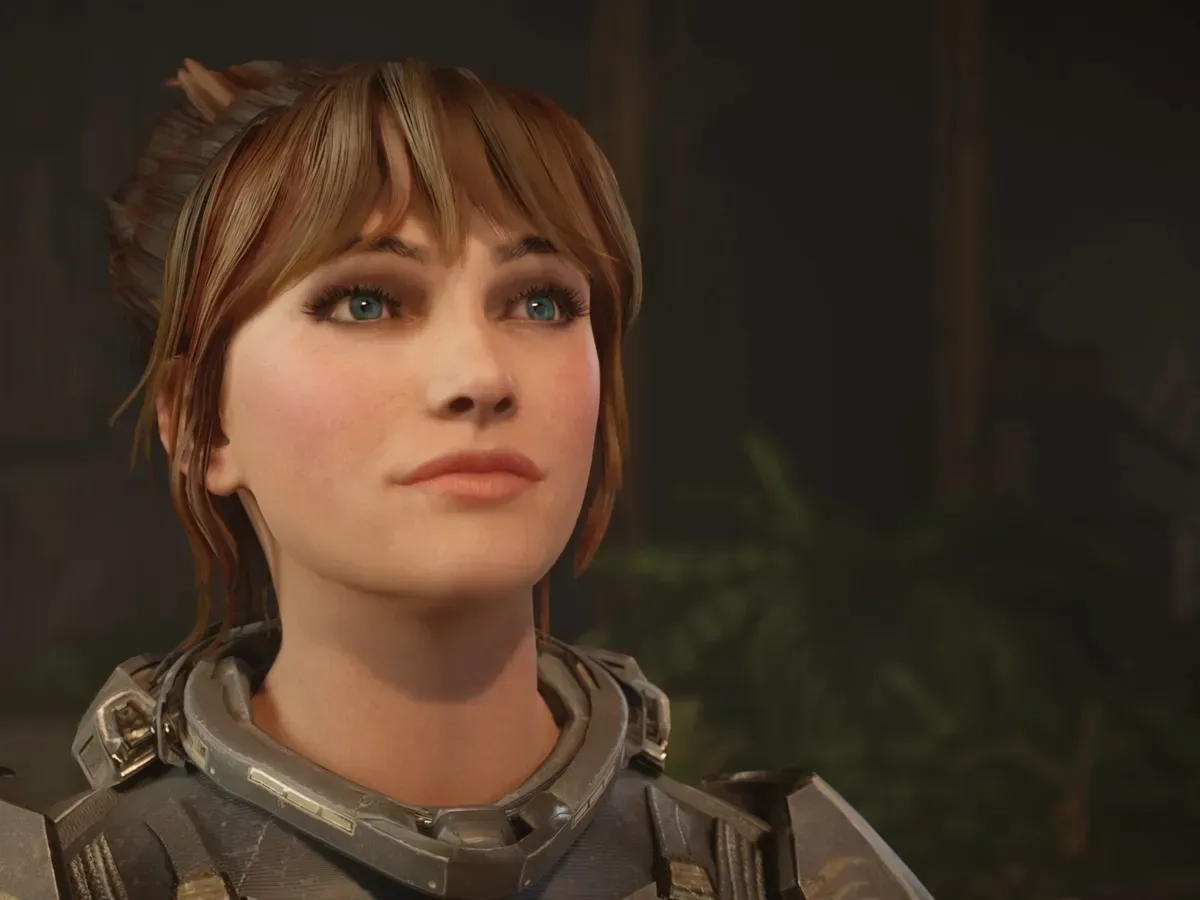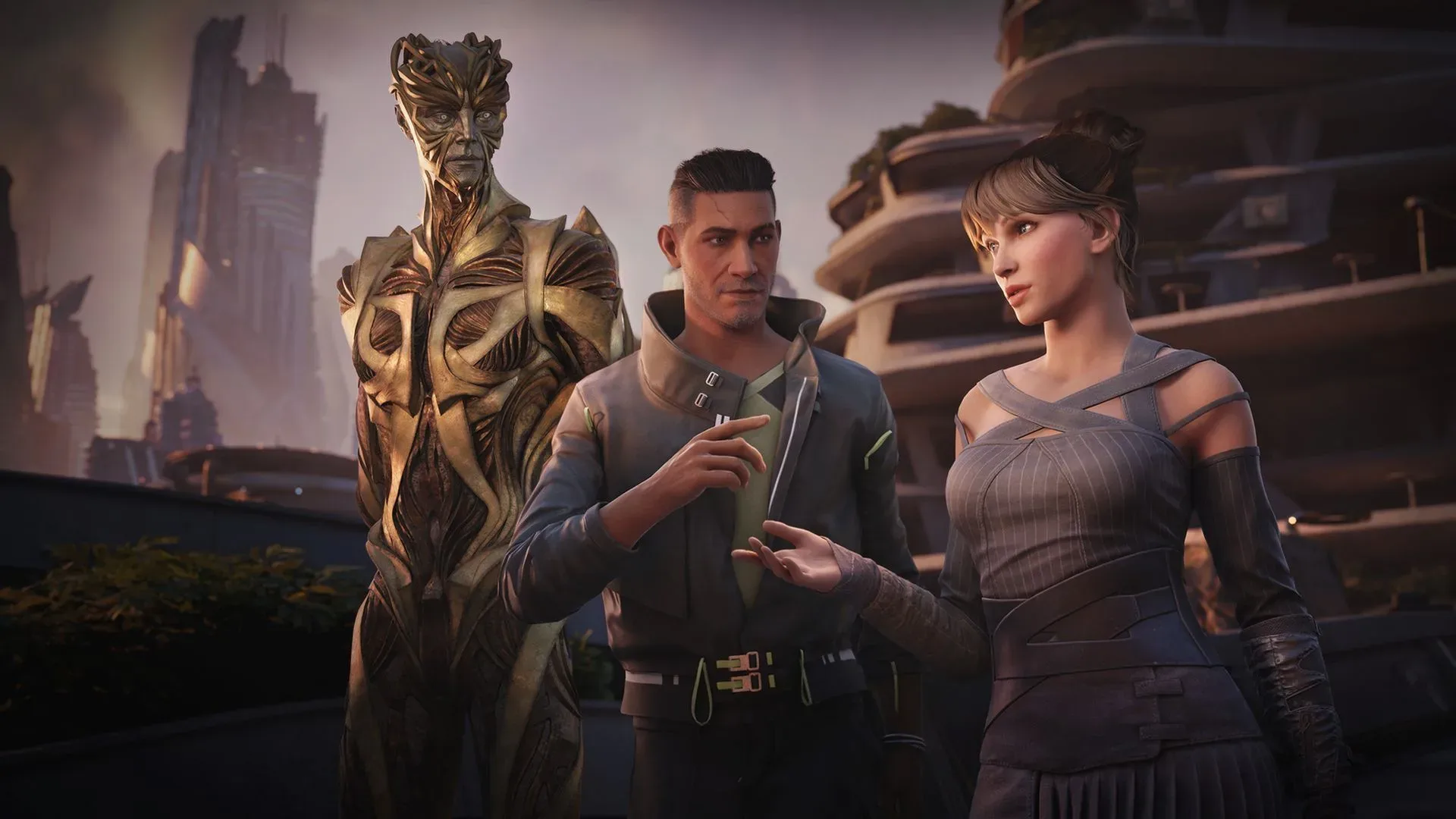
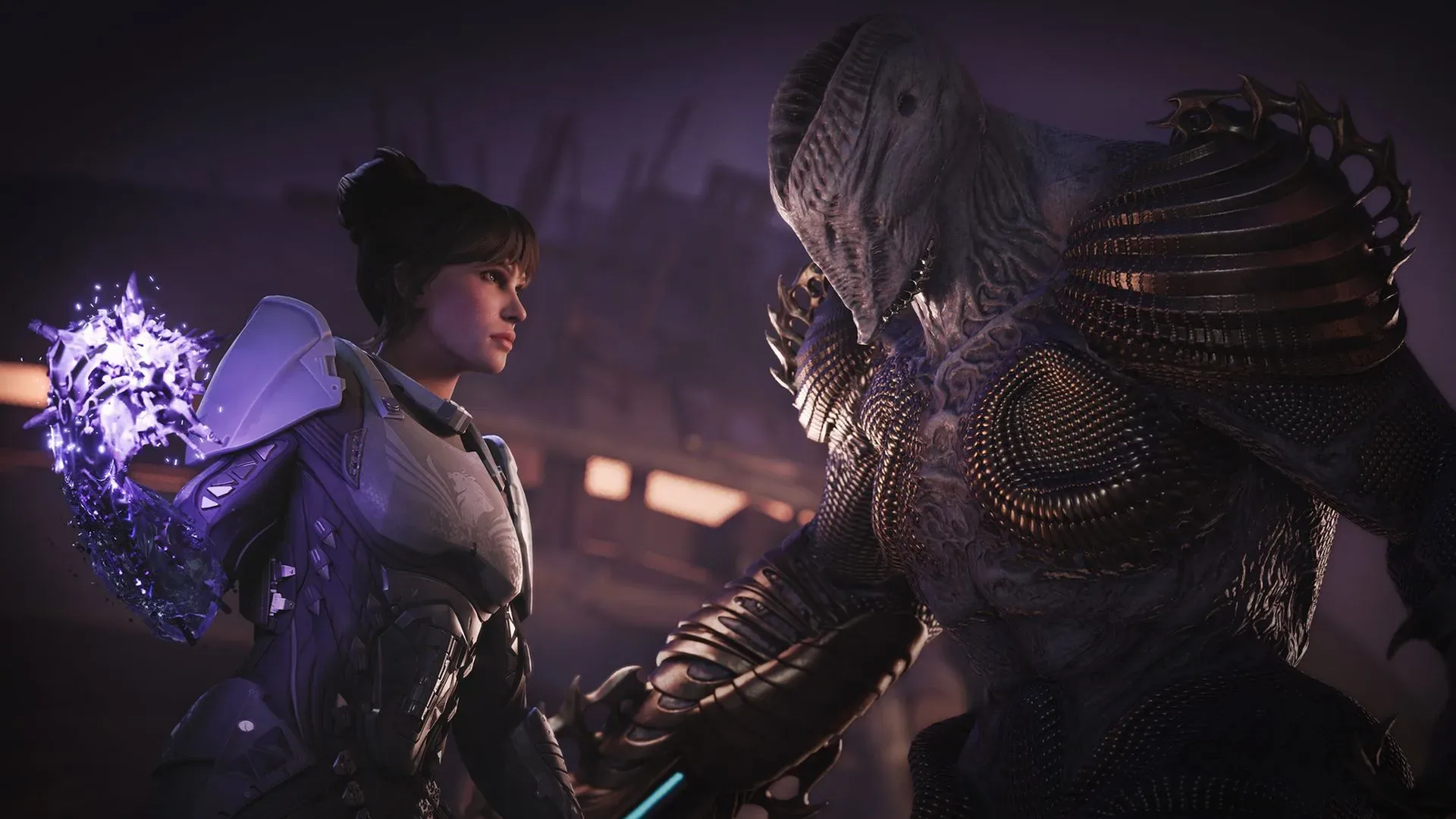
Exodus is asking its lead performers to do more than carry a galaxy-spanning RPG. Stephen Oyoung and Carina Conti, who play the male and female versions of protagonist Jun Aslan, have described a production built around divergent decisions, alternate emotional realities and a science-fiction premise in which time does not pass evenly for everyone.
Jun can be played as either a male or female character, with Oyoung taking the former role and Conti the latter. Both versions occupy the same central place in the adventure, but the two actors’ accounts make clear that putting a player-defined lead at the heart of a branching RPG is not simply a matter of recording every line twice. Exodus also builds choice into its morality framework and uses time dilation as a major narrative force. That combination gives performers a far less linear map than the one usually available when a scene leads directly into the next.
For players, that potentially means the role-playing promise is not limited to selecting a response and watching a numerical meter move. The acting itself has to remain credible when Jun takes sharply different positions, then encounters people whose lives may have changed dramatically during what felt like a short journey to the protagonist.
What makes a branching performance difficult?
A branching narrative is a story structure in which player decisions lead to different scenes, dialogue, relationships or outcomes. The difficult part for an actor is continuity: the performer must understand what their character knows, feels and has done at a precise point on each possible route.
In a linear game, the order of events can provide much of that context. One scene follows another, and the actor can track a character’s emotional movement through the story in a relatively straightforward way. In a choice-driven RPG, a later moment may need several valid versions. Jun might arrive there after a compassionate choice, a pragmatic one, or a choice that commits to an entirely different outlook. Each version needs to sound like the same person while still reflecting the consequences of what happened before.
Oyoung described the difference in practical terms: a linear performance can be shot scene by scene, while Exodus required a decision about whether to complete an entire narrative route before returning to a branching point or to stop and map each location in the story. The team chose the latter approach. That approach may reduce repeated retracing of a complete path, but it asks everyone involved to be exact about where a scene sits in the wider decision tree.
Conti called the work considerably more difficult than her previous game experience, emphasizing the extra cost, time and complication involved. Her reaction is revealing because the technical ambition of a choice-driven RPG is often discussed in terms of writing, systems or the sheer number of outcomes. Performance capture and voice work face the same multiplication problem. Every meaningful divergence can require a different emotional setup, different body language, different timing and potentially different interaction with another character.
Paladin and Immortal choices are more than alternate lines
Exodus frames its morality choices around Paladin and Immortal paths. The available details do not establish every rule or consequence of those paths, so it would be premature to define them as simple good-versus-evil options. What is established is that they produce distinct versions of Jun’s perspective that the actors had to perform.
Related coverage includes Exodus Actors Explain How Branching Choices and Time Dilation Changed Their Performances.
That distinction matters. A morality system can be a mechanical label, but it becomes more compelling when it changes how a protagonist inhabits a conversation. Conti explained the challenge as moving from one reality to another where the character does not feel what they felt in the previous version. In other words, the task is not to mechanically repeat a sentence with a different inflection. It is to locate the reasoning and emotion that make a particular Jun believable on that route.
Oyoung saw an upside in the same complexity: alternate paths allow an actor to explore another thing the character might say. That is the creative opportunity inside the logistical headache. A player character in a branching game must be flexible enough to accommodate the player, but cannot become so undefined that every response feels detached from a recognizable personality.
Conti’s explanation of taking direction gets at the balance. An actor may establish an instinctive default for a character, then receive a note that asks for a decision contrary to that default. The work is in accepting the new direction without making it feel arbitrary. In a role-playing game, that flexibility is especially important because the player may deliberately select the option that is least natural to their own instincts—or to the actor’s initial read of the hero.
Time dilation gives the supporting cast a different burden
The more unusual wrinkle in Exodus is its use of time dilation. In the game’s fiction, Jun travels at faster-than-light speeds. Time can pass much faster for the friends left behind than it does for Jun. A trip that subjectively feels like hours for the protagonist can leave months or years of elapsed time in its wake for other people, with choices echoing across years or decades.
Time dilation is a science-fiction device that creates an uneven experience of time between characters. Narratively, it can turn distance into a personal cost. Jun may leave a friend under one set of circumstances and return to find that person carrying years of events, changes and consequences that Jun did not live through alongside them.
That is why Oyoung and Conti both suggested that supporting performers may have faced the harder assignment. Jun is present for the player’s version of the journey and can react directly when the time gap becomes apparent. Characters left behind must make the intervening life legible even when the audience has not witnessed every step. They may have to convey accumulated grief, maturity, resentment, altered priorities or a transformed relationship in a comparatively brief scene.
Conti noted that Jun’s performers were given the events step by step, whereas other characters may need to build much more of the missing history themselves. That is a useful lens for players watching those reunions. The story’s time mechanics are not only there to create a far-future backdrop; they should affect how characters carry themselves and how relationships feel when Jun re-enters their lives.
It also makes consequence less abstract. In many games, a decision’s delayed result is communicated by a later quest flag, a changed line of dialogue or a reward. Exodus’ premise gives delayed consequence a human shape: someone may be older, different, or permanently affected by developments that took place while Jun was away.
Two actors, one protagonist, and room for interpretation
Oyoung recorded first, and some cutscenes were rendered around his performance. That meant Conti occasionally had to match established movements. Yet she said reproducing his work exactly would be impossible. The performers did not meet to compare their interpretations of Jun during production, and both have said their versions have their own flavor.
This is an important distinction for players who select a protagonist presentation. The game’s male and female Juns are not being presented as identical recordings with a superficial swap. Shared scenes may require comparable staging, but performers bring their own cadence, physicality and emotional emphasis to the same material. Conti’s point is a simple one: an actor’s perspective inevitably affects a role, even with the same script and direction.
That does not necessarily mean one version reveals a different plot, and no such claim has been established. It means the moment-to-moment texture of Jun can vary. In an RPG focused on decisions, that variation fits the broader idea that different playthroughs can hold different emotional meanings even when they visit some of the same places.
Why the production approach matters to players
The details from Oyoung and Conti do not guarantee how every branch will work in the finished game, but they explain what the team is trying to preserve: a sense that decisions, elapsed time and performance all belong to the same story rather than existing as separate layers.
- Choice continuity: Paladin and Immortal routes require Jun’s reactions to reflect more than the immediately selected line.
- Long-term consequence: Time dilation gives the game a framework for consequences that emerge after substantial time has passed for other characters.
- Character change: Supporting roles may have to communicate unseen years of development when Jun returns to them.
- Distinct protagonist readings: Oyoung and Conti’s separate interpretations should give male and female Jun their own performance identity.
That attention to player-driven progression is part of a wider RPG conversation. For a separate example of how an RPG can revise progression after launch, The Blood of Dawnwalker’s Patch 1.2 added New Game+ and doubled its level cap. Exodus’ situation is different: its performers are discussing the work required to embed progression and consequence into the narrative from the outset.
For now, the most concrete takeaway is that Exodus’ ambitious premise is shaping the acting process as much as the script. Jun must remain a coherent lead while stepping through incompatible decision histories, and the people Jun leaves behind have to embody time that the protagonist has not personally experienced. If the finished game makes those switches feel emotionally natural, the complicated work Conti described will be one of the key reasons why.