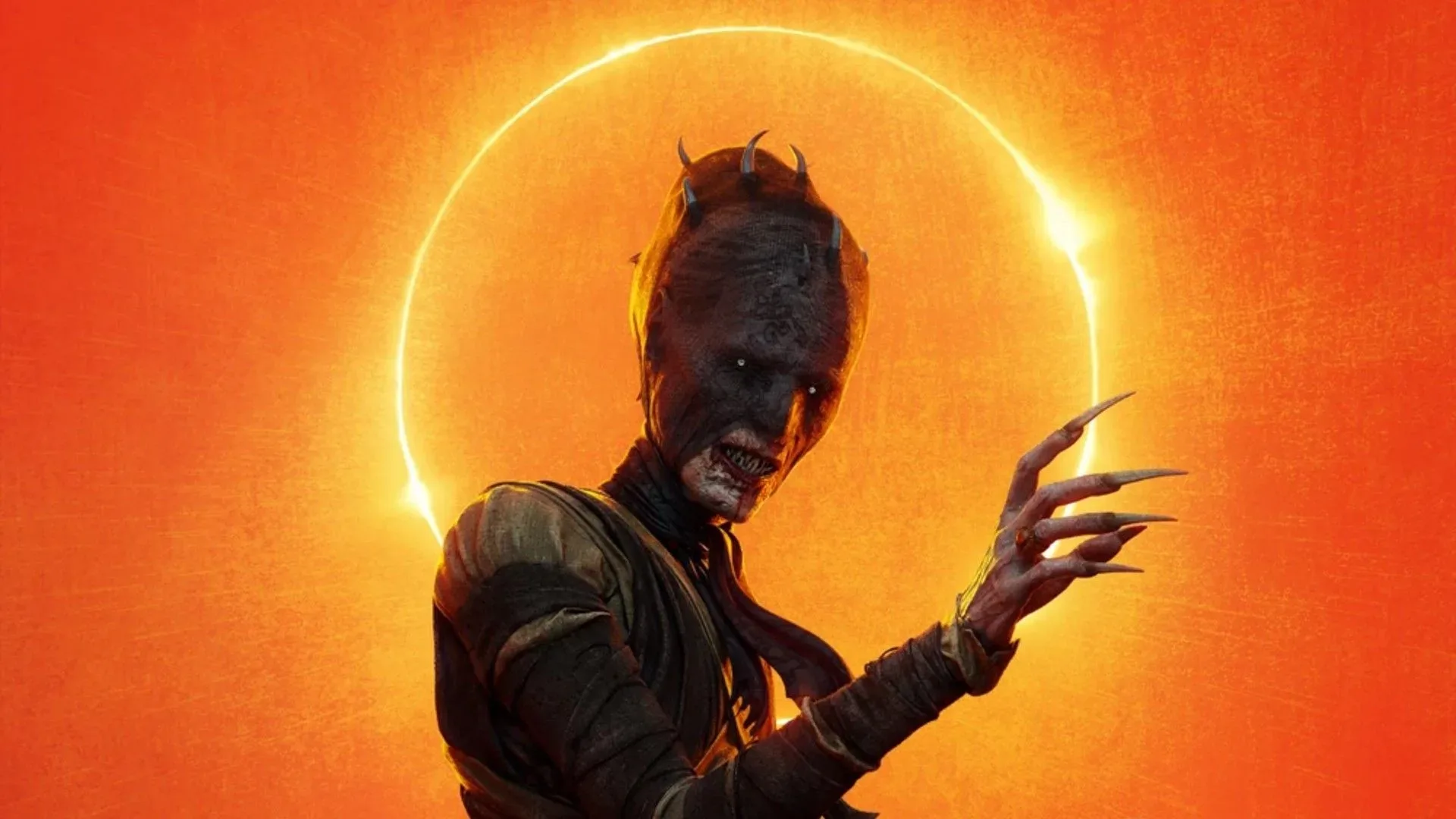
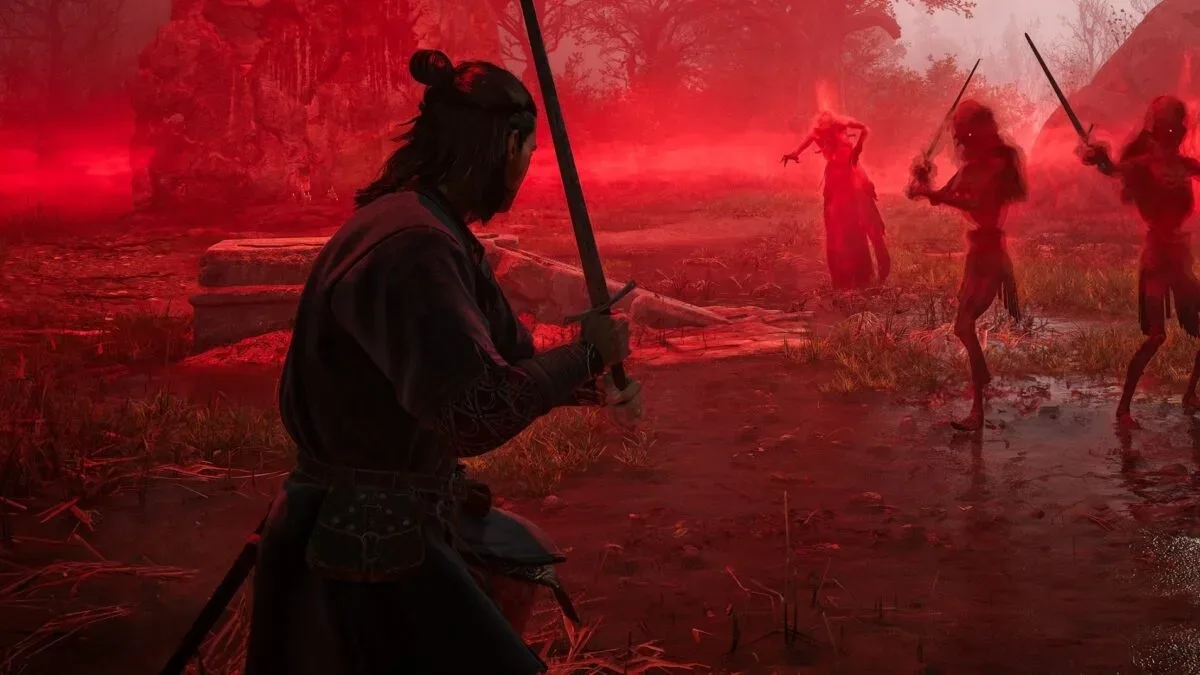
The Blood of Dawnwalker has received patch 1.2, and its headline addition is a New Game+ mode that changes several of the role-playing game’s most consequential pressures. Players can now pursue a second run with a level cap raised from 50 to 100, while zone scaling has been removed. For a game built around difficult choices, dangerous travel and a fixed deadline, that combination could make a return trip feel substantially different rather than merely more powerful.
The update follows other post-launch additions from developer Rebel Wolves, including a new difficulty tier with extra combat assists for players struggling with the game’s directional parry system. Patch 1.2 also retains one of the more delightfully unnecessary uses of that system: petting cats with directional inputs. It is an unusual detail, but a fitting reminder that even a tense, deadline-driven adventure can spare a mechanic for giving local cats the properly calibrated scritches.
New Game+ brings a much higher ceiling
New Game+ is generally a mode that lets players begin another playthrough after completing the game, commonly carrying forward some form of character progression or player knowledge. The supplied patch details establish its most concrete progression change here: the maximum level rises from 50 to 100.
That is not simply a small postgame bump. Doubling a level cap creates much more room for continued advancement, though the specific rewards, skills, equipment rules and carryover details for this mode have not been provided. It would be premature to assume exactly what persists between runs or how rapidly Coen can reach the new limit. What is clear is that players who had reached level 50 now have a reason to keep developing the protagonist during a repeat journey.
The bigger number also changes the appeal of repeat encounters. An early wild boar or stray bear may have been a terrifying obstacle during an initial, underprepared outing. A high-level Coen revisiting those threats is likely to approach them with a much different sense of risk—although the removal of zone scaling complicates that picture in an interesting way.
What removing zone scaling means
Zone scaling is a design system in which an area’s enemies, and sometimes its rewards, adjust to match or follow the player’s level. It can keep a large world consistently challenging, but it can also reduce the feeling that certain places are genuinely beyond a character’s current capabilities.
Before this change, Coen could wander into a region while far below the intended level and be promptly overwhelmed by wildlife such as boars or bears. That possibility made navigation a meaningful part of the game’s danger. Going somewhere too early was not merely a question of whether the next objective was geographically distant; it could be a disastrous combat decision.
Patch 1.2 removes zone scaling in New Game+. The immediate practical result is that areas can more clearly retain their own level expectations instead of continually shadowing Coen’s power. A player who comes back with a far stronger character may be able to handle former trouble spots more comfortably. Conversely, heading into a high-level location before being ready may still carry consequences.
This matters because it restores a sharper sense of a world with uneven terrain and threats. Not every path has to be equally suitable at every moment. In a first run, that structure can make exploration feel nervy: a detour might produce valuable discoveries, or it might end in an undignified defeat at the hooves of wildlife. In a New Game+ run with a possible level 100 character, revisiting the same geography offers a chance to feel the difference that progression makes.
There is a useful distinction to make here. Removing scaling does not automatically mean every encounter becomes easy. The patch information does not spell out the levels assigned to zones, enemies’ statistics, or how New Game+ enemy progression operates. It does mean the relationship between player level and regional challenge is no longer being governed by the prior scaling approach. Players looking to test the limits of a high-level build will likely find more meaningful contrasts between low- and high-threat locations.
A second chance at a 30-day problem
Combat is only part of Dawnwalker’s tension. Coen has 30 days to save his family, and the game’s time-management structure means not every activity can necessarily be completed within that window. Major quests can be accommodated, but a full clear of every possible thread is not guaranteed.
That makes New Game+ valuable even apart from its higher cap. A repeat run gives players an opportunity to reconsider how they spend their limited time. The first attempt may prioritize immediate needs, follow an emotional instinct, or avoid zones that seem especially dangerous. A later attempt can be more deliberate, guided by knowledge of which obligations matter most and which opportunities fit around them.
Time management in this context means making decisions under a finite allotment rather than treating every side objective as automatically compatible with every other. The design turns route planning and quest selection into part of the role-playing experience. A player is not only asking, “Can Coen win this fight?” but also, “Is this pursuit worth spending part of the remaining month?”
New Game+ cannot erase that premise. The 30-day limit remains central to the scenario described for the game. But added combat strength and prior knowledge may let players investigate the edges of what is possible within it. Can a substantially stronger Coen safely move through areas that previously demanded caution? Can a more efficient plan make room for objectives left behind before? And after the main outcome is settled, how much remains feasible to see?
Those are replay questions rather than promises of a perfect run. The available details do not confirm that every quest can be completed in a single cycle, nor do they outline the game’s end-state rules. Yet the presence of objectives that cannot all be completed during the initial 30 days is precisely why a New Game+ framework is a meaningful addition. It gives the game’s choices more room to be revisited, not just replayed mechanically.
Combat assistance broadens the parry conversation
Rebel Wolves had already added a new difficulty tier with additional combat assists aimed at players having trouble with directional parries. A directional parry asks the player to respond to an attack with the correct direction as well as the correct timing. That can be rewarding for people who enjoy precise defensive systems, but it also introduces another demand beyond simply pressing a block button at the right moment.
Combat assists can lower or otherwise ease such demands, though the exact form of the assists is not detailed here. Their addition is important because it acknowledges that the same combat system can be a satisfying mastery challenge for one player and an obstruction for another. Difficulty options are not necessarily about stripping away tension; they can help players tune which parts of that tension they want to confront.
That accessibility-minded addition sits neatly beside New Game+. A returning player may want a punishing route through the world, a chance to experiment with a powerful character, or an easier way to engage with a parry-centric system while concentrating on the story’s branching priorities. Patch 1.2 supplies pieces that can serve all of those motivations, even if the exact New Game+ configuration remains unspecified.
The essential cat-petting technology
Then there is the cat interaction. The directional parry system has been applied to petting cats Coen encounters, allowing players to stroke them in different directions. It has no stated connection to combat, levels or the family-saving deadline. It simply gives a serious game another small, odd human touch.
There is a broader charm in a feature like this because it reuses a recognizable control idea outside its highest-stakes setting. The same directional awareness that can matter in a fight becomes a way to interact with an animal. No claims have been made about rewards or gameplay benefits, so it is best regarded as flavor rather than a system to optimize. Still, it may be the rare mechanic where practicing careful directional input is emotionally justified by a cat rather than a sword.
Wildlife can clearly occupy very different roles in games: threatening boars and bears here, or the tracking focus seen in theHunter: Call of the Wild’s Texas Hunting Reserve DLC. In Dawnwalker’s patch notes, however, the animal hierarchy is simple: some animals are a combat lesson, while cats are there to be petted correctly.
Why this update is more than a stat boost
Patch 1.2 is notable because its systems point in the same direction: encouraging another trip through a game whose first journey is defined by pressure. The doubled level cap supplies long-term progression. The removal of zone scaling lets regional danger matter in a more fixed way. The 30-day structure means a new run can become an attempt to make different decisions rather than a routine checklist cleanup.
For players who left Coen’s story wondering about missed quests, alternate priorities or the practical limits of the deadline, New Game+ offers a reason to return. For those who mainly remember being flattened after walking into the wrong place at the wrong level, it offers an opportunity to revisit that geography with a little more authority—perhaps eventually enough authority to make the boars reconsider their career choices.
At the same time, uncertainty remains part of the appeal. The available patch details do not establish every rule governing completion, retained progression or endgame activity. That leaves the real test for returning players: not merely whether level 100 makes Coen formidable, but how much of this demanding world can be meaningfully navigated when they know its stakes better the second time around.