Disney says its long-running effort to bring Disney+ and Hulu under one roof will reach a more complete stage in December. The company plans to offer a “fully unified experience” inside Disney+, encompassing Hulu programming alongside live TV and select premium add-ons.
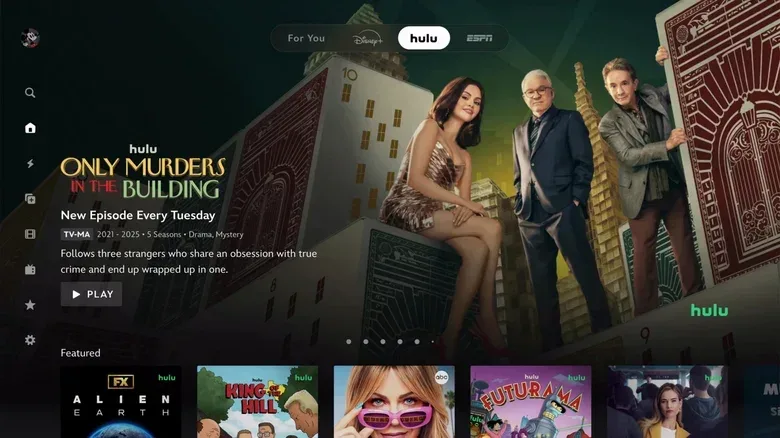
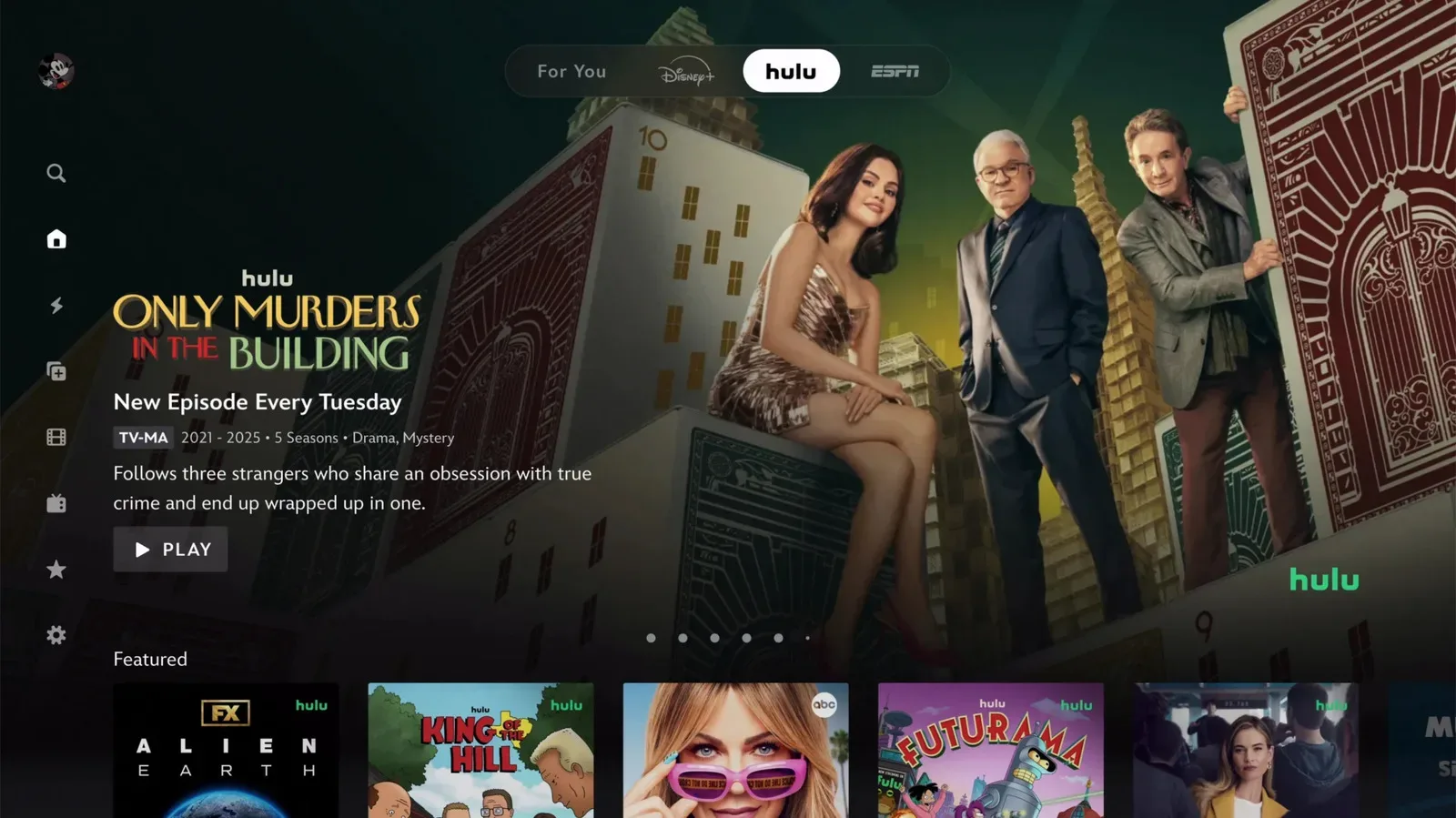
For viewers, that phrasing points to a significant expansion of the current arrangement rather than simply another redesign of the Disney+ home screen. Hulu already has a presence in Disney+ through a dedicated tab, but Disney has said the December version will bring the services entirely together in the Disney+ app. The aim is to make a very large, varied catalog easier to browse through one product.
The company has not provided every operational detail, including the future of the standalone Hulu app. It has, however, previously said standalone Disney+ and Hulu plans would continue to be offered. That distinction matters: a unified app does not automatically mean every customer must subscribe to both services, nor does it establish that the existing Hulu app will disappear immediately.
What “fully unified” means so far
Disney’s stated December plan has three clearly defined elements: a combined Disney+ and Hulu experience, live TV, and select premium add-ons. In practical terms, the company is positioning Disney+ as the front door for more of its entertainment business, rather than asking customers to move between separate apps to find programming from its brands and franchises.
There are still meaningful unanswered questions. Disney has not specified which premium add-ons will be included, how live-TV access will be presented, or whether the layout and recommendations will work differently for subscribers on standalone plans. Those are details customers will need before they can judge how much the change affects their own account and viewing habits.
It is also important not to confuse a shared interface with a change in subscription entitlement. A standalone Hulu plan and a Disney+ and Hulu bundle are different products. Disney has indicated that standalone options will remain, while the overall direction strongly favors a more integrated bundle experience.
A quick explanation of the streaming terminology
- Unified app: one application that combines content and service features previously split between separate applications.
- Live TV: programming delivered as it airs, as distinct from on-demand films and episodes selected from a catalog.
- Premium add-on: an additional paid offering attached to a base streaming subscription. Disney has only said that select add-ons are part of the coming unified experience.
- Churn: the rate at which subscribers cancel a service. Streaming companies watch it closely because retaining an existing subscriber is generally more valuable than repeatedly needing to win that person back.
A project years in the making
The December rollout follows a lengthy corporate and product-integration process. Disney took full control of Hulu in 2019, though it did not own the service outright until its deal to acquire Comcast’s stake closed in June 2025. Ownership is one part of the story; rebuilding and combining customer-facing technology is another, and it has taken longer.
The first visible step for many subscribers arrived in 2023, when Disney added a Hulu tab to the Disney+ app. That experience remained in beta through March 2024. At that point, Disney had not moved all Hulu content into the Disney+ product, making the tab an important but incomplete bridge between the services.
Disney’s former CEO Bob Iger said last year that a unified Disney+ and Hulu app would arrive in 2026. The December target meets that timetable. Iger also framed the plan as a way to lower costs and create more opportunities to sell advertising packages.
That business rationale is central to understanding why the change is happening. Maintaining separate major apps can mean parallel technical work, separate product systems, and more complicated marketing and advertising operations. A single platform can potentially simplify those tasks. Whether those efficiencies are visible to users is a different question, but the company expects the strategy to improve engagement and reduce cancellations over time.
The convenience case—and the trade-offs viewers may notice
For households that already use both services, the clearest upside is reduced friction. Instead of deciding which app to open first, subscribers may have a more direct path from browsing to watching. A broader catalog in one place could also make cross-brand discovery easier: someone arriving for a Disney title could encounter Hulu programming without deliberately switching services.
Live TV and add-ons could widen that proposition further. Putting on-demand series, films, live programming, and selected extras in a common app could make Disney+ feel less like a single-purpose streaming destination and more like a general entertainment hub.
But centralization has a natural downside for some users: the home screen can become busier. A service holding several distinct kinds of programming must decide what gets prominence and how it labels recommendations. Families, viewers with different tastes, and people who primarily open an app for one narrow purpose may care much more about clear controls and simple navigation than about having the largest possible catalog on a single screen.
Disney’s reference to engagement is relevant here. Engagement means how actively subscribers use a service—how often they open it, browse it, and watch programming. Combining more content and features can give people more reasons to stay in the app. It can also increase the importance of recommendations, profiles, and parental tools, although Disney has not detailed any changes to those features for this rollout.
Bundles are likely to be the strategic center
Disney has not said users will be forced from standalone subscriptions into bundles. Still, a unified experience makes the bundle easier to explain and promote: the broader the service appears inside a single app, the stronger the incentive to purchase access to more of it.
That matters following another recent increase in bundle pricing. The company can make the technical and browsing experience more cohesive, but customers will still weigh that convenience against the cost of subscribing. A unified app may lower the annoyance of app-hopping, yet it does not by itself resolve the basic decision facing viewers: which combination of services is worth paying for month to month?
For subscribers, the sensible near-term approach is to watch for the plan-specific details when the December transition arrives. Check which service or bundle your account includes, whether any live-TV access applies to that plan, and which add-ons—if any—are available. The announcement establishes the direction, but not all of the account-level mechanics.
Disney+ is also broadening beyond conventional on-demand streaming
The app consolidation is part of a wider effort to expand what Disney+ contains. Disney is pushing more vertical video into the service, while also building up live sports and podcast offerings. Vertical video is the portrait-oriented, mobile-first format associated with short-form feeds. Its inclusion suggests Disney+ is looking beyond the traditional rows of movies and TV episodes that defined early subscription streaming.
Beginning next month, Disney+ is also set to feature videos from TikTok creators as part of promotional activity for Avengers: Doomsday. That initiative is separate from the Hulu integration, but it shows the same larger ambition: use Disney+ as a place for promotion and different media formats, not only for full-length on-demand viewing.
Podcast growth fits that broader mix as well. Audio programming does not replace television or film, but it can give a media platform another way to keep an audience connected to its franchises and personalities. Listeners who split their time across different audio services may also be interested in our look at CarPlay audio apps for music, podcasts, offline files and live radio.
What remains uncertain
The major confirmed point is the timing: Disney expects a fully unified Disney+ and Hulu experience in December. It has also specifically named live TV and select premium add-ons as parts of that experience. Beyond that, caution is warranted.
Disney has not announced a shutdown date for the standalone Hulu app. It has not said that every Hulu title or feature will be handled identically across every plan. And it has not fully explained how the new live-TV and add-on options will be surfaced. The company’s cost-saving and advertising goals make a longer-term move away from duplicate platforms plausible, but that is an inference, not a confirmed retirement plan for Hulu’s existing app.
For now, the significance is straightforward. Disney is moving from partial integration to a more comprehensive Disney+ destination, on the 2026 schedule it had previously laid out. The customer benefit it is promising is a smoother route across its content library; the company benefit it is pursuing is a simpler platform that may support retention, advertising, and bundling.