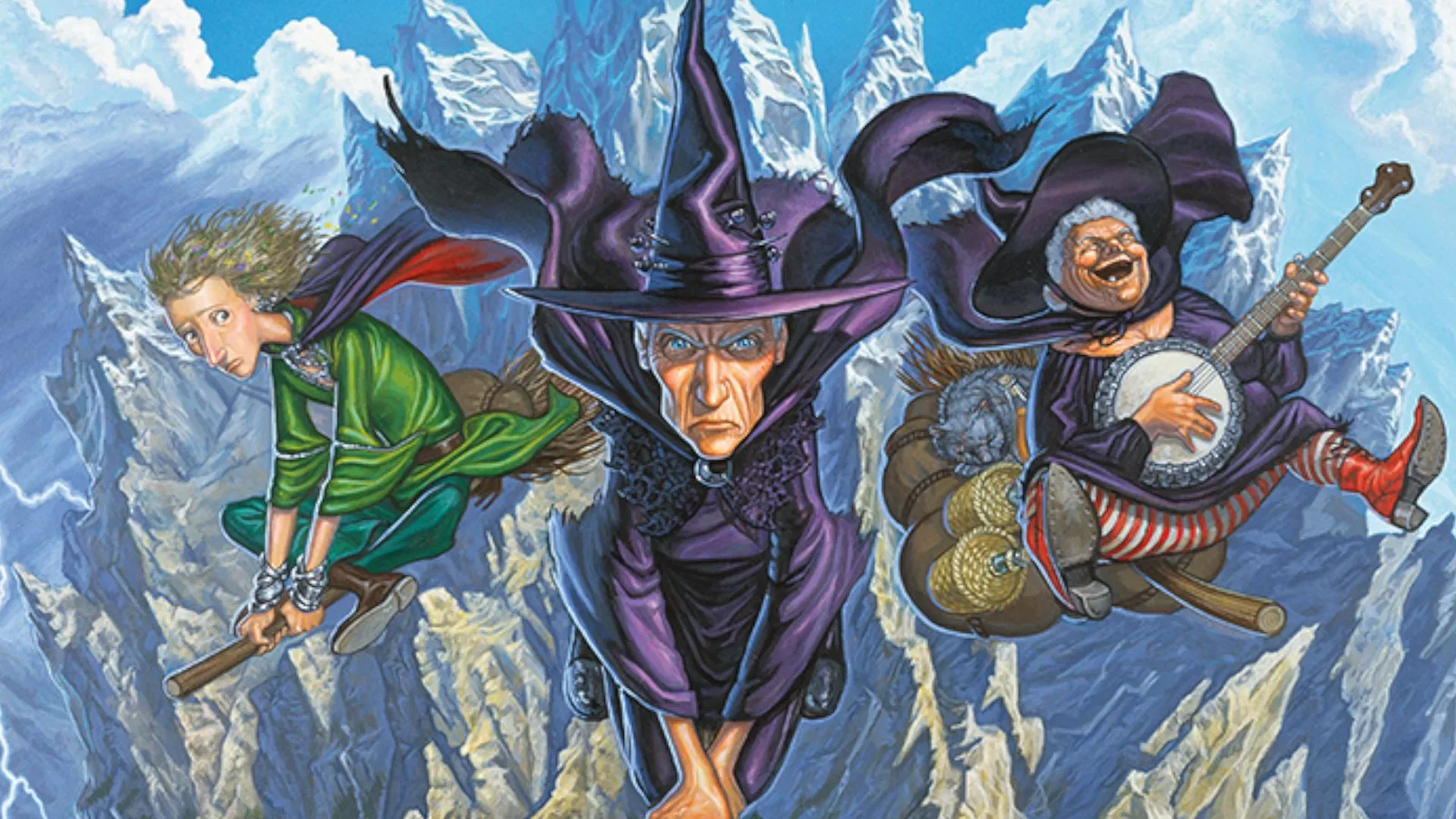
The Discworld tabletop role-playing game is preparing to leave Ankh-Morpork’s famously bustling streets for territory where the mountains are sharper, the villagers know better than to underestimate a witch, and vampires are part of the local political weather. Modiphius Entertainment has revealed Discworld: Adventures in Lancre and Überwald, a new release for the Discworld RPG line that arrived last year.
Its name lays out the itinerary plainly enough, but the contents point to a broader expansion than a simple gazetteer. Lancre, Überwald, and The Chalk are all part of the package, while new player-character options include witches, trolls, vampires, and werewolves. The release is also set to introduce rules supporting ongoing campaigns, giving groups a framework for stories that stretch beyond a single misadventure involving a suspiciously magical goat, an ancient family curse, or someone who has accidentally become responsible for local government.
The Gamefound crowdfunding campaign is scheduled to begin in October. A release date has not yet been specified.
A journey beyond Ankh-Morpork
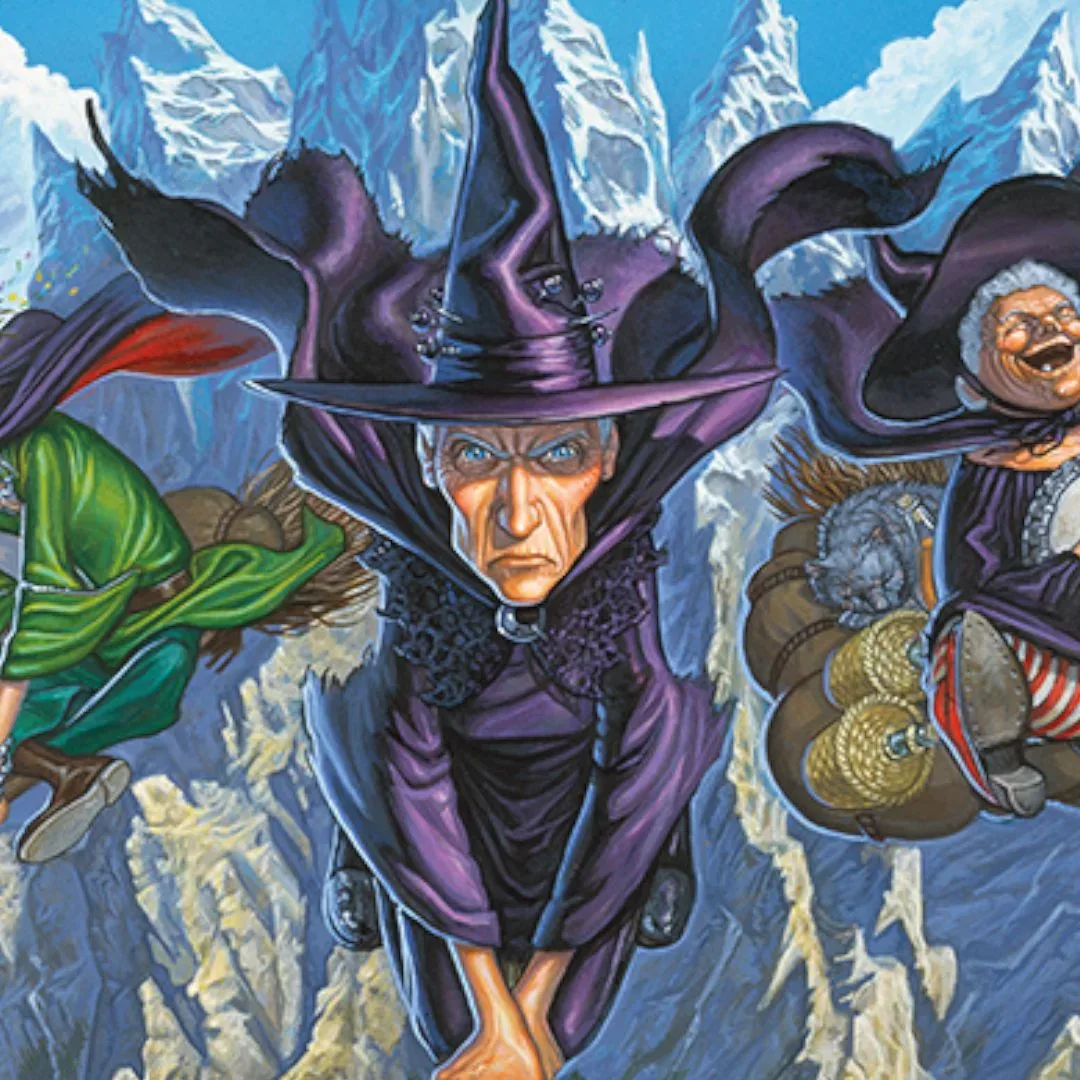
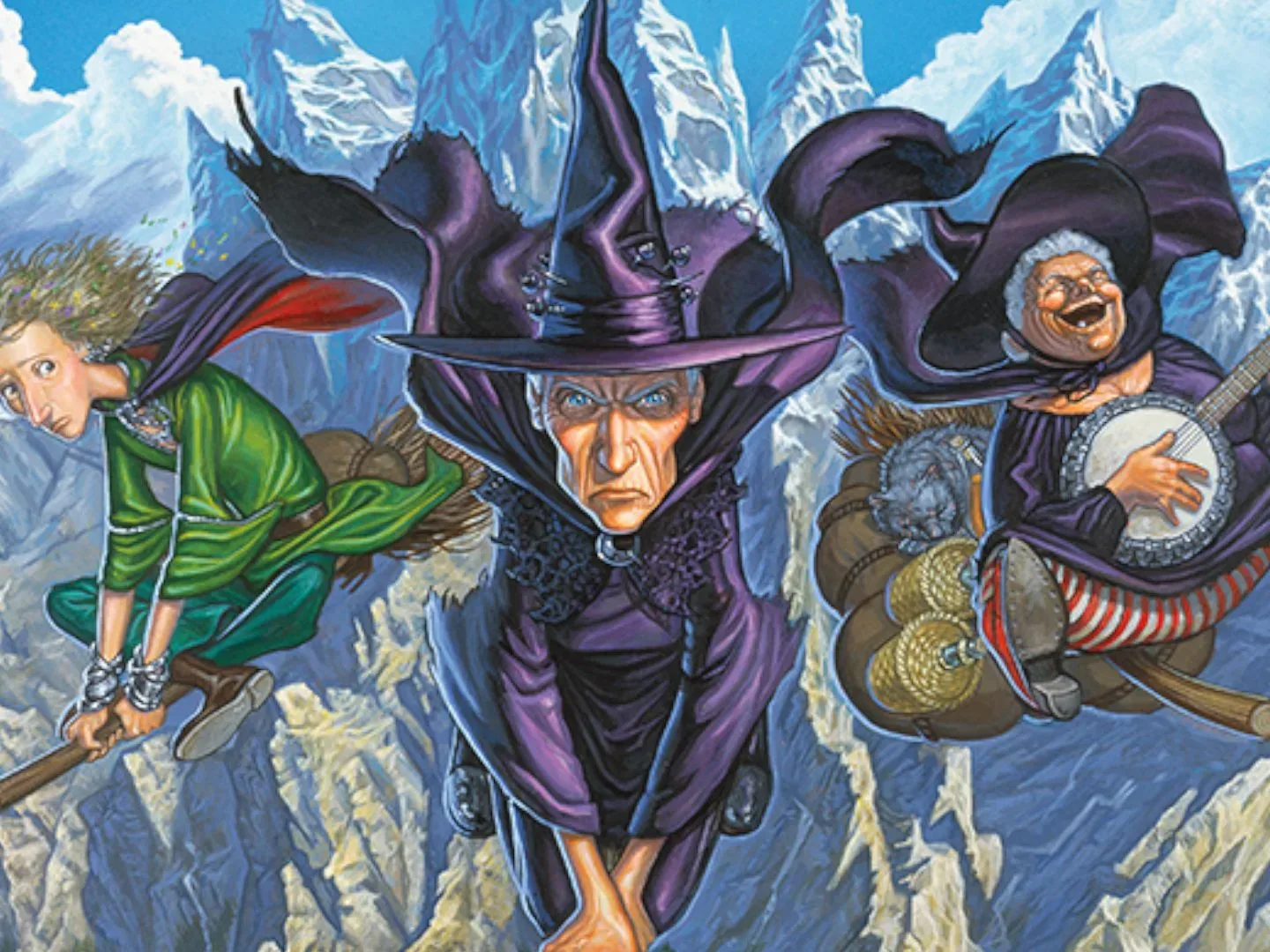
Discworld: Adventures in Lancre and Überwald moves the role-playing game’s focus toward some of the most recognizable regions in Terry Pratchett’s setting. Lancre is particularly important for readers familiar with the witches stories, as it is home to figures including Granny Weatherwax. That setting brings a different tone from the city-centred chaos associated with Ankh-Morpork: smaller communities, old customs, practical magic, folklore, and the sort of trouble that may look very local until it plainly is not.
Überwald brings another layer to the book’s regional material. The area is strongly associated with vampires, along with other supernatural inhabitants and a society where ancestral expectations can be as intimidating as any monster. It is fertile tabletop territory because it offers room for humor, gothic trappings, politics, family baggage, and culture clashes without losing the strange, satirical character that defines Discworld.
The expansion also includes The Chalk, the homeland of the Nac Mac Feegle, better known as the Wee Free Men. Tiny, blue, determinedly unruly, and rarely far from an energetic misunderstanding, the Feegle make The Chalk a meaningful addition rather than merely another location label on a map. Bringing these regions into the game should give groups the tools to build adventures that feel distinct from a visit to the big city while remaining very much part of the same flat-world universe.
More ways to make a character
One of the clearest gameplay additions is the ability to create witches, trolls, vampires, and werewolves. Those options are a notable fit for the locations being explored. A Lancre-oriented game without space for witch characters would feel like arriving for tea and discovering that every kettle has been confiscated; similarly, Überwald is an especially natural home for vampire and werewolf stories.
Each option also suggests a different kind of party dynamic. Witches can place folk knowledge, social responsibility, and understated but formidable magic near the center of a campaign. Troll characters open paths toward stories about identity, prejudice, community, and the practical difficulties of being an extremely large person in a world built around standard-sized doors. Vampires and werewolves can add personal secrets, family histories, and transformations to the table, whether a group plays those elements for melodrama, comedy, or a careful mixture of both.
Related coverage includes Discworld RPG Expansion Heads to Lancre and Überwald With Witches, Vampires, and Campaign Rules.
Importantly, the announced material is not framed solely as a guide for visiting famous places and spotting familiar names. The character options indicate an effort to let players inhabit parts of Discworld society that are closely tied to the new regions. That matters in a role-playing game adaptation, where the best use of a beloved setting is generally not to turn every session into a queue for established characters. It is to give a group enough rules, flavor, and narrative hooks to create its own improbable civic crisis.
Campaign play enters the picture
The release will mark the first time the Discworld tabletop RPG has received rules for continuing campaigns. That is arguably its most consequential addition. One-off sessions are an excellent format for a comic fantasy setting, especially one where plans can collapse because a dwarf took a phrase literally or an item of magical importance has been filed in the wrong cupboard. Campaign rules, however, make room for lasting relationships, recurring places, consequences, character development, and problems that evolve from one episode to the next.
A continuing game can make the contrast between Lancre, The Chalk, and Überwald particularly useful. A party might begin by handling a very small local issue, become entangled in matters elsewhere in the Ramtops, and eventually find that a diplomatic visit or inherited mystery has much wider implications. The source material’s settings have always supported shifts between intimate human concerns and enormous fantasy stakes; campaign support should help game masters and players connect those scales over time.
The tabletop space is also full of RPGs exploring how rules can support a particular sort of story rather than simply supplying combat encounters. For a different corner of the genre, Decapolice’s virtual-world detective RPG approach shows how broadly the term can stretch across settings and formats. Discworld’s appeal lies elsewhere: social observation, wordplay, characters trying to do the right thing while the universe makes that unnecessarily complicated, and a deep suspicion that institutions work best when nobody looks directly at them.
A standalone release with a wider product line
Although the new material can be used alongside Discworld: Adventures in Ankh-Morpork, it is being presented as a standalone product rather than an add-on that requires the earlier book. That makes the release potentially useful for groups whose preferred Discworld stories begin far from the city.
The announced range includes a full core rulebook, a Game Master Toolkit, supplements, and dice. There will also be a separate book of connected adventures described as a tour through the Ramtops. The linked-adventure format seems well suited to the introduction of campaign rules, offering a possible structure for groups that want an ongoing story rather than needing to devise every destination and escalating complication from scratch.
Specific contents, pricing, reward tiers, and a final publication date have not been detailed here. Prospective backers therefore have some important practical information still to wait for when the October Gamefound campaign opens. Even so, the broad shape of the project is clear: this is positioned as a substantial regional gateway into the Discworld RPG, not a thin booklet that merely adds a few character sheets and declares the job done.
Why Lancre and Überwald are such a natural next step
Choosing Lancre, Überwald, and The Chalk makes sense for a line seeking to expand beyond its first major location. They are places with strong identities, plenty of story potential, and a mixture of the everyday and the fantastic that suits a tabletop campaign. They also let the game embrace the parts of Discworld that can be warmly funny without becoming weightless. Witches can be hilarious, vampires can be ridiculous, and a Feegle intervention can cause immediate property damage, but those ideas coexist with questions of duty, tradition, power, belonging, and who bears the cost when a community is in trouble.
Granny Weatherwax’s association with Lancre is especially likely to draw attention. She is among the setting’s defining witch characters, and the presence of her home region gives the book an immediately recognizable anchor. Still, the larger promise is not just proximity to familiar personalities. It is the opportunity for players to make their own witches, creatures, travelers, villagers, and reluctant heroes in lands where magic is often less about fireworks than knowing what needs doing before everyone else realizes it.
For Discworld readers, the expansion’s regional emphasis may provide an accessible route into tabletop role-playing. For existing RPG groups, its new campaign support and character choices could make it a more flexible way to explore the setting over multiple sessions. The Gamefound campaign’s October launch should clarify how all of these books and accessories fit together. Until then, the key details are the destination, the expanded character roster, and the fact that Discworld adventures are preparing to become a longer-term proposition.
Shop the products
Check current price, model and availability at the retailer.