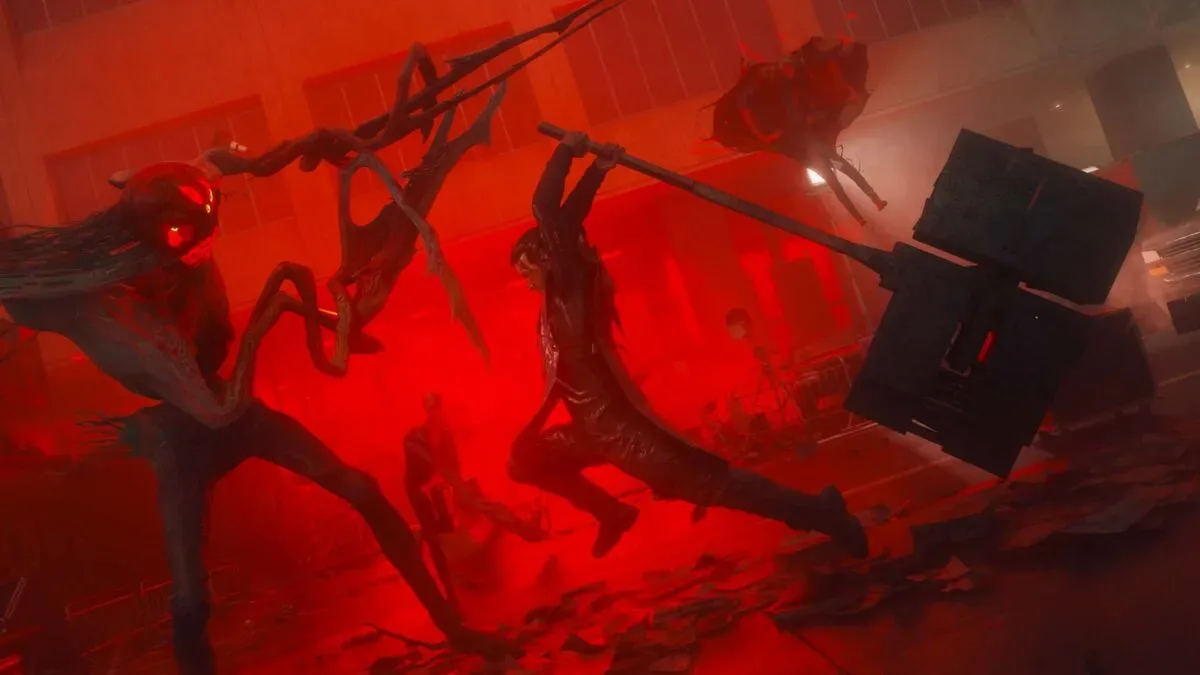
Control Resonant is receiving a launch-day hotfix focused squarely on the feel of its earliest combat encounters. Version 1.3.3 lowers the base health of most enemies, reduces the amount of Falter buildup needed to stun them for executions, and also applies health and Falter adjustments to the Dancer and Deserter bosses.
The update arrives as the open-world sequel to 2019’s Control reaches its wider console and PC release on September 24. Players who bought a higher-priced edition had access beginning September 22, giving the developer early feedback alongside reviews and its own observations of the finished game. The recurring concern was straightforward: early enemies were taking too long to defeat, making opening combat feel more laborious than challenging.
That distinction matters. A difficult encounter can ask players to learn timing, positioning, resource use, or an enemy’s attack pattern. A protracted encounter can instead leave those choices intact while simply requiring more repetitions. The hotfix is aimed at the latter problem, seeking to make fights move more cleanly without removing their intended pressure.
What changes in Control Resonant 1.3.3
The core combat adjustments are:
- Reduced base health for most enemies.
- Reduced Falter requirements for most enemies, plus the Dancer and Deserter bosses.
- Higher maximum Aberrant Strength and Ability Strength for Dylan.
- Strength increases that become progressively larger later in the upgrade curve.
- A permanently lower cost to respec abilities.
- UI text revisions intended to explain combat and other mechanics more clearly.
These are connected changes rather than a simple universal damage buff. Enemy durability is lower, executions should become available with fewer hits, and Dylan’s potential damage output has a higher ceiling as upgrades accumulate. Together, that should address both the immediate pace of early fights and the sense that progression is paying off over time.
Enemy health pools: why the number is not the whole issue
An enemy’s health pool is the amount of damage it can absorb before being defeated. On its own, a larger pool is not necessarily a problem. It can give an enemy enough time to use different attacks, force the player to react under pressure, or make a boss encounter feel suitably substantial.
But health is experienced in relation to a player’s damage output and the encounter’s available tools. If foes survive for too long early on, the result can be combat that feels slow before a player has enough upgrades or options to offset it. That appears to be the balance issue the update addresses: not that players should breeze through opposition, but that the opening hours should establish a better rhythm.
The Dancer and Deserter are specifically named in the hotfix notes, so their changes are not merely inferred from the broader enemy adjustment. Their inclusion also suggests the developer identified these boss encounters as part of the early combat feedback rather than treating the issue as limited to regular enemies.
Related coverage includes Control Resonant Day-One Hotfix Reduces Enemy Health and Boosts Early Combat Power.
Falter and executions, explained
Falter is the game’s term for a stun state that can lead into an execution. The update reduces the amount of Falter needed for affected enemies. In practical terms, the game should ask for fewer successful hits or less cumulative pressure before an opponent is vulnerable to that follow-up action.
That matters because a stun-and-execution loop does more than shorten a health bar. It changes the tempo of a fight. Reaching the Falter state sooner can create a clearer beat in combat: build pressure, trigger vulnerability, then capitalize. If the threshold is too high, executions may feel too infrequent to be a meaningful part of the early toolkit. Lowering it makes that system more likely to appear at a useful cadence.
The supplied patch details do not specify the exact numerical reduction, which enemy types receive which values, or the precise behavior of every execution. Players should therefore avoid assuming every encounter has been made equally easier. The confirmed change is broader: most enemies and the two named bosses now require less health damage and less Falter buildup.
Dylan’s power curve is being raised
Version 1.3.3 also increases Dylan’s maximum Aberrant Strength and Ability Strength. The developer says those increases follow a curve, becoming larger toward the end, and that more upgrades will result in more damage dealt.
A power curve describes how a character’s effectiveness grows as the player unlocks or improves abilities. Here, the important part is that the adjustment is not described as a flat increase at every stage. The gains scale upward, so players who invest further into upgrades should see a more substantial damage benefit later in progression.
This is a useful complement to reduced enemy health. Lowering enemy durability improves the immediate sensation of combat. Improving the upper end of Dylan’s strength progression helps ensure upgrades feel increasingly consequential. The two changes address different sides of the same relationship: how durable opponents are, and how much damage the player can realistically produce.
There is still an important limit to what is known. The update notes identify maximum Aberrant Strength and Ability Strength, but do not lay out the individual upgrade values, the exact shape of the curve, or every system those stats affect. The safest reading is that upgraded Dylan builds are intended to hit harder than before, especially deeper into the upgrade path.
Respecs and clearer UI reduce friction around builds
The patch permanently lowers the cost of respeccing abilities. A respec lets a player redistribute or reconsider previous ability choices rather than remaining locked into an earlier build. Lowering that cost can make experimentation less punishing, particularly if players discover that a new combat approach better suits the revised balance.
That does not mean the hotfix adds new abilities or changes every build. Rather, it makes changing direction more accessible. In a game where strength scales with upgrades, the freedom to reconsider those upgrades can be especially valuable: players have more room to test whether different investments better support their preferred way of fighting.
The revised UI text is a smaller but notable part of the package. UI, or user interface, includes the on-screen information that communicates mechanics, status, and options. Better wording cannot replace a balanced encounter, but it can reduce confusion about how a combat system works. If players more clearly understand their abilities, upgrades, and combat states, they are better able to engage with the challenge the game is trying to present.
Assist mode remains an option in both directions
Even after the hotfix, Control Resonant retains an assist mode that can adjust enemy health and the damage Dylan deals. Those settings are not framed solely as a way to lower difficulty. Players can make the game more approachable if opponents remain too demanding, or push the challenge upward if the revised default combat becomes too forgiving for their tastes.
That distinction is important because a broad balance patch must target a default experience for a large audience. Assist settings provide a separate layer of control for individual preferences. The hotfix changes the baseline; the assist mode remains available for players who want to tune beyond it.
What players should expect at launch
The developer’s stated aim is to improve combat flow while preserving challenge. Based on the listed changes, players beginning the game after the update should expect shorter encounters with most enemy types, more accessible Falter opportunities, and a stronger eventual payoff from investing in Dylan’s upgrades. Players who already started may also find it less costly to rework ability choices.
Early reaction to the balance changes has been mostly positive, reflecting the view that overly durable enemies were a central frustration. There has also been frustration among some Steam users because the hotfix required a reinstall of a preloaded copy. For more on that PC-specific wrinkle, see our coverage of the Control Resonant preload redownload.
The larger takeaway is that the launch update is not just a boss nerf or an isolated damage tweak. It reshapes enemy durability, stun pacing, progression strength, build flexibility, and mechanical explanation at the same time. Whether that produces the intended smoother start will depend on how those systems feel together, but the developer has directly targeted the specific pieces of combat that drew early criticism.