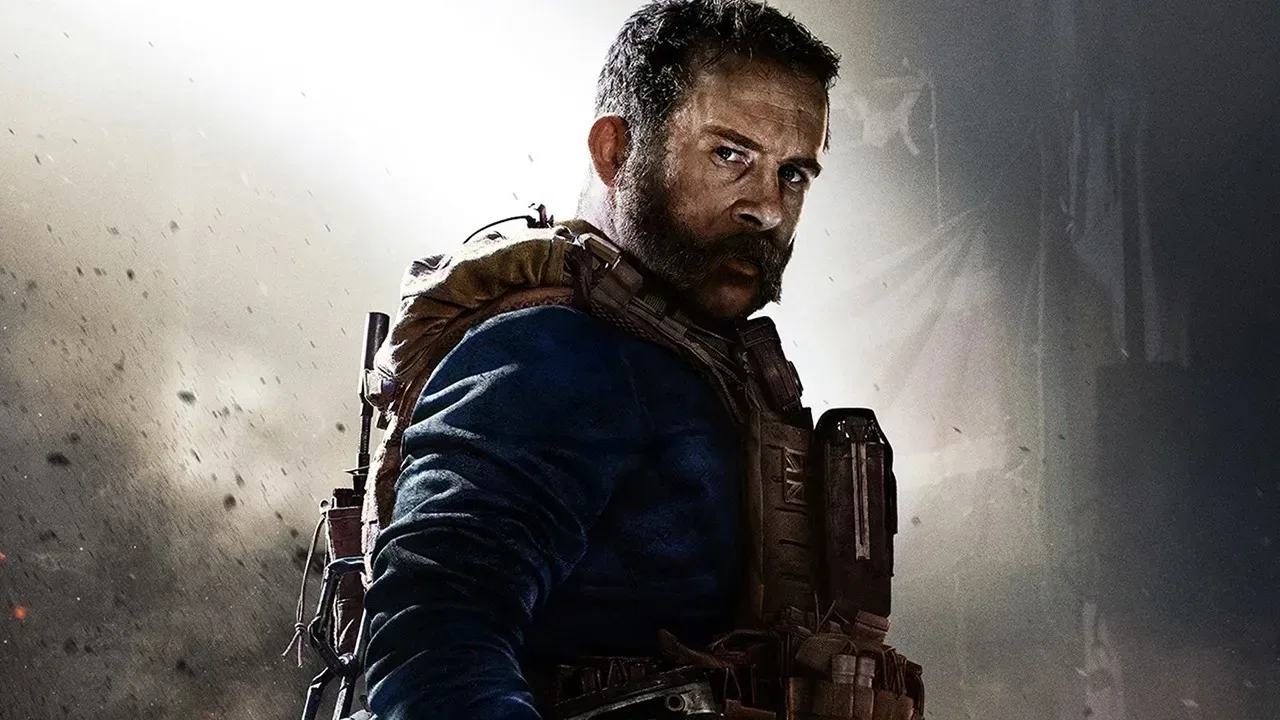
A conversation about Call of Duty reportedly brought a Frontier Airlines departure to a halt Sunday night at Southern California’s Ontario International Airport after another passenger heard the words “bomb” and “explosion” and alerted the crew.
The result was considerably larger than an awkward request to lower a phone’s volume. Authorities evacuated the aircraft before departure and cleared the east wing of Terminal 2. The person who had been speaking on FaceTime was detained while police investigated. After a search found no explosives or weapons, that passenger was released without charges. Passengers then reboarded, and the flight departed without any further reported incident.
Police said the detained traveler explained that the FaceTime call concerned an online game of Call of Duty. That explanation fits the vocabulary of a military first-person shooter, where players commonly discuss virtual explosives, attacks, loadouts, objectives and battlefield events in immediate, blunt language.
What happened at Ontario International Airport
The incident occurred sometime before 10 p.m. on Sunday while the Frontier aircraft was waiting to depart. A passenger reported overhearing the two words that triggered the concern. In an airport and aboard an aircraft, language suggesting an explosive threat cannot reasonably be brushed aside as gaming chatter without verification. Crew and law-enforcement personnel responded by treating the report seriously, removing people from the immediate area and checking the aircraft.
The subsequent search did not turn up a weapon or explosive device. The FaceTime participant was released, no charges were filed, and the same group of passengers was ultimately able to continue on the flight. Those facts matter: this was not a reported in-game threat, an allegation of a real plan, or an incident in which prohibited items were discovered. It was a misunderstanding created by isolated words overheard without the surrounding context of the call.
There is no confirmed account of the precise game mode, match, mission or conversation that used the words. It would be unwise to turn a plausible assumption into a detail of record. The firm information is narrower: the passenger told police the call was about playing Call of Duty online, and the investigation concluded without finding explosives or weapons.
Why game talk can sound alarming out of context
Call of Duty is a military shooter franchise. Its multiplayer modes center on players competing in simulated combat, and the ordinary vocabulary of those matches can be unusually stark outside the game: “explosion,” “enemy,” “attack,” “kill,” “strike,” “bomb,” “cover” and similar terms can all be routine descriptions of fictional events or tactical decisions.
That does not make the words harmless in every setting. Context is the difference between a teammate calling out a virtual objective and a statement that sounds like an imminent real-world danger. A person seated nearby may hear only a small slice of a conversation, especially during a phone call where the other participant is invisible and the game itself may not be obvious. In a busy terminal or boarding cabin, fragments can carry farther than context.
Related coverage includes Call of Duty FaceTime Conversation Triggers Ontario Airport Evacuation.
The airport response reflects that imbalance. A misunderstanding can be disruptive, but failing to assess a genuine report of a possible threat would carry vastly greater consequences. From the passenger’s perspective, reporting what sounded alarming was the cautious decision. From authorities’ perspective, searching the plane and clearing the relevant terminal area was the means of establishing whether the concern had any basis. The eventual all-clear is reassuring, but it could only come after that process.
FaceTime, speakerphone and the missing context problem
FaceTime is Apple’s audio and video calling service. In public spaces, a FaceTime call can function much like a speakerphone conversation: people nearby hear one side more clearly than the other, lack visual context for what is being discussed, and may not know whether a phrase refers to a game, a movie, a news event or something real.
Gaming makes that problem especially easy to understand because the language is often urgent. Multiplayer sessions reward fast communication. Players announce a changing situation in short bursts rather than carefully framing every sentence: an objective is being taken, an explosive was deployed, a teammate needs help, or an area is under attack. It may be perfectly intelligible to the friends playing together and utterly ambiguous to someone overhearing three seconds of it.
There is also a practical distinction between private conversation and public audibility. Someone can be discussing fiction, competition or a simulated conflict with no harmful intent, while still creating unnecessary uncertainty by doing so loudly in a sensitive setting. Airports are one such setting. The takeaway is not that players must stop talking about action games; it is that volume, wording and venue can change how a conversation lands.
Practical etiquette for gamers traveling with a phone
This incident is a useful reminder for anyone who games socially while traveling. The goal is not self-censorship of ordinary entertainment. It is avoiding a situation where other people can hear a handful of alarming words but none of the explanation around them.
- Use headphones for calls and game audio. This reduces noise for fellow travelers and makes it less likely that a partially overheard conversation becomes confusing.
- Keep public calls brief and quiet. Boarding areas and aircraft cabins are shared spaces, so a lower voice is both considerate and clearer in its intent.
- State the context when needed. If discussing a combat game in a crowded place, a quick reference to the game can prevent listeners from filling in the blanks themselves.
- Avoid performative or joking threat language. Even when meant as a joke or a game reference, it can prompt a response that no one can simply undo.
- Cooperate if staff ask questions. Safety personnel need to resolve reports based on what can be verified, not on assumptions about what a speaker meant.
These are common-sense precautions rather than claims that a player did anything criminal merely by discussing a game. In this case, the traveler was released without charges after the check found nothing dangerous. But the disruption extended to an entire plane and a section of the terminal, showing how quickly a context gap can become a significant operational event.
A gaming story with consequences beyond the screen
Most discussion around games concerns releases, patches, platforms and the business behind them. There is still room for broader stories about how gaming language and habits meet ordinary public life. Industry debates can be about technology and production—such as the ongoing discussion of AI’s potential role in game development—while this episode is about communication, interpretation and public safety.
The Ontario incident does not establish that gaming conversations are inherently suspicious. It demonstrates something more limited and more useful: words have different meanings when stripped of their setting. A term that is routine inside a match can sound very different on a plane awaiting departure. The responsible response is to give safety reports the attention they warrant, then follow the evidence. Here, the search found no threat, the passenger was released, and the flight continued.