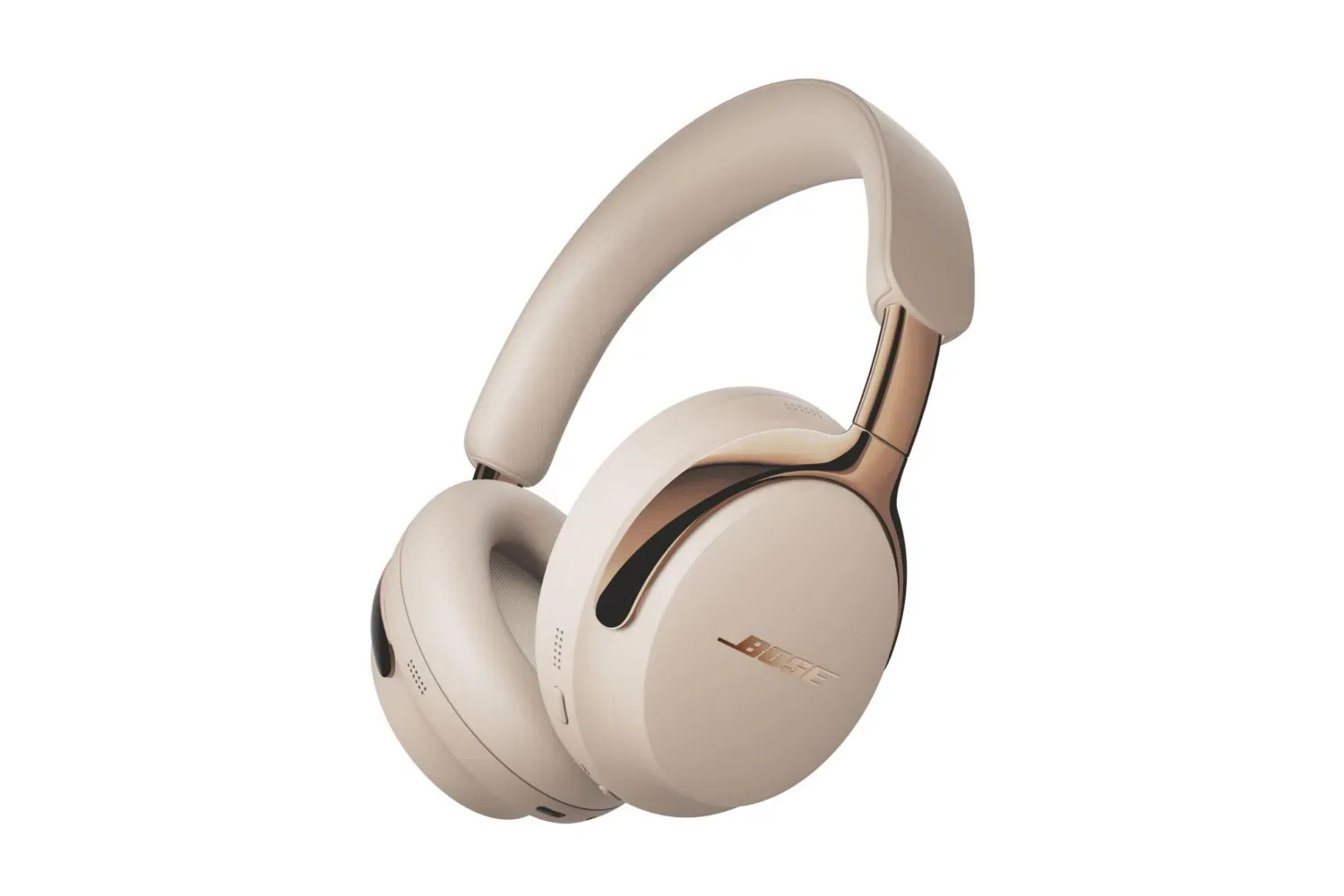
Premium noise-cancelling headphones have entered the part of the holiday shopping season where colors can matter as much as the product name. Bose’s QuietComfort Ultra Headphones (2nd Gen) are currently listed for $349 in Driftwood Sand, a $100 reduction from the stated $449 regular price. Black, Cherry Chocolate, Midnight Violet, Olive Green, and White versions are listed at $369.
The difference is worth noticing before treating a color choice as a purely cosmetic decision. At $349, the Driftwood Sand option is $20 cheaper than the other listed finishes and $100 below the stated regular price. The other colors still represent an $80 reduction, but shoppers who do not have a firm preference may reasonably see the sand finish as the value pick.
Free standard shipping is listed for both Prime members and shoppers without a Prime subscription. As with many retailer discounts, though, pricing and stock can change. The sensible move is to verify the price, selected color, shipping terms, and final total at checkout rather than assuming every finish will remain discounted at the same level.
What the QuietComfort Ultra (2nd Gen) is offering
The QuietComfort Ultra is positioned as a premium over-ear, noise-cancelling model. Its feature set centers on active noise control, several listening modes, voice-call processing, personalized sound adjustment, and battery life intended to cover extended sessions.
Bose describes plush ear cushions and a metal headband designed to distribute pressure across the head. Fit is not a minor detail on headphones meant for flights, workdays, or long game sessions: discomfort can become the deciding factor long before battery life runs out. The available information does not establish whether the fit will work for every listener, but the stated design emphasis is clearly on sustained wear rather than a stripped-down portable build.
Sound is described as having clear output, balanced high frequencies, and deep low frequencies. The headphones also use CustomTune, a system that adjusts playback around the listener’s ear shape. In plain terms, ear shape and how a headphone seals around the ear can affect what reaches the listener. Personalized tuning is intended to account for those physical differences. It should be understood as a sound-adjustment feature, not a guarantee that every listener will prefer the final tuning.
Three modes, three different practical uses
The strongest reason to pay attention to a noise-cancelling headphone is usually not just its sound profile. It is control over how much of the outside world makes it into a listening session. Bose lists three notable options here: noise cancellation, Aware Mode, and Cinema mode.
Noise cancellation
Noise cancellation is the setting for reducing unwanted external sound and making music, games, video, or spoken audio easier to focus on. It is best suited to environments where distraction is the problem: shared rooms, travel, busy public spaces, or a home where someone has discovered a fresh enthusiasm for vacuuming exactly as a multiplayer match begins.
Related coverage includes Bose QuietComfort Ultra Headphones (2nd Gen) drop to $349 at Amazon.
That does not mean it makes a user invulnerable to the real world. It is a listening tool, not a substitute for situational awareness. Anyone navigating traffic, transit platforms, or other changing environments should select a mode appropriate to the setting.
Aware Mode
Aware Mode takes the opposite approach, allowing external sounds through. This can be useful when a person wants to keep headphones on but still needs to hear what is happening nearby. For a player waiting for a delivery, a remote worker expecting a colleague to speak up, or someone who simply does not want to be completely cut off from a household, the distinction is meaningful.
The key benefit is convenience. Instead of repeatedly removing a pair of over-ear headphones, a listener can choose a setting that preserves some awareness. How much outside sound is desirable will depend on the listener and location, but the mode gives the product a role beyond solitary listening.
Cinema mode and Immersive Audio
Cinema mode is described as spatializing and balancing background sound for a theater-like presentation. Spatial audio refers to processing intended to make sound feel positioned around the listener, rather than simply arriving as conventional left and right channels. The appeal is easy to understand for films and games built around atmosphere: ambient effects, music, and dialogue may feel more enveloping when the presentation has a stronger sense of space.
Immersive Audio is the battery-life tradeoff to keep in mind. Bose’s stated estimate is up to 30 hours from a charge in standard listening mode, dropping to around 23 hours with Immersive Audio enabled. Neither figure promises a fixed result in every use case, but the seven-hour gap offers a practical reason to decide when the more elaborate listening mode is actually wanted.
For a long trip or consecutive work sessions, standard mode may be the straightforward choice. For a movie night, a single-player game with a soundscape worth lingering in, or an album a listener wants to hear with a more expansive effect, the shorter Immersive Audio estimate may be an acceptable exchange. The important point is that activating extra audio processing is not free in battery terms.
Calls are part of the premium pitch
The QuietComfort Ultra Headphones (2nd Gen) also use noise-rejecting microphones and an AI-based background-noise suppression filter for calls. A microphone system like this is meant to prioritize the speaker’s voice while reducing surrounding noise sent to the other person.
That matters for more than meetings. Voice chat, group calls, and quick conversations between games can all suffer when a microphone faithfully captures every keyboard clack, passing car, fan hum, or nearby conversation. The stated goal here is clearer speech in messy environments. It is not a claim that background noise disappears entirely, and shoppers should view it as a feature intended to improve call intelligibility rather than magic.
Headset buyers comparing options may also want to consider what they value most. A dedicated gaming headset can prioritize platform-specific features or a gaming-oriented microphone setup, while Bose’s proposition is broader: premium over-ear listening, active noise control, multiple ambient modes, and calls in one portable pair. For another discounted audio option in a more overtly gaming-themed lane, see this SteelSeries Towelie headset price report.
How to read the price drop
The listed $349 price is the headline because it is the largest discount, but it applies specifically to Driftwood Sand. Anyone committed to Black, Cherry Chocolate, Midnight Violet, Olive Green, or White should budget for the $369 listing instead. That is still below the stated $449 standard price, just not by quite as much.
- Driftwood Sand: $349, or $100 below the stated $449 price.
- Black, Cherry Chocolate, Midnight Violet, Olive Green, and White: $369, or $80 below the stated price.
- Shipping: standard shipping is listed as free for Prime and non-Prime shoppers.
- Battery claim: up to 30 hours in standard listening mode; around 23 hours with Immersive Audio enabled.
There is no need to invent an urgency timer where none is provided, but these listings should be treated as changeable retailer offers rather than permanent new prices. Check the exact generation, the color selection, and the price displayed before completing a purchase. Those small checks prevent the classic shopping-cart boss fight: discovering the deal applied only to the shade you did not select.
For shoppers who want Bose’s combination of active noise cancellation, Aware Mode, Cinema mode, CustomTune personalization, and a long stated battery estimate, the Driftwood Sand listing is the clearest value in the current set of prices. Those who care more about a particular finish can still find a lower-than-stated-standard price at $369, with the same core feature package.
Shop the products
Check current price, model and availability at the retailer.