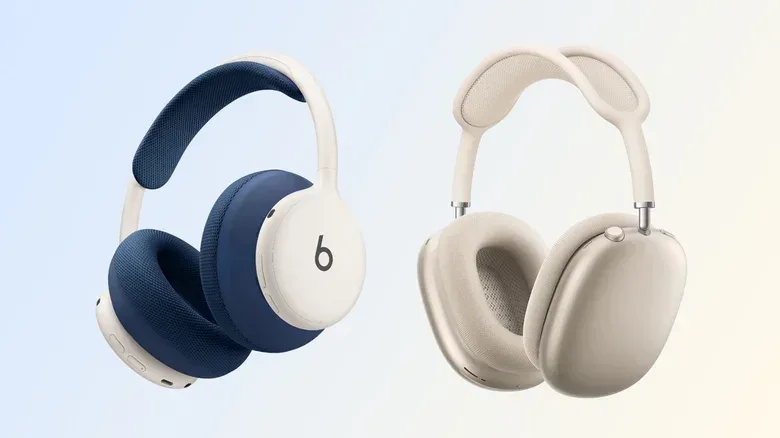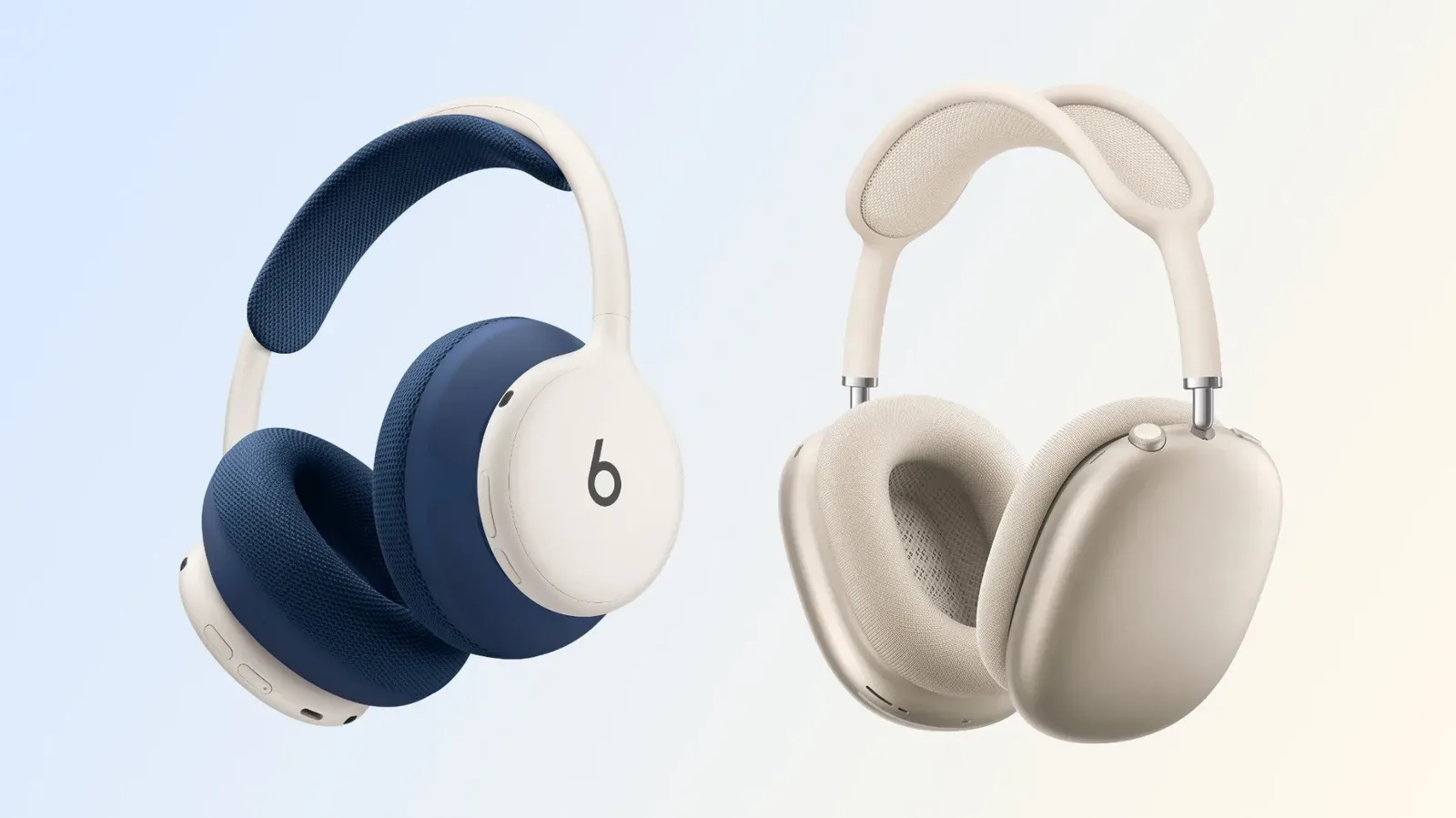
Apple’s two premium over-ear options now make a more interesting pair than their shared ownership might initially suggest. The Beats 360 and AirPods Max 2 both offer a flexible headband, replaceable ear cushions, USB-C charging and a familiar set of Apple-oriented conveniences, including quick pairing, automatic device switching, hands-free Siri, Audio Sharing and Find My.
But the common ground is only the starting point. The Beats 360 is the lighter, lower-cost and more cross-platform choice, with a stated 32-hour battery life while active noise cancellation is enabled. AirPods Max 2 costs substantially more, at $549 versus $350, but brings an aluminum construction, a stated sound-quality edge, wired lossless and passthrough support, Adaptive Audio, automatic pausing when removed, and Apple-exclusive features including Live Translation and Conversation Awareness.
There is no one-specification answer here. The more useful question is which compromises matter least in someone’s actual routine: carrying headphones daily, using them over a long trip, moving among Apple and Android devices, listening wired, or wanting Apple’s more elaborate software behavior. Here is how the two sets differ.
At a glance: the meaningful differences
- Price: Beats 360 is listed at $350; AirPods Max 2 is listed at $549.
- Weight and materials: Beats 360 is largely plastic and weighs 294 grams. AirPods Max 2 uses aluminum and weighs 386 grams.
- Battery: Beats says the 360 reaches up to 32 hours with ANC on, compared with Apple’s up-to-20-hour claim for AirPods Max 2.
- Wired listening: AirPods Max 2 supports lossless audio and wired audio passthrough through USB-C. Beats 360 does not.
- Noise modes: Beats 360 offers ANC on or off. AirPods Max 2 also includes Adaptive Audio.
- Platform fit: Both work with Apple features, while Beats 360 also pairs easily with Android and supports Google’s Find My.
- Replacement and customization: Both have interchangeable cushions; Beats 360 additionally offers two cushion materials and a replaceable headband.
Build, weight and the practical meaning of “premium”
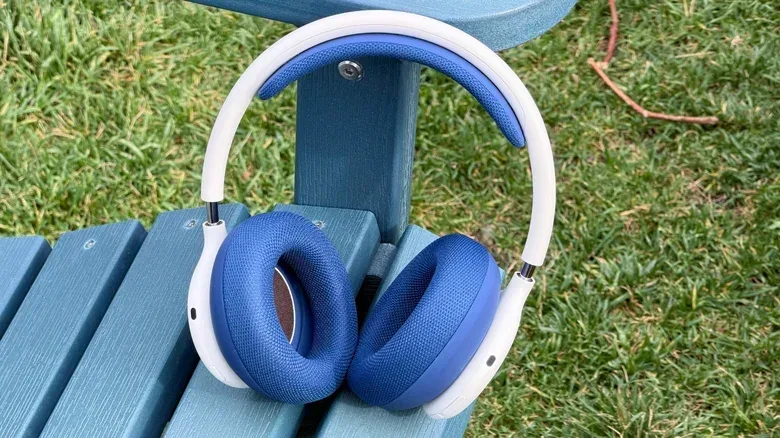
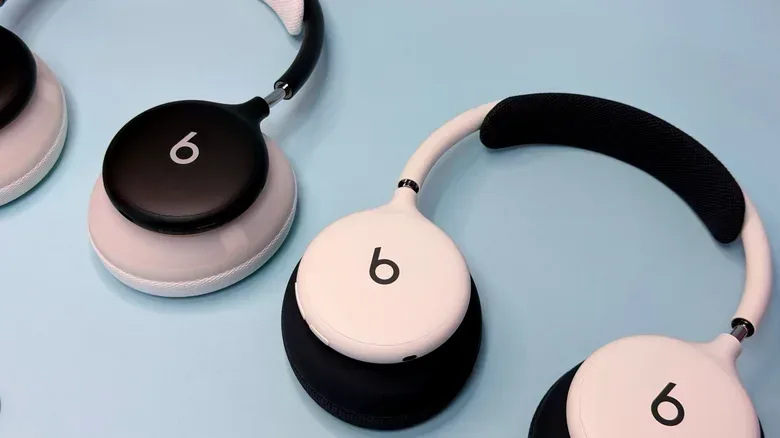
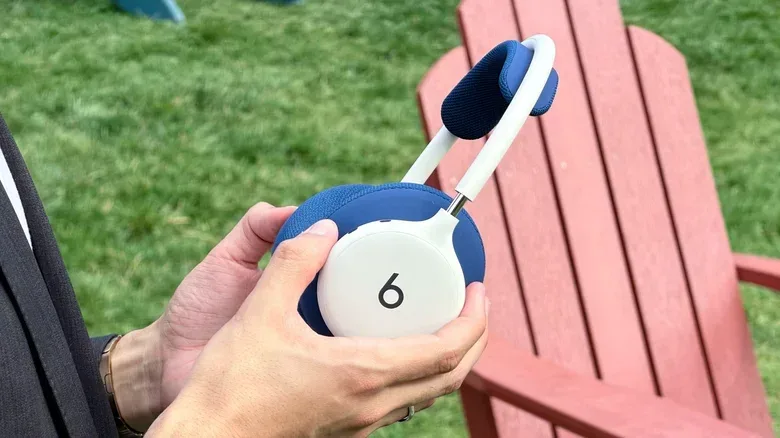
The two headphones take notably different approaches to physical design. Beats 360 uses mostly plastic, though its structural arch is stainless steel. Its ear cups rotate, its headband is more flexible than previous traditional Beats designs such as Beats Studio Pro, and the visible Beats branding makes its family resemblance clear.
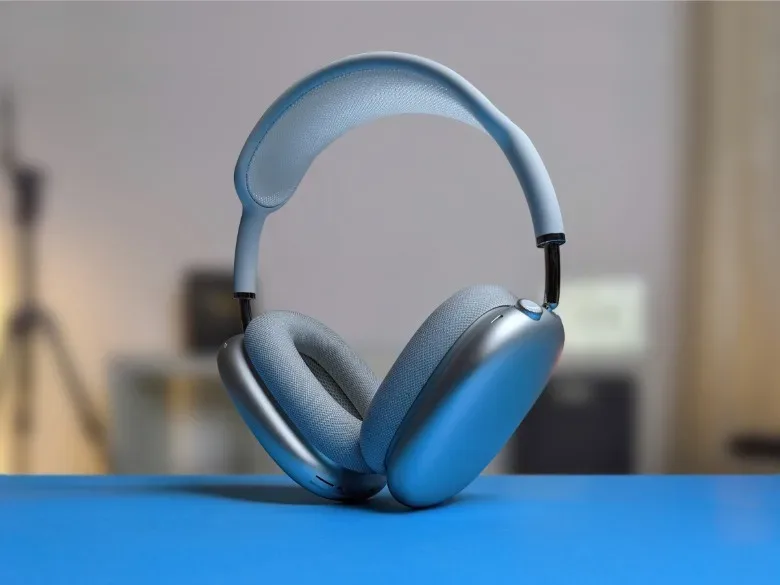
AirPods Max 2 instead uses aluminum. That choice gives the more expensive model the more overtly premium appearance, but it also contributes to a major numerical gap: 386 grams for AirPods Max 2 against 294 grams for Beats 360. That is a 92-gram difference.
Weight is not just a specification-sheet ornament for over-ear headphones. It is felt through the headband and ear cushions across a long session. Someone who expects to wear a pair through extended travel, a full workday, or a prolonged gaming session should treat the 92-gram difference as a legitimate purchasing factor rather than assuming heavier automatically means better built. It does not settle comfort on its own, since fit and cushions also matter, but it establishes a clear advantage for the Beats model in portability and reduced load.
AirPods Max 2’s advantage is aesthetic and material rather than weight. Buyers who value the aluminum finish and a more upscale object may reasonably decide that it justifies the additional mass and cost. Buyers who care primarily about the headphones disappearing into a bag and staying manageable on the head have a more straightforward argument for Beats.
Cases are a small detail with an outsized daily impact
The Beats 360 comes with a magnetically closing fabric case intended to protect the headphones from dust and scratches. The case is not presented as luxurious, but it covers the product more comprehensively for storage and transport.
AirPods Max 2 continues with the Smart Case, which covers the ear cups while leaving much of the headphones exposed. That may work for someone who likes the design and does not mind carrying the headphones in that form. For anyone who wants a conventional protective container for a backpack or luggage, the Beats approach is plainly more practical.
That distinction can matter for players who move between rooms, travel with a laptop, or pack a headset alongside controllers and handheld hardware. For example, readers mapping out every optional stop in Control Resonant’s Last Taxi quest may not need a $549 fashion statement so much as a headset that is easy to pack, locate and use for a long stretch. The broader point is that carrying behavior should be part of the purchase decision, not an afterthought.
Cushions and customization: Beats offers more ways to change the fit
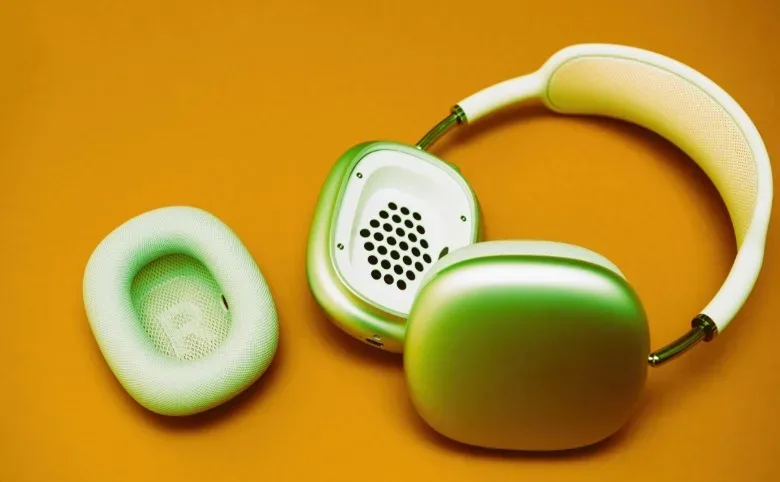
Both models support interchangeable ear cushions, but they make replacement feel different. AirPods Max 2 cushions attach magnetically and pull away with a simple tug. It is the more seamless mechanism.
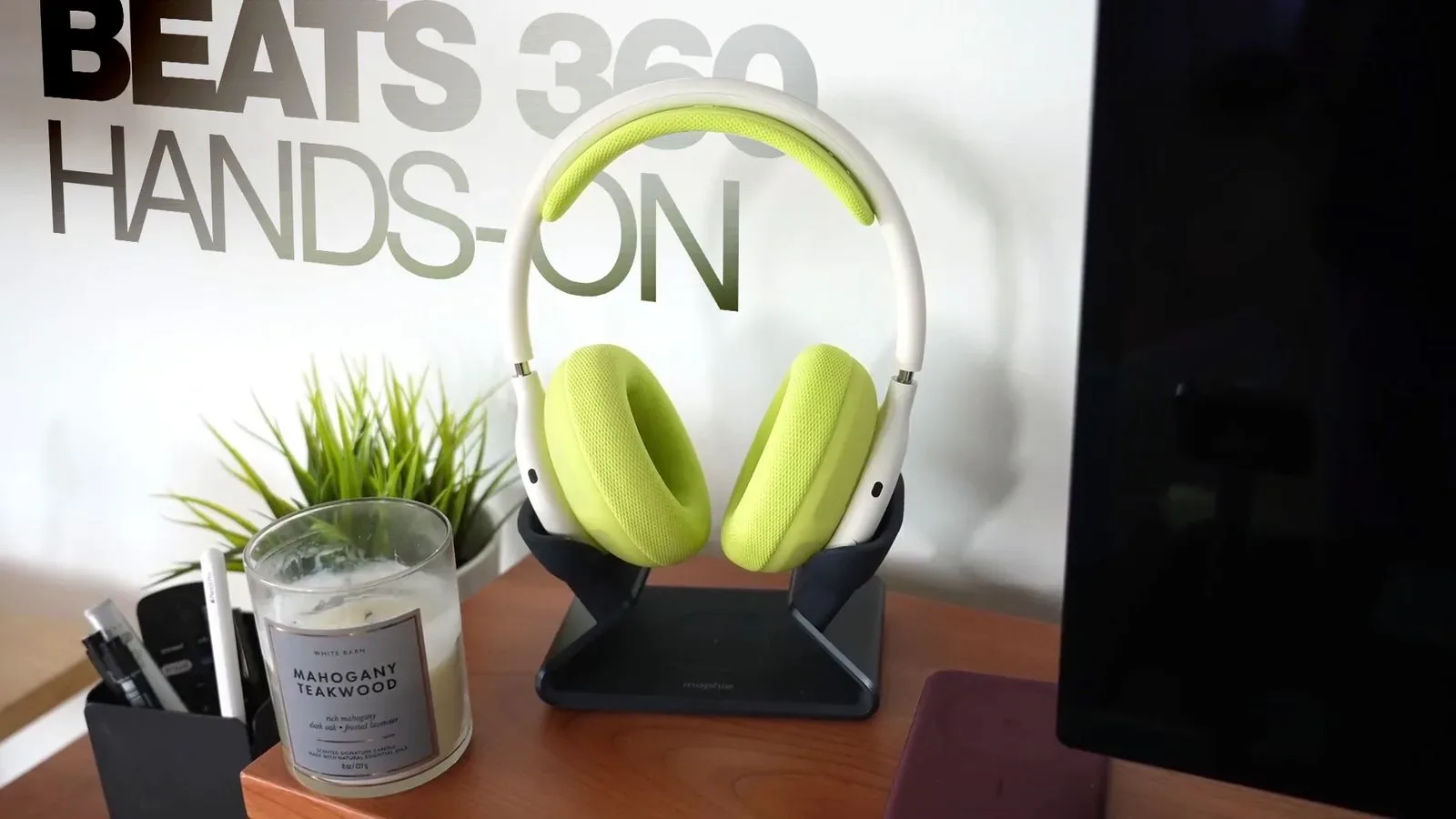
Beats 360 cushions require a twist to remove and reattach. That is less elegant than a magnetic connection, but Beats supplies a broader customization proposition around it. The headphones are available with performance cushions made from woven fabric for workouts and everyday wear, as well as UltraPlush cushions using the material associated with classic Beats headphones. The headband is also interchangeable.
AirPods Max 2 uses one fabric cushion type. Its colors can be mixed and matched, but the headband is not designed for simple user replacement. In effect, AirPods makes swapping cushions easier, while Beats provides more possible changes once a buyer decides to customize.
This is also a reminder that cushions are doing two jobs. They affect physical comfort and they help create a seal around the ear. A stronger seal can help reduce outside sound before any electronic noise processing begins. That makes the physical design relevant to both long-session wear and perceived isolation.
Sound quality: a close contest, with extra capability on AirPods Max 2
Both headphones are positioned as satisfying premium listening options rather than radically different sound classes. AirPods Max 2 has the reported edge in clarity, loudness, separation between layers of sound and bass depth. “Separation” here means the ability to more distinctly pick out individual elements within a dense mix instead of having them blur together. It can be meaningful for music with many simultaneous parts, but it is not necessarily a make-or-break difference for every listener.
The Beats 360 is described as well-balanced and strong overall. That matters because a modest sound advantage does not automatically outweigh a $199 price gap, longer battery claim and lower weight. The available information indicates a difference of refinement rather than a dramatic quality gulf.
The more concrete audio divide is wired functionality. AirPods Max 2 can use a USB-C cable for lossless audio and wired audio passthrough. Lossless audio refers to playback that preserves audio data without the reduction associated with lossy compression. Wired passthrough, in this context, means being able to receive audio through the USB-C connection rather than relying solely on wireless playback.
Beats 360 does not include either capability. That will be irrelevant to listeners who intend to use Bluetooth all the time. It matters more to anyone who specifically wants corded listening sometimes, or considers lossless playback a required feature. Buyers should identify that need before comparing subjective descriptions of sound, because it is a simple yes-or-no feature difference.
ANC and Adaptive Audio explained
ANC, or active noise cancellation, is the electronic system used to reduce external noise. Both models perform strongly here, with AirPods Max 2 holding a slight advantage in part because its larger cups can create a better physical seal. Beats 360’s ANC is also described as effective in loud settings, including an airplane cabin.
For Beats 360, the choice is straightforward: ANC is on or off. AirPods Max 2 adds Adaptive Audio, a middle setting that adjusts noise cancellation to leave some awareness of the surrounding environment. That is potentially useful while walking outdoors, when total isolation may not be desirable.
The distinction is not merely about maximum noise reduction. It is about how much manual management a listener wants. Beats gives a more basic binary choice. AirPods offers another mode designed to balance reduction with environmental awareness. The latter is more flexible, though a buyer who normally wants either full ANC or none may not derive much value from it.
Apple integration versus wider device freedom
The shared Apple feature set is substantial. With an iPhone or Mac, both pairs support quick pairing, automatic switching between devices, hands-free Siri, Audio Sharing and Find My. These conveniences reduce friction for people already using Apple hardware: pairing takes less effort, and playback can move between compatible devices without treating each headphone connection as a separate setup task.
AirPods Max 2 runs on Apple’s H2 chip and has the fuller Apple-first feature package. It supports Live Translation and Conversation Awareness. Conversation Awareness lowers listening volume when the wearer begins speaking to someone, making brief interactions less disruptive. Live Translation is another differentiator reserved for the AirPods option in the provided comparison.
Beats 360 uses a custom chip designed for iOS and Android compatibility. It misses those AirPods-exclusive features but can pair easily with Android devices and works with Google’s Find My. This makes it the more accommodating choice for people who use a mixture of Apple, Android and Windows devices rather than a single tightly Apple-centered setup.
Neither ecosystem strategy is inherently superior. An iPhone-and-Mac-only owner may place real value on the H2-linked extras. Someone with an Android phone, a Windows computer, or a mixed household has a strong reason to avoid paying more for functionality that is tied more closely to Apple devices.
Battery life, controls and automatic pausing
Battery endurance is Beats 360’s most decisive numerical win. Beats claims up to 32 hours with ANC enabled, while AirPods Max 2 is rated for up to 20 hours on one charge. An additional 12 hours can be meaningful on long trips, where charging opportunities may be limited and ANC is often particularly useful.
Both models charge over USB-C and include built-in microphones that are described as decent rather than flawless. Buyers expecting headphones to double as an exceptional call device should therefore avoid treating either as a guaranteed winner on microphone performance from the available information.
Controls favor AirPods Max 2 in one important quality-of-life respect: removing the headphones automatically pauses music. Beats 360 lacks that behavior. It is a minor feature until it becomes routine; then every interruption requires a manual pause or risks leaving audio playing.
Beats 360’s physical controls also have a usability caveat: the volume and ANC-mode buttons look very similar and can be confusing. AirPods Max 2 relies more heavily on seamless automatic behavior, though it still has buttons for pausing tracks and changing ANC modes.
Which buyer fits each model?
Choose Beats 360 when value, endurance and mixed devices lead
Beats 360 makes the strongest case for the buyer who wants capable ANC, solid overall sound, a lighter 294-gram design, a proper carrying case and substantially longer stated battery life. At $350, it is also $199 less expensive than AirPods Max 2. Its support for Android pairing and Google’s Find My is particularly important for anyone who does not live exclusively in Apple’s ecosystem.
The interchangeable headband and two cushion material options further make Beats the more visibly customizable product. The trade-offs are the lack of wired lossless/passthrough support, the absence of automatic pause-on-removal, fewer ANC options and no Live Translation or Conversation Awareness.
Choose AirPods Max 2 when Apple extras and wired audio matter
AirPods Max 2 is the fit for buyers who want the aluminum construction, the slightly stronger sound presentation, deeper bass, magnetic cushion attachment and the greater sophistication of Apple’s software features. Its USB-C lossless and wired-passthrough support is a material advantage for anyone who wants a corded option, not a minor bonus.
Adaptive Audio, Conversation Awareness and Live Translation extend that advantage for an Apple-only user. Still, the decision means accepting a 386-gram headset, an up-to-20-hour battery estimate and the less protective Smart Case, all at the higher $549 price.
In short, Beats 360 looks like the practical flagship: less expensive, lighter, longer lasting and friendlier to mixed-device users. AirPods Max 2 is the feature-rich Apple-centric option, with a more premium finish and capabilities that justify the premium only if its specific extras are important to the buyer.