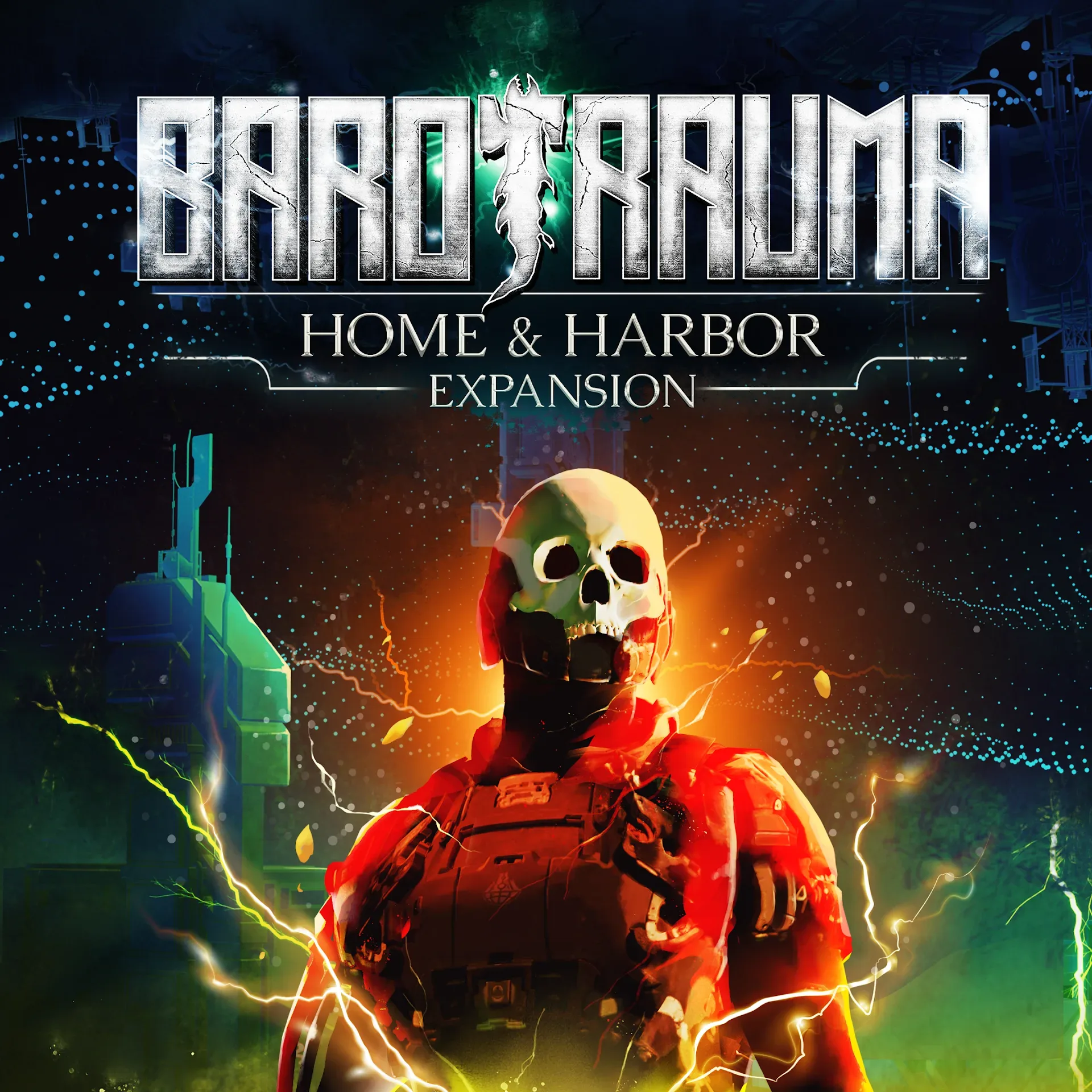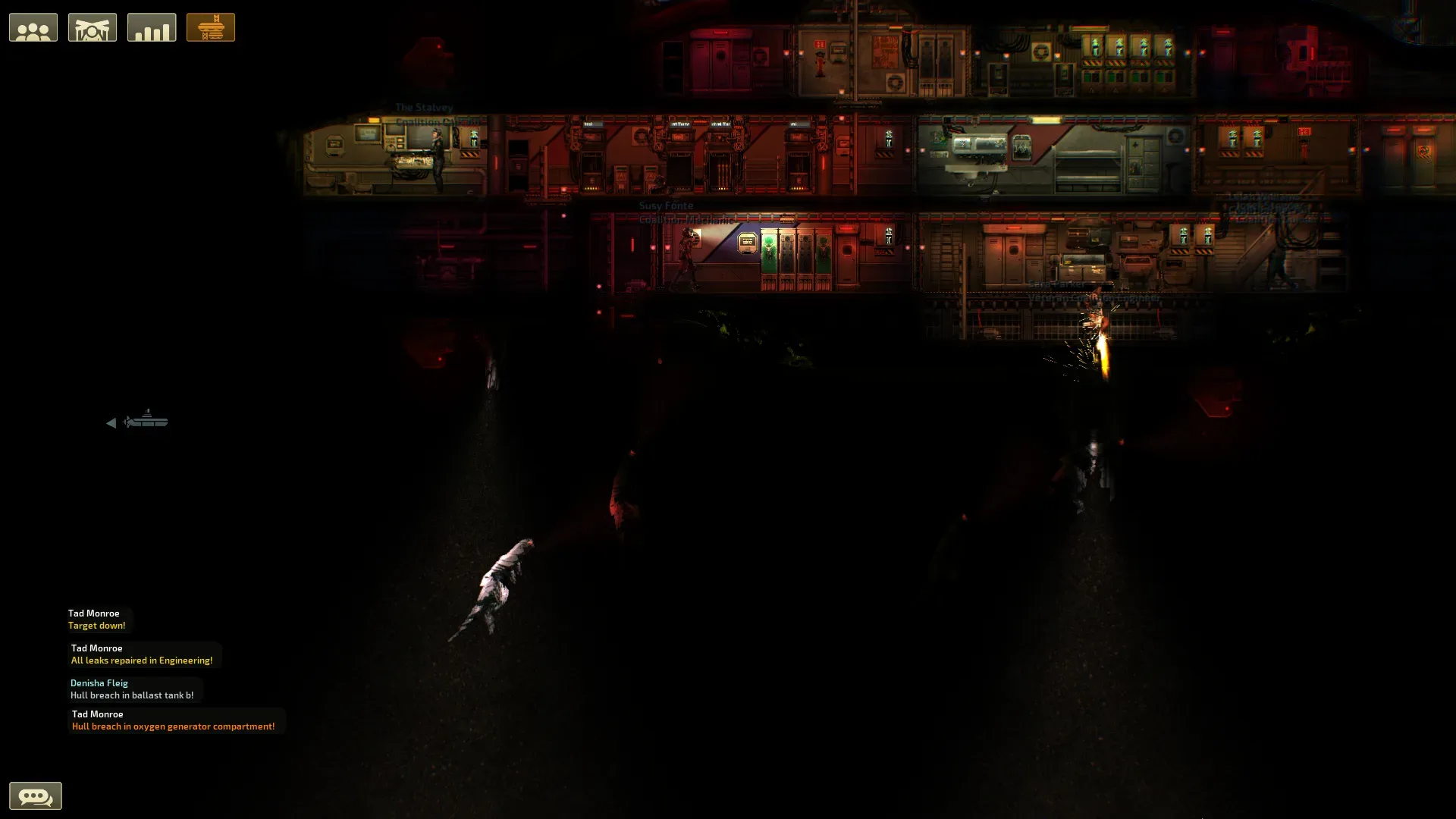
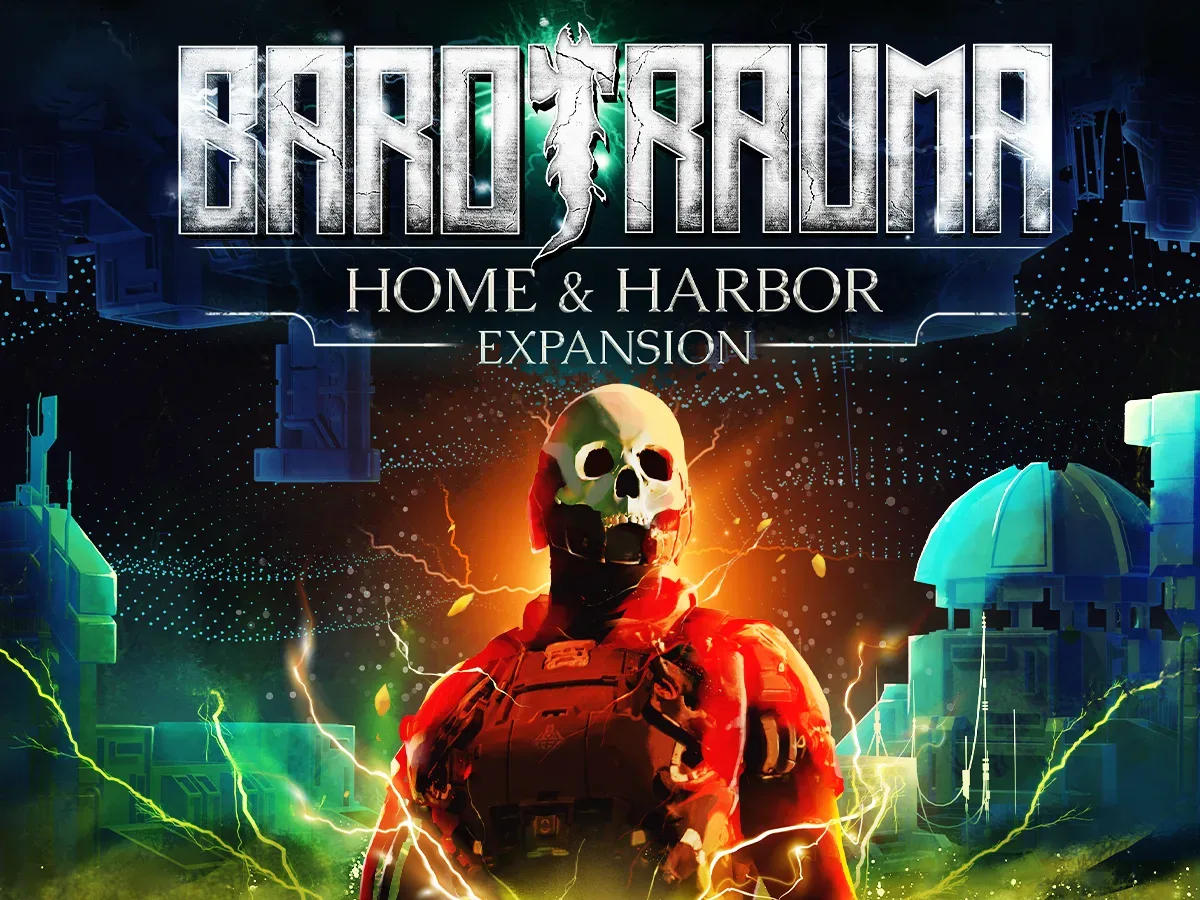
Barotrauma’s Home & Harbor expansion is scheduled to launch on December 2. The upcoming add-on brings player-owned Outposts to the submarine survival game and introduces the Descendants, a technocratic faction with its own story role, equipment, submarines and a conspicuously hungry power setup.
A newly released development diary focuses on the Descendants, who are described as one of Europa’s original factions. They disappeared after contact with Earth was lost, but have now returned—placing players between the resurfaced group and the wider tensions already unfolding beneath Europa’s ice. The expansion’s premise is not merely a new set of items for the cargo hold; it ties its new faction, home-building systems and dangerous machinery together as parts of one addition.
The Descendants return with a distinct visual identity
The Descendants’ design is characterized as NASA-punk. In broad terms, that label points to science-fiction aesthetics rooted in recognizable space-program hardware and technical infrastructure, rather than pristine, frictionless futurism. It is a useful fit for Barotrauma’s confined, industrial undersea setting: machinery is not background decoration when a crew’s lights, life support and defenses depend on it continuing to work.
The faction also uses cybernetic technology to augment both its members and its servant creatures. The available details do not define the exact gameplay effects of those enhancements, so players should not assume particular enemy behaviors, upgrades or counters before they are detailed. What is clear is that cybernetics are a core part of the Descendants’ identity, not a stray bit of flavor text attached to a new mission giver.
That gives the faction several stated layers:
- Lore and story: the group’s disappearance following the loss of Earth contact, and its eventual return, provide a narrative hook.
- Technology: cybernetic enhancement applies to people and servant creatures.
- Hardware: the expansion includes Descendant-linked weapons and submarines.
- Visual direction: its NASA-punk styling separates its machinery and spaces from a generic “advanced faction” look.
For a game built around systems failing at inconvenient times, a new group whose identity revolves around sophisticated and power-intensive machinery has obvious potential to affect the decisions players make. Still, the announced information establishes the ingredients, not every recipe. The diary confirms the faction’s place in Home & Harbor; it does not provide a full catalogue of missions, weapons or vessels.
The Singularity Reactor is framed around risk and payoff
The diary’s most concrete new machine is the Singularity Reactor, presented as a high-risk, high-reward reactor. It can supply the Descendants’ more power-hungry devices. A reactor, in this context, is the system that provides electricity to ship and outpost equipment; “power-hungry” simply means those devices demand more of that electrical supply.
The risk-and-reward label matters because it suggests a trade-off rather than an automatic upgrade. The stated information does not spell out the reactor’s failure conditions, operating procedure, output figures or penalties. It would be premature to claim that it creates a specific hazard or requires a particular crew role. But the intended design direction is clear enough: access to stronger technology is paired with greater operational stakes.
Related coverage includes Barotrauma’s Home & Harbor arrives Dec. 2 with outposts and the Descendants.
That is a natural thematic match for Barotrauma. A powerful generator is only valuable if its advantages justify the attention, planning or danger it imposes. The Singularity Reactor appears designed to make power capacity a strategic question instead of a purely invisible statistic. Players may be tempted by the equipment it enables, while needing to account for the risk that comes with adopting the system.
There is also a wider implication for the Descendants as a faction. Their technology is not positioned simply as “better gear.” It is described as gear that asks more from the infrastructure supporting it. That creates room for a meaningful identity: their equipment may offer capability, but it also comes with a more demanding relationship to the systems keeping a vessel or settlement functional.
Outposts turn a stopover into something players can own
Home & Harbor’s other major feature is the arrival of player-owned Outposts. Players will be able to own, build, customize, manage and defend these homes. Each verb points to a different portion of the system, even if the details of menus, construction limits, resources and defense scenarios have not been set out here.
- Own indicates that an Outpost can belong to the player rather than serving solely as a fixed location.
- Build establishes some form of creation or expansion.
- Customize suggests players can alter an Outpost beyond its initial state.
- Manage puts ongoing responsibility alongside construction.
- Defend means an Outpost is not necessarily a consequence-free retreat.
Put together, those functions suggest Home & Harbor is interested in persistence: establishing a place, deciding how it should operate and protecting what has been established. That is different from treating every location as a disposable waypoint. It also complements the Descendants’ emphasis on heavy technology, since a home base provides a logical setting for systems that need maintenance, expansion and defense.
Players who enjoy games that turn construction into an ongoing responsibility may find the direction familiar in spirit, though the mechanics should not be assumed to match another game’s. For a separate example of a build-centered option, Fangtopia’s free Creative Mode takes a low-pressure approach without scores or time limits. Home & Harbor, by contrast, explicitly includes management and defense, indicating a more precarious form of settlement ownership.
What arrives with the expansion—and what is already free
Home & Harbor is set to bring the new Outpost framework, the Descendants and associated story, gameplay, lore, weapons and submarines. The expansion is due December 2.
Separately, a free base-game update launches on November 26 for all players. That update adds additional story and gameplay options. The distinction is important: not every addition connected with this release window is restricted to the expansion, but the provided information does not identify which particular story or gameplay options are included in the free update. Players looking to understand exactly what is included in each should avoid treating the expansion and base-game update as one undifferentiated package.
The timing makes practical sense from a rollout perspective. A free update can broaden the base game’s options for everyone, while Home & Harbor adds its new ownership and faction-focused material a few days later. It also means players can reasonably separate two questions: what changes for all existing players, and what the expansion specifically adds through Outposts and the Descendants.
Why the pairing could matter
The most interesting part of the announcement is how its components reinforce one another. Outposts add a reason to invest in a place. The Descendants add a new political and technological force. The Singularity Reactor introduces an explicitly hazardous route to powering more demanding devices. None of those features needs to exist in isolation: homes can become sites of management and defense, while faction technology can raise the stakes of what players choose to install and maintain.
That is analysis rather than a promise of specific mechanics. No detailed building flow, combat encounter, reactor procedure or campaign branch has been confirmed in the available material. But the expansion’s announced focus is unusually coherent. It is about harboring something worth keeping, then deciding how much risk to take in order to make that refuge more capable.
The Descendants development diary is available as an official video, offering a closer look at the faction’s art direction and technology ahead of the December 2 release. Until more granular information is provided, the safest expectation is a substantial new framework built around ownership, a returning faction and the tension between powerful equipment and the trouble required to keep it running.