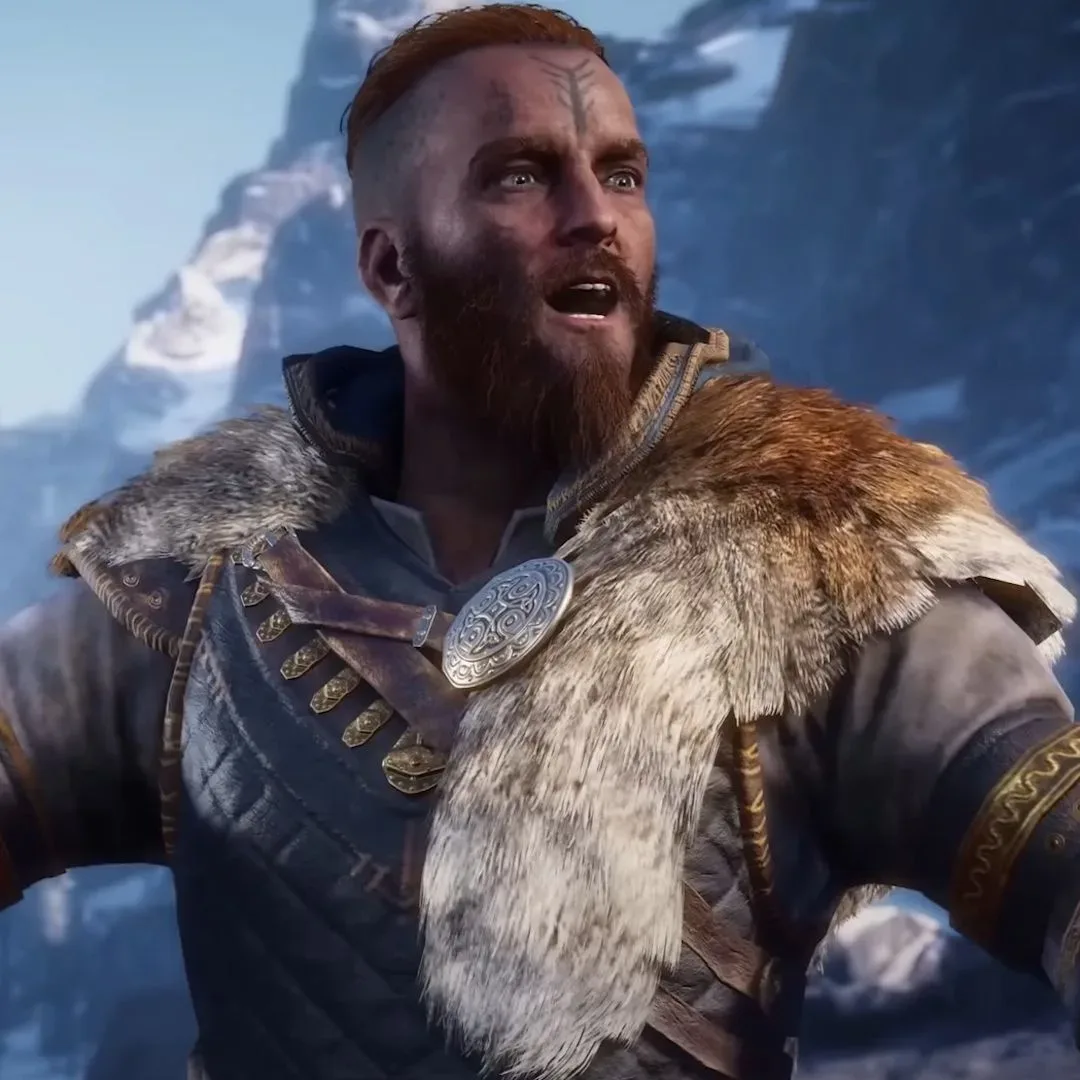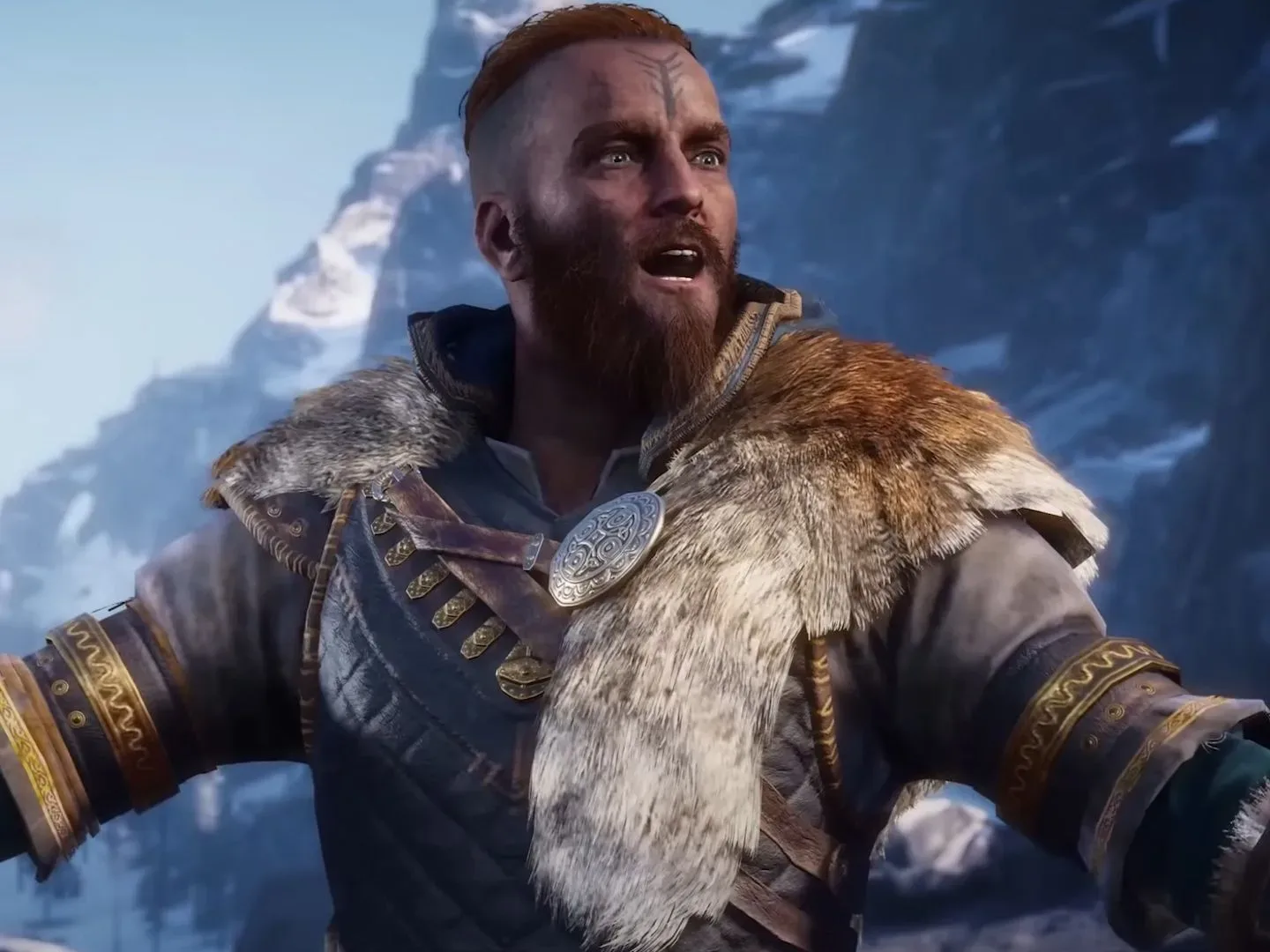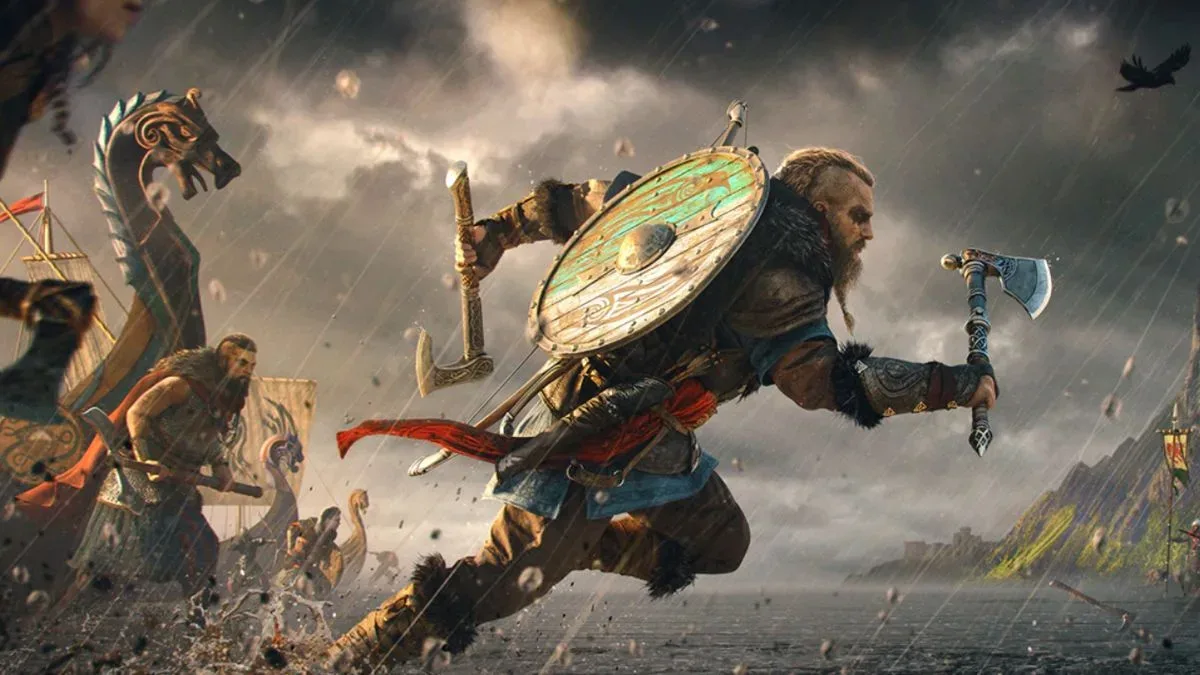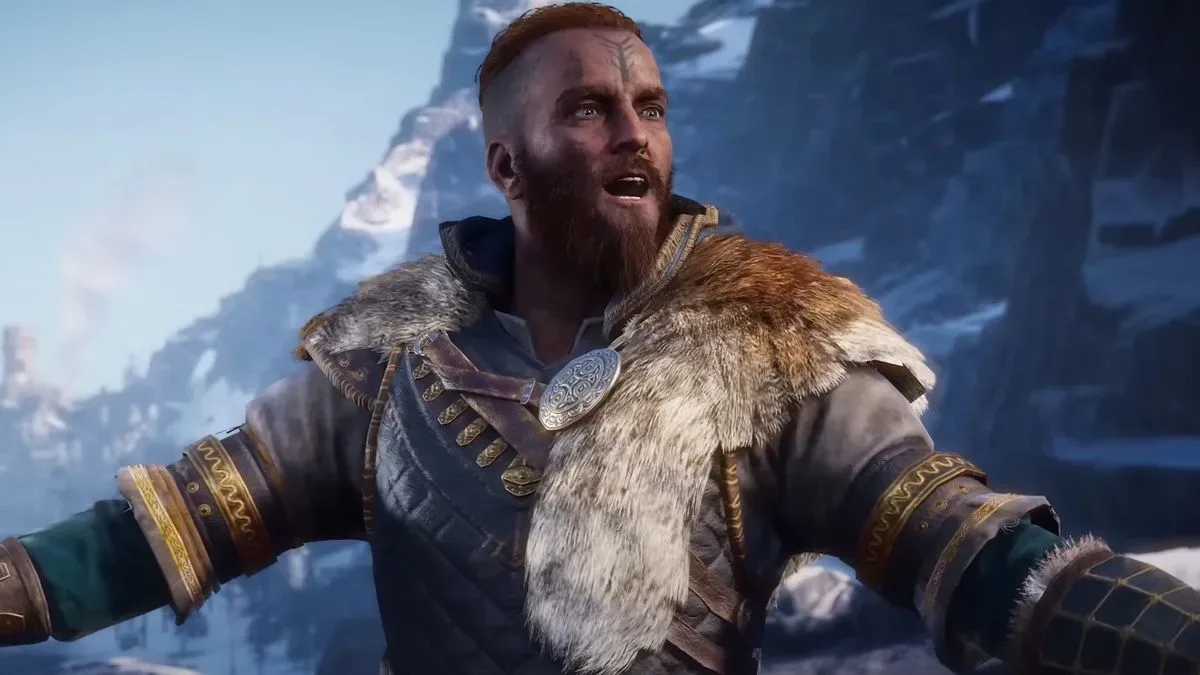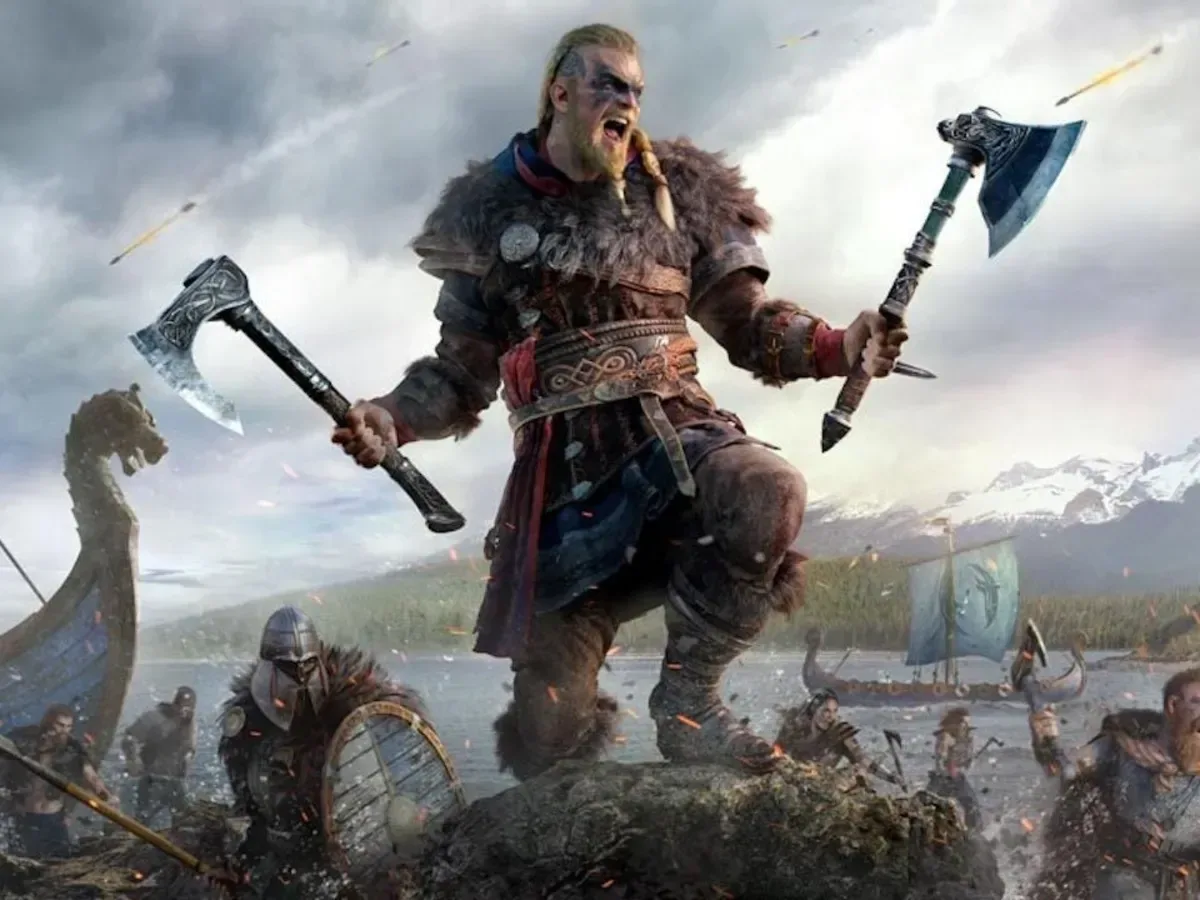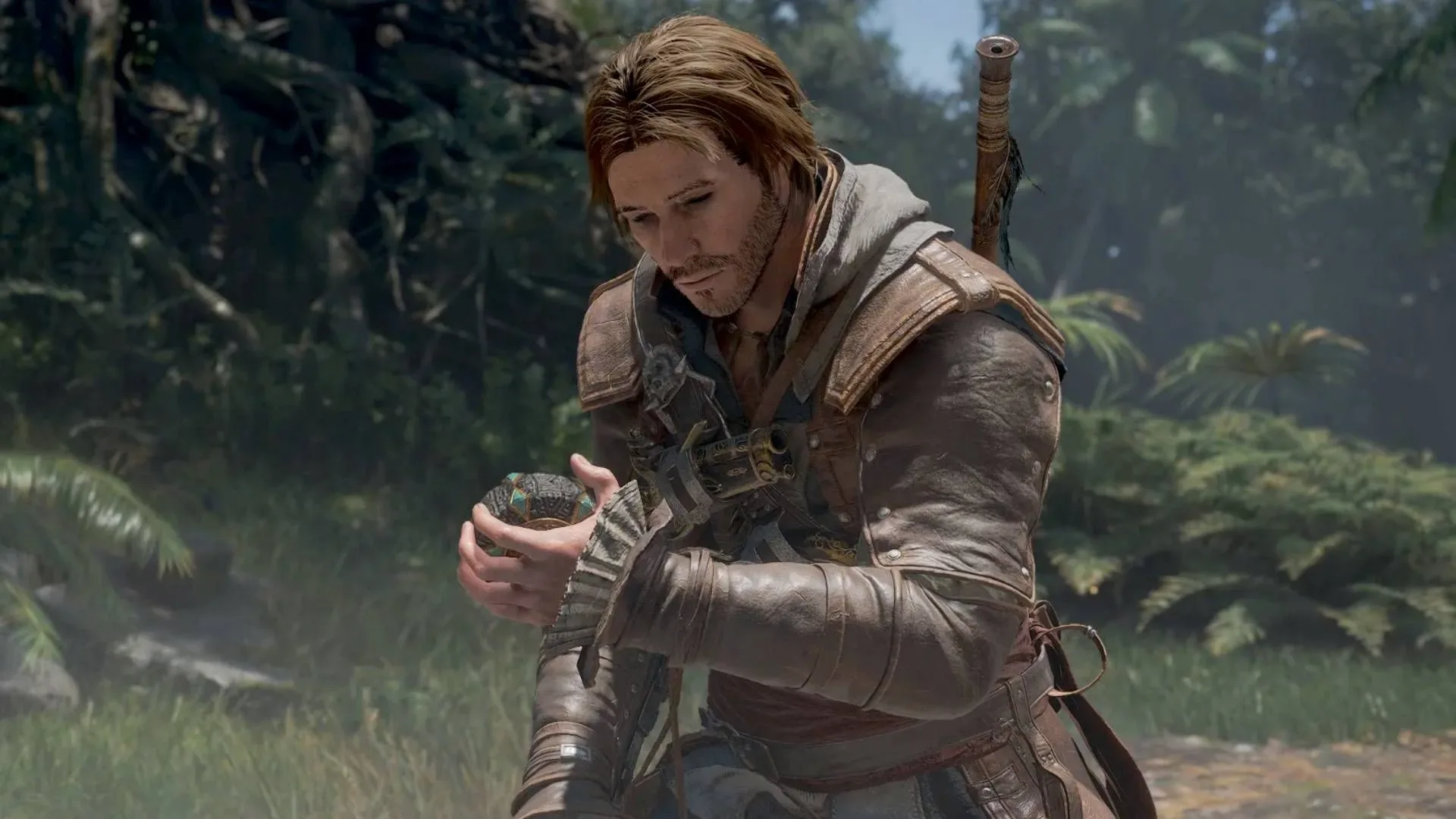
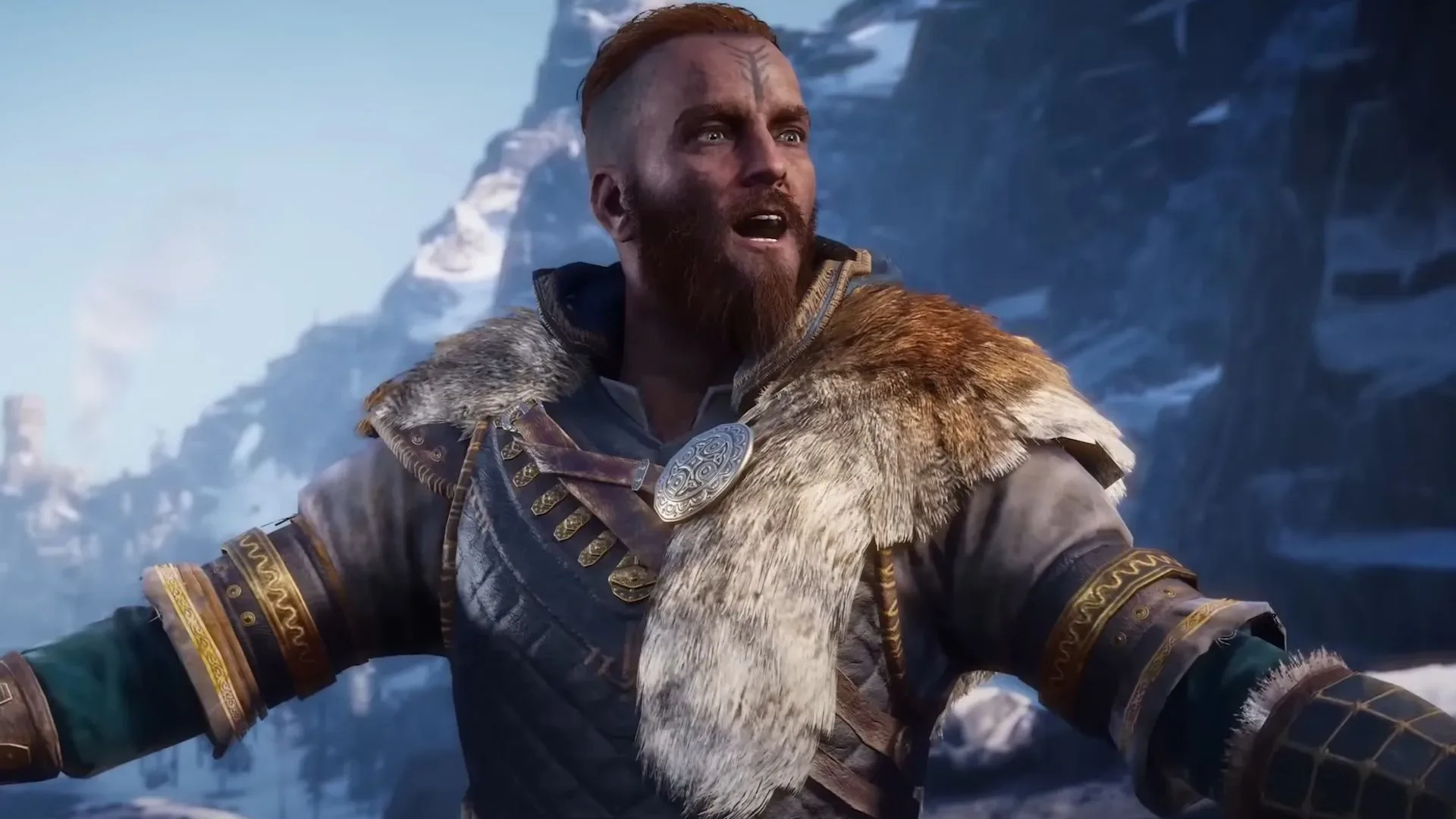
Assassin’s Creed Valhalla has received an update titled The Most Requested Update, and the name is doing substantial work: New Game Plus is finally in, arriving alongside a Stash inventory, a reworked long-term progression option, a much higher gear-upgrade ceiling, expanded rune customization and new PS5 Pro enhancements.
For a game built around a vast adventure and a steadily expanding pile of weapons, armor and runes, the patch is notable less as one isolated addition than as a group of connected systems. New Game Plus gives completed saves a reason to begin again. The increased upgrade ceiling and new mithril resource establish more room for advancement. The Stash gives players somewhere to put the resulting accumulation of gear. And Extended Progression Mode changes how strongly equipment, runes and Masteries feed into a character’s Power.
It is a late, systems-focused update for Valhalla, but one tailored to players who have already spent considerable time in Eivor’s world and want a more structured way to revisit it.
How to unlock New Game Plus
New Game Plus, often shortened to NG+, lets players start the campaign again after reaching a specified point in their existing save. For Valhalla, access requires completing the Holy Day quest, the final quest in the Hamtunscire region. That threshold comes before the game’s true ending, a deliberate choice intended to let players enter NG+ without requiring every final piece of the larger narrative to be finished.
There is one easy-to-miss housekeeping requirement: players must save their game after installing the update before the NG+ option becomes available. Anyone who has cleared Holy Day but does not initially see the mode should therefore make a fresh post-update save before assuming the completion flag has failed to register.
The mode is not simply framed as a victory lap. Every subsequent NG+ cycle becomes progressively harder. That matters because it establishes a repeatable escalation loop: returning players can take their upgraded builds back through the adventure, but future iterations are designed to ask more of those builds rather than preserving the original campaign’s challenge unchanged.
The update does not detail every rule governing what carries forward into a new run, so players should avoid making assumptions beyond the stated availability condition and increasing difficulty. What is clear is that NG+ now forms the center of Valhalla’s renewed endgame structure, with the rest of the patch providing more tuning options for people who choose to engage with it.
Gear upgrades now reach 27, with mithril at the center
The maximum gear-upgrade cap has risen from 13 to 27. It is a major numerical expansion, but it comes with a new requirement: upgrades are now tied to mithril, the resource introduced for this revised progression path.
Related coverage includes Assassin's Creed Valhalla Adds New Game Plus, Stash Storage and Expanded Progression.
In practical terms, mithril is the material gate for pushing equipment into the update’s new tiers. Players looking to raise multiple pieces of gear rather than concentrate on one preferred loadout should expect it to matter a great deal. The update makes no promise that every item can be fully developed quickly or casually; on the contrary, it explicitly signals a heavy mithril demand.
That resource is also used for rune upgrades. Runes can now be improved to a new superior tier, creating another layer between simply collecting a rune and maximizing its contribution to a chosen build. A rune is an item that supplies an equipment perk or stat effect. With superior upgrades, the system is no longer limited to deciding which rune to slot: players can invest further in the ones that best fit their approach.
This is an important distinction for anyone returning after a long absence. The update is not only adding larger numbers to weapons and armor. It is extending the decision-making around the small modifiers that support those items, while putting a shared material cost behind both parts of the system.
Extended Progression Mode gives Power more granular inputs
The new Extended Progression Mode is the patch’s clearest attempt to make fine-tuning matter more. In this optional mode, gear upgrades and runes each increase Power by one point. Masteries, meanwhile, grant Power every five skill points.
Power is the game’s broad measurement of character advancement. Under this expanded model, advancement is meant to be distributed more visibly across a player’s build rather than being felt only through major milestones. Improving an item or strengthening a rune contributes directly to Power, while investment into Masteries produces gains on a five-skill-point cadence.
Masteries are the post-progression investment layer referenced by the update. The balance changes also address Masteries and their bonuses, so the mode should be viewed as part of a wider recalibration rather than a simple extra counter bolted onto the existing game.
The intended trade-off is straightforward: greater challenge in exchange for stronger rewards for committed builds. That makes Extended Progression Mode especially relevant to players considering multiple NG+ runs, where an expanded build can be tested against rising difficulty. It may be less essential for someone returning solely to clear an unfinished quest line, but it is central to the patch’s vision of a deeper repeat-play loop.
The Stash addresses Valhalla’s inventory overflow
Perhaps the least flashy change may prove to be one of the most welcome. Ravensthorpe now has a Stash that can store any gear piece and any rune from the inventory.
It is a storage solution rather than a new form of equipment enhancement, but that distinction is precisely why it matters. A game with numerous weapons, armor pieces, runes, add-on content and additional perks can turn inventory management into a constant background annoyance. The Stash lets players separate their active selection from items they want to keep without retaining in the immediate inventory.
For build-focused players, this should make it easier to maintain a cleaner working inventory while preserving alternatives for later experimentation. It also gives collectible-minded completionists an organizational home for gear and runes that they do not currently equip. The update specifically says both categories can be stored, so players should not expect it to serve as a general-purpose bank for every possible item type unless further patch documentation says so.
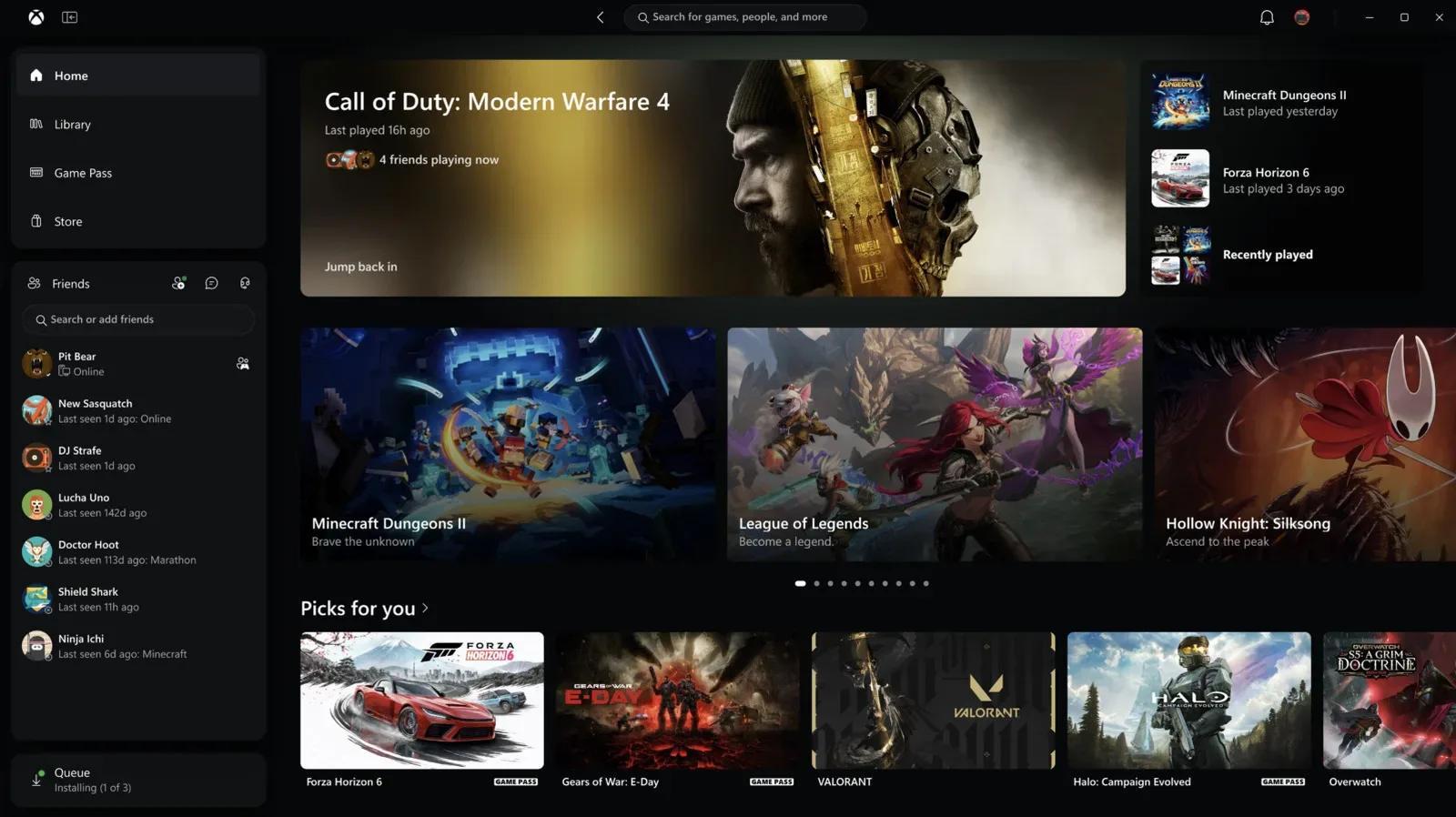
The change lands at a moment when game-library organization is receiving attention elsewhere as well; the recent Xbox PC app update focused on a cleaner game library. Valhalla’s Stash applies the same basic principle on a much smaller scale: less clutter makes returning to a large collection of content easier.
More than 300 perks can be engraved
The Rune Forge’s engrave page has also received a sizeable expansion. More than 300 engravable runes are available, covering perks introduced since Valhalla’s release, including those from DLC and items purchased through the Helix Store.
Engraving is the process of applying an eligible rune perk through the forge interface. The practical effect of this larger pool is flexibility. Players can more readily build around perks that may have entered the game after the original release, instead of treating later additions as isolated curiosities or needing to reshape their choices around a narrower starting set.
The sheer number should not be read as an assurance that every combination is equally effective. The patch also includes balancing for stat runes, which indicates that the studio is adjusting how these modifiers perform as part of the same update. Still, broader engraving access gives experienced players more ingredients for specialized setups, and it complements the new ability to upgrade runes with mithril.
Dual wielding, achievements and PS5 Pro support
Several changes sit outside the primary progression overhaul. The update includes a broad balance pass aimed at making dual wielding feel better, improving stat runes, and balancing Masteries and their bonuses. Dual wielding refers to using a weapon in each hand, so adjustments in this area may be meaningful for players whose preferred combat style depends on that pairing. The supplied details do not enumerate the exact mechanical changes, however, so it is too early to reduce the patch to a single verdict on which loadouts have improved most.
Completionists receive two new achievements: one for fully upgrading divine gear and another for completing New Game Plus. These goals neatly reflect the update’s two priorities—new replayability and a much longer upgrade path.
On PS5 Pro, the game now supports PSSR 2 optimizations. PSSR is Sony’s PlayStation Spectral Super Resolution technology, an image-reconstruction approach designed to improve image quality. The stated goal here is enhanced 4K image quality while delivering Quality mode at 60 frames per second on PS5 Pro. That is a platform-specific enhancement, not a stated change for every console version.
What returning players should do first
The new systems overlap enough that a short preparation order makes sense for players returning to Valhalla:
- Install the update and make a new save. This is required to unlock New Game Plus.
- Check Holy Day completion. Finishing the Hamtunscire region’s final quest is the stated gateway to NG+.
- Visit Ravensthorpe’s Stash. Put aside gear and runes that are worth keeping but do not belong in the active inventory.
- Decide whether Extended Progression Mode suits the goal. It is designed for players seeking more build impact and greater challenge.
- Plan mithril spending. Both gear upgrades beyond the old limit and rune upgrades draw on the new resource, making it worth prioritizing a build instead of treating every upgrade as equal.
- Review rune engraving options. The enlarged selection may create opportunities to refine a favorite setup before beginning another campaign cycle.
The patch’s importance lies in how these components reinforce one another. New Game Plus would be less compelling without deeper upgrading; deeper upgrading would create more inventory friction without storage; and a bigger rune ecosystem would be less useful without more ways to grow and engrave it. Valhalla now gives its long-running save files a more substantial second life, while asking returning Vikings to decide how much mithril, organization and escalating difficulty they are ready to embrace.